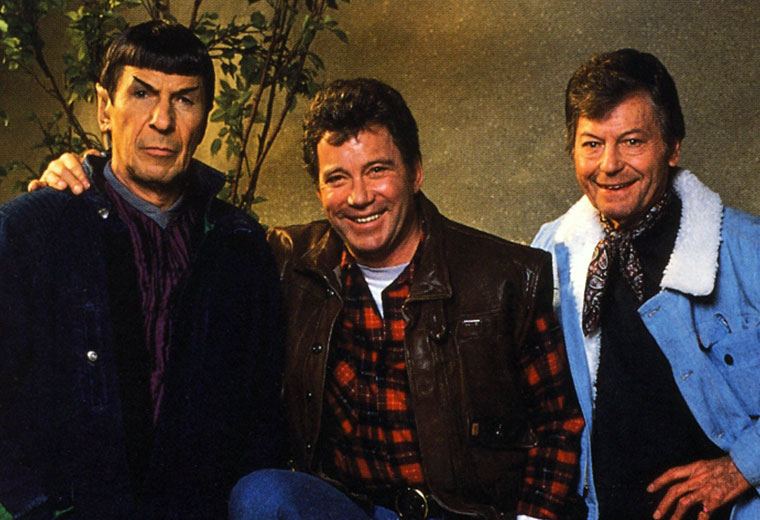
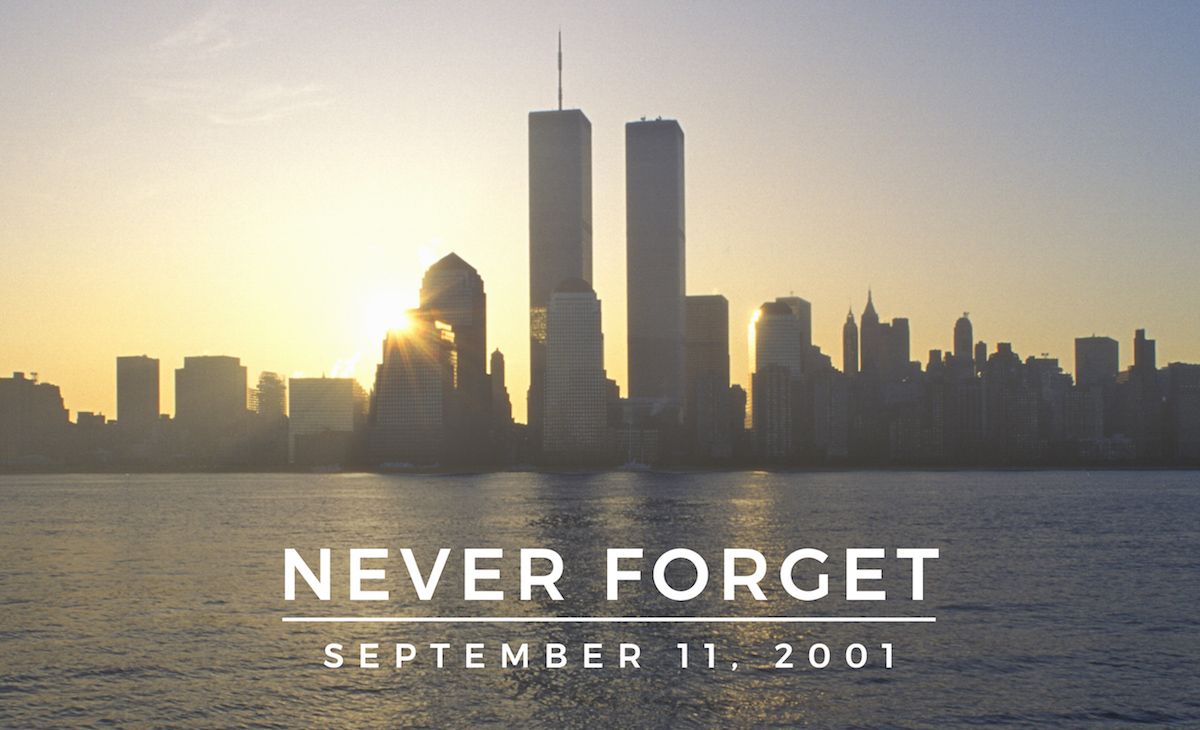
9/11: Never Forget #911 #NeverForget

If you enjoy this post, please retweet it.

Sen. Cruz: May We Never Forget 9/11 | Ted Cruz | U.S. Senator for Texas

For people within a certain range of ages, this was our JFK assassination moment. We remember exactly where we were. I lived and worked in downtown Chicago during the worst year of my life. I was riding the bus to work, and everyone on the bus was talking about it. When I got to work, the news reports (many false) were pouring in. We were told to go home by 11 am, but I left around noon.

When I got back to my apartment in Lincoln Park, I called my friend, Matt, and we headed out to a bar to watch the news coverage together. During our time at the bar, we saw the first tower fall, and then the second. I grew up in the Washington, DC area, so I was calling everyone there to make sure they were alright. Unfortunately, things were so chaotic that even reliable sources of information were being fooled by false news reports (e.g., “They hit the State Department!”). It took about a day for all of that to be sorted out, at least for me (I have what I’ll call “connected” family and friends).

Regardless of how you feel about our efforts against the Taliban and Iraq, it’s all hindsight. At that moment, all of America was pissed off and demanded action.

Follow me on Twitter @gsllc

Growing-on-Me Watch: Star Trek Lower Decks @StarTrek @CBSAllAccess #GoodWatch

If you enjoy this post, please retweet it. For other entries in the Good Watch category, click here.

Star Trek: Lower Decks is CBS’s attempt to capture the magic of Rick & Morty without losing its target audience. That would seem to be a tough sell: trying to do something but tying one’s hands in an important aspect. It certainly started that way. It’s first couple episodes fell flat for me, but even Futurama had a boring first episode. All first episodes are set ups.

Five episodes in, it’s finally growing on me. It’s better than Star Trek: The Animated Series, which was ridiculous. (There was only one good episode, and it was good because the third act was ridiculously funny.) This doesn’t mean I’d ever re-watch and episode of Lower Decks, but it’s decently entertaining, and I’m already paying for it. The gimmick with this series is that its main characters are ensigns rather than ship captains and senior officers. However, the higher-ranked officers get far more attention than was initially advertised, so they don’t really stick to the gimmick.

I think CBS missed the mark on this one, but if it fills the gap between the other shows such that we always have Star Trek, I’m on board. A low production budget show to fill that gap may have been the idea. Besides, Lower Decks may get better.

Now if you’ll excuse me, I’m off to watch today’s episode. As always, YMMV.

Follow me on Twitter @gsllc
Follow Star Trek @StarTrek
Follow CBS All Access @CBSAllAccess

Good Watch: 1BR @Netflix #GoodWatch

If you enjoy this post, please retweet it. For other entries in the Good Watch category, click here.

I don’t like horror movies. They’re ridiculous. This one’s a little different, and it works for me.

This isn’t a movie about an insane human with no superpowers that somehow gets up after getting stabbed in the neck. This is far more believable, and that makes it more enjoyable to me.

Per Netflix,

Seeking her independence, a young woman moves to Los Angeles and settles into a cozy apartment complex with a disturbing sense of community.

The community seems awesome, but it has a secret, and it doesn’t take long for Sarah to be forced from her comfort zone.

If you’re into horror movies, this may be too tame for you, but I liked it. As always, YMMV.

Follow me on Twitter @gsllc
Follow Netflix @netflix

#Persistence

If you enjoy this post, please retweet it.

One of my favorite quotes comes from Calvin Coolidge:

Nothing in this world can take the place of persistence. Talent will not; nothing is more common than unsuccessful men with talent. Genius will not; unrewarded genius is almost a proverb. Education will not; the world is full of educated derelicts. Persistence and determination alone are omnipotent. The slogan Press On! has solved and always will solve the problems of the human race.

No excuses. Just keep fighting.

Yeah, this is a lame post, but you all needed a break after yesterday’s treatise. 🙂

Follow me on Twitter @gsllc (please retweet!)

How I Prefer to Play Dungeons and Dragons, and Why I No Longer Do @Raddu76 @Luddite_Vic @SlyFlourish #DnD #RPG

If you enjoy this post, please retweet it.

A couple of weeks ago, one of my posts raised some questions from my social media contacts both on Facebook and Twitter. Specifically, they were wondering what I meant when I said I played Dungeons & Dragons differently from most others. It’s tough to express what I mean by that, but there’s been some back and forth, so I’ve given some thought on how to express it. I’m going to do my best here in an uncharacteristically long post. I’d like to make four quick points for context before I explain.

1. For RPGs, I limit myself to D&D out of necessity. I could play other games (and have), but nothing is more accessible than whatever the current edition of D&D is, especially in light of the living campaign being run for that edition.

2. There’s no right way to play D&D. Nothing I’m saying is a criticism of how other people play except to the extent that I’m saying I don’t prefer to play that way myself. Moreover, I was in Sly Flourish’s home game for years, and people like me can absolutely coexist on the same table as people . . .  not like me. That was probably the best gaming group I’ve ever been in because no matter who was in the group, everyone let everyone else do their own thing. I credit the DM for creating that atmosphere. He certainly guides the game but always places fun ahead of his own ego. Not many DMs do. Unfortunately, my gaming experience has conditioned me to go along with what other people expect, so even in that game I’d often sabotage myself by becoming what I didn’t want to be. But if that’s the way you want to play, then go for it. Some people reading this will know I’m talking about them and their play style. They shouldn’t be offended. None of this is meant as an insult.

3. Combat is part of the game, and I’m capable of enjoying a good combat.

4. Luddite_Vic and I have been designing our own RPG for a few years now. It’ll probably never see the commercial light of day because we’re too busy to meet regularly, but to some extent game design can absolutely accommodate my play style. It can even encourage it, though the best game system is going to be one that allows anyone to play it the way they want to play it.

So, what am I talking about?

I’m an Actor

No, you shouldn’t be asking me for my autograph. I didn’t say that I’m a good actor.

There are several player types. Some players change their type over time, and some fall into several categories at once. I’m certainly what I call an actor. I create a character with at least one notable, obvious personality quirk, and I play that up for maximum effect. Sometimes it’s funny, sometimes it isn’t, but it always defines my character, so much so that years later people reference the quirk by shouting, “Honor duel!”, “Bongos!”, or something referencing a character, when they see me. Whether I’m in combat or not, if I’m not playing up that quirk (or quirks), I’m not having fun.

Sometimes character concepts fail, so in theory I could impose an annoying play style on others, but I don’t. If I make a mistake with a character concept, or if it just doesn’t work within the game system, I move on from it before it becomes a burden. I’m self-aware of the impact I have on others, so if I’m annoying you, it’s intentional 😊, but I avoid doing that with characters.

True Immersion

The key to me having a good time is true immersion in the game world. I don’t think many players do that, and I think the best way for me to explain this is through a few examples.

The simplest and most talked about example of that is alignment. If you’re playing a lawful good character, then your character should act as such. I see far too many players choosing an alignment because of some mechanical bonus it gives, or because it serves a class build well, but then they act according to tactical needs rather than character philosophy, and their alignment goes right out the window. Again, if it makes you happy, fine, but I think you’re losing something valuable by doing that. After all, rolling a critical hit isn’t really an accomplishment. It’s random unless you’re cheating. As the great philosopher, Neil Peart, once wrote, “The point of the journey is not to arrive.” Misplaced modifier aside, by that he meant that how you get somewhere can often be more rewarding than where you wind up.

Assuming your character has roughly the same alignment as you, is that how you’d behave in the real world? If you’re playing a character with vastly different morals than you, is that how such a character would behave in the real world? If not, you’re not immersing yourself in the game world.

Here’s a better example. I openly wanted to test a story line but covertly wanted to test whether others would be interested in my play style, so I took over a 4e campaign when our characters hit paragon level (11th level). This is 4th edition, so even the bard had at least 70 hit points. The first encounter in the paragon campaign was clearly underpowered. It was designed to be a “James Bond” moment, where everything started off with a bang, but the point was to deliver the story hook. Any experienced player could recognize that, and in fact they all did.

The characters were visiting “the Lawns,” which was an area of the city best described as a much smaller version of Central Park. Commoners were everywhere, and I had the PCs place themselves randomly on the board. There were three magical cages containing a bear, a destrachen, and a manticore, all of heroic tier. Collectively, they were no match for the PCs. A blast of energy wipes out the vegetation in the immediate area and causes the cages to burst open. The bard wins initiative. He’s standing near the bear, an elf, the elf’s two small children, and a human. He elects to run over to the manticore to gang up on it with two other PCs. I say, “Just in case neither the minis nor I have described the scene properly, you have the jump on the bear, and the bear has the jump on the commoners. If you run away, those commoners, including two children, are as good as dead.” He said he understood but was going for the better tactical move, and the other players agreed, saying, “Get over here!” (or words to that effect).

I know these players well, so I knew this would happen — this encounter was also designed by me to be an ethical set up — but I couldn’t believe they fell for it. What exactly is the “better tactical move”? In my mind it was to limit as much damage to the citizens as possible. That’s what heroes do. (If I recall correctly, only one character was neutral on the good-evil axis, and I know it wasn’t the bard.) The party instead defined “better tactical move” as personally taking the least amount of damage possible. (Later, I’ll provide more evidence that this is their thinking.) This was the case even though the bard would be looking at taking, at most, one healing surge worth of damage in a one-on-one combat against any one of them.

When the bear got its turn, I described the event in gruesome detail. The elf shouts out, “Run to your mother, children!” right before he’s disemboweled with one claw. Then the human has his face ripped off by the other claw. I don’t expect the players to lose any sleep over make-believe characters getting killed, but not one of the characters expressed the slightest bit of sadness or regret. And don’t think for a second that I missed it. I was watching them carefully and prodding them in character (through NPCs) to let me know what they thought about these events. From a meta perspective, that was the entire point of me taking over the game as DM.

Isn’t a role-playing game supposed to be about writing a story? What kind of a story are these “heroes” writing?

As I said, I knew this would happen because I knew these guys, and part of what I was testing was this principal of immersion. I was trying to see if the right story would change the players’ approach to the game. So, I had some more tricks up my sleeve. I bit my lip for three months waiting for the story to progress to a specific encounter. The players needed to research some very obscure information, so they visited the “Black Library.” This place held all the knowledge of the universe in special crystals, including dreams and memories.

The Black Library was at a very important place in the multiverse. It was near the “Grand Stairwell,” which (as far as mortal minds could perceive) is a stairwell that leads up and down to each of your potential final resting places after death (e.g., the Nine Hells, Archeron, Nirvana). There was always a long line of souls of the recently departed waiting their turns for final instructions. Go up four levels, go down two levels; whatever.

I asked the players to make a Perception check. It didn’t matter what they rolled. I said, “You seem to recognize one of the people in line,” and they took the bait. It was the elf they let die. He confronted them, and once again all of the player characters showed no remorse other than an insincere, “Sorry, but . . . .” I gave them one more shot though. The elf said, “Okay, I don’t agree, but I at least understand the tactical approach. So did you at least make sure my children were okay? Did they find my wife? My wife and three children, one of them a newborn, depended on my farming to earn a living. My wife doesn’t know how to farm, and now she must feed three young children on her own. How are they doing?”

This sounds really sad, and it was somewhat predictable considering the scene in which the elf (and human) were brutally killed. Nevertheless, I received no showing of true sympathy despite closely looking for it. Instead, the characters (players, really) stood their ground and responded (essentially), “It wasn’t our problem.” They were so intent on being right that they couldn’t muster any sympathy for such a tragic circumstance their choices created. And of course, even after this conversation, not one of the characters even suggested checking in on the elf’s family. These were 15th-level characters at this point with more wealth than entire towns, but they just didn’t care. If that’s how they wanted to play, so be it, but that’s not immersion.

As I said, when bad things happen to innocent but make-believe people, I don’t expect players to be sad, but I do expect their characters to be, especially where the bad things were the result of the characters’ own choices.

If you were in an analogous situation in the real world, would you have behaved this way? Would you have any remorse for these circumstances even though there was no financial reward or information to be gained?

Another Example: The Puzzle Encounter

I created a puzzle encounter, which I’ll describe here. There’s a magically charged, metal plate with an array of 100 lighted buttons (10 rows of 10) in front of it. Each button is numbered from 0 to 99 in order (left to right). You must figure out which buttons to push and in what order. If you fail, the plate will light up and zap you (but not your allies) for an amount of damage equal to the number of the button you should have pushed. For example, if you should have guessed 4 but pushed 87, you’d take 4 points of damage (not 87!). You then should push the 4 and continue with the sequence. Remember, at this level, the relatively fragile bard (now at 13th level) has at least 80 hit points, so even a 4 would result in 5% of his total. If you couldn’t figure out the answer before running out of buttons to push, you couldn’t try again in your lifetime, so another player would have to try this level. If you push two correct buttons in a row (something you could pull off by guessing in some cases), the plate acts as an elevator and moves you and your allies up to the next level, where you face the identical situation but with a different code. There are four levels you must pass to get reach your goal.

All this information was deduced care of an easy Arcana check. My intent wasn’t to hold back the nature of the puzzle at all, so if someone was confused, I freely shared any information they needed. What they never got was a hint as to what the code was applicable to each level. The only way to discern the codes were through trial and error, and that was the actual puzzle. Hit some buttons, get zapped for a tiny amount of damage, but figure out how to avoid it and move forward.

Answer: FYI, the codes were based on various sequences. The first sequence was a series of squares (i.e., 1, 4, 9, 16, 25, etc.), the second was a series of cubes (i.e., 1, 8, 27, 64), the third was the Fibonacci series (i.e., 0,1,1,2,3,5,8,13), and the fourth was the digit product series (i.e., 1, 2, 4, 8, 16, 22, 26, 38, etc.). Again, the only way to discern the codes were through trial and error, and the players were angered by that. More on that later.

The point is this: If you truly immersed yourself in the game world, you wouldn’t have a problem with this puzzle. In fact, you’d expect this because of course this is how a puzzle would be designed. These are meant to keep out would-be intruders. They aren’t supposed to give you an out in which you take no damage, and logically you wouldn’t expect there to be any way to deduce a code unless you personally knew the puzzle’s creator and the way he or she thought. If anything, puzzles should be a lot harder (e.g., a simple 6-digit pin impossible to guess), but that makes the game inaccessible, which we don’t want. However, it’s reasonable that 1) you’re not going to be able to reason out the code except through trial and error; and 2) you’ll be punished when you get things wrong; however, 3) the initial punishment is easy in case the puzzle-maker himself makes a mistake or forgets which code goes in which order.

Remember when I said above that I’d provide more evidence that the players define success by how much damage they take? When we were finished with the third level, the players had had enough of my nonsense. They accosted me because the puzzle was unfair. The straw that broke the camel’s back? The third sequence was the Fibonacci sequence, which means when they got the first number in that series wrong, the plate lit up, and one player took a whopping . . . zero (0) points of damage. That’s right. A couple of them actually raised their voices and complained because one of them took 0 hit points of damage. After they were finished complaining, we continued. They pressed the one (per the instructions), then a two (which zapped them for one point of damage), and that’s all the damage one player took. Another player immediately deduced that 0, 1, and 1 were the start of the Fibonacci sequence, so for this sequence, a single 13th-level player with close to 100 hit points took exactly 2 points of damage, and that was unacceptable to all of them. I was so annoyed at this point that I didn’t tell the about the fourth level. I just said that they had reached their goal after the third puzzle (essentially, “Congratulations! You won D&D!”). The digit product series would have been a bit tough anyway, so frustrations aside, that was probably a good call.

Explain that any way you want. To me, it’s as simple as this: Some people just want to win D&D flawlessly, but that won’t always be possible if you immerse yourself in the game world. You always lose at least a little. I don’t get this at all, but I at least respect the fact that some of these players admit that immersion isn’t what they want from the game. Others claim they like immersion, but it seems like nothing but talk to me.

So Why Is This Important?

Why is this important to me? Why do I think this sort of thing would matter to far more players than it does if they ever gave it a try? Simply put because all mechanical bonuses and victories in the game are illusory. The only true successes or failures are story-based.

Let’s first look at the mechanics. Game designers, take note. As a DM, you may want to balance your encounter or campaign to be easy, even, or hard. I don’t care which; that’s not the point. The point is that you want a certain “balance,” which I’m using as a general term that doesn’t necessarily mean having a 50% chance of success. If a game is designed such that a 3rd-level PC is expected to have a +1 sword, then that disturbs your balance. It doesn’t do something cool like 4th edition frost brand weapon does. It simply increases your chances to hit by 5%. To keep the game balanced as you want it, the NPCs must have built within their mechanics a boost to defenses at 3rd-level (more or less). That means that the +1 bonus isn’t a bonus at all; it’s just keeping things consistent. Maybe you’re falling for that, but I’m not. I see it for the poorly-disguised illusion that it is. A frost brand weapon, on the other hand, allows (for example) a fighter to become a wizard for just a moment or two by giving the fighter a limited-use blast attack. It’s not enough to steal the wizard’s thunder, but enough to mix things up a bit. It’s a far more legitimate reward, though even that is still a bit illusory (just not as noticeably). It also allows the fighter to get a nice boost of damage against cold-vulnerable NPCs (if the game designers would ever create such creatures!), which mechanically is balanced by the fighter’s reduced damage against cold-resistant creatures. Thus, the reward is that the fighter has yet another avenue to get their moment to shine within the story. That’s much closer to a real reward.

The same can be said of encounters. If you’re trying to sneak by a campsite but get caught, you have an extra fight on your hands. Worse, if they’re able to sound the alarm to their allies, you have a single fight on your hands against, let’s say, 25 opponents. Levels don’t matter at that point. Even 25 kobolds 5 levels below you will likely be unstoppable. So, what does the DM do? He fudges it. He has the kobolds choose poor tactics by not all rushing the PCs, or he eliminates an encounter or two so that this extra encounter doesn’t upset the balance. Sure, the math allows some wiggle room here, but not a lot. Too many encounters, and you’re facing an inevitable TPK simply because you stepped on a dry twig. Because DMs don’t allow for a single twig to result in a TPK, the punishment is also illusory.

Something Real

So, what’s a real reward or punishment? A story-based one. Let’s say you’re approaching that same campfire, but the kobolds have prisoners. The prisoners are commoners who have no money, no information, and aren’t even important enough to have names. If you immediately charge, one of commoners gets their throat slit before you get there. If you’re sneaking but step on that dry twig, a few get their throats slit. Before you know it, you’ve got a lot of dead kobolds, but also a lot of dead commoners. That shouldn’t be seen as a victory despite the dead kobolds. Instead, the dead commoners should be your punishment for your failure. The more that die, the greater your failure. After all, aren’t you adventuring to save the world (assuming it’s not an evil campaign)? Unfortunately, commoners aren’t a concern to anyone unless they find enjoyment in immersing themselves in the game world. I haven’t met many of you that truly do, or perhaps most of you (like me) have resigned yourself to how things are done, so you don’t play that way despite it being your preference. I don’t know what’s in your heads; I can only guess based on your words and actions, and I’ve never heard anyone voice these specific concerns. Many adventure and game system writers don’t write that way either. Ergo, gaming has grated on me, and I no longer enjoy playing. The one time a year I do is at Winter Fantasy, but if I play too much, I get into a bad mood.

End Rant

That’s it. Rant over. I hope that explains my position. Please keep in mind that if all of this is falling on deaf ears, that’s fine. You don’t have to agree. None of you owe me a game played the way I want it played. If I’m not enjoying the game, I’ll find something else to do. We can still catch a movie together when the pandemic passes. That’d be fun. I rarely drink, so I can be the designated driver if necessary. 🙂

Side Note: 4th Edition D&D

In response to something someone said to me on Facebook, I’ll add that I love 4th edition. It’s my favorite edition of D&D. Despite the way I want to play, and even though it’s largely a combat simulator, I really enjoyed it. The math and logic were largely normalized, meaning you could focus on story above the math, which was easily dealt with as you went along. I wish more people took advantage of that. Instead, I think people prefer the convoluted, illusory math because they want that to be their focus. If true, that’s rather ironic considering the primary criticism of 4th edition is that it’s too rules heavy. But now I’m just picking fights. 🙂

Follow me on Twitter @gsllc
Follow (the other) Robert @Raddu76
Follow Vic @Luddite_Vic
Follow Mike @SlyFlourish

The Smithsonian’s Restoration of Star Trek’s USS Enterprise #StarTrek #NCC1701 #TV

If you enjoy this post, please retweet it.

Sundays are now lazy days for me. Going forward, I’m just going to re-post other people’s work or just do something silly. Today, it’s the Smithsonian’s restoration of the original model of Star Trek‘s USS Enterprise.

Follow me on Twitter @gsllc (please retweet!)

Travelling Through the Star Trek Universe, Part VI. Viewing Notes on Star Trek VI: The Undiscovered Country. @WilliamShatner @StarTrek @Hulu #StarTrek #GuiltyPleasure #movie

If you enjoy this post, please retweet it.

Another day; another Star Trek film. For an intellectual property that prides itself on continuity, there are a hell of a lot of logical errors in their scripts. Remember, I can criticize the things I love.

“For Gene Roddenberry” 😦

So, Sulu finally gets his command. I’d like to believe he hand-picked Janice Rand for her assignment, but I know that probably isn’t true. She was already assigned as of Star Trek III. However, according to the novelization for Star Trek III, Sulu was getting ready to take command of the Excelsior, so he may have picked that entire bridge crew.

I’d assume that they would have made a more durable form of teacup by now in much the same way they replaced polymers with transparent aluminum.

How many times are these guys going to come out of retirement.

None of this makes sense. The destruction of a single planet, even the home world, shouldn’t destroy a planetary government. Even assuming the Klingons fall in line, mothballing Starfleet would leave the Federation vulnerable to numerous other enemies.

Valeris was supposed to be Saavik, but Roddenberry was worried that turning the popular character into a traitor would anger some of her fans.

Am I the only one that interprets Spock’s approach to Valeris as, “Boy, if I were only 20 years younger”?

I still love the Klingon D-7 ship design.

Why is the Chancellor in a single, unescorted ship? Doesn’t that seem suspicious? There must be some (other) cloaked ships nearby.

Chang is an unusual name for a Klingon.

The objection to “inalienable rights” was stupid, and the universal translator should have assured that the correct meaning of “alien” was translated.

McCoy should understand Klingon anatomy.

Clarence “Red” Boddicker has come a long way since his days in Wisconsin and Los Angeles.

Seeing the Romulan ambassador ran a sore point into the ground. The Romulans were always my favorite Star Trek villains, and they were conspicuously left out of this entire series of Original Series movies, cloaking Klingon ships and references to Romulan ale notwithstanding. That’s such a shame.

That Klingon proposed attacking the Federation while the Federation President’s communication line was still open.

Christopher Plummer was great.

Klingon rules of evidence really suck. For example, if someone speculates, you’re not allowed to offer an alternative possibility because that would be unlawful speculation. What? That’s dumb.

If they throw people out of Rura Penthe from the main gate, and it’s cold enough to kill you in a minute or so, then there should be a lot of preserved bodies lying around.

Why is there a store of phasers in the kitchen?

So, all bats from Tiberia are vampiric? I didn’t know that.

That’s a strange place for genitals, but even if it makes sense, every species develops an instinct to protect them. This guy practically led with his knees. He might as well have had a “kick me” sign on them.

That’s right. Keep Christian Slater in the dark.

Is that a smile on Valeris’s face when she pins the gravity boot to the locker door?

Kirk was still wearing a “veridian patch” that allowed him to be tracked by Spock. Did they not search him before putting him in prison? Where are his prison clothes?

“I can’t believe I kissed you.”
“Must’ve been your lifelong ambition.”

Bravo, Shatner, for being able to make fun of yourself.

This is the first time I noticed that there was no segregation between men and women in crew’s quarters.

A forced mind meld raises all sorts of ethical issues. Those issues have been raised in Star Trek on a few occasions. Here, it seemed a trivial choice, though some seemed to appreciate the ethical dilemma as it unfolded.

More self-awareness from Shatner, but in character. He appreciates how his approach (rushing in) was too extreme and was well-balanced by Spock’s opposing approach (logic). The strength of society is that we are not homogeneous. I wish more of us understood that, as much as we frustrate each other, we need each other.

A lot of people are sweating profusely, both in space and on the ground.

All that Shakespeare is fitting for Christopher Plummer but overdone for General Chang.

It’s fitting that the dining room was blown to bits by one of Chang’s torpedoes.

For a missile focusing in on a stationary target, that torpedo sure took a weird route to get there.

The explosion of Chang’s ship is used again for the explosion of Lursa and B’etor’s ship in Star Trek Generations. As Kessel Junkie referenced yesterday, Generations was the last Star Trek film where they recycled footage from prior films.

They took the ridiculous slow clap and somehow made it even more ridiculous. John Shuck and those freaky, yellow aliens had weird ways of clapping.

It didn’t take long for the new Enterprise to be decommissioned.

Again, Spock understands colorful metaphors. Because this is essentially the end of the original crew’s tenure in the Star Trek universe, they ended with the casts’ signatures. Avengers: Endgame would later borrow that idea (along with all the others they borrowed).

I’m taking a break from this series (unless tomorrow’s post counts) to do some other things. I’ll get to the Next Generation era films soon enough.

Follow me on Twtter @gsllc
Follow Kessel Junkie @kesseljunkie
Follow William Shatner @WilliamShatner
Follow Star Trek @StarTrek
Follow Hulu @Hulu

Travelling Through the Star Trek Universe, Part V. Viewing Notes on Star Trek V: The Final Frontier. @KesselJunkie @WilliamShatner @StarTrek @Hulu #StarTrek #GuiltyPleasure #movie

If you enjoy this post, please retweet it.

Back to Hulu I go, and this time I’m doing something really different. This is my first audio blog post, and I’m joined by my cousin, Kessel Junkie, who I give so much grief on this blog. This is our running commentary on a movie that’s certainly a guilty pleasure for both of us. No one else seems to like it, but we both love it.

Cue up the movie when instructed if you want to watch it with us. Kessel has clearly done his research on this movie, which is unsurprising considering 1) his love of the movie, and 2) the fact that he has a degree in theater. As a Star Trek nut that was raised on the theater (Arena Stage), I should be just as knowledgeable about this movie, but I’m lazy.

Just one note. There’s a point where Kessel Junkie changes the subject on me, and I don’t quite pick up on it, so we wind up talking past one another. I get his point. There’s an apparent canon violation between an episode of the Animated Series and this movie. Both have the Enterprise visiting a planet at or near the center of the galaxy. Fortunately, he’s wrong. The Enterprise was thrown into an alternate universe, so the fact that “God” wasn’t there isn’t a canon violation. Interestingly enough, “Lucien” was originally supposed to be God, but the network nixed that. Enough about that. Enjoy the listen.

No, we’re not related at all.

Click here for the audio file. Note: This is just over two hours long, and if you pause it, note where you paused. Pausing it often requires you to refresh the page before continuing.

I hate my voice. You will too.

Follow me on Twitter @gsllc (please retweet!)
Follow Kessel Junkie @KesselJunkie
Follow William Shatner @WilliamShatner
Follow Star Trek @StarTrek

References:
V’tosh ka’tur (Vulcans without logic)
Star Trek into Darkness: Sybok
Spreading It Too Thinly
Shazam v. Guardians of the Galaxy
Travelling Through the Star Trek Universe, Part I
Travelling Through the Star Trek Universe, Part II
Travelling Through the Star Trek Universe, Part III
Travelling Through the Star Trek Universe, Part IV

The Villains of Black Panther

Travelling Through the Star Trek Universe, Part IV. Viewing Notes on Star Trek IV: The Voyage Home. @kesseljunkie @StarTrek @CBSAllAccess #StarTrek #movie

If you enjoy this post, please retweet it.

To date, the films I’ve watched in this series were on Hulu. Now I must jump to CBS All-Access for the Voyage Home. They went all in on trying to make this comedic without losing the importance of what makes Star Trek Star Trek. Whether they succeeded is for each of us to decide. Don’t ask my opinion; I’m a Star Trek apologist.

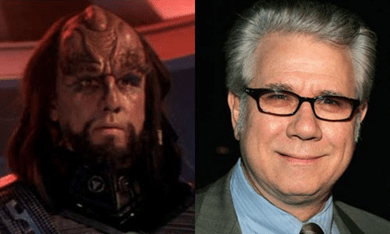
John Schuck played the Klingon ambassador. The first time I saw him was in a sitcom in the 70s, Holmes and Yoyo. He played a cop that was secretly an android. He occasionally malfunctioned, which was funny to a kid in elementary school but didn’t last long. If I recall correctly, it aired about a year after a show with the same premise started, only that show was a drama. Schuck has been a solid actor since 1969.

As I said before, I want to see V’Ger fight the whale probe. Both movies have the same basic premise. Human activity results in an alien probe coming to destroy the planet. Let’s see which of them

I always found it silly that cameras would make it appear as if a disabled ship was titling. Orientation is always relative to a reference point, and there’s no such point in deep space. But yeah, there are humans watching this movie, so I guess they must do that.

I think the pandemic has finally given me an understanding as to how Amanda Grayson must have felt living on Vulcan. I can’t hug, or even shake hands with, anyone. Neither could she.

I never liked time travel in movies. It always created stupid paradoxes. Avengers: Endgame did it right but raised the problem of multiple timelines that I also don’t like. It’s a burden to be me.

It took three seasons and four movies before we knew that Sulu was born in San Francisco. I’ve noted before that this is a good thing.

“It’s a miracle that these people got out of the 20th century.” Well, we did. Whether we can get out of the next century remains to be seen. I’m sure that’s a sentiment shared by every generation in every century.

“I’ll give you . . . $100.”
“Is that a lot?”

To a high school kid in 1986, yes, but not now; not even to a kindergartner.

Just what is the future? / The things we’ve done and said? / Let’s just push the button / We’d be better off dead / ‘Cause I hate you / And I berate you / And I can’t wait to get to you / The sins of all the fathers / Being dumped on us, the sons / The only choice we’re given is / “How many megatons?” / And I eschew you / And I say screw you! / And I hope you’re blue too / We’re all bloody worthless. . .

I miss my boombox. Not really, though.

“Colorful metaphors.”

If he could mind meld with the Horta, he could mind meld with a humpback whale.

Spock’s the only one that can get the colorful metaphors right. Kirk’s so bad at it that he thinks Spock isn’t.

“I have a photographic memory. I see words.” This is probably the dumbest line in all of Star Trek, and that’s a high bar to clear.

I think there’s a script continuity error here. Spock agrees to Italian food but doesn’t go to dinner.

According to the novelization, Dr. Nichols, the one that’s given the formula for transparent aluminum by Scotty, is the one that supposedly discovered it in the Star Trek timeline. Temporal paradox resolved! “How do we know he didn’t invent the thing?” Paradox restored.

Poor Madeline. She did nothing wrong.

Now I want pizza.

Kirk seems confused. I guess they don’t have beer in the 23rd century. They have various forms of liquor, so maybe he simply doesn’t like it.

I don’t think two whales could repopulate the species.

My uncle, also an avid Star Trek fan, had recently served on the USS Saratoga when this movie came out. The Enterprise in the movie was the USS Forrestal, which is of the same type as the Saratoga. This gave my uncle a nerdgasm.

Kirk got the entire pizza that Gillian paid for. Smooth move, Captain.

“Of course, he’s a Ruskie, but he’s a retard or something.” Even a movie like this doesn’t age well. There’s always something that will send people into a frenzy.

There was a painted sign on the wall of the ship during Chekov’s escape. It said, “Escape route,” and had an arrow pointing the way. I shit you not.

Wouldn’t the cloak bleed over into anything nearby? It wouldn’t be a perfect cloak outlining the ship.

Finally, those lessons in miming paid off!

Wouldn’t it be funny if they just flew right into the sun? Everyone dies, Earth is destroyed, and we won’t have to deal with Star Trek: Insurrection. Everyone wins!

I know it’s not real, but I don’t see how the Klingon Bird of Prey could possibly be expected to float.

The scene where Kirk attempts to save the whales is the first scene where I started holding my breath while watching a movie. I wanted to see if I could do what they did. It’s an unfair test due to the scene jumps, but I try anyway. It’s safe to say that most of the time these scenes are bullshit, especially considering how much physical exertion is involved. The first time I was able to do it was recent: The second Kingsmen movie. For the first time, I came close on this one watching it this time. I still drowned though.

Again with the orientation thing. Why would the probe go vertical when speaking to the whales? There’s no vertical up there, and its communication can clearly reach anyplace in line-of-sight regardless of orientation.

Ironically, filming these scenes was probably tough on the whales.

So, now we’re left with a nagging question: What happens when George and Gracie die? That probe will do another U-Turn, and Picard’s going to have a bad day. They better figure out how to meaningfully duplicate the whale’s language.

Reading of the charges: Nichelle Nichols doesn’t seem to give a shit.

This alien looks like a toy.

Mark Lenard was as good at playing a Vulcan as Leonard Nimoy was.

I mentioned something similar in the Star Trek III post. How the hell did they not know exactly what ship they were getting? How would you even hide the creation of the 1701-A? I know; I know. Drama.

The score is nonstandard for Star Trek, but I liked it. Kessel Junkie? Not so much.

Tune in tomorrow when Kessel Junkie joins me for my first audio blog, which discusses Star Trek V: The Final Frontier. That’s where the real fun begins.

Follow me on Twtter @gsllc
Follow Star Trek @StarTrek
Follow CBS All Access @CBSAllAccess

Travelling Through the Star Trek Universe, Part III. Viewing Notes on Star Trek III: The Search for Spock. @StarTrek @Hulu #StarTrek #movie

If you enjoy this post, please retweet it.

This is an important movie to me. As always, I’m going to be vague about why. There was a time when, for better or worse (worse, really, but necessary), I asserted my “independence.” This movie was part of that in a strange way. I will say that this is the first movie I saw in the theaters because I got on a bus, rode up to the (now closed) Aspen Hill movie theater, and bought a ticket with my own money. Twice. So, this movie is really important to me for reasons that don’t apply to any of you. Nevertheless, based on everything I’ve heard, I couldn’t believe how good its numbers are. Though I’m not sure how “scientific” Rotten Tomatoes is, I’m certain our personal experiences are even less so, so I shouldn’t be too surprised. Here are my viewing notes.

This movie starts with such high hopes, having us relive the most heartbreaking loss in Star Trek history.

That cadet that wanted a ceremony was a dingbat.

Christopher Lloyd was awesome as Kruge, and as with the Reliant, it was cool to see a new type of Klingon ship.

Are the Klingons still using 8-track tapes?

Why would anyone deal with the Klingons knowing they kill anyone working with them? Oh, wait I know why. Because the script says so.

The existence of Spacedock was also a no-brainer, but it was still cool to see it. The Excelsior was even better. As I said in yesterday’s Wrath of Khan post (and just above), it was neat to see other ship designs that we know must exist. The Excelsior represented the future as far as we knew; same-but-different. Who cares if Scotty liked it? The FASA Star Trek RPG really scratched that itch, but there’s nothing like seeing it on the big screen.

Scotty learning of his new assignment wasn’t the last time Starfleet told personnel their new assignments in casual conversation.

Hey, I know that Klingon!

Was Maltz once a prosecutor for the Klingon Empire?

And here’s another one: The USS Grissom. Another same-but-different design.

David’s hatred for Kirk was intense in the novelization, but in the movie, his brief interaction was polite. None of his thoughts on the matter were explored because there wasn’t any time to do so. The same can be said for David’s romantic relationship with Saavik, which wasn’t even hinted at in this movie. I remember a scene where they were criticized for taking the risky move of holding hands while being transported. Even more, Saavik’s Romulan side came out in the book. She was ferocious when provoked.

Hey, I know that Klingon!

As I mentioned yesterday, the novelization of Star Trek II: The Wrath of Khan didn’t have the “remember” scene in it.

Admiral Morrow was a dope. How can he not understand “Vulcan mysticism”? He must have witnessed neck pinches and, more importantly, mind melds. Plus, his mustache sucks, though it could be worse.

The highlight of Allan Miller’s career.

“How many fingers do I have up.”
“It’s his revenge for all those arguments he lost.”
“Up your shaft.”

🙂

I remember an interview with Nichelle Nichols. She was initially disappointed in the size of her role. She thought it was too small but eventually was happy with it considering how important it was. The novelization went into her role much more deeply.

I hoped we’d see James B. Sikking again. The reason we didn’t is because Sulu took over as captain of the Excelsior. In fact, in the novel, he was already assigned to do so. As they were stealing the Enterprise, Sulu reflected on how he was throwing away that opportunity. This also explains why This brings up an anecdote. George Takei lobbied heavily for Sulu to become captain of his own ship. I remember Howard Stern making fun of him for it, saying, “You realize that Sulu becoming captain of another ship means you’re out of a job, right?” Takei stood firm. I guess it worked out. By the time he got the Excelsior, it was this crew’s final movie.

So, they find a young Spock. That raises an issue for me. When Spock’s consciousness goes back into his body, what happens to the personality of the new Spock. However briefly he existed, he’s a separate person. Is the new Spock wiped out, or are the two personalities merged? What are the ethical ramifications either way?

That Klingon dog was ridiculous.

“Range, 5,000 killicams.” Why? Why are they speaking entirely in English but use a Klingon unit of measurement? They’re speaking Klingon, of course, and we’re hearing what we would assuming there was a universal translator present. Wouldn’t the universal translator also translate the range into units we’d understand?

The conversation between Kirk and his son, David, was the most cordial David was regarding Kirk in the novel. Then David dies, and Saavik says, “Admiral, David is dead.” After that, she goes nuts and attacks the Klingons. This is what I was referring to when I said she was ferocious.

I was hoping Kirk would say, “No tricks once on board.” That would have been a good call out to the Original Series episode, Day of the Dove. That reminds me: Kang is currently running around somewhere in the Klingon Empire.

Beaming down to a dying planet was a risky plan.

Klingons are like the Drow in D&D. Their society and psyche could never work in the real world, but we overlook that because they’re cool. That is, if Klingon captains are so eager to die, you won’t have many qualified captains running around. Deep Space Nine pulled back on that a little bit, but perhaps not enough. They are cool though.

You know, Kirk left the remaining Klingons on the planet knowing they’d die.

The refusion scene had me thinking about Star Trek: The Motion Picture. Boy did that drag even though it really wasn’t that long. They wanted to give you the feeling that it took hours, but the verisimilitude was broken because no one left to pee. The same could be said about Spock wandering around in a confused state (except the peeing part). Overall, though, a good ending.

Follow me on Twtter @gsllc
Follow Star Trek @StarTrek
Follow Hulu @Hulu