The Dinosaur Cat @FatCatArtRu #Caturday #5e #DnD #TTRPG #RPG

If you enjoy this post, please retweet it.

Combining my love of cats with my childhood obsession with dinosaurs? Yes, please.

The original (as far as I can tell) image can be found here: https://imgur.com/gallery/IL4e9mp. The accompanying text notes that it can be used as a beastmaster ranger’s animal companion. The user apparently creates a lot of homebrew content for 5th Edition D&D.

Follow me on Twitter @gsllc

Dungeons & Dragons is a trademark of Wizards of the Coast, LLC, who neither contributed to nor endorsed the contents of this post. (Okay, jackasses?)



My Permanent Maps @schley #ADnD #DnD #RPG #1e #4e #5e

If you enjoy this post, please retweet it.

My favorite 1st Edition D&D (“1e”) adventure is C2: The Ghost Tower of Inverness. Also up there in the ranks is C1: The Hidden Shrine of Tomoachan. I’ve converted both mods** to 4th Edition D&D (“4e”) and 5th Edition D&D (“5e”). I’m always eager to run either one, and because I’ve done so multiple times, I made (and saved) maps for them.

** The last time I used the word, “mod,” for what others call “adventure” or “module,” I received an odd amount of pushback. One person even accused me of lying that it’s what I called them growing up, as if there could possibly be a motivation for something like that. I grew up in Montgomery County, MD, and every single person I gamed with called it mod. Some still do. We also occasionally used the terms adventure and module, but the point is that “mod” was the standard term. Your regional dialect, or even your specific gaming group, may have a different experience. I don’t care. I shouldn’t have had to write this aside, but if I didn’t, I might receive the same pushback over something that shouldn’t matter at all.

Ghost Tower

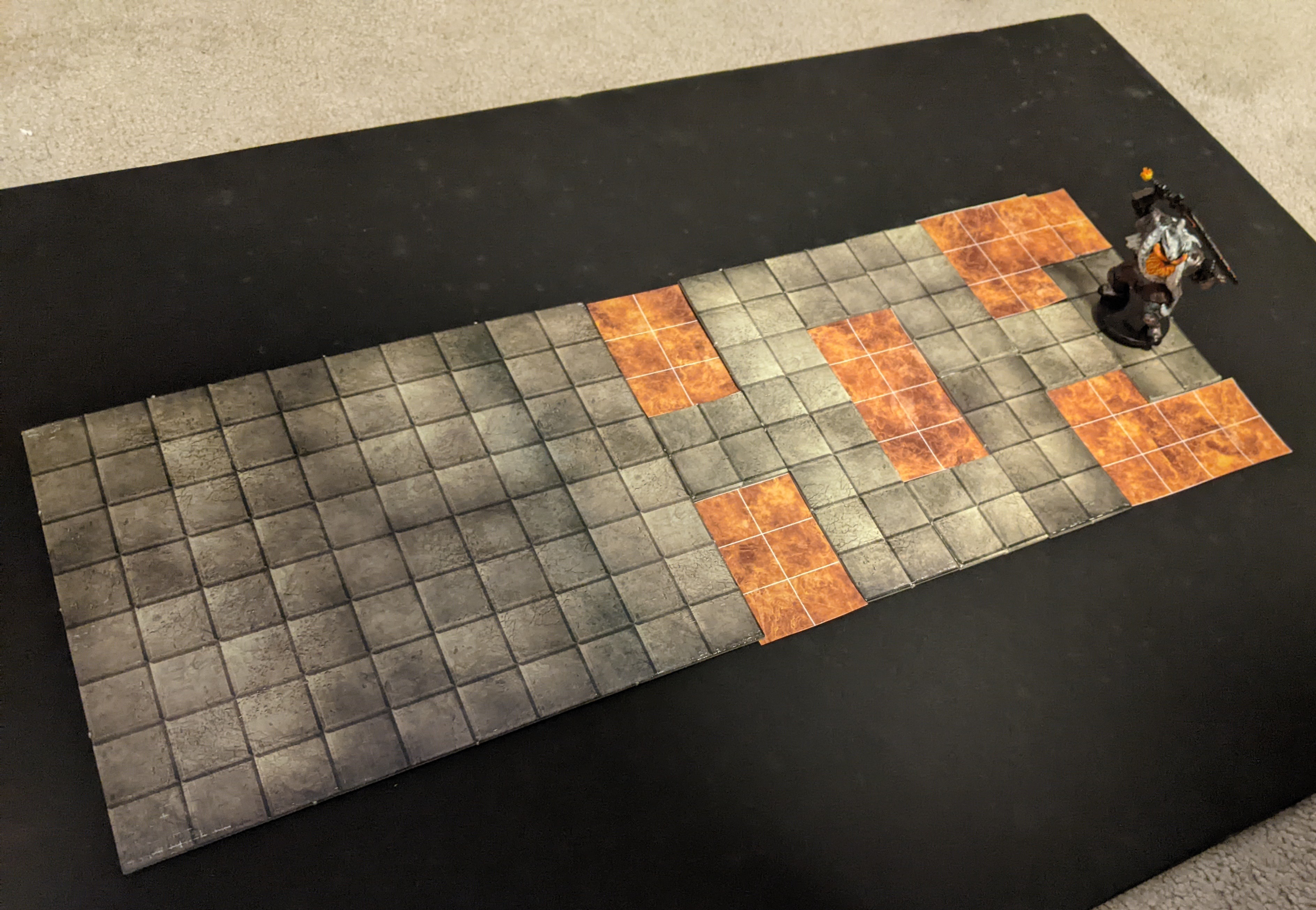
Dungeon Tiles were released during the 4e era, and I had tons of them. So much, in fact, that I had enough to spare. So, when I created the Dungeon Delves for synDCon 2011, I decided to take some of those Dungeon Tiles and permanently affix them to foam core. I’ve since used these for 5e as well. In other words, I’ve made good use of them. While unpacking recently, I discovered them. SPOILER ALERT! These cover only the Ghost Tower itself and a few iconic encounters along the four paths that lead you to it. Here are a couple of images of them.

The Earth Level

The Fire Level with a Friend

For the other encounters, I can always use these. I bought a set.

Hidden Shrine

With Hidden Shrine, I took a different approach, though not until 5e. I bought the hi-res images of the maps directly from their creator, Mike Schley. (You can see his work at https://mikeschley.com/.) I printed almost every room and hallway in the entire dungeon to cardstock (in color) so that I could use them as Dungeon Tiles. They’re exactly the correct size for minis. I also have several sound files containing phrases in Nahuatl that are either common (e.g., “Hello.”) or specifically used in the mod. They further helped set the mood. Here are some samples.

A Couple of Rooms

The problem with both of these mods is that they’re designed for competition. Each is designed for a set number of pre-generated PCs, 3 for C1 and 5 for C2 (though I created a 6th for C2), and the risk of death was unreasonably high — even by 1e standards — so that there would be one clear winner at the end of the convention. With both adventures, you can probably solve the “unreasonably high” problem (if you think that’s a problem) by having a normal party size.

In the foreseeable future, I plan to play only 1e, but I’ll make use of these maps nonetheless. “Theater of the mind” (i.e., gaming without maps) doesn’t bother me — it can be quite convenient at times — but I’m a huge fan of using maps. They help with the immersion that I often discuss, and they correct mistakes I make as DM in describing the surroundings. That doesn’t mean my 1e games won’t otherwise be theater of the mind. To me, that’s an inseparable part of the 1e experience. At least for now. 🙂

We won’t be breaking out the tape measures.

Follow me on Twitter at @gsllc
Follow Mike Schley @schley

Dungeons & Dragons is a trademark of Wizards of the Coast, LLC, who neither contributed to nor endorsed the contents of this post. (Okay, jackasses?)

Memory Failure #DnD #RPG #4e #5e #TTRPG

If you enjoy this post, please retweet it.

Here’s a short thought inspired by the Metaverse.

Someone on Facebook asked, “As a DM, what rule do you most often forget?” My answer is easy for 5th Edition D&D: I never award inspiration. I’ve done it maybe two or three times, and only then because people asked me to do it. It’s a silly thing. Someone like me should constantly be thinking about rewarding character concept-driven role-play, which I believe is the primary purpose of the mechanic. In 4th Edition D&D, the analog to inspiration was the Action Point (“AP”), and I never forgot to award that because it was rewarded based solely on how many encounters you had. Every other encounter, you received an AP. Most players were on top of that and automatically gave themselves the AP.

6,140 Erasing Memory Stock Photos, Pictures & Royalty-Free Images - iStock

In all editions of all games, my forgetfulness manifests itself primarily through running a PC. If my character sheet gets too complicated, I forget to use abilities, feats, spells, etc. My professional life is all about attention to detail. When I’m playing a game (or writing about one), I want to relax, focusing on acting out a distinctive character concept rather than my character’s mechanics. Ergo, I try to keep my character’s mechanics as simple as possible, venturing into complexity only when it serves the character concept.

That’s it. Just a thought.

What do you forget?

Follow me on Twitter @gsllc

Dungeons & Dragons is a trademark of Wizards of the Coast, LLC, who neither contributed to, nor endorsed, the contents of this post. (Okay, jackasses?)


Edition Wars! @ansonmount @WilliamShatner #DnD #RPG #4e #5e #Pathfinder #Shadowrun #TTRPG #StarTrek

If you enjoy this post, please retweet it.

Going forward, Sundays are lazy for me. I either post something silly or other people’s work. Usually both. Today, it’s explaining myself, then picking a fight.

I’ll start. From left to right:

1st Edition AD&D and 4th Edition D&D
Anson Mount’s Christopher Pike and William Shatner’s James Tiberius Kirk

You give it a shot. In the meantime….

I never said I wasn’t a dick.

Follow me on Twitter at @gsllc
Follow Anson Mount @ansonmount
Follow William Shatner @WilliamShatner

Dungeons & Dragons is a trademark of Wizards of the Coast, LLC, who neither contributed to nor endorsed the contents of this post. (Okay, jackasses?) Shadowrun and Pathfinder are also trademarks, but I have no reason to believe their lawyers are jackasses.

Another Thing 4e D&D Got Right . . . Then Screwed Up #DnD #RPG #4e #5e #1e #ADnD #TTRPG

If you enjoy this post, please retweet it.

Last week, I discussed spell components. The conversations I had across Facebook and MeWe led me to a follow up post, and then down a rabbit hole to today’s topic.

4th Edition D&D (“4e“) didn’t track spell components for powers, and rituals had a set cost that didn’t even list the material components. Material spell components were abstracted, so a ritual caster could remove a specified number of gold pieces from the character sheet and assume the material components were available. Based on my linked posts, you’d think I’d have a problem with this, but I didn’t. In 4e, there were no go-to spells or rituals. Everything was balanced so that players chose their suites of powers based on the type of characters they wanted to play. Tracking material spell components (or casting times as in 1st Edition D&D) was unnecessary; characters were already greatly diverse. That kind of variety made for far more interesting combats, even if most of table were playing the same classes. In 4e, there was no place for the question, “What classes are you guys playing?” It didn’t matter. You could play what you wanted without affecting the game because everyone was different even if they were the same. As someone who played a ton of 4e, I never understood the claim that all classes played the same. Even within classes, they played differently.

Rituals weren’t used very often in my experience, but I think that was the result of adventure writing rather than an inadequacy of the ritual system. In fact, I wrote a Dungeon Crawl system for 4e, and on the now-defunct loremaster.org added a post on how to convert rituals to spells (or “near-spells”). Here’s a PDF that was the basis of that post. It’s not the final draft, so it may have some rough edges.

Nothing Is Certain Except Death and Taxes

As good as that was, 4e screwed up in a different but analogous way. When it came to feats, almost every class had go-to feats. In fact, there were feats that were go-to for most classes. This was known as a “feat tax.” Durable, Implement Expertise, Improved Initiative, Toughness, Weapon Expertise, and Weapon Focus immediately come to mind. This wasn’t nearly as large a sin of game design — other players generally don’t notice which feats a player has chosen — but for what it’s worth, 5e does a much better job with feats. I have trouble selecting 5e feats because a large number of them are valuable no matter what class I’m playing, so I know I’m going to make different choices than other players.

Modern games seem to have defeated the death part.

As I said in the prior posts, game designers need to pay better attention to whether their systems lead a majority of players to make the same choices. 4e proved that you can design a game of diverse characters in such a way that it doesn’t devolve into an exercise in accounting, and simultaneously broke that rule.

4e is still better than 5e. 🙂

Follow me on Twitter at @gsllc

Dungeons & Dragons is a trademark of Wizards of the Coast, LLC, who neither contributed to nor endorsed the contents of this post. (Okay, jackasses?)

More Gems Dug up While Unpacking @slyflourish @alphastream @aquelajames @loganbonner @shawnmerwin @scottfgray @erikscottdebie @ChrisSSims @TheTownshend @AntarianRanger @mcleankendree @jacobsontyler @erbelisle @Alex_Aparin #DnD #RPG #4e #5e #TTRPG #WotC

If you enjoy this post, please retweet it.

Going forward, Sundays are lazy for me. I either post something silly or other people’s work. Usually both. Today, it’s a bit less lazy of a post, but it references other people’s work, so it qualifies.

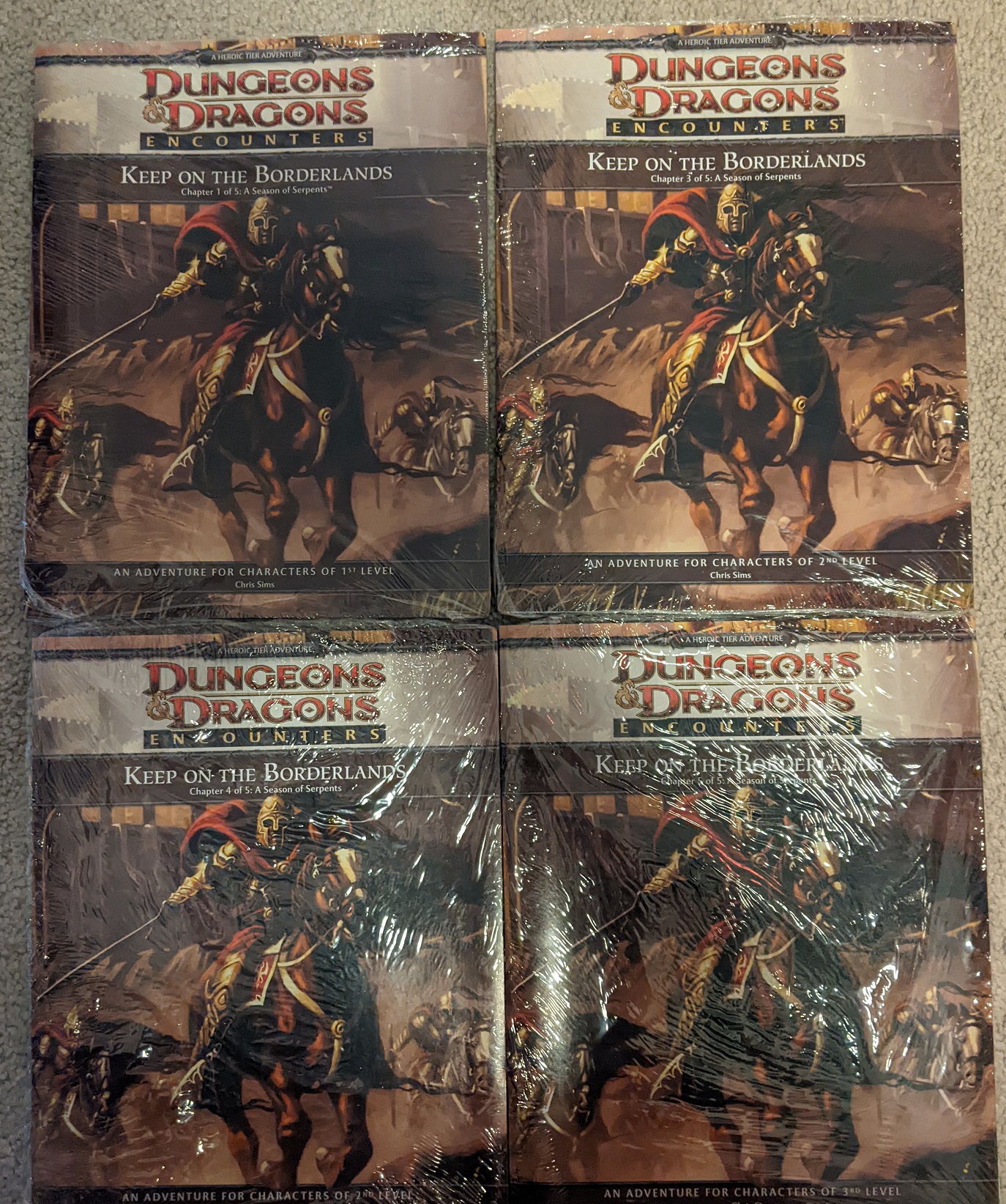
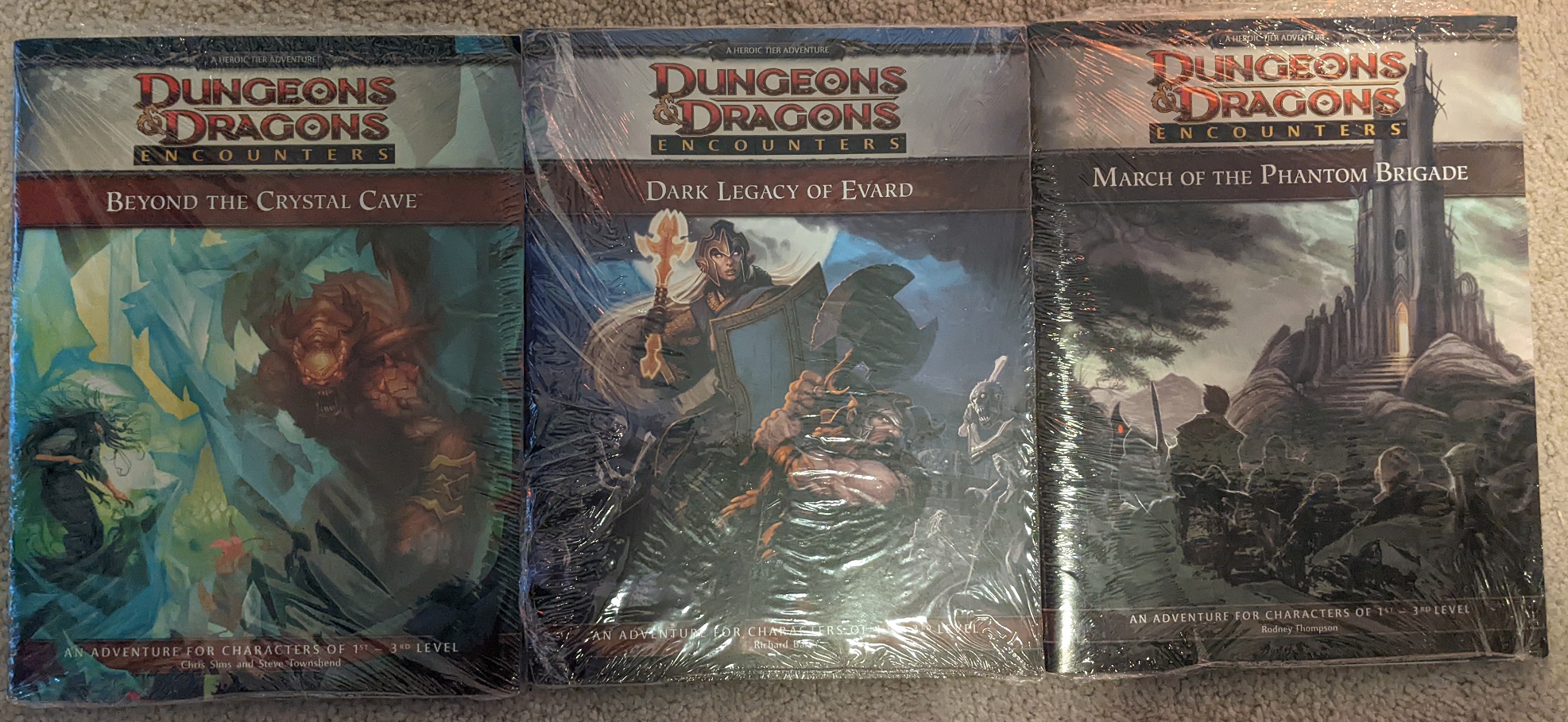
I put together another bookshelf, and in doing so started unpacking some more books. I found some gems in there. I used to run a gaming club in the Washington, DC area, and as a result, I was given a lot of WotC material for our game days, much of which was never taken out of its shrink wrap. I also have tons of duplicates. This is what I’ve discovered.

First up is material from some great writers, only one of which hates me. (Don’t hold it against him; I’m a tough pill to swallow.) Art credit to Ralph Horsley and Eric Belisle.

The latter has some supplemental material.

Major NPC cards with backstory and roleplaying information on the back.

Trigger warning: Is anyone else’s OCD going off right now? Art credit to Craig Spearing.

Where’s Chapter 2?!?!

These were something of a mistake for WotC, as I discussed with a WotC employee at GenCon who shall remain nameless. They were far too brutal for D&D Encounters, which was a program designed to introduce new players to the game. Some of us like brutal adventures and campaigns. In this century, we are clearly the minority. Art credit to William O’Connor.

Somewhere in Portland, Oregon, someone is squealing (you know who you are).

Oddly enough, I never played or ran either one of these, yet the shrink wrap has been removed from them. I’m guessing the DMs gave them back to me, but that doesn’t make a lot of sense. I allowed them to keep them because I had so many. Art credit to Eric Belisle and Alexey Aparin.

One of these authors has no idea what he’s doing (you know who you are).

For these, art credit goes to Alexey Aparin, Eric Belisle, and William O’Connor.

I don’t recall playing or running any of these either. I had a lot of helpers.

Okay, Logan. We get it. You like Drow. Art credit to Tyler Jacobson and McLean Kendree.

Or maybe Logan doesn’t. It’s just a job.

As I’ve said, I have unfinished business with 4th Edition D&D (and 3rd Edition and more 3rd Edition).

Follow me on Twitter at @gsllc
Follow Mike @slyflourish
Follow Teos @alphastream
Follow James @aquelajames
Follow Logan @loganbonner
Follow Shawn @shawnmerwin
Follow Scott @scottfgray
Follow Erik @erikscottdebie
Follow Chris @ChrisSSims
Follow Steve @TheTownshend
Follow Rodney @AntarianRanger
Follow McLean @mcleankendree
Follow Tyler @jacobsontyler
Follow Eric @erbelisle
Follow Alexey @Alex_Aparin
Follow Craig @craig_spearing

Dungeons & Dragons is a trademark of Wizards of the Coast, LLC, who neither contributed to nor endorsed the contents of this post. (Okay, jackasses?)

A Follow up on Spell Components #DnD #RPG #4e #1e #5e #ADnD #TTRPG

If you enjoy this post, please retweet it.

Yesterday, I discussed spell components. The conversations I had across Facebook and MeWe encouraged me to provide a quick epilogue to the spell components post.

The point I was making applies to games yet to be designed, not to current editions, and the argument is a rather trivial one: The more valuable a thing is, the higher it’s cost should be. We can all get behind that notion, right?

A problem I have with 5th Edition D&D (“5e“), and I think most editions, is that there are a list of go-to spells (or class abilities) that everyone feels they have to take, limiting the diversity of builds at the table. I have no intention of trying to “fix” existing editions to balance material spell component cost and availability with the power of spells. It turns out that for 5e (the subject of that post), that would be a lot of work. Here’s a sample of those spells (and their spell components) that I’ve mathematically proven to be preferred by WotC themselves in creating NPCs, and I suspect players favor as well.

  • Feather Fall: a piece of down or small feather.
  • Fireball: bit of guano and sulfur.
  • Fly: a feather from a bird’s wing.
  • Hold Person: a small straight piece of iron.
  • Invisibility: an eyelash encased in gum arabic.
  • Lightning Bolt: a bit of fur and a rod of amber/crystal/glass.

As you can see, all of these spells have cheap material components that are easily obtained without the DM creating an illogical scarcity. Some popular spells (Counterspell, Dimension Door, and Misty Step) don’t even require material components. So, in 5e, even if you “enforced” components, it wouldn’t change a damn thing. That, to me, is a design flaw, and one I don’t have the desire to fix. However, where there’s a high cost for a spell (e.g., Heroes Feast), I’m going to enforce it.

That said, increasing the cost or scarcity of material components is just one way to increase the cost of spells. In 1st Edition D&D (“1e“), spell cost was assessed using casting times. Combat consisted of 1-minute rounds divided into 6-second segments (i.e., 10 segments per round). Initiative determined the segment in which a character was able to act (with some caveats not relevant here). Because spells had casting times measured in segments, a caster would start casting a spell in one segment, but the casting wouldn’t complete until a later segment. If a caster took a single point of damage during this time, the spell would fail, and the caster would lose the spell slot. Therefore, casters had a choice to make: either cast a weaker spell quickly, assuring it would be of (limited) value, or cast a more powerful spell accepting the risk that it could wind up to be worthless.

In other words, 1e used casting times to increase the cost of spells, and it appears to have done so quite well. Of course, without dividing your rounds into segments, casting times may not be a viable solution.

The moral of this story is that game designers really need to pay better attention to whether their systems lead a majority of players to make the same choices. Sure, some things should be better than others, but like in the real world with food, cars, houses, and everything else, the better things should have a higher cost, regardless of how that cost is assessed. That way, different players will create widely diverse builds, and we’d (or at least I’d) see more dynamic combats.

In 5e, material spell components seem to be the intended way to do that.

Follow me on Twitter at @gsllc

Dungeons & Dragons is a trademark of Wizards of the Coast, LLC, who neither contributed to nor endorsed the contents of this post. (Okay, jackasses?)
A Familiar (Hidden?) Trope in Horde of the Dragon Queen @DoubleDM @slyflourish #5e #DnD #RPG

If you enjoy this post, please retweet it.

A Twitter conversation last week led me down a rabbit hole.

In case DoubleDM’s tweet is deleted, it asks, “So have you had more Dungeons or Dragons in your #DnD Games?” I responded, “Dragons by far.” Another person’s reply brought up the adventure, Horde of the Dragon Queen, for 5th Edition D&D (“5e“). This had me remembering Balasar Kimbatuul, one of my favorite D&D characters, known for invoking honor duels in Sly Flourish’s home game. For those who haven’t played it, the party faces a blue dragonborn, Lennithon, at the end of the first act. One PC has to face him, and there’s no chance the PC will win, even rolling all crits. It’s just impossible. At some point in the next act, the PCs meet Lennithon again, but are far better suited for the challenge. Despite Balasar insisting on an honor duel, he’s able to defeat Lennithon on his own, with his fellow PCs picking off Lennithon’s allies.

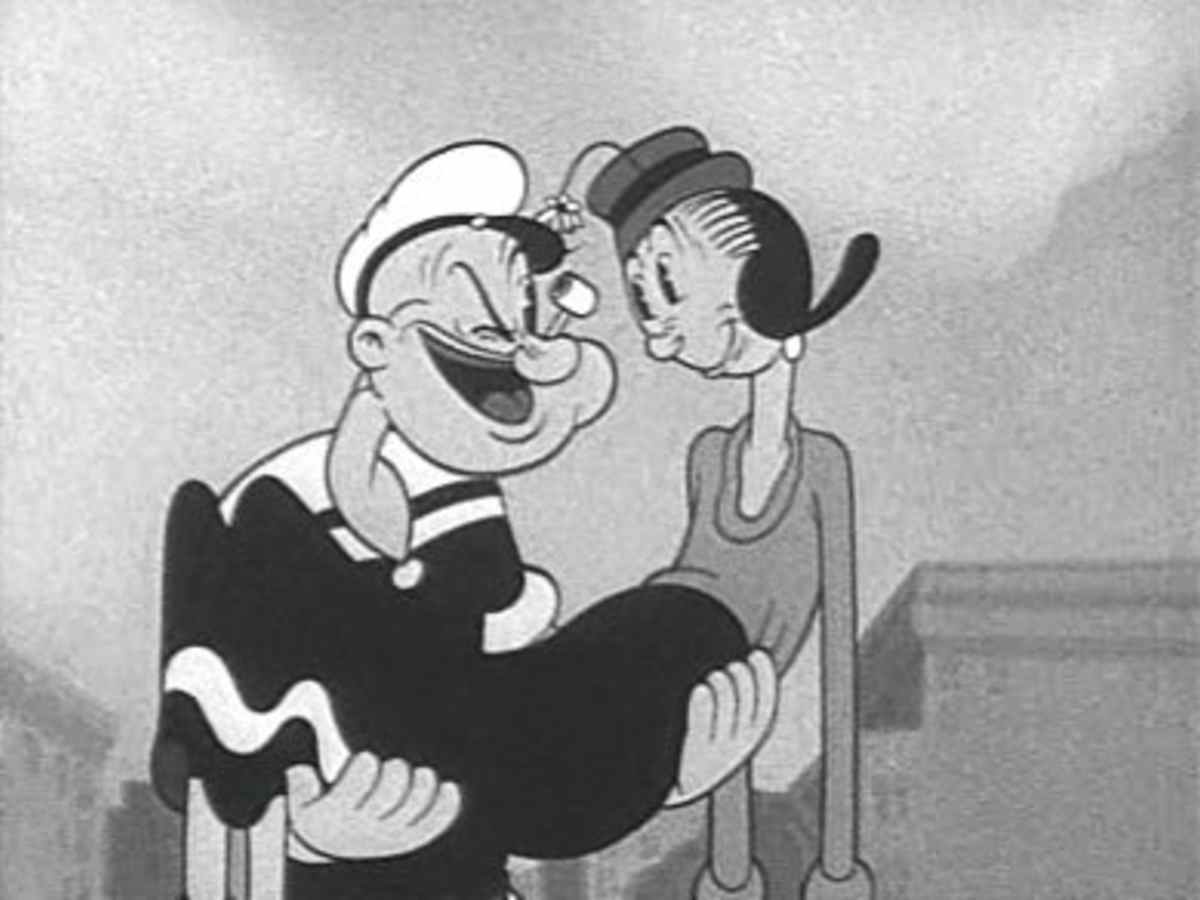
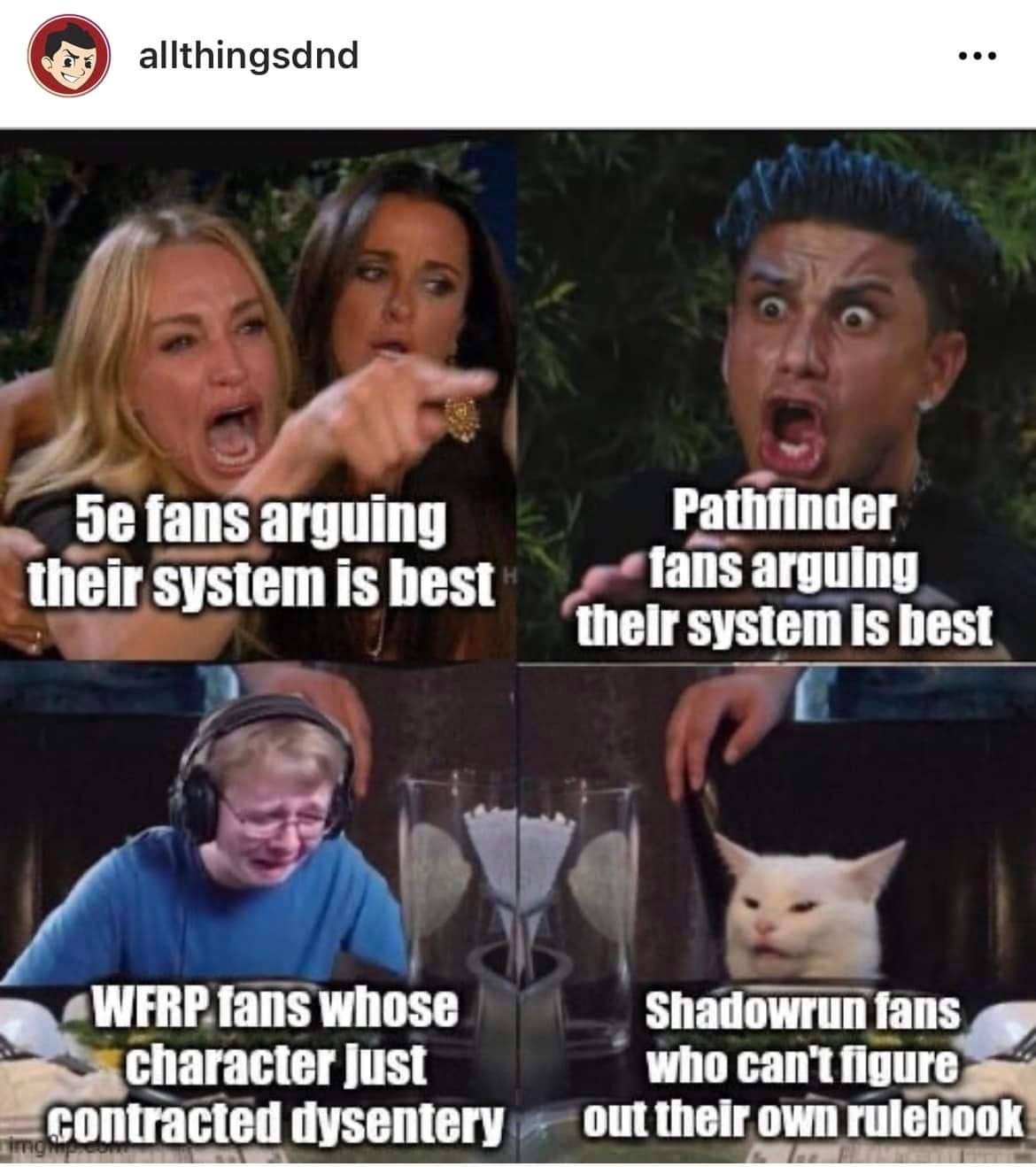
So, why bring this up? Because this segment of Horde of the Dragon Queen is essentially the plot of Popeye the Sailor Man cartoons.

Celebrating Popeye the Sailor Man With Spinach Festival in Crystal City, TX  - LetterPile
Imagine these two with scaly skin. Or not.

In many of the cartoons, and in the live-action motion picture with Robin Williams, Popeye has two fights with Bluto/Brutus. The first one, he loses, and after some story and/or character development, Popeye exacts his revenge. While Popeye relies on spinach for that final push, PCs in Horde of the Dragon Queen rely on hit point and ability increases and the acquisition of better equipment that comes with leveling up.

Of course, this is a trope, so it’s not unique to Popeye. A scene in Only the Strong immediately popped into my head in which the protagonist claims that this time he isn’t playing around. This eventually gave the viewers (all three of us, I presume) the same result in the final, cheesy battle for supreme control over high school kids.

Winning a fight always comes down to what music is playing, right? Right?

There are other, better-known examples. Nevertheless, this is the first time I drew the connection, in part because I don’t recall ever seeing that before in a TTRPG story, and in other part because of the distance between those two scenes with Lennithon. With respect to the former, I’ve had characters meet a BBEG before their final fight, and sometimes on not-so-friendly terms, but I’ve never had a direct fight with one. I find it interesting that this isn’t a more common trope in D&D. It reinforces my belief that players are far too averse to losing a fight, and adventure writers write their adventures accordingly.

It’s not railroading; it’s drama.

Follow me on Twitter @gsllc
Follow DoubleDM @DoubleDM
Follow Sly Flourish @slyflourish

Dungeons & Dragons is a trademark of Wizards of the Coast, LLC, who neither contributed to nor endorsed the contents of this post. (Okay, jackasses?)

The Other D&D: Deities and Demigods @SerpentineOwl @Luddite_Vic #ADnD #DnD #RPG #MythologyMonday #MythologyMonandæg #folklore

If you enjoy this post, please retweet it.

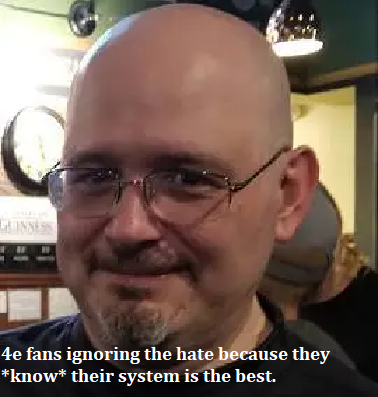
Every now and then, someone posts to a D&D group asking how everyone used Deities & Demigods in your games. The question almost always refers to 1st Edition D&D (“1e”). I suspect the reason for that is 1) many people that used it as kids so (like me) their answers will depend on how long ago they played; and 2) later editions of D&D overtly incorporated combat with divine creatures, or their avatars, for epic level adventurers. I’ve also played 3rd Edition D&D (“3e”), 4th Edition D&D (“4e”), and 5th Edition D&D (“5e”), so I’m going to address all of them.

Yes, there’s a clear pattern in my abbreviations, but this is how lawyers write.

1e

As a kid, I loved reading mythology before I had even heard of D&D. Mythology is what drew me in, so of course I was going to use Deities and Demigods anyway I could. I remember during my earliest days (1977 or 1978), I created a list of 100 (or so) magic items from that sourcebook (e.g., Thor’s hammer, Enlil’s helm), and each PC was permitted to roll a d100 to determine their starting magic weapon. Yes, a 7th-level level character could wield Zeus’s Aegis. As an adult, this sounds stupid, but there’s no wrong way to play D&D, right? We had fun with it.

Hiatus

I stopped playing D&D in 1982 due to the Satanic Panic, so no 2nd Edition or 3rd Edition D&D for me.

3.5e

I returned to the game of D&D in 2005, and 3.5e was the current edition. I never played or ran epic level for 3.5e, so that edition’s Deities and Demigods was nothing more than reading material. I sold off almost all my 3e materials when 4e came out, but when I repurchased some for posterity, I made sure to grab that one (actually, it was gifted to me by James). I love that book, but what stood out the most to me about it was the transition to Horus as the supreme leader of the Egyptian pantheon. Like the real world, leadership switched. But I never used it in game.

Side Note: I really wish I’d never sold Hordes of the Abyss or Tyrants of the Nine Hells. They’re great resources valuable in any edition, but buying them now would be a horrible waste of money.

4e

There was no 4e Deities and Demigods. Divine creatures, or their avatars (DM’s choice as to which), appeared throughout various monster manuals, and they were designed as encounters for epic level creatures. Basically, Wizards of the Coast (“WotC”) surrendered to the notion that a lot of us wanted to face the divine, and it became part of the game. How the monster was interpreted – the actual creature or just an avatar – was a matter for the DM to decide, but they were there. Well, a few of them. I don’t recall WotC publishing gods beyond their own proprietary pantheons. I believe you had to go to third parties for that material, and sometimes it wasn’t right on point (e.g., Soldiers of Fortune had a Thor equivalent, but he wasn’t called “Thor”).

Going Backwards

Now that I’m going backwards, I must decide how to deal with divine creatures. They aren’t baked into the scheme like they are with 4e. In fact, as some have pointed out, it really should be impossible for PCs to compete against the divine on their home plane, which is the only place where they can finally be defeated. Once you leave the Prime Material Plane, many spells don’t work or are severely weakened. The environment itself works against the PCs but is home sweet home for divine creatures. There’s no upper limit to class levels for PCs, so eventually PCs should be able to fight the divine within the rules, but who’s going to level up to level 1,000? No one, and isn’t advancement through adventuring the real fun of the game? I’m not just going to say, “Okay, you’re all 1,000th level. Let’s go fight some gods.” I’m also not going to rewrite the rules in some odd way to make divine encounters more practical. It’s assumed that DMs will tweak the rules a bit, but eventually that reaches a point where we aren’t playing D&D anymore. That doesn’t interest me.

Of course, I don’t have to make my decision anytime soon. In fact, I may never have to make it. Once I sit down at the table, I may lose interest in 1e quickly. We’ll see.

Shameless Plug

This isn’t much of a plug, but here it goes. Luddite Vic and I are designing our own RPG. It’ll never see the commercial light of day because we don’t meet frequently enough to get it done. However, the system so far is, unsurprisingly, exactly what I want from an RPG. One of our design schemes relevant here is to make sure that PCs can emulate characters from mythology, folklore, or literature even at first level. I’ve never seen that in an RPG.

For example, how might one emulate Thor in 5e? One less-than-ideal option would be a hammer-wielding human tempest cleric, but that cleric would barely be distinguishable from any other cleric build until 3rd level, and even then, it’s going to take a while before it’s obvious to other players what you’re trying to do. You could just tell them, but if you need to do that, you’re not really playing Thor yet. What about Tarzan? How long would a half-naked, dagger-wielding barbarian last in a game of 5e?

In our system, everyone would know from the get-go exactly what you were doing with your lightning/thunder-based, hammer-wielding, human tempest, or a half-naked, dagger-wielding barbarian, even though those characters wouldn’t be any more or less powerful than any other 1st-level characters. That’s the real solution, but I know of no other game that does that. One game was mentioned to me where the PCs are the gods, but from what I understand, they don’t start as anything resembling 1st-level for other RPGs. That’s not bad, but it’s not the same thing. I want to start as first level with that character concept and earn divinity.

That’s how I’d prefer to “use Deities and Demigods.” I shouldn’t need to. I should be able to make the PCs and NPCs exactly what I need them to be. But in 1e, they’re just avatars.

Maybe someday Vic and I will finish our game.

Follow me on Twitter @gsllc
Follow James @SerpentineOwl
Follow Luddite Vic @Luddite_Vic

Dungeons & Dragons is a trademark of Wizards of the Coast, LLC, who neither contributed to nor endorsed the contents of this post. (Okay, jackasses?)

Tales of Arcana 5e Race Guide @TalesofArcanaRP #5e #DnD #RPG

If you enjoy this post, please retweet it.

Sundays now are lazy days for me. I either post something silly or other people’s work. Usually both. Today, it’s an advertisement of sorts. I was a legal consultant for the Tales of Arcana 5e Race Guide. I have an advanced copy, and it took me by surprise because I didn’t know much about what was going to be inside. At times, I found myself laughing out loud and some of the 200 playable races this resource provides.

Great stuff, and it appears to have something for everyone. Whether your a goofy bastard like me or someone that takes their game seriously, I suspect there’ll be something in there for you.

For now, it’s a PDF, but there’ll be a hardcover release.

Follow me on Twitter @gsllc
Follow Tales of Arcana RPG @TalesofArcanaRP

Dungeons & Dragons is a trademark of Wizards of the Coast, LLC, who neither contributed to, nor endorsed, the contents of this post. (Okay, jackasses?)