Let's roll some dice, watch some movies, or generally just geek out. New posts at 6:30 pm ET but only if I have something to say. Menu at the top. gsllc@chirp.enworld.org on Mastodon and @gsllc on Twitter.
And now for something completely off topic for this blog.
The Supreme Court of the United States (“SCOTUS”) allowed the so-called ban on TikTok to go through. I refer to it as “so-called” because, as the holding states, it’s not a true ban; it’s a conditional ban. Political rhetoric always clouds the truth, so despite this being a unanimous decision of the Court, I still feel the need to preface this discussion with a brief discussion of the role of appellate courts.
Some Pontificating
The reason most of you are so angry at SCOTUS, or particular justices, is at least in part because you don’t understand (or care about) its role. Appellate courts, including SCOTUS, aren’t there to make policy decisions. They don’t make law. That would be a violation of the Separation of Powers principle, a violation of their individual oaths of office, and anti-democratic. In other words, SCOTUS doesn’t ask what the law should be; they ask what it actually is, for better or worse. What the law is, whether statutory or constitutional, is determined by Congress (and state legislatures). All the appellate courts do (that’s relevant to this conversation) is interpret that law, resolving ambiguities in the language or in how it might apply to a particular set of facts. So, you may absolutely be upset that TikTok is banned if you want, but the blame for that doesn’t lie on SCOTUS, and it would be horribly inappropriate if the justices sitting on that bench changed the law because they didn’t like it either. Stop shooting the messenger. That includes me. Much like SCOTUS just tells you what Congress says, I’m just telling you what SCOTUS said.
Enough of that. Let’s talk about what they said.
The Facts and the Law
In the interests of brevity and clarity, I’m just going to get right to the point, simplifying everything and leaving out a lot of fluff (and perhaps some important nuance).
TikTok, Inc. (“TikTok”) is an American company, but it’s owned by ByteDance, Ltd. (“ByteDance”), which means, like ByteDance, TikTok is subject to Chinese laws. This means that TikTok must “assist and cooperate” with the Chinese government, granting them “the power to access and control private data.” In other words, not a single piece of information you put on TikTok, even data indirectly coming from other connected social media platforms, is truly private. The Chinese government has access to all of it.
Important: This information includes age, phone number, precise location, internet address, device used, phone contacts, social network connections, the content of private messages, videos watched, and behavioral data (e.g., keystroke patterns and rhythms). Remember this list or come back to review it if necessary.
Trump tried to shut down TikTok, but the appellate courts stopped that, seeing that as outside the scope of executive power. Biden took office and tried to negotiate with ByteDance, but that went nowhere. In the meantime, Congress than passed the Protecting Americans from Foreign Adversary Controlled Applications Act (the “Act”). Under the Act, entities may not “distribute, maintain, or update a foreign adversary-controlled application” in the USA. There were some other details, including exceptions, but the point, of course, is that TikTok fit the definition.
I mentioned “conditional ban” above. TikTok could continue to operate under the Act if it underwent a “qualified divestiture.” That means that ByteDance would have to sever its control over TikTok, which would prevent ByteDance, and thus the Chinese government, from accessing your data on TikTok.
Applying the Law to the Facts
This gets complicated for the non-lawyer, so I’m going to leave it up to you to ask questions if you want a more detailed analysis. Here’s the short version. The first issue was whether the First Amendment applied to the Act, and SCOTUS said yes. The second issue was whether the Act’s constitutionality was subject to strict scrutiny or intermediate scrutiny. The Court said intermediate scrutiny, which is an easier test to pass, in part because the Act didn’t impose restrictions based on the content of any speech. In fact, the Act doesn’t care what was being said at all. In legalese, it was “content neutral” as opposed to “content based,” so it would be easier for the Court to find the Act constitutional (though not “easy”).
Applying intermediate scrutiny, the Court asked whether the Act 1) “advances important governmental interests”; that 2) don’t “burden substantially more speech than necessary”; 3) “to further those interests.” In other words, the goal must be important, and there must be a causal connection between the restriction and achieving the goal.
The Entire Point
I’ve been discussing this case with a coworker, and I know what she’s going to want to know. It isn’t going to be all the details on how all the conclusions above were reached. I imagine you want the same thing. Here it is. Congress passed the Act to prevent China from “track[ing] the locations of Federal employees and contractors, build[ing] dossiers of personal information for blackmail, and conduct[ing] corporate espionage.” This isn’t unreasonable. The Free Speech clause could certainly interfere with legislative acts that prevent such employees and contractors from using the TikTok app, so prohibiting the app’s availability is the only way to protect national security.
Or is it? Well, no, there are indeed other ways to do so, but under SCOTUS precedent, Congress is under no obligation to select those other ways. Congress made this choice after extensive hearings and other fact-finding processes and determined that all the evidence suggested that this is the best way, all while doing so in a way that satisfies intermediate scrutiny.
You may also want to know whether other platforms are next. It should be obvious that US companies are clearly outside the scope of this law, so Facebook, the platform formerly known as Twitter, and MeWe are safe. As for other foreign entities, SCOTUS points out that TikTok has “special characteristics” (i.e., foreign control over large amounts of private data) that have always justified a different analysis. This is why SCOTUS chose to “emphasize the inherent narrowness of [the] holding. . . . A law targeting another speaker would by necessity ential a distinct inquiry and separate considerations.” This case won’t immediately affect any other social media platform.
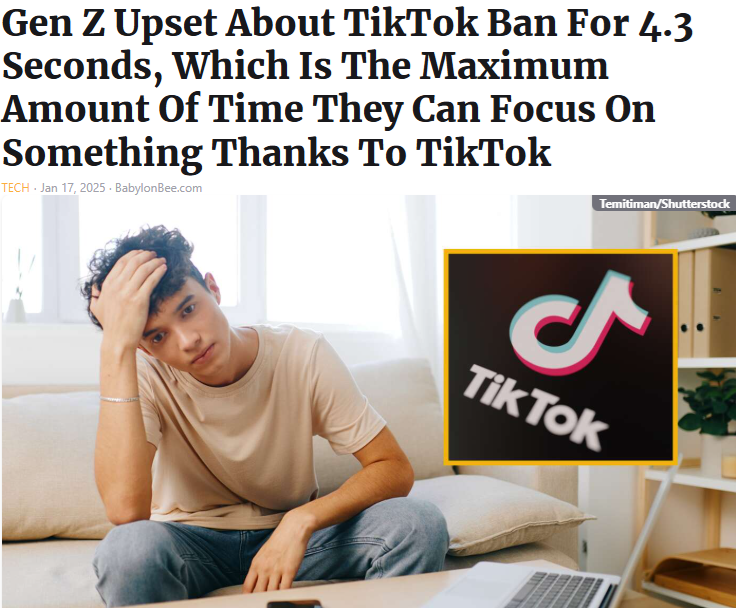
c/o The Babylon Bee
Is This a Good Idea?
As I said, SCOTUS doesn’t ask what the law should be, but we certainly can. I read somewhere (but didn’t verify) that a content creator can make 10 times on TikTok what they can make on Facebook, and YouTube is even less generous than that. This will certainly hurt content creators, but is your profit more important to you than your own privacy? What about the names and phone numbers of your friends that will also be exposed without realizing it? With everyone complaining about Facebook tracking confidential information, you’d think you’d be even more concerned with a foreign adversary doing so. All that considered, and putting aside matters of censorship, is this a good idea?
This is a decision you must make for yourself, and you can let your congressperson know how you feel about it. SCOTUS did not tell Congress it had to keep the Act; it just said it could. There is nothing stopping Congress from repealing or amending the law. That said, please keep in mind that Congress made its decision based on extensive research I’m sure you haven’t done, and arguments without specifics will fall on deaf ears. The nature of a republic is that you elect people you trust to do that research and make those decisions, because you don’t have time for a proper analysis. But they still must answer to you.
Final Note: I’ve left out a lot of details. However, I’ve uploaded a PDF of the decision with highlighted text and commentary from me. If you want to dive into the detail and have all your “Why?” questions answered, download it here. I’m happy to discuss the Court’s reasoning in greater detail. As long as you’re polite. 🙂
A few days ago, I complained about how clunky Mastodon was. I stand by that. However, I managed to figure it out. So, let me tell you some things that, for some ridiculous reason, no one else seems willing to tell you.
First, if you go to Mastodon.com, you’re screwed. It won’t work. So, how do you do it? The best way to get on Mastodon is to know what server you want to join. In my case, I went with https://chirp.enworld.org/web/home. Another popular one for nerds is https://dice.camp/explore. I applied for membership 🙄, which was accepted. Mastadon.social appears to be the baseline, as a few celebrities are on there, but it doesn’t allow signups for some reason (maybe it’s just me). However, I learned that you don’t have to be on a server to follow someone on another server. As long as you see them appear in your server through a re-toot (yeah, their “tweets” were called “toots,” but now they’re called “posts”), you can follow them. I’m not sure how that works, but it does, so there you go.
Now, if I wanted to join a server that’s dedicated to sports, I wouldn’t know where to start. Someone had to give me the name of a server for me to find it. Again, going to Mastodon.com doesn’t help. You just have to know the URL of the server to find it, but for all I know, no such server exists. How could I possible find it?
I’m sure it can be done, but Mastodon is horribly clunky, so it’ll be a slow burn to get there. It’ll also take a while to get followers. To do so, I think I need to pepper my followers on other social media outlets to do so. In other words, the only way to even get on Mastodon in the first place, then to make it work for you, is to use other social media sites. Not a good business plan. Note, however, that there’s a setting in your profile that allows you to be found and promoted based on other members’ searches. It’s off by default, so I imagine you’ll want to turn it on.
So, join whatever server you want, then migrate to my profile and follow me. I’m at https://chirp.enworld.org/web/@gsllc and https://dice.camp/web/@gsllc. I believe these can also be found by searching for gsllc@chirp.enworld.org or gsllc@dice.camp once you’re in Mastodon.
Many of my contacts are flocking to Mastodon, so I decided I’d give it a try. That was a waste of time, and I’ll waste no more time on it.
First, let’s discuss what it is to the extent of my understanding.
Which ain’t much.
Mastodon is a group of servers each acting as its own Twitter. You can create your own server with your own rules, which can cover content or speech moderation. In other words, you can say, “No naughty language,” or “This server is for discussing race cars and nothing else.”
So, I decided to create a login. The first thing it asked me is what kind of server I wanted to join. This is similar to what Twitter does (i.e., asking your interests), but in the case of Mastodon, it’s non-optional. You have to pick one. The choices I was given were about 10 in number. If I attempted to search for others, it would search from among those 10 options. I sighed and picked the one that was closest to what I was interested in, then hit “Next.”
Here, I tried to create my account. No matter what I chose as a username or how I modified my password, I received a “forbidden” message. I went to Google to see if I could find answers (Mastodon help is useless) and found this tweet and an interesting reply.
I've googled for a solution. This thread is the top relevant search result. 😐
Image pasted below in case the tweets are later deleted.
I can’t find anything backing up the reply’s claim, but I did find several other complaints posted over the past week (among other issues), so it’s not just me. No matter how idiotically I’m behaving, if your system isn’t idiot proof, it’s not going to be popular.
But I’m no idiot, which is why I’ve stopped trying.
EDIT: It turns out that I am an idiot. I kept trying and succeeded.
The Facebook police are often on the wrong side of the “law,” but their attitude is no worse than Facebook users who themselves try to police the environment. I wrote about this before. TL;DR, me announcing that I’m leaving a Facebook group is no worse than you telling me where you’re going on vacation next month. At least in my case, I may be helping other people, whether administrators of the group or new members who are trying to figure out whether this group is for them. Your post is just a self-aggrandizing brag.
But that’s okay. Announcing to the world where you’re going on vacation next month is what social media has always been for, so type away. If I don’t care, I’ll either ignore your post or unfriend/block you. (I’m an adult, so of course I’ll probably just ignore your post.)
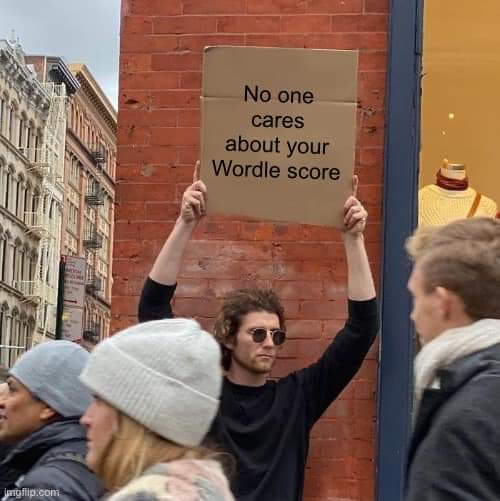
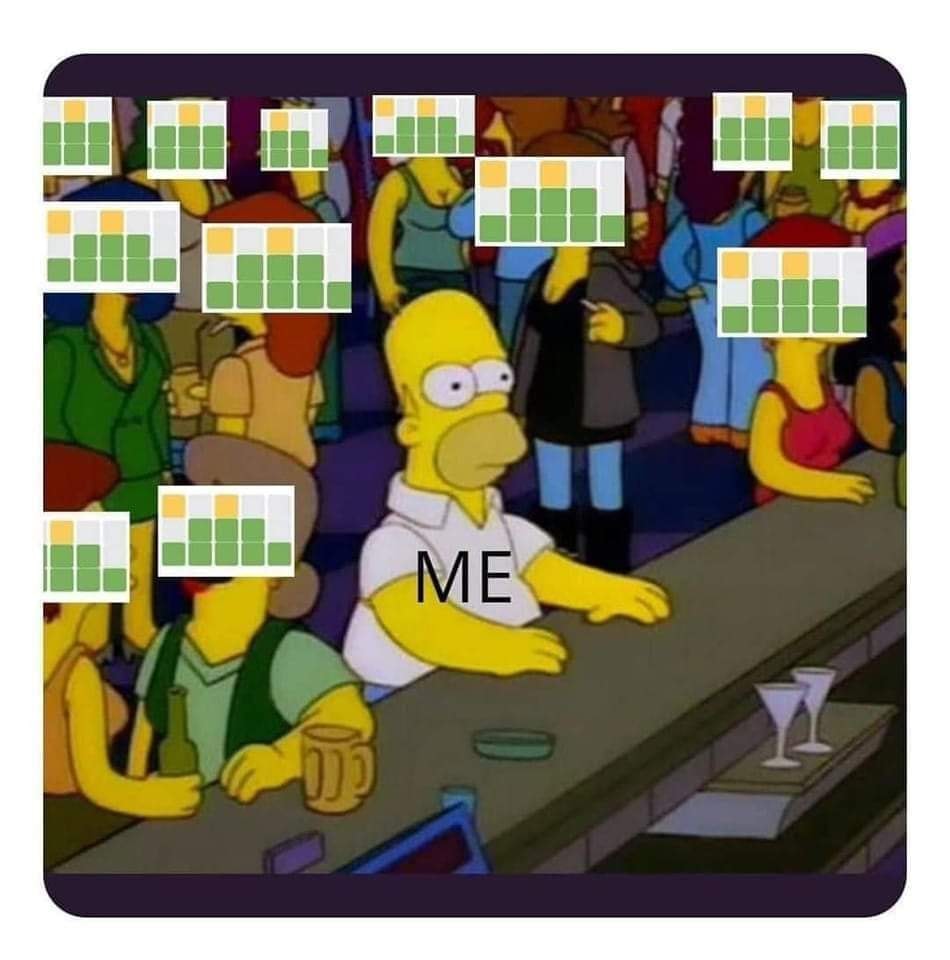
So, why am I bringing this up? Because of Wordle. The new cool thing to do is to shit on anyone that posts their Wordle results to their social media stream. I get it. You don’t give a fuck about Wordle.
Something’s not right here.
Do you know what I don’t give a fuck about? I don’t give a fuck that you don’t give a fuck about Wordle.
Actually, I wouldn’t be writing this post if I didn’t care about what you care about.
The fact that I’m not quite dead inside allows me to take joy in silly things. It’s a shame you’ve lost that, but that’s fine. I don’t fault you for it. I fault you for expecting everyone else to follow you to your grave. If you don’t like Wordle, too bad. We’re all going to keep posting our scores, and there’s nothing wrong with that, BECAUSE THAT’S WHAT SOCIAL MEDIA HAS ALWAYS BEEN FOR!!!
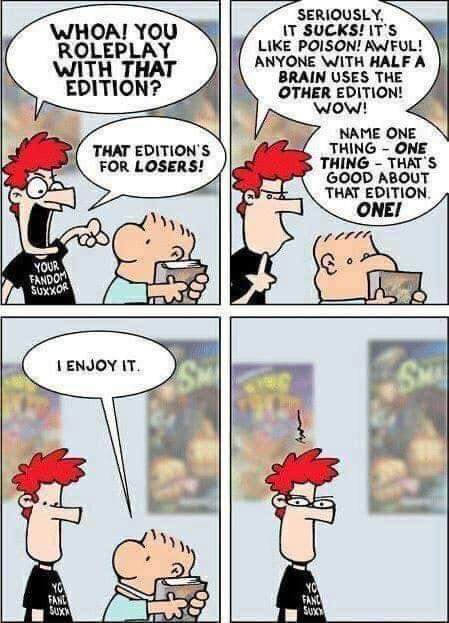
Your mentality is that of an edition warrior. Embarrassing, isn’t it?
Something Else?
I think there’s something else going on here.
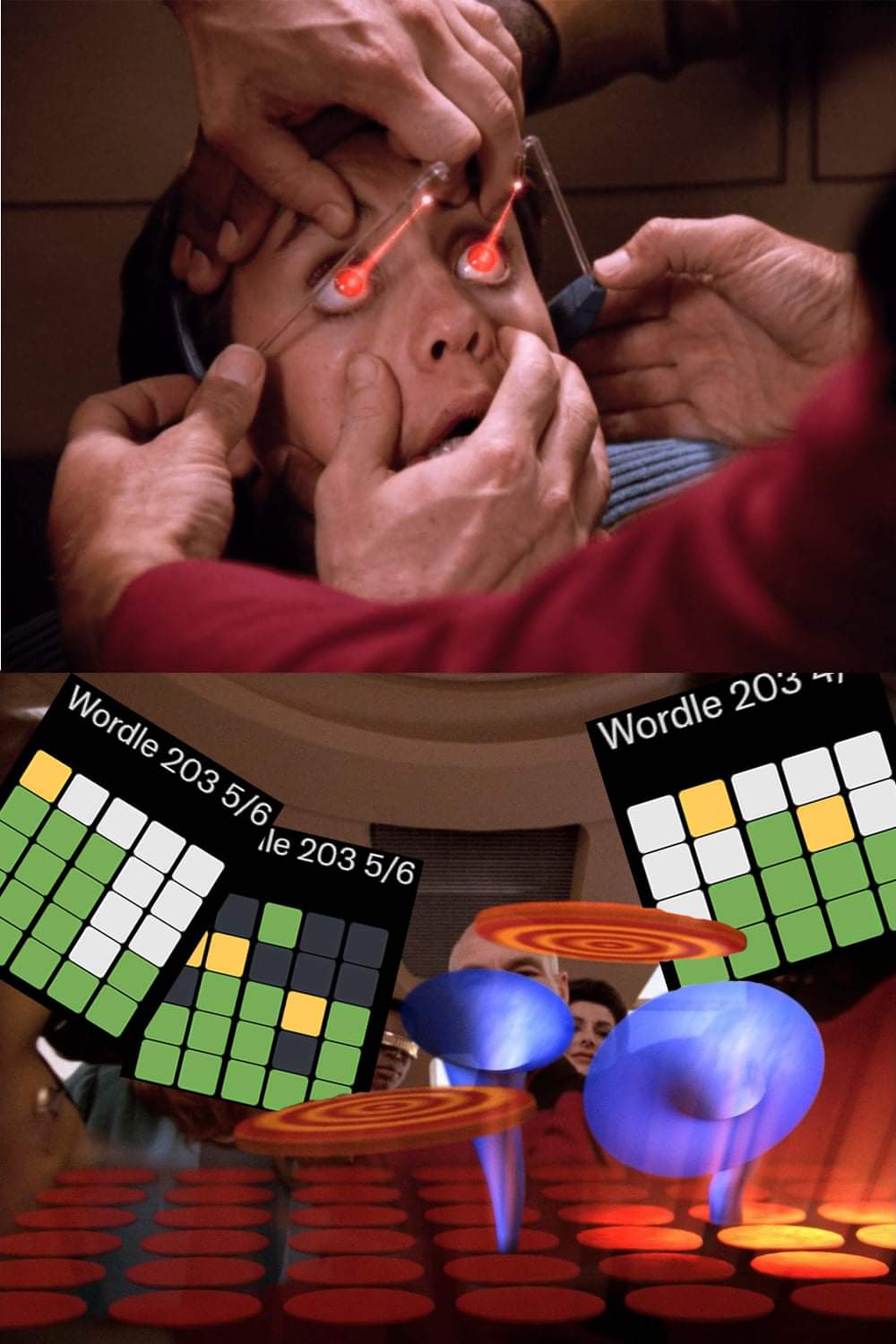
I find it fitting that the vigilantes are portrayed by the least favorite regular Star Trek character in franchise history.
This guy gets it.
There were go. Portraying the “victim” as Homer Simpson is self-deprecating, self-aware, and fun in and of itself. Many of you aren’t confident enough in yourselves to play, but unlike this guy, you can’t handle being reminded of it. Telling the rest of the world that they can’t have fun simply because you have issues seems to be in chic right now, but when you do it, you out yourselves for what you are.
While it’d be easy to ignore this as just bitching about a game, it’s a symptom of a larger societal issue in play, which is more easily addressed by dealing with trivial matters like a game. You can’t engage in a logical fallacy and say, “Oh, you want to post about Wordle? So I guess you want to murder babies, huh?” There’s no connection to those two things, so you have to address the point head on without logically fallacious distractions. Hence, this post.
You admit you’d probably be like this window.
Some of you that aren’t so insecure are still behaving in the same way. Much like the confusion some have over the definition of free speech, you see to misunderstand the purpose of social media. You think it should be a free landscape to do as you choose, and for others also to do as you choose. As soon as someone says something you disagree with, has fun in a way you don’t think is fun, etc., suddenly they’re abusers, bullies, criminals, social media vandals or whatever applies. Sorry, not sorry, but what’s good for the goose is good for the gander. If you insist on announcing whether you think storms are scary or fun, then we’ll post our stupid shit too. Again, you can just ignore us or you can throw a temper tantrum and block 75% of your friends list. We won’t miss you.
Well . . . .
Actually, we will miss you, because Wordle (or whatever the trend of the day is) is a small part of everyone’s total online presence, and we wouldn’t all be connections with one another if there weren’t more to like than to hate in each other’s streams. Most people have at least something to offer me, so I wouldn’t want that to disappear. This is why I suggest you eschew the temper tantrum and just ignore the things that don’t interest you (blocking keywords where possible, such as on Twitter). Even better, join in the fun. If you continue to complain about it, well, that’s what social media has always been for too. I couldn’t stop you if I wanted to. But be honest with yourself: If you’re not being insecure, you’re just being a selfish asshole. It has to be one of those two things, because there’s no other reason to complain about other people having fun and announcing it from their own account. Keep it up, and we’ll start posting our Lewdle and Sweardle scores as well.
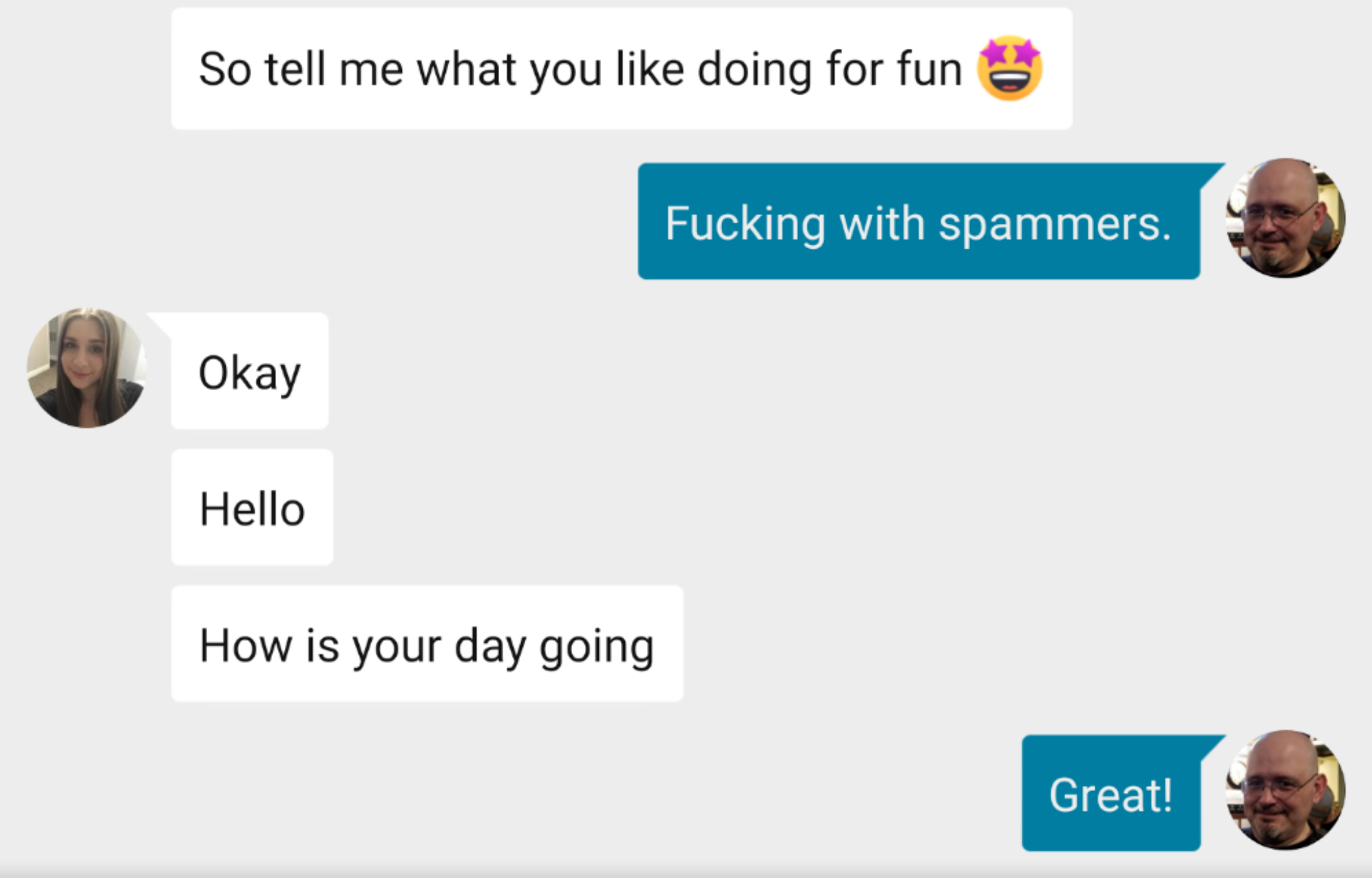
As a follow up to my posts on how MeWeexposes out our hypocrisy, my first and secondFacebook suspensions, and most recently my announcement that I’m not giving up on it, I demonstrate that MeWe isn’t immune to at least on of the more annoying aspects of social media. Meet my new friend, Doriane.
Four days later, it continued.
I almost called ” Doriane ” out right then and there, but I wanted to have some fun. I’m going to keep playing with “Doriane” as long as I can. If necessary, I’ll be proactive and reengage myself with one of my own selfies. In the mean time, I’ll have fun with one of her friends.
I’ve written a few times about MeWe. I pointed out that our instinctive dislike of MeWe‘s exposed our hypocrisy with respect to privacy concerns. I talked about how my first and second Facebook suspensions were driving me towards MeWe despite my instinctive dislike. I then took a thinly veiled stab at Facebook. So here I am trying to find a replacement for Facebook, but it’s been tough. Last weekend, I posted the following to Facebook:
I’m really trying with #MeWe, but it’s just not going anywhere.
After navigating my way through some commentary that were mere diversions, I reached a conclusion as to why I’m having so much trouble with MeWe. Sure, the privacy protections make MeWe unwieldy, but that’s because it isn’t meant to be used the way we use Facebook. With Facebook, it’s all about “friendships.” I hate that they use that term. We’re not necessarily friends. “Connections” would be more accurate, but less marketable. Obviously, the latter is Facebook‘s concern, but I digress. To use Facebook as intended, you should have as many connections as possible. MeWe‘s technology isn’t conducive to that, but I get the impression it isn’t meant to be.
I think the idea behind MeWe isn’t about making numerous direct connections. Instead, the idea is for you to join groups that cater to your interests, and interact with people within those groups. That is, you’re not supposed to just post a random thought on your timeline and expect to receive reactive comments from your connections list, nor are you supposed to see the random thoughts of your connections hitting your timeline and giving you an impulse to rant. Instead, you’re expected to do these things within the groups you’ve joined, thus reducing the noise on the site, and avoiding the need to connect directly with other accounts in a way that could compromise your privacy.
And MeWe is great with groups. I’m a member of many music-oriented groups, and despite song lyrics often addressing sociopolitical issues, I’ve never once seen a sociopolitical debate in those groups. We can discuss the lyrics of, for example, Gimme Shelter by the Rolling Stones, which are about the civil unrest of the 60s, in particular the Vietnam War, race riots, and Charles Manson. As long as we discuss the Stones’ opinions and don’t inject (or at least don’t emphasize) our own opinions on analogous modern subjects, there’s no true mixing of politics and music in a way that spoils the group. If you want to share your opinions on modern issues, there are plenty of political groups available that are designed specifically for that. Go there. You may even see many of the same people there. Problem solved. Everyone’s happy.
Because otherwise you’ll have regrets.
In contrast, I’m a member of a Far Side group on Facebook. I’ve never once seen a post that didn’t devolve into a sociopolitical debate. I’m not exaggerating. Every single Far Side post is a debate between Republicans and Democrats, vegetarians and meat-eaters, etc. It’s maddening and typical of Facebook. Perhaps when MeWe gets more popular, it’ll devolve into that as well, but for now, these groups really work well.
So why am I still having trouble with it? Simple: I’m not used to it, and Facebook keeps my brain from adjusting. On Twitter, I have over 40 accounts. No shit. Over 40. I do that to reduce the noise. GSLLC is for gaming, music, and other assorted nerdity, MMADork is for sports, PropertyAtty is for law, and RobertEBodine (seldom used) is for politics. (The other accounts are anonymous satire accounts or related to a gaming project I’m working on.) I’ll never cross those streams on purpose because I’m doing my part to keep the noise down. Nevertheless, even Twitter has the same effect on my brain because none of you follow the same practice. My GSLLC stream is loaded with politics I don’t want to discuss (or even read) there, and filters are only so good at keeping those topics out. As a result, Twitter also keeps my brain from adjusting. Transitioning to MeWe successfully is going to take a lot of work. For me, that’s worth it — I’m very concerned with the antitrust implications of the Facebook/Twitter oligopoly — but I don’t know that it’ll ever be worth it for you (until you’re severely censored).
Plus, there are the small things. For example, I’ve turned off automatic notifications of chat messages, but I still get the audible ding whenever someone posts a group chat message. I can’t turn it off. More importantly, MeWe is missing distribution lists. Google+ introduced me to them because they had them from the start. Facebook eventually followed suit, but not before I had well over 1,000 Facebook connections. It took a lot of work to place all of you onto list. One of these days, MeWe will wise up and introduce them, and that’s going to create a lot of work for me. Finally, I’ll mention that MeWe avoids ads. Hooray! Right? Well, not really. In order to maintain the site and make a profit, some features require payment. We hate ads, but we’re used to not having to pay directly for social media, so most of us won’t pay for those features. Again, it’s our hypocrisy. We’re not bad people, but we’re continually making our own bed with this, and I hope enough people are paying for MeWe Premium ($5/month) that the site stays afloat.
I’m not giving up. I’m going to make this work eventually.
Well, it’s Tuesday, so my second Facebook suspension is winding down. During this “one-day became three-day became four-day” suspension, I was unable to manage my charitable fundraiser for the Juvenile Diabetes Foundation, all because Facebook is afraid of people having opinions (though my expressed opinion was clearly a joke).
I see no reason to delete my Facebook account, because I’m still able to communicate with people via Messenger. After all, the whole point of social media isn’t to solve the world’s sociopolitical problems, but rather to connect. And share cat memes. However, I’m quickly shifting my focus to MeWe. My profile can be found here: https://mewe.com/i/robertbodine1. The problem with MeWe is that it’s not very good for building networks, which, again, is the point of its existence. The only way to find people is to know they’re there. So please, if you’re considering an alternative to Facebook, give MeWe a try, and invite as many people as you can to do the same. I suspect it’s only a matter of time before Facebook runs afoul of antitrust law. You may find yourself making a change eventually.
Facebook should be ashamed of itself, but it isn’t.
Less than an hour ago, I deleted a post from this Twitter account. It’s my daily, automated paper, and because this account is meant to be fun and/or silly, I use every filter at my disposal to make sure nothing too serious appears in that paper. Unfortunately, that doesn’t always work, and today’s paper included articles I simply didn’t want appearing on this stream. That said . . . .
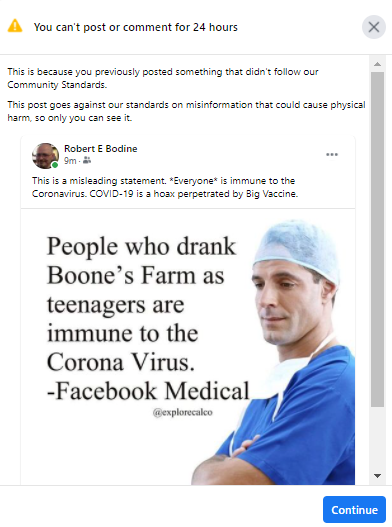
I have to share this bullshit. I just got this message from Facebook.
This is clearly a joke, I can’t imagine why they would even hide the post, let alone give me a 24-hour ban (UPDATE: 3 days now, including my birthday). Ironically, I received this ban on the day I received my first vaccine shot.
Let me remind you of the problem with Facebook, et al. In the old days, the ordinary citizen’s standard means of political discourse was to stand in the middle of town square, get on a soap box, and bitch. Such acts would result in counterarguments from the crowd, but even more importantly the bystanders got to listen and form opinions somewhere in the middle of the lunatics. Because town square is public property, the Free Speech clause protected such discourse. Now the ordinary citizen’s standard is to use social media, and it’s what everyone relies upon for such discourse. The problem is that social media platforms are private property, and even clear jokes can be censored legally. Speech is going to be chilled at a time when we need reasonable discussion — and a sense of humor — the most. Our only recourse will be antitrust law, and Twitter has certainly flirted with that in the Parler case (see the section entitled This Isn’t the End of the World, but It’s No Small Matter), but it’s going to be a long time before that dust settles and the common person’s everyday speech will once again be free.
UPDATE!!!! Facebook has decided to extend my suspension to three days, which means I won’t be able to thank anyone for all the birthday wishes I’m sure to receive on Monday. If you’re reading this, thanks in advance. Also, my MeWe profile is at https://mewe.com/i/robertbodine1. Just sayin’. No reason.
Side note: I tried to use the back door that used to work but apparently no longer does. I posted to Instagram, which shares to Facebook automatically. Unfortunately, my post violated community standards over there. I’m going to try again but with a picture of a kitten. We’ll see what happens.
Facebook should be ashamed of itself, but it isn’t.











 Play What You Want