Let's roll some dice, watch some movies, or generally just geek out. New posts at 6:30 pm ET but only if I have something to say. Menu at the top. gsllc@chirp.enworld.org on Mastodon and @gsllc on Twitter.
It's about 3 am, and I can't sleep. My mind is racing through #DnD/#RPG discussions I had on Twitter that I couldn't resolve in 280-character snippets. My brain is fleshing out my stance even though no one is here to listen.
— Rob Bodine, #Attorney by Day, #Nerd by Day & Night (@GSLLC) June 13, 2021
All of those discussions were inspired by or involved NewbieDM, S Keldor lord of Castle Greyskull DMLSP (that’s a mouthful), Roving Band of Misfits, and Merric Blackman. I can say that NewbieDM and Merric are good at doing that; I’ve never interacted with S Keldor. Note that while I’ll be quoting them in these posts, much like my brain at 3 am acknowledged about me, I can’t do their arguments justice either. You’ll have to click through to see everything they’ve said. My only purpose here is to express my own opinions while providing context for their genesis and giving credit to those that inspired them. If you want to know what they think, click through and ask them to clarify.
To keep my posts short, each issue will be dealt with in its own post, all with this same introduction. | Part I | Part II | Part III | Part IV | Part V |
Part #4: 4th Edition Stat Blocks
Okay, I know what you’re thinking. “Didn’t you already write 39 pages on this subject (Cambria 11 pt. font)?” Well, sort of. Those posts were about intellectual property law, so the comments on this particular subject were obscured in a sea of other material. Because this is still going on in my mind and the minds of others, it’s worth a brief and focused reexamination. Besides, this is going to pick far fewer fights than yesterday’s post.
**cries in 4e** The 5e designers really dropped the ball when they left behind the 4e style monster stat blocks. I've been using @GSLLC 's "4e style" 5e monster stat blocks.
— RovingBandOfMisfits (@bandofmisfits) June 11, 2021
So Shawn, who clearly has no idea what he’s talking about (settle down, internet tough guys; inside joke), inspired a complimentary response from Roving Band of Misfits. This led to a back and forth between Merric and me. I’m just going to post a couple of tweets. If you want more context, click through to the thread.
Merric has a good point. I don’t expect any bestiary to be printed with one-stop/4e-style stat blocks (henceforth, “OSSB” or “OSSBs”), but I do expect Wizards of the Coast to make them printable via D&D Beyond, or to provide PDFs for download on their site. However, I don’t care what they choose to do (especially now that I’ve done it). This post is about why I think they’re helpful.
Versatility
Merric’s position is that shorter stat blocks allow you to make more complex creatures. However, if you hide a stat block’s complexity through shorthand, the complexity not only disappears, but the stat blocks all become nearly identical to one another.
Let’s use an example. Halaster Blackcloak’s stat block (Waterdeep – Dungeon of the Mad Mage, page 310) is about 2/3 of a page long. In my OSSB treatment, he’s 3-1/2 pages long (see page 12). What should be going through you head is, “How can you expect 3-1/2 pages of content to be properly run with about 81% of it missing?” Well, without an eidetic memory or tons of study time, you can’t.
Which ties into versatility. One of the chief criticisms of 4E monsters is that they couldn't do things they should have been able to do. Because there wasn't space in the stat block to describe them.
What Merric is missing is the fact that compressing everything into a small space with up to 90% of the content missing can no longer be considered “describ[ing] them”; you’re merely hinting at what they could be, because most DMs can’t run that much material as intended in combat unless it’s right in front of their face. Now, you may also say that most DMs couldn’t possibly handle a stat block as large as Halastar’s. Well, that’s kind of the point. OSSBs will always be easier to run properly than the alternative. Put another way, if Halastar is too big to run, abbreviating it will make it even harder. It’s always harder except for the most simplistic of stat blocks, which break even. by publishing OSSBs, game designers need not fear making more complex stat blocks.
So, how do DMs typically handle very complex stat blocks in combat? In my experience, they just go with what they know: Fireball, Magic Missile, and Hold Person. That is, the spells that are most popular among WotC designers themselves (in part due to their universal value in combat) are the ones they memorize, and rather than look up a new couple of candidate spells every round, DMs just use those adjusting each for spell slot level. They sure as hell aren’t going to use Symbol in combat, and most couldn’t handle Confusion either unless they had the time to look up and memorize it, but the brain has only so much space to store these spells. What’s the difference between Halastar casting Magic Missile and a Githyanki Gish doing it? Spell level. That’s it. The result is that every monster they run become slight variations of each other. In other words, not only is stat block complexity lost, but so is the complexity of the game itself. Everything’s the same, and it can be boring. If OSSBs don’t fix that, nothing really will short of computers running the combats for you.
I really don’t get the resistance at all, so if you have a different view, please speak up.
It's about 3 am, and I can't sleep. My mind is racing through #DnD/#RPG discussions I had on Twitter that I couldn't resolve in 280-character snippets. My brain is fleshing out my stance even though no one is here to listen.
— Rob Bodine, #Attorney by Day, #Nerd by Day & Night (@GSLLC) June 13, 2021
All of those discussions were inspired by or involved NewbieDM, S Keldor lord of Castle Greyskull DMLSP (that’s a mouthful), Roving Band of Misfits, and Merric Blackman. I can say that NewbieDM and Merric are good at doing that; I’ve never interacted with S Keldor. Note that while I’ll be quoting them in these posts, much like my brain at 3 am acknowledged about me, I can’t do their arguments justice either. You’ll have to click through to see everything they’ve said. My only purpose here is to express my own opinions while providing context for their genesis and giving credit to those that inspired them. If you want to know what they think, click through and ask them to clarify.To keep my posts short, each issue will be dealt with in its own post, all with this same introduction. | Part I | Part II | Part III | Part IV |
To keep my posts short, each issue will be dealt with in its own post, all with this same introduction. | Part I | Part II | Part III | Part IV |Part V |
Here’s where I pick a fight. 🙂 To make sure you stay laser focused on my point, here’s my thesis up front: 4e was not a significantly less marketable game design than 5e; it was simply a victim of circumstances beyond the control of its designers. Ergo, while you’re free to legitimately hate its mechanics, you can’t reasonably argue that it was a failure. 5e would have suffered from the same circumstances if it were released in 2008.
4th Edition D&D is my favorite edition of D&D (stay focused!), so I love the nostalgic ramblings I’m seeing on Twitter. As S Keldor noted, not everyone agrees.
At what point is a 6 year run and 35+ core books and supplements, a video series, several spin off games, live shows at major conventions (albeit PA), an swath of actual standalone adventures a "massive failure " or "not very successful"? pic.twitter.com/Es3Ewxd2iS
— DMLSP my gender is Cigars and Eyeliner 💖💜💙 (@Dm_LSP) June 11, 2021
Wizards of the Coast has never been in the business of losing money. As S Keldor pointed out, they kept producing material despite this supposed failure. 4th Edition didn’t fail in a meaningful sense of the word. They, and others, thought that they didn’t succeed enough; hence, the relatively quick release of 5th Edition. Maybe. Let’s dive a little deeper.
Why wasn’t 4e as successful as it could have been? Here was Merric’s answer (again, just 280 characters of it) and my response.
The context is 1) the hate for being too much like an MMO, which came before the game was even released (self-fulfilling prophecy); 2) Paizo capitalizing on that hate; and, 3) how it sold relative to other eds. adjusted for pop. & inflation (it wasn't *much* more costly to make).
— Rob Bodine, #Attorney by Day, #Nerd by Day & Night (@GSLLC) June 12, 2021
I love Merric’s ramblings on Twitter and respect his analysis and opinions, so I say this with a great deal of respect.
Starting first with my third point, he analogizes 4e to a movie that cost twice as much to make as it took in as a profit. Even respecting that he was exaggerating, for the analogy to stick you must presume that 4e costs more to make than 5e. To my knowledge, 5e books cost just as much to produce as 4e books (maybe more adjusting for inflation). The cost to produce the game isn’t higher. A more appropriate analogy is to two movies, one that costs $1M to make and that brought in $100M at the box office, and another that cost $1M to make and that brought in $200M at the box office. Both are successful, but one more than the other. The “failure,” therefore, is less about failing per se and more about missing an opportunity to have done even better.
Logarithmic v. Linear Thinking
Now, I’m no economist, and I don’t have access to WotC‘s sales reports, but I’m at least as good as most of you at analysis and speculation. As I stated in my third point, there are probably other factors that affect one’s interpretation of “failure.” How much better are 5e’s sales if factoring in inflation? Also, let’s consider the difference between raw numbers and percentages. If we have 10 consumers, and 5 of them buy a product, you’ve captured 50% of the consumer base. Now let’s say that by the time you produce your new product, the consumer base has jumped to 20 (not due to marketing, but because the population in general has doubled), and 7 of them buy a product. You’ve captured more consumers, and therefore are making more money with the second product, but you’ve captured only 35% of the consumer base. Anyone that’s ever rolled a d20 should know this. 😉 In other words, your new product may represent the “missed opportunity” above despite looking like it was a greater success. I doubt that’s what happened here — as Merric did, I’m using a simple equation to illustrate a point — but without proof to that effect, and not just taking WotC‘s word for it, we can’t reasonably argue from our couches as to the full context. Either way, it’s outlandish to believe that WotC didn’t make a profit off of 4e, so even merely analogizing to such an example is a bit off the mark.
Unit Cost
Let’s now assume that 5e overcomes all of that. How should I know they didn’t? Let’s say that the cost to produce their books is less than the cost to produce 4e books, which would validate Merric’s use of his analogy. Let’s also say that 5e is outselling 4e adjusting for both inflation and general population increases. This still doesn’t address several important factors. I’ll deal with the simple issue first. If it currently costs less to produce RPG books today than it did between 2008 through 2011 due to market factors, then that would have applied if 5e was produced during that span. That is, if 5e were released in 2008, its costs would have matched that higher cost of production. That can’t be said to be a failure specific to 4e’s mechanics, so 4e could still be seen as the most successful it (or 5e) could have been at the time. Remember, we’re trying to figure out if 4e’s design was a mistake. You can’t use generally applicable circumstances to justify that position.
Market Hysteria
Here’s the bigger issue representing points 1 and 2 in my post above, and it isn’t meant as a counter to anything Merric said, but rather what I’ve heard over the past 13 years on the subject. Without exception, the community always had a large subset that reacted very poorly to the announcement of a new edition, even if some of those naysayers were destined to accept the new edition once it was released. 4e was no exception. Accusations that 4e ruined the game flew by like those damned cicadas even before the game was released, meaning those accusations were based on ignorance. This, in turn, means they were really based on emotion (**see sidebar below). RPGs are expensive, and being the market leader with the most valuable trademark in the industry, WotC is clearly no exception to that rule. They can charge what they want, and consumers will pay that amount, but those consumers won’t be happy having to spend that amount of money all over again for the new edition to keep up with their fellow gamers. This sense of entitlement isn’t unique to gamers, but clearly gamers aren’t immune to it. We just call it nerd rage when applied to gamers and our kin.
** A good example of this was 1st level hit points. When 4th edition was released, one of the complaints was that 1st level characters had too many hit points, making them too durable. 3.5e, they said, had a much more reasonable number of hit points. It didn’t take long for 4e defenders to point to similar complaints about 3.5e. There were posts (lost to time) complaining that 3.5 characters had too many hit points because they didn’t have to roll for them at first level. That is, if their hit die was a d8, they didn’t roll a d8 for starting hit points, but instead just received 8 hit points. Even that was deemed too much. Why? Because those naysayers were looking for an excuse to complain, and they latched onto 1st level hit point mechanics to give credibility to their nerd rage. The more things change, the more they stay exactly the same.
The Perfect Storm
In comes Paizo, who lost the license for publishing Dragon and Dungeon magazines. However, unlike the other third parties publishing official content, they were in a position to make a move to compete seriously via Pathfinder. I don’t have access to the internal machinations of Paizo, but I (and you) personally know that they had a foothold not just in the gaming community generally, but specifically in the D&D community. Paizo took advantage of both their position and that customary anger/resentment, giving those naysayers what they wanted, even including a living campaign. People fear change, and Pathfinder gave a certain group a means to avoid it (to a large extent). Moreover, their public playtest was launched (2007) before 4e was released (2008), so by the time consumers were making their decision to invest in 4e, they knew that Pathfinder was not merely a twinkle in some nerd’s eye. This was a real game that was going to be published come Avernus or high water by a talented set of designers, and it was more familiar than what was coming from WotC. No other edition of D&D faced this combination of talent, market presence, timing, and appeal to the naysayers. None. How would 5e have fared against this perfect storm of competition? How would any game or edition have fared? These are obvious but inconvenient questions that are, unsurprisingly, ignored by the 4e haters.
Finally, I’ll remind you of what I wrote yesterday. The game has a low barrier to entry for players but high barrier entry to casual adventure designers. That’s a strength of marketing, but not of game design. That is, 5e doesn’t necessarily sell better because it’s a more enjoyable game, but because it’s built to force sales on the consumer. This isn’t at all devious or “wrong,” but I believe it’s an accurate assessment that cuts against the notion that 4e was a mistake.
WotC Did a Good Job with 4e
This is why I don’t believe WotC’s abandonment of 4e was a sign of failure. If not for those outside factors completely beyond the control of the game’s designers, the naysayers would have come back around as they always have. Because they didn’t, 5e was released sooner rather than later as an attempt to regain what WotC had lost at the hands of an intelligent, talented, and opportunistic competitor. WotC was punished for experimenting and knew that they needed to go backwards in some ways (even offering strategic mea culpas at times) to get back that share of the market. I don’t think that the following equation is perfect, but it’s probable that most of Pathfinder‘s revenue represents money that otherwise would have gone to 4e. It’s impossible to prove but also impossible to disprove; however, it makes sense based on history. When all was said and done, a significant portion of the naysayers would have come around and invested in 4e, had fun playing well-written adventures with good friends, developed a nostalgic attachment to the game (if not love), and cried just as hard when 5e was eventually announced (regardless of how they ranked 4e against other editions). The cycle would have repeated because those initial complaints are based on your financial investment in the game, not the game’s mechanics. If they were based on mechanics (which is perfectly reasonable; play what you like), you’d probably just keep playing that version and not worry about what everyone else was doing, but as history shows us, you’d have been in the minority if you left the D&D community altogether over a new edition.
So, add Pathfinder‘s sales to 4e’s sales and tell me with a straight face (and reliable, hard data) that 4e wouldn’t have been just as successful as 5e, adjusting for inflation and population. Seriously, tell me. I don’t know the numbers. I’m going off of my extensive, well-connected, but ultimately anecdotal experiences. 5e may legitimately be doing better than 4e, but I bet those speculative 4e numbers are far from “failure” numbers.
Haters Gonna Hate
All of this is to say that the factors that went into 4e’s disappointing sales numbers would have impacted 5e as well, so calling 4e a mistake is unfair until proven otherwise. This is unsurprising considering that those same 4e haters use every mention of 4e to spew vitriol on 4e and those that love it (no accusation intended towards Merric; he’s always respectful). Because Pathfinder gave 4e haters a “3.75e” D&D for a large community, and even gave them a living campaign on top of that, they didn’t have to get over their hate, so they never did. We can’t stop the vitriol, of course, but we can call it what it is: pathetic and assinine (the latter is intentionally misspelled). When they use sales numbers without proper context as a placeholder for their hate, it’s almost certainly based on ignorance or evasion of that context. Of course, no one should spew such vitriol at someone who legitimately prefers 3.5e, Pathfinder, or 5e, but that’s a relatively rare occurrence. The only people I’ve seen do that are those few playing only AD&D or 2nd Edition.
In any case, to say 4e failed, and that 5e was objectively a more marketable design, you have to prove that 5e wouldn’t have been similarly impeded if it had been presented as the 4th edition of D&D at that particular time in history, and so far I’ve seen no one even address that issue, let alone prove it to my satisfaction. I’d be interested in seeing data supporting that position.
Follow me on Twitter @gsllc Follow Newbie DM @newbiedm Follow S Keldor lord of Castle Greyskull DMLSP @Dm_LSP Follow Merric Blackman @MerricB Follow Roving Band of Misfits @bandofmisfits
Dungeons & Dragons is a trademark of Wizards of the Coast, LLC, who neither contributed to nor endorsed the contents of this post. (Okay, jackasses?)
In case the tweet is deleted, here’s an image of it.
It's about 3 am, and I can't sleep. My mind is racing through #DnD/#RPG discussions I had on Twitter that I couldn't resolve in 280-character snippets. My brain is fleshing out my stance even though no one is here to listen.
— Rob Bodine, #Attorney by Day, #Nerd by Day & Night (@GSLLC) June 13, 2021
All of those discussions were inspired by or involved NewbieDM, S Keldor lord of Castle Greyskull DMLSP (that’s a mouthful), Roving Band of Misfits, and Merric Blackman. I can say that NewbieDM and Merric are good at doing that; I’ve never interacted with S Keldor. Note that while I’ll be quoting them in these posts, much like my brain at 3 am acknowledged about me, I can’t do their arguments justice either. You’ll have to click through to see everything they’ve said. My only purpose here is to express my own opinions while providing context for their genesis and giving credit to those that inspired them. If you want to know what they think, click through and ask them to clarify.
To keep my posts short, each issue will be dealt with in its own post, all with this same introduction. | Part I | Part II | Part III | Part IV|Part V |
Part #2: 5th Edition D&D Is Accessible. So What?
This one starts with NewbieDM.
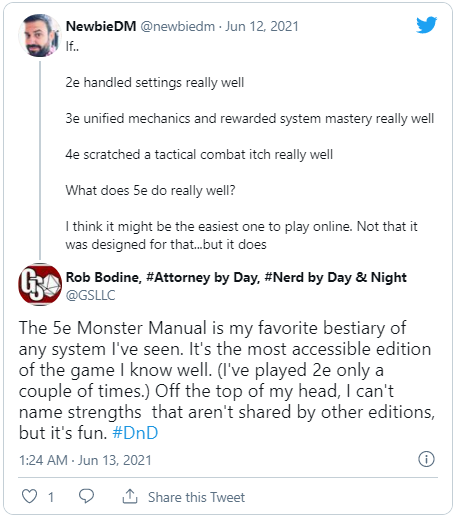
The 5e Monster Manual is my favorite bestiary of any system I've seen. It's the most accessible edition of the game I know well. (I've played 2e only a couple of times.) Off the top of my head, I can't name strengths that aren't shared by other editions, but it's fun. #DnD
— Rob Bodine, #Attorney by Day, #Nerd by Day & Night (@GSLLC) June 13, 2021
Notice my comment: 5th Edition Dungeons & Dragons is accessible. In our community, that means there’s a low bar to entry, so I was saying that picking up 5th Edition is easy for new players. I’m not alone in my view.
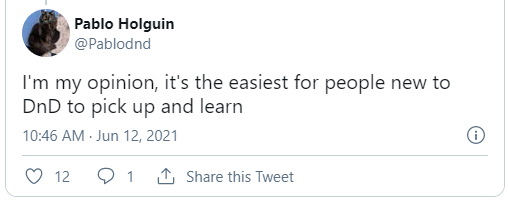
I'm my opinion, it's the easiest for people new to DnD to pick up and learn
Accessibility and flexibility. The game is streamlined (by comparison) and unites enough recognizable pieces to feel like the culmination of all the previous editions. It’s not flawless and it won’t last forever, but it deserves credit for matching step with virtual innovations.
— Graham Ward (He/Him) Black Lives Matter (@DarkplaneDM) June 13, 2021
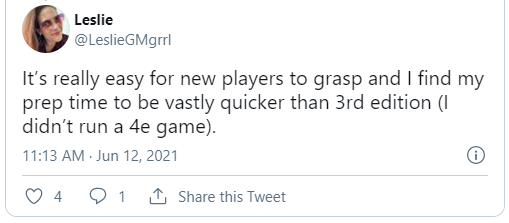
It’s really easy for new players to grasp and I find my prep time to be vastly quicker than 3rd edition (I didn’t run a 4e game).
Most streamlined, coherent design making it easier to learn. Also as advertised when it came out: The Best Hits version.
— The Moderna DM (2nd Dose) (@ChattyDM) June 14, 2021
It's peculiar that many, including me, mentioned accessibility. While that's good from a marketing perspective, it's not necessarily a strength from an idealized game design perspective. If you're in it for the long haul, you need to mention more than accessibility. #DnD
— Rob Bodine, #Attorney by Day, #Nerd by Day & Night (@GSLLC) June 13, 2021
This is certainly going to be shorter than yesterday’s post, because that’s my entire point.
We all understand why it’s important for a game to be accessible: You can’t sell books to new or casual players if the game is too complex. People want instant (or at least quick) gratification from their games. If they’re always being run over by the hardcore gamers that study the game as if it was their full-time job, then the game’s community will inevitably consist of only hardcore gamers. Game designers need to keep that big picture in mind. However, there’s more to the big picture. They also have to appeal to their current players, giving them more to discover as they learn the game. If the game doesn’t keep giving more at a rate that satisfies players’ needs for new material, and the release schedule doesn’t compensate for that, then the success won’t last.
Also of note is that the one and only serious gripe I have about 5e is its encounter building system. You have to run your numbers through a formula to produce your encounter, then run that encounter through another formula to get it right, solving a partial differential equation along the way (not really). Even then, creatures like the Banshee make it impossible to know whether those formulas produced an encounter with the intended difficulty. As for DMs — and more to the point, adventure designers — the game really isn’t that accessible, and I lost interest in trying to build fair or accurate encounters long before other things took me away from playing RPGs. The only thing that saves 5e in this narrow regard is, as I said yesterday, the beauty of the 5e Monster Manual. So, we have a low barrier to entry for players, resulting in a huge number of players buying Player’s Handbooks, but a high barrier to entry to casual adventure designers, resulting in a huge number of DMs resorting to buying adventures. Hmmm, good marketing strategy, I guess. 🙂
So, all but one of the responses I saw to NewbieDM’s tweet mentioned accessibility, and that’s great, but only one mentioned anything else. This shared observation answers NewbieDM’s question as such: Other than accessibility, the consensus is that 5e doesn’t do anything better than any prior edition of D&D. This isn’t a fatal flaw, of course, because 5e is fun, and people are sticking with it. Perhaps a focus on accessibility is the best approach. After all, 5e is reported to be selling better than all previous editions, but that observation seems to ignore another part of the bigger picture. Could they have done even better if they had taken a different approach? Is the reason for their unprecedented success based on other factors that didn’t apply before (and may not apply in the future)? Despite the success, is there yet another lesson to learn for other game designers? Well, that’s for my next post on these Twitter thoughts and will probably be far more controversial.
It's about 3 am, and I can't sleep. My mind is racing through #DnD/#RPG discussions I had on Twitter that I couldn't resolve in 280-character snippets. My brain is fleshing out my stance even though no one is here to listen.
— Rob Bodine, #Attorney by Day, #Nerd by Day & Night (@GSLLC) June 13, 2021
All of those discussions were inspired by or involved NewbieDM, S Keldor lord of Castle Greyskull DMLSP (that’s a mouthful), Roving Band of Misfits, and Merric Blackman. I can say that NewbieDM and Merric are good at doing that; I’ve never interacted with S Keldor. Note that while I’ll be quoting them in these posts, much like my brain at 3 am acknowledged about me, I can’t do their arguments justice either. You’ll have to click through to see everything they’ve said. My only purpose here is to express my own opinions while providing context for their genesis and giving credit to those that inspired them. If you want to know what they think, click through and ask them to clarify.
To keep my posts short, each issue will be dealt with in its own post, all with this same introduction. | Part I | Part II | Part III | Part IV |Part V |
Part 1: This is Why the 5th Edition D&D Monster Manual is My Favorite RPG Bestiary
The 4e and 5e Monster Manuals took opposite approaches to how they loaded them with monsters. Very generally, and something you all already know, the Dungeons & Dragons 4th edition Monster Manual (let’s just say MM going forward) sacrificed variety for detail. The 4eMM1 (get it?) was the first bestiary we had for 4e, yet it didn’t include some iconic monsters such as metallic dragons and frost giants. No frost giants?!?! Even a 4e apologist like me (stay focused!) complained. The trade off was that there was more room to discuss the ecology and history of the monsters that were included, and there were more stat blocks for each of those creatures within that group. Plus, we got humans as monsters. 😐
5e took the opposite approach. With only a few exceptions, such as dragons, giants, and slaadi (I get a smug sense of satisfaction for knowing the proper plural form of slaad), we got no ecology or history and only one stat block per monster. This provided a lot of variety but considering how hard it is for new DMs to create monsters in 5e (compared to 4e), it was initially frustrating. On the bright side, they had room to give us the flumph. 😐
Ironically, it would seem that WotC should have taken opposite approaches in both situations, giving us only one, easily-leveled monster for 4e, but giving us multiple monsters for 5e so that we didn’t have to figure out how to create them. But didn’t they? Foreshadowing!
Enough complaining. Considering the title of this post, there must be a happy ending. As a result of my one-stop stat blocks project, I have in my possession something that I’ll never publish: a Word document containing my treatment of all of the 5eMM stat blocks, including ones that aren’t actually in the 5eMM (i.e., variant giant lizards, diseased giant rats, cave bear, and variant insect swarms). That is, I recreated by rote every single stat block in the 5eMM and then some. That gave me some perspective that I’m not sure one can have without at least intently reading the book cover to cover relatively rapidly.
Reskinning monsters is pretty easy in 5e. Here are two examples. First, let’s look at the giants. Before my stat block project, I was arguing with a friend (let’s call him Rob #247). He didn’t like the 5eMM, and I did. He complained that all the giants were the same: weapon attack, throw a rock, and multiattack. He found it boring and uncreative. I don’t think that’s fair. First, it’s actually important that the giants are very similar. It gives a sense that the giants were related evolutionarily speaking. Granted, You have to suspend quite a bit of disbelief in order to play D&D, but when logic is successfully applied, it triggers our instincts for familiarity and order. Second, when you visit the glacial rift of the frost giant Jarl, you don’t expect to see many, if any, fire giants, stone giants, etc. Maybe you’ll see one other giant type who’s an envoy from his leader (such as the cloud giant ambassador in Steading of the Hill Giant Chief), but that’s about it. That means that you can easily adapt the stat blocks for the other giants into the ones you need, even at different CRs , without appearing to use the same stat blocks over and over. There are plenty of other creatures with similar formats (e.g., cyclopes) that can be used as any form of giant.
Let’s now consider the kraken. Maybe you want to unleash it (yeah, I know) on your PCs, but that’s not an option for low level characters. What do you do? Well, have a giant octopus capsize their raft. Still too high a level? Then have a rock capsize the raft, and send a bunch of octopuses (octopi isn’t an English word) attack them. Maybe such a low level encounter isn’t that high a priority for your adventure, making ordinary octopi (octopodes also isn’t an English word) unimportant, but if your BBEG is a kraken, they become important as a means of foreshadowing or providing a theme. Need a lower-CR treant? Try the awakened tree.
The bottom line: The stat blocks are connected in such a way that you realistically have several stat blocks at different CRs that can be trivially adapted to represent the monsters you want. Because the 5eMM went almost 100% in the direction it did, the connections are far better than I’ve ever seen in a bestiary. You don’t just have to reskin some unrelated monster. You can reskin something that’s really close to it both mechanically and thematically, no matter which one you choose. That makes the game far more accessible for DMs than it otherwise would be.
Talk about foreshadowing! My thoughts on accessibility are the topic of the next post!
Follow me on Twitter @gsllc Follow Newbie DM @newbiedm Follow S Keldor lord of Castle Greyskull DMLSP @Dm_LSP Follow Merric Blackman @MerricB Follow Roving Band of Misfits @bandofmisfits
Dungeons & Dragons is a trademark of Wizards of the Coast, LLC, who neither contributed to nor endorsed the contents of this post. (Okay, jackasses?)
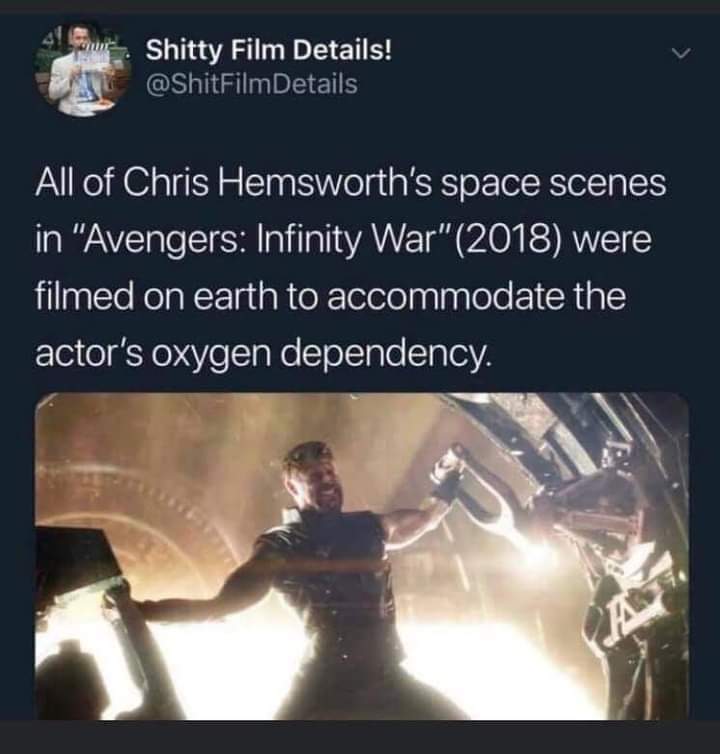
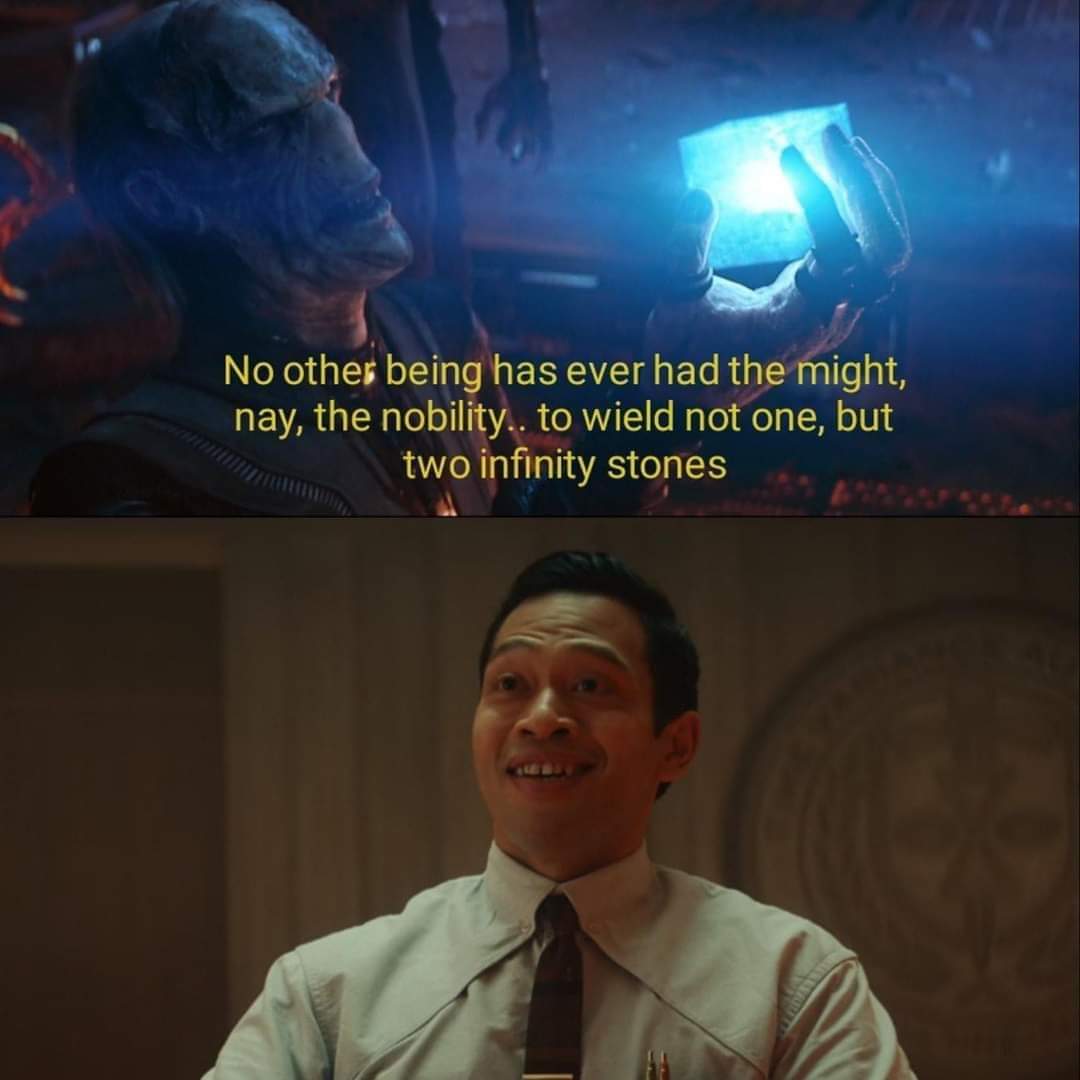
Going forward, Sundays are lazy days for me. I either post something silly or other people’s work. Usually both. Today, it’s a few MCU memes that hit my social media streams this week. Two you’ve almost certainly seen. One is pretty new. They all surround last week’s ComicBook.com quarantine watch party of Thor (which was awesome), which was in preparation for the following day’s premiere of Loki on Disney Plus (which was awesome).
Bad start, but young Cap thought old Cap was Loki, so close enough.
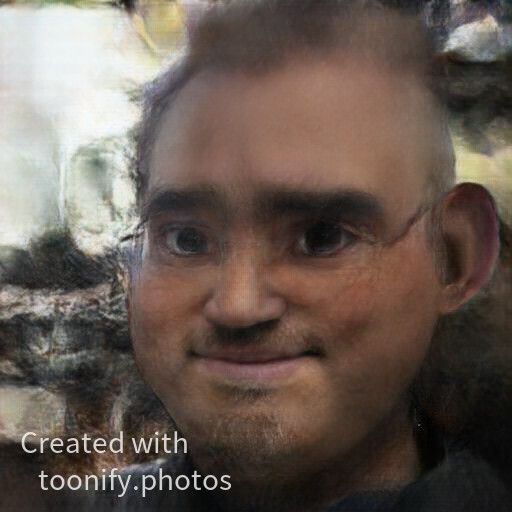
Toonify has an app that let’s you covert a photo of yourself into something resembling yourself as a Pixar character. Everyone is complaining about their toonified image, so I decided to give it a try. Here’s the starting point:
How beautiful.
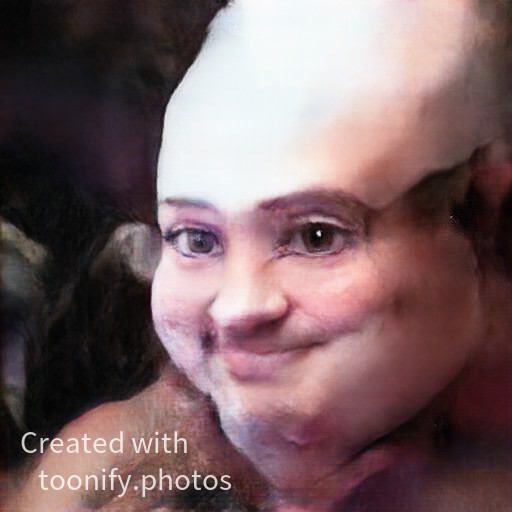
Well, this is what I got. Don’t let children look at it.
What am I? A hobbit on Venus? My cousin, Kessel Junkie, with microcephaly? At least now I have my hair back.
Okay, I know what your thinking. Between the glasses and the background, I broke the conversion algorithm. So, I tried this one.
Stable background, no glasses. What could go wrong? Look away while you still have the chance.
I’m considering a lawsuit.
Okay, how about this one?
Here we have a white background and white shirt, and at a better resolution without that screwed up eyeball touchup. Third time’s the charm, right?
There and back again.
Now I’m a hobbit in a meat locker or some such shit. Maybe I’m going about this the wrong way. Maybe I need to take a photo of me in a pretty bad place so that I’m bound to improve. I mean, artificial intelligence may be subject to reverse psychology just like we are. Here’s one when I weighed over 300 pounds.
What could be worse than this?
Well, this, for one.
Seriously? It may have well just linked me to Pearl from Blade.
Dammit! I shall not be denied. Maybe I can intimidate the algorithm.
That’s one bad motherfucker.
Or so I thought.
This guy looks like he couldn’t beat up Napoleon Dynamite. I’m going to give this another shot.
This is going to be cruel.
This defies explanation, but that’s never stopped me from trying. This looks like the skin of a baby turned into a doll. They could write a horror movie out of this one.
Here’s one from Christmas, 1990.
Like Pinocchio, that doll became a real boy and then grew up. If anyone makes a horror movie about this character, I’ll sue for the rights.
Does this count?
I think it’s safe to say that none of your pictures are really that bad, and I couldn’t get one good picture from any of my photos, so I . . . win, I guess?
If yours is worse, you’re going to have to prove it. Until then, quit your bitching.
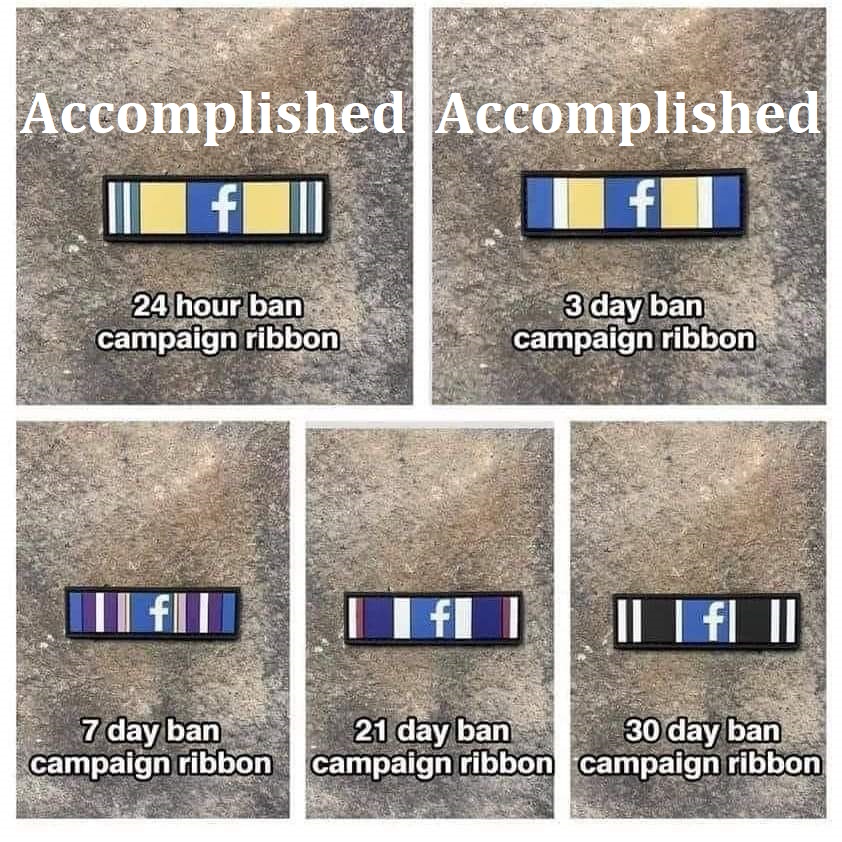
I’ve written a few times about MeWe. I pointed out that our instinctive dislike of MeWe‘s exposed our hypocrisy with respect to privacy concerns. I talked about how my first and second Facebook suspensions were driving me towards MeWe despite my instinctive dislike. I then took a thinly veiled stab at Facebook. So here I am trying to find a replacement for Facebook, but it’s been tough. Last weekend, I posted the following to Facebook:
I’m really trying with #MeWe, but it’s just not going anywhere.
After navigating my way through some commentary that were mere diversions, I reached a conclusion as to why I’m having so much trouble with MeWe. Sure, the privacy protections make MeWe unwieldy, but that’s because it isn’t meant to be used the way we use Facebook. With Facebook, it’s all about “friendships.” I hate that they use that term. We’re not necessarily friends. “Connections” would be more accurate, but less marketable. Obviously, the latter is Facebook‘s concern, but I digress. To use Facebook as intended, you should have as many connections as possible. MeWe‘s technology isn’t conducive to that, but I get the impression it isn’t meant to be.
I think the idea behind MeWe isn’t about making numerous direct connections. Instead, the idea is for you to join groups that cater to your interests, and interact with people within those groups. That is, you’re not supposed to just post a random thought on your timeline and expect to receive reactive comments from your connections list, nor are you supposed to see the random thoughts of your connections hitting your timeline and giving you an impulse to rant. Instead, you’re expected to do these things within the groups you’ve joined, thus reducing the noise on the site, and avoiding the need to connect directly with other accounts in a way that could compromise your privacy.
And MeWe is great with groups. I’m a member of many music-oriented groups, and despite song lyrics often addressing sociopolitical issues, I’ve never once seen a sociopolitical debate in those groups. We can discuss the lyrics of, for example, Gimme Shelter by the Rolling Stones, which are about the civil unrest of the 60s, in particular the Vietnam War, race riots, and Charles Manson. As long as we discuss the Stones’ opinions and don’t inject (or at least don’t emphasize) our own opinions on analogous modern subjects, there’s no true mixing of politics and music in a way that spoils the group. If you want to share your opinions on modern issues, there are plenty of political groups available that are designed specifically for that. Go there. You may even see many of the same people there. Problem solved. Everyone’s happy.
Because otherwise you’ll have regrets.
In contrast, I’m a member of a Far Side group on Facebook. I’ve never once seen a post that didn’t devolve into a sociopolitical debate. I’m not exaggerating. Every single Far Side post is a debate between Republicans and Democrats, vegetarians and meat-eaters, etc. It’s maddening and typical of Facebook. Perhaps when MeWe gets more popular, it’ll devolve into that as well, but for now, these groups really work well.
So why am I still having trouble with it? Simple: I’m not used to it, and Facebook keeps my brain from adjusting. On Twitter, I have over 40 accounts. No shit. Over 40. I do that to reduce the noise. GSLLC is for gaming, music, and other assorted nerdity, MMADork is for sports, PropertyAtty is for law, and RobertEBodine (seldom used) is for politics. (The other accounts are anonymous satire accounts or related to a gaming project I’m working on.) I’ll never cross those streams on purpose because I’m doing my part to keep the noise down. Nevertheless, even Twitter has the same effect on my brain because none of you follow the same practice. My GSLLC stream is loaded with politics I don’t want to discuss (or even read) there, and filters are only so good at keeping those topics out. As a result, Twitter also keeps my brain from adjusting. Transitioning to MeWe successfully is going to take a lot of work. For me, that’s worth it — I’m very concerned with the antitrust implications of the Facebook/Twitter oligopoly — but I don’t know that it’ll ever be worth it for you (until you’re severely censored).
Plus, there are the small things. For example, I’ve turned off automatic notifications of chat messages, but I still get the audible ding whenever someone posts a group chat message. I can’t turn it off. More importantly, MeWe is missing distribution lists. Google+ introduced me to them because they had them from the start. Facebook eventually followed suit, but not before I had well over 1,000 Facebook connections. It took a lot of work to place all of you onto list. One of these days, MeWe will wise up and introduce them, and that’s going to create a lot of work for me. Finally, I’ll mention that MeWe avoids ads. Hooray! Right? Well, not really. In order to maintain the site and make a profit, some features require payment. We hate ads, but we’re used to not having to pay directly for social media, so most of us won’t pay for those features. Again, it’s our hypocrisy. We’re not bad people, but we’re continually making our own bed with this, and I hope enough people are paying for MeWe Premium ($5/month) that the site stays afloat.
I’m not giving up. I’m going to make this work eventually.





















 Play What You Want