Waking Up #health #fitness #gym

If you enjoy this post, please retweet it.

Last Friday, I mentioned that I’m finally headed back to the gym. Despite the difficulty of doing so, there’s one thing working in my favor. My body is naturally waking up every morning at least 80 minutes earlier than necessary to get me to work on time. I don’t even sleep in on the weekends. I noted that there’s a reason for this.

I’m a very private person, but in an odd way. Much of what you might think should be private, I have no problem sharing, while things you routinely blab about, I keep to myself. Still, one thing that exemplifies my privacy kick that will come as no surprise is that I always keep my shades drawn. In my last residence, this meant that the sun never made it through. Last January, I bought a house, and the — what do you call them? — window treatments keep prying eyes at bay but allow the sunlight through.

Poop.

Well, by now you should all know the meme. Sunlight impacts your sleep cycle. It wakes you up more gradually than a jarring alarm clock. I arguably don’t need an alarm clock, but if I rely on it to wake up, it makes getting out of bed far more difficult. Sunlight really works better.

If you’re having trouble getting up in the morning, consider different coverings for your windows. It really works.

Follow me on Twitter @gsllc

Cake @TheAndrewNadeau #aging #happybirthday #birthday #cake

If you enjoy this post, please retweet it.

No, not them!

I don’t really celebrate my birthday, but . . . .

Go ahead and check, motherfuckers!

Follow me on Twitter @gsllc
Follow Andrew Nadeau @TheAndrewNadeau

In case the tweet is ever deleted.

I’m About to Turn 54 @blink182 #aging #happybirthday #birthday #music

If you enjoy this post, please retweet it.

Once a decade for an entire year, I get to make myself the subject when I sing Blink 182’s What’s My Age Again? Today is the last day of that year. Sing it for me as well. See you in 9 years.

0:57

I’m still a child.

Follow me on Twitter @gsllc
Follow blink-182 @blink182

Aging #aging #happybirthday #birthday

If you enjoy this post, please retweet it.

My birthday is coming up next month. Fun fact: My birthday is as far from today as it was from 1914. What was going on in 1914 (no earlier than May 17)?

  • England passes the Irish Home Rule Bill. My maternal, maternal, great grandmother was probably pleased.
  • Honus Wagner becomes the first baseball player in the 20th century with 3,000 career hits.
  • Archduke Franz Ferdinand of Austria is assassinated.
  • The Royal Naval Air Service is established.
  • Babe Ruth makes his Major League debut.
  • World War I begins.
  • A ton of other war stuff.

How about some innovations and inventions?

  • The first electric traffic light is installed at Euclid Ave. and East 105 St. in Cleveland, OH.
  • Oxymorphone (related to morphine) is developed.
  • Stainless steel items spread through the general public.
  • A perfumer, Puig, is founded.
  • Woodman’s of Essex, a Boston clam shack, opens.

Births of people (no one of note on May 17)

  • Superman actor George Reeves (died before I was born).
  • Boxer Jersey Joe Walcott
  • Actor Alec Guinness
  • Actor Ray Walston
  • Baseball’s Joe DiMaggio

Source: Wikipedia. So, perhaps none of this is true.

Follow me on Twitter @gsllc

Getting Back to the Gym #health #fitness #gym

If you enjoy this post, please retweet it.

I’ve occasionally spoken about my massive change in health (for the better).

Unedited photo, 2018.

Once I was where I needed to be, I relaxed my dietary restrictions (though I can still say it’s been over five years since I’ve had a soda). I wound up having my first surgery in 2020, and the pandemic shut down all the gyms. Combined with my relaxed diet, the net result was that I fell off the fitness wagon. I’ve since put on far more weight than I wanted, and I haven’t been to the gym in over two months.

This came up yesterday with a coworker. She asked why I haven’t been to the gym in so long. I told her that when I was a kid, I loved going to the top of the Empire State Building, Sears Tower, etc. Unsurprisingly, I always wanted to go to the top of the Washington Monument but never did. Why? Because I lived here. The Washington Monument would always be there tomorrow, so I could put it off another day. And another. And another.

Now I’m less than a week from my 54th birthday, and I’ve still never been to the top of the Washington Monument. The problem is that it’s too easy. When something is too easy, it can be exceptionally hard. That’s what’s happened to my workouts. I bought a home in January and cancelled my gym membership because my HOA comes with a gym. The gym is less than 1/2 mile from my home, is open from 4 am to midnight every day, and is already paid through my dues. I can go there any time I want.

So I never do.

I hope to say that, this morning, all of that changed when I finally got back into the gym.

Proof!

I don’t have to get up until about 7:50 am every morning to get to work on time, but I’ve been waking up at 6 or 6:30 am without the help of an alarm. (There’s a reason for that.) That gives me at least 80 minutes to get to the gym and do something, so that’s what I’m going to start doing.

I hope.

Follow me on Twitter @gsllc

Character Death in RPGs #ADnD #DnD #RPG #TTRPG #1e

If you enjoy this post, please retweet it, and please visit my 1st Edition D&D resources page.

Today, I kick off my death theme for the last throes of my one-year streak of daily posting to this blog, I’m going to reiterate and summarize the content from a couple other posts. More detail on my positions can be found by clicking through.

I’ve spoken about how dumb I feel the save or die mechanic is (though my stance has softened a bit since I wrote that and started playing 1st Edition D&D [“1e“]). Moreover, in that same post I’ve talked about how much I enjoy the way 4th Edition D&D (“4e”) applied their remedial mechanic (“save three times or die”) to one of my favorite creatures, the medusa: slowed on first failed save, immobilized on the second failed save, and petrified on the third failed save. In fact, I’ve adapted that mechanic to my medusa in my 1e game simply because I enjoy it. Even if you prefer save or die, petrification is far more dramatic when the character (and player) can feel it slowly taking over. That’s dramatic and immersive.

Seriously?

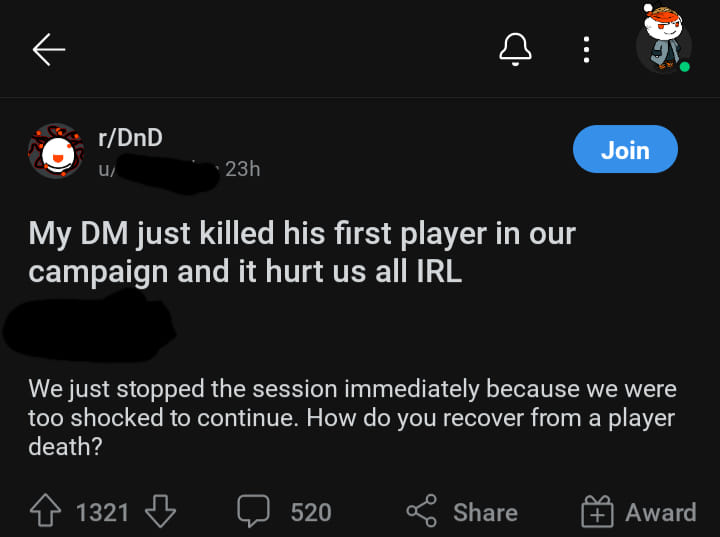
All that said, I never understood the aversion modern gamers have towards character death (at least among those that play D&D). I have a friend who refused to kill my character even though he knew I didn’t mind it. He minded. There are two reasons I’m completely okay with character death. First, without risk, the reward loses meaning (at least to anyone with an ego). Second, as with other forms of failure, it presents new opportunities. I can switch to playing a completely different character before having the chance to grow tired of the now-dead character. Moreover, the one time I convinced that friend to kill one of my characters, it was because I wasn’t enjoying playing the character. This character is the brother of two of my other characters, one of whom I played as recently as this year’s Winter Fantasy. His death was not only heroic, but has now enhanced my other characters’ backstories. Win-win. Besides, it’s not as if anyone is actually dying. This is a fantasy world and should be viewed as such.

Now, all that said, we can have overkill. I was in a 4e Dark Sun campaign where, over 9 weeks of gaming, I lost five characters. My barbarian died in week one, so I rolled up a new character that lasted two weeks, then another that lasted two weeks, and so on. Each of those deaths meant that I had to write one of my one-page-or-more backstories. To paraphrase a friend, I shouldn’t have to write that much for you unless the result is money or a university degree. Full disclosure: One of my characters was a reanimated revenant of the one that died the week prior. So, I prefer a balance between the two rather than choosing one at the exclusion of the other. As with most things, the answer lies somewhere in the middle.

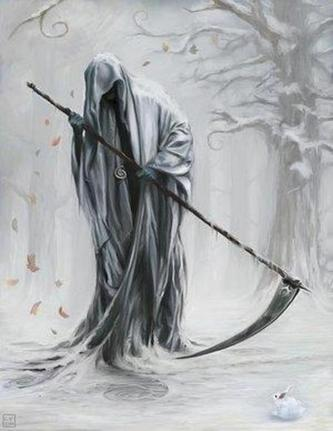
This streak of daily blog posts is almost dead.

Follow me on Twitter @gsllc

Dungeons & Dragons is a trademark of Wizards of the Coast, LLC, who neither contributed to nor endorsed the contents of this post. (Okay, jackasses?)


The Curious Legality of the Aspirin Trademark @bayer #trademark #ip #aspirin #Bayer #TrademarkTuesday

If you enjoy this post, please retweet it.

Blog posts cannot substitute for legal advice. If the topics discussed in this post are relevant to a real case you have, please consult an attorney.

I’ve previously dispelled a common misconception between copyrights and trademarks. In summary, the “doctrine of laches” does not apply to copyrights. That is, if a copyright holder doesn’t enforce their copyright, they don’t lose the copyright. The doctrine of laches does apply to trademarks. Bayer’s Aspirin is an example of a trademark that fell prey to the doctrine of laches and was subsequently “genericized.” But there’s a legal twist to this story.

The German company, Bayer, held a patent in acetyl salicylic acid (“ASA”), and a trademark in Aspirin to identify it. The patent expired in 1917, but they continued to sell it under the brand name Aspirin, so the trademark lingered. Due to World War I, Bayer lost all its assets including its intellectual property. A new, company, bought those assets (including the trademarks “Bayer” and “Aspirin”) and continued selling ASA using the Aspirin trademark. Unfortunately, “considerably more than 220 tons” of counterfeit Aspirin flooded the U.S. market. This ASA was sold as “aspirin” throughout the general public, but with perhaps only an insignificant percentage of exceptions, manufacturing chemists, retail druggists, and physicians didn’t use or sell the infringing ASA.

In Bayer Co. v. United Drug Co., 272 F. 505 (S.D.N.Y. 1921), Bayer sued to enforce the trademark, and the result was, despite the Honorable Learned Hand’s claim, a first in the law. Here’s the relevant quote, which I’ll next explain.

The case, therefore, presents a situation in which, ignoring sporadic exceptions, the trade is divided into two classes, separated by vital differences. One, the manufacturing chemists, retail druggists, and physicians, has been educated to understand that “Aspirin” means the plaintiff’s manufacture, and has recourse to another and an intelligible name for it, actually in use among them. The other, the consumers, the plaintiff has, consciously I must assume, allowed to acquaint themselves with the drug only by the name “Aspirin,” and has not succeeded in advising that the word means the plaintiff at all. If the defendant is allowed to continue the use of the word of the first class, certainly without any condition, there is a chance that it may get customers away from the plaintiff by deception. On the other hand, if the plaintiff is allowed a monopoly of the word as against consumers, it will deprive the defendant, and the trade in general, of the right effectually to dispose of the drug by the only description which will be understood. It appears to me that the relief granted cannot in justice to either party disregard this division; each party has won, and each has lost.

Id. at 513-14.

What all of this means is that, to the general public, aspirin was no longer a trademark. Anyone could sell ASA to the general public and call it aspirin (with a small A), because to the general public, they were the same thing. However, Aspirin (with a capital A) was still a distinctive mark among manufacturing chemists, retail druggists, and physicians, because they never treated it as a generic term. As professionals in the industry, they weren’t burdened by having to call the generic drug acetyl salicylic acid (or monoaceticacidester of salicylicacid), so they continued to do so. Also, those professionals weren’t willing to trade in infringing goods, so they never did.

The net result was that the trademark was no longer applicable to the general public, but it was still valid when selling to manufacturing chemists, retail druggists, and physicians.

Weird, huh?

Follow me on Twitter @gsllc
Follow Bayer @bayer

Puzzles and Cistercian Numerals @dCode_fr #ADnD #DnD #RPG #TTRPG #1e

If you enjoy this post, please retweet it, and please visit my 1st Edition D&D resources page.

It’s been a minute since I’ve written about D&D, and it’s going to be a little while before I do so again. (The next couple weeks of posts have been written.) So, I wanted to get back on track. I’ve talked about how I prefer to play D&D, and why that drove me from the game for a while, and in that post I discussed puzzles a bit. This expands on that.

I like puzzles.

Acrostics, sudoku, crosswords, Wordle . . . you name it, I love to solve them or write them. I also like to be challenged, which means if I always succeed, I lose interest. I’ve noticed that many players don’t like puzzles, and that many who do like them will get frustrated unless they always succeed. That’s fine, of course; play what you like, but it’s part of why I stopped playing altogether, and even now am just running games. I seem to be in a small minority among the nerd circles I frequent. Crafting puzzles is as much about finding the right level of difficulty for the group as it is about the logic of its design.

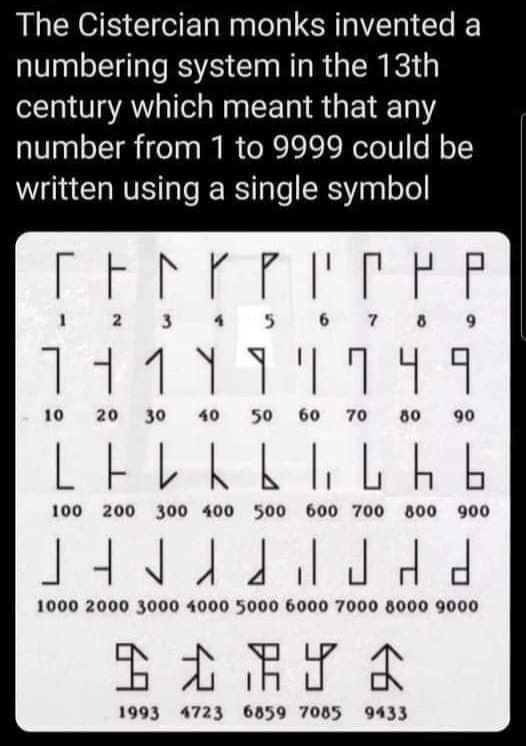
I think I found the basis for a puzzle that many people can enjoy. I present to you the Cistercian numbers.

If you have a group that doesn’t like hard puzzles, then simply writing a number can be the puzzle itself. To make sure you get it write (intentional typo, because I think I’m funny), here’s a converter care of @dCode_fr. If you have a group that likes hard puzzles, this can throw a wrinkle into the mix. If they need to calculate or otherwise decode a number, make them read the puzzle, or write the answer, in this system. You could also provide a hint that the characters must add the appropriate markings in the order in which they appear in the Arabic numerals (i.e., if the number is 12, add the horizontal line running left first, and then the one running right second — 10 than 2). Perhaps a Cistercian clock could be counting down, so that you don’t know how much time you have. That would probably require some software engineering on your part, but if you can code and you like puzzles, why not?

I like puzzles.

Follow me on Twitter @gsllc
Follow dCode @dCode_fr

Dungeons & Dragons is a trademark of Wizards of the Coast, LLC, who neither contributed to nor endorsed the contents of this post. (Okay, jackasses?)


Juiblex: The Nerdiest Example of the Mandela Effect in the History of Sociology (Maybe) #DnD #ADnD #1e #RPG #TTRPG #gaming #Juiblex #sociology #MandelaEffect

If you enjoy this post, please retweet it, and please visit my 1st Edition D&D resources page.

If you’d rather listen to this blog, you may watch the video here.

I posted this on social media in the past, but never on my blog.

For those few that don’t know, the Mandela Effect is an effect popularized by a “paranormal consultant” (i.e., a kook) to describe false memories shared by a large number of people. Some famous examples are the misremembered movie, Shazam, starring Sinbad, which was memorialized in an April Fool’s Day joke; spelling errors like “Fruit” Loops and Oscar “Meyer”; and, of course, the alleged 1980s death of Nelson Mandela in prison from which the phenomenon gets its name.

Eats Froot Loops for breakfast and hot dogs for lunch.

Enter Juiblex, the grotesque demon lord of slimes first introduced in the 1st Edition D&D Monster Manual. Whenever I mention this, there’s always someone that chimes in that, even today, they thought JuIBlex was spelled JuBIlex. That is, many people, myself included, switched the ‘i’ and ‘b’ in the word. This might be — and I say “might” because I’m neither a psychologist nor a sociologist — because a few people made that mistake, and then it cascaded through nerd society (i.e., the Mandela Effect). It might also be because “Jubilex” is easier to pronounce, so everyone making that mistake did so independently based on some psychological effect (i.e., not, as I understand it, the Mandela Effect). I prefer the former hypothesis. It supports my premise.

Now there’s some psychological bullshit.

But wait! There’s more!

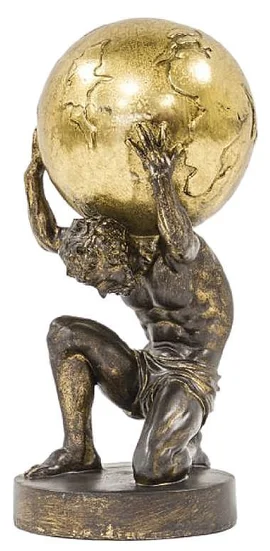
Earlier this week, I published a post on Atlas. As originally written, I pointed out that Atlas carried the world on his shoulders. I was reminded that this is, of course, wrong. Atlas held up the sky. This common mistake has changed the way Atlas is portrayed in art, and may be the origin of the phrase, “carrying the weight of the world on one’s shoulders.”

It appears this may also be an example of the Mandela Effect with an interesting impact on art and language.

Considering how cold the South Pole is, you’d think he’d wear more clothing.

Follow me on Twitter @gsllc

Dungeons & Dragons is a trademark of Wizards of the Coast, LLC, who neither contributed to, nor endorsed, the contents of this post. (Okay, jackasses?)

Men Are Pigs #DnD #ADnD #gaming #TTRPG

If you enjoy this post, please retweet it, and please visit my 1st Edition D&D resources page.

Men will say anything to get some action, won’t they?

I don’t buy it.

Follow me on Twitter @gsllc

Dungeons & Dragons is a trademark of Wizards of the Coast, LLC, who neither contributed to, nor endorsed, the contents of this post. (Okay, jackasses?)