Let's roll some dice, watch some movies, or generally just geek out. New posts at 6:30 pm ET but only if I have something to say. Menu at the top. gsllc@chirp.enworld.org on Mastodon and @gsllc on Twitter.
Author: Frylock
Robert E. Bodine, Esq. is an attorney in Virginia focusing his practice on real estate and intellectual property law. He is one of the founding members of the Gamers’ Syndicate, a Washington, DC-based gaming club. He was the author of the Loremaster.org article series, Protection from Chaos, dealing with intellectual property law matters as they relate to the gaming industry, and has represented several game designers on intellectual property matters. You can follow him on Twitter @RobertEBodine for politics, @PropertyAtty for legal matters, @GSLLC for gaming matters, and if you’re a sports fan, @MMADork.
I don’t know if it’s my best memory of my cousin, Norma, but it’s the one that immediately comes to mind. Norma and a friend came to Chicago when I was in law school (1999 IIRC). We were barhopping in the Rush Street district, which was a popular weekend spot back then. Frankie Valli, a singer well-known for his small acting and large musical roles in Grease, was walking the streets, and Norma and her friend caught his eye. He was hitting on them. I was standing close by to make sure they were okay, which almost resulted in a fist fight with one of his security guards. He kept placing his hand on my chest, and I kept swatting it away. Everything worked out, though. That 60+ year old pervert didn’t get laid that night. Well, at least not by my 29/30-year old cousin. I didn’t follow him around. (EDIT: I added more to this story on tomorrow’s post.)
Last Thursday, Norma died of the same cancer that killed a handful of people in our extended family. I found out on Saturday and found her obituary at about noon today. The most difficult part of being estranged from one’s nuclear family is the loss of people who you still love. Norma was wonderful, and I loved her very much. She was only a year younger than I, but I could never imagine outliving her. I wish I could have said goodbye, not only to her but to a couple others who’ve died, but this is a consequence you sometimes must accept to keep yourself safe and sane. Leaving ties gives them a way to sneak in and do damage, and asking the ones you love to make a choice between you and the ones that harm you is not a fair thing to do. As far as I’m concerned, this is just one more thing they’ve taken from me. I’m a far happier and healthier person in general, but not today.
My return to 1st Edition AD&D (“1e“) is now two years strong, and now I’ve added a 4th Edition D&D (“4e“) game to my schedule. So, it was a nice surprise for my friend, Mike, to let me know that he was offloading his old school D&D material. Before you get too excited, he’s giving these materials only to people he knows well because we’re getting them on the honor system. The only cost is to make a (tax deductible) donation to a cat or dog charity that represents the approximate cost to buy them in the store or on eBay. Considering I’m going to get a cat in early April, that’s an easy ask of me.
So, what did I get? First up, the box sets and hard-covers.
Menzoberranzan box set, Star Frontiers Alpha Dawn box set, Greyhawk Adventures, Dragon Lance Adventures, the Scarlet Brotherhood, a reprint of the Second Edition Player’s Handbook, Oriental Adventures, and Dragon #56
In general, I never owned any of these in the day, and I bought the PDF of Oriental Adventures from the DMs Guild during my recent rebuy because the hard cover wasn’t on sale. I’m glad I now have a hard cover without paying through the nose for it. I’ve been intrigued by Star Frontiers based on the relatively recent chatter it’s generated — the less I say about that chatter, the better — so I picked it up out of curiosity. As for Dragon #56, I told Mike I wasn’t interested in any of the magazines except perhaps the one that has the 1e bard in it, redone as a character you can play at 1st level. Sure enough, he had that issue. Score!
Next up, some soft covers.
I was planning to buy the Book of Lairs and Book of Lairs II, so that makes this supplement all the sweeter. I never owned any of these materials either. Now for the minis.
Yeah, that’s quite the haul, ain’t it. Of particular interest . . .
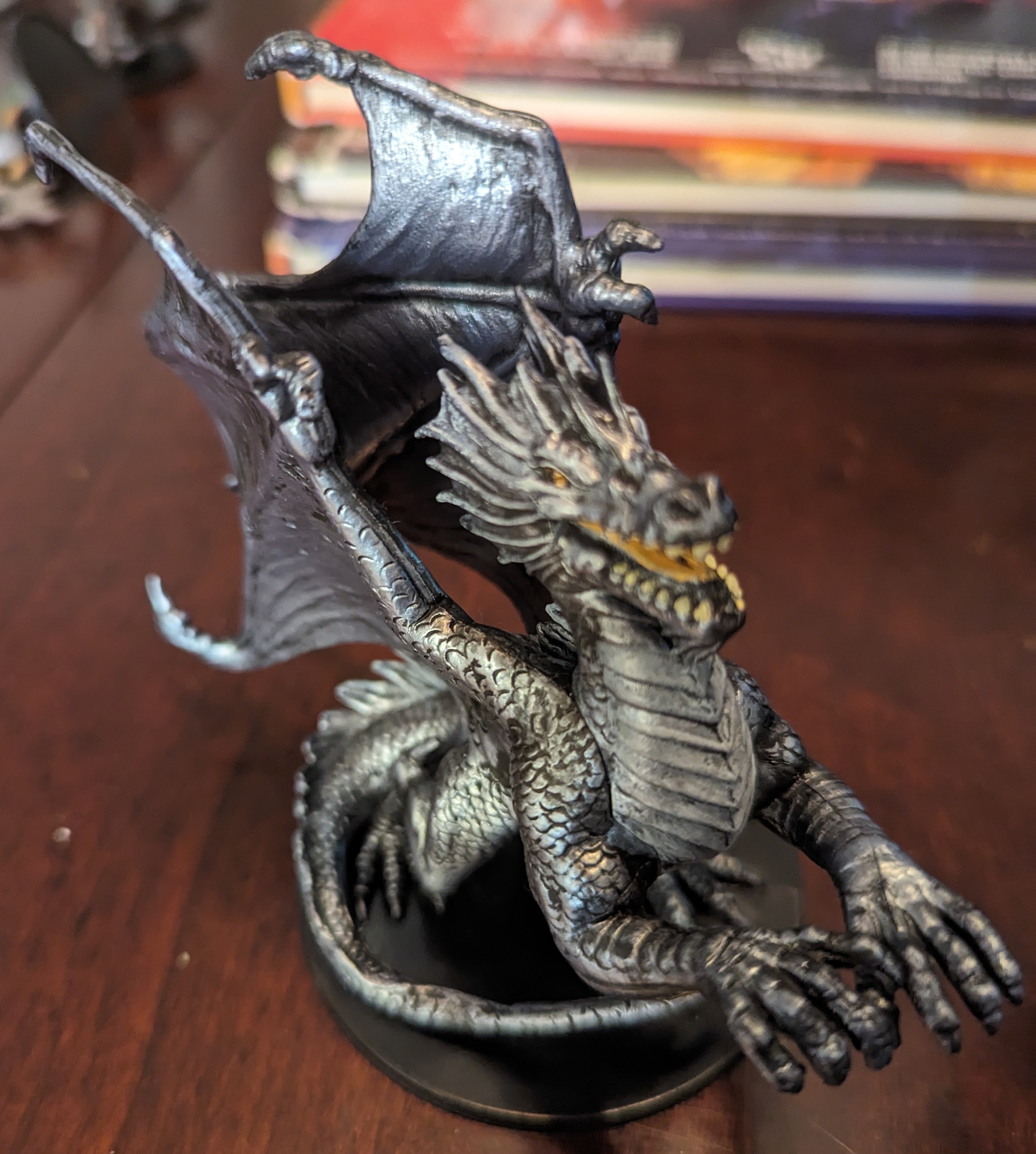
I never owned this guy. In fact, I never knew it existed, and I was quite the mini collector during the 3rd Edition D&D and 4e days. Somehow this one escaped me. Right now, the cheapest I see it on sale is $20 + about $6 shipping, so this one will set me back a bit.
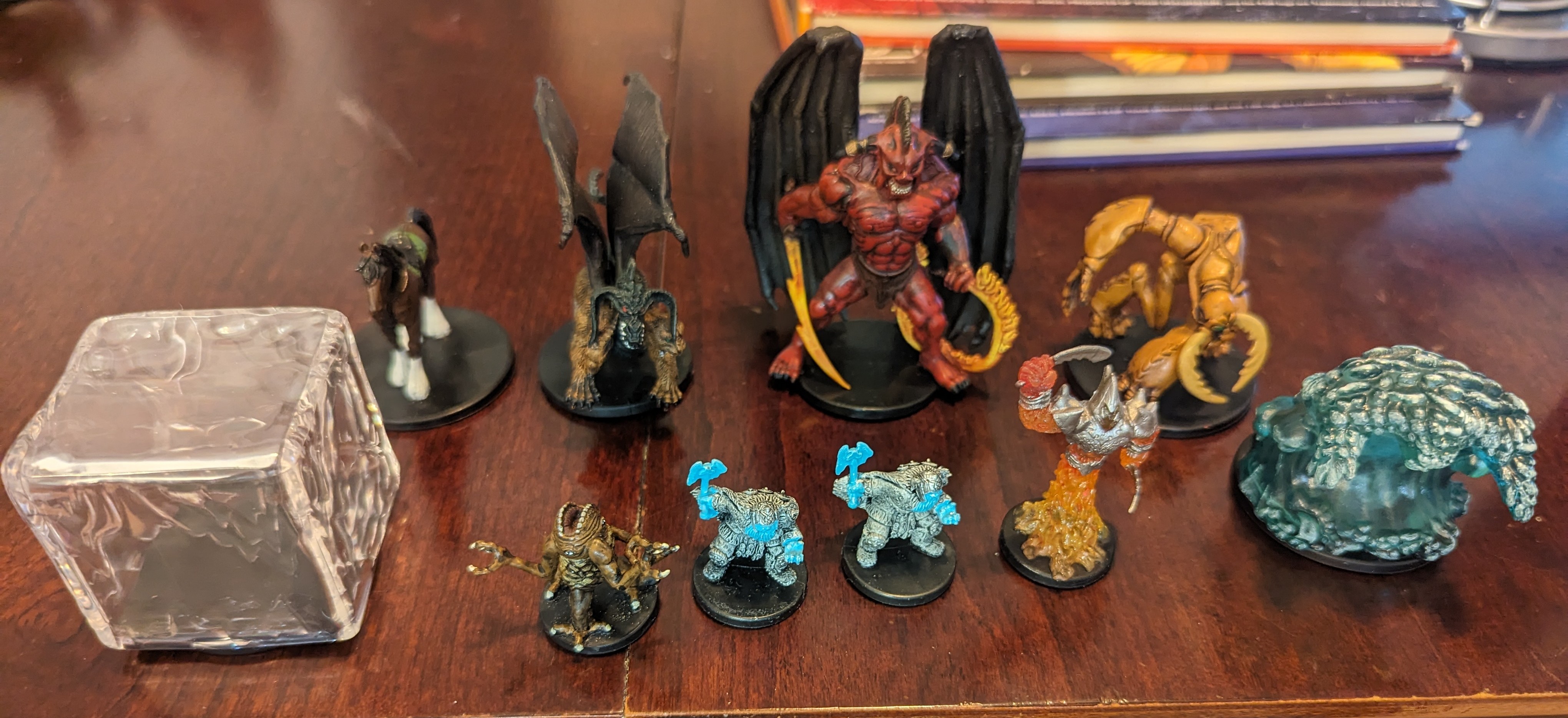
These are just a few of the minis that I’ve never owned.
These are a few of the minis that I own but could always use more of. My players may not appreciate multiple Balors on the field of battle, but them’s the breaks.
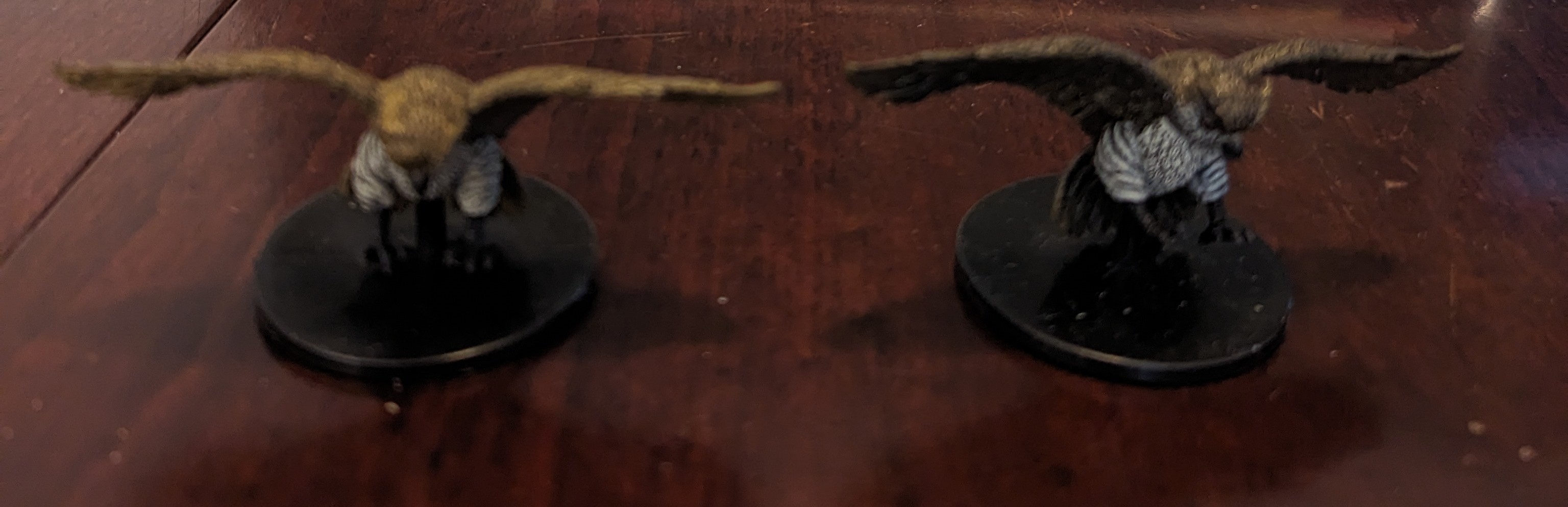
One of my Living Forgotten Realms characters had a giant owl, so I was a bit disturbed when the stand for that mini broke. No amount of crazy glue could fix it. Now, I’ve replaced it. I think I took the second one out of some sort of cosmic spite.
Importantly, I have every intention of using these goodies in my 1e and 4e games, so this is quite the haul.
Some animal shelter is going to be very happy very soon.
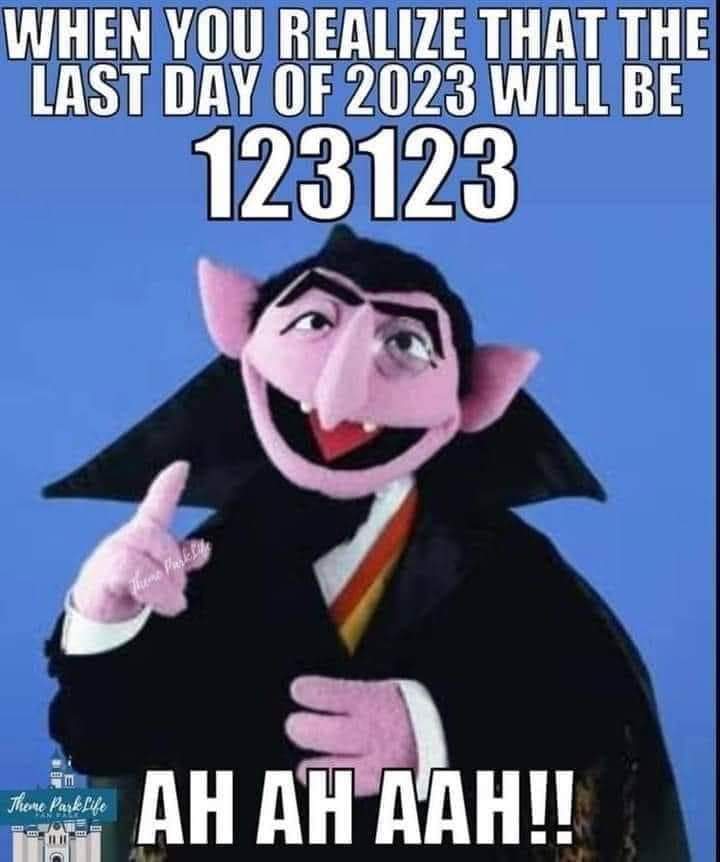
I wrote this post on January 31, 2023. I’m sure this is old news by now, but that’s not my fault. The fact that it’s been shared so much since the year started just establishes that you have poor comedic timing.
If you enjoy this post, please boost it via BlueSky, Mastodon, and/or Twitter/X.
Social media led me to an article entitled, Popular Movies That Aren’t Available to Stream Anywhere. Yes, I took the time to capitalize all the major words in that title because the Associated Press standard is stupid. Anyway, it’s an interesting list, and I’m sure you’ll sympathize with a lot of their choices. However, there’s one movie that isn’t on this list, probably because it isn’t that popular, but it’s one I wish I could find on a streaming service.
I Love You to Death
Movie poster with Kevin Kline in his white pajamas with a whole in his chest.
I Love You to Death was released in 1990. The “black comedy”, which was based on a true story, instantly became one of my favorite movies. The movie centers on an unfaithful husband, Joey, and his wife, Rosalie. When Rosalie discovers Joey has been cheating on her, she tries to kill him. For the record, the real “Rosalie” (Francis Toto of Allentown, Pennsylvania) spent four years in jail for attempted murder, but the couple is still married to this day.
The cast was incredible, led by Tracey Ullman, Kevin Kline (one of my favorite actors), Keanu Reeves (“Deliver us from freedom.”), the late William Hurt, and the late River Phoenix. Heather Graham and Phoebe Cates are also in it. As far as I know, it was Tracey Ullman’s only leading role in a motion picture. I could be wrong, but she did a great job in this one.
The trailer is here. You can buy or rent it here. I decided to buy it.
A random thought inspired this post, which will likely result in a series of posts. I asked myself which album was my favorite among those produced by the Cars. There are honestly only four candidates for me: The Cars (1978), Candy-O (1979), Shake It Up (1981), and Heartbeat City (1984). All of these albums are good, and all have multiple songs that received substantial airtime, but as near-and-dear to me as Shake It Up is, and as much commercial success as the singles of Heartbeat City enjoyed, I have to go with The Cars.
This album is nearly perfect. Only three songs on the album didn’t substantial airtime, and only one of them absolutely shouldn’t have. 😊 Consider the following data:
So, three of these new wave songs are released as singles, but I could hear six almost every time I went radio station surfing. Most of the songs on this album were all over my radio well into the 80s. I think Benjamin Orr gets the nod over Ric Ocasek as far as the songwriting goes, but this is still a solid album from top to bottom.
Of course, this is just an opinion, and everyone is free to form their own, but besides how I personally feel about the music, that data paints a picture of a good album in the eyes of the masses. It’s their only album that went 6x platinum (in the US), with even Heartbeat City (and Candy-O) trailing at 4x platinum. Moreover, most albums have several weak tracks, but this one has only one that I’d place in that category. Lastly, I’ll add that this album holds 5 positions in the list of the top 15 Cars songs, including #1, according to Billboard Magazine. Rolling Stone places 5 songs from The Cars on their top 17 “essential” list. Not that you should ever take the critics too seriously, but for only the second time, I’m on their side. The Cars takes my top spot for this band.
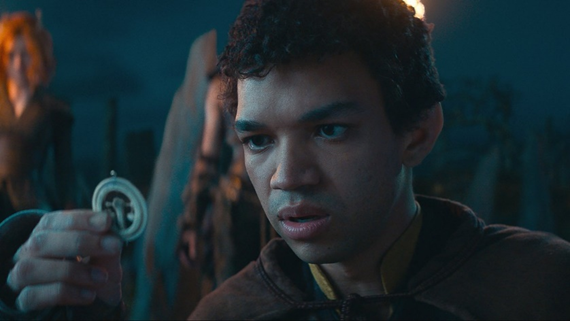
Timing is apparently not my strong suit. A few days ago, someone mentioned how much they loved the graveyard scene in the Dungeons & Dragons: Honor Among Thieves. Watch the scene here before it disappears.
I wasn’t as big a fan of the scene. Sure, it was funny, but it exemplifies the difference between legacy and modern gamers. Okay, I mean old people and young people. Whatever. As D&D players, we all want this movie to emulate the game, so our different approaches to the game affect our reactions to the movie or individual scenes. In the old days, failure was a thing in RPGs. If a magic user (that’s a wizard for the young’uns) wanted to learn a new spell, the player rolled percentile dice with a target number dependent on the character’s intelligence. If the roll failed, the wizard not only didn’t learn the spell, but could never learn it. Ever. That’s failure. The dice giveth, and the dice taketh away.
Nowadays, failure has fallen out of favor, granted to different degrees depending on the individual. Today, if a player were told that they could never learn the fireball spell, they’d be furious. If they couldn’t deduce a password from a riddle, it’s possible they’d quit your game. As I’ve discussed before (see the section, Another Example: The Puzzle Encounter), I once had players get angry at me because they couldn’t solve a puzzle trap, and as a result, the trap went off doing zero (0) points of damage to them.
Yeah, you read that right, but read it again if you don’t think you did.
Play whatever game you want — that’s the name of this blog — but I find this approach boring. I don’t try to solve easy sudoku puzzles; I go for the hard ones. I want the chance of failure because that’s how I improve. But even from a purely entertainment perspective, what’s the point of rolling the dice or even showing up to the game if you know the outcome? The players should instead tell the DM how they want the session to go, and the DM respond, “Sure, that’s what happened. Congratulations. You won D&D. Now get out of here and play some miniature golf or something.” Where’s the excitement in that? I really don’t get it, and it’s why I’m not involved in organized play anymore. Most tables just hand the players the victories.
This is not to say that I enjoy the notion of a character dying during character creation as in Traveler. There should be a chance of success, and the chances should tilt in favor of the players, but when the players don’t start enjoying my game until I remove all the challenge from it, I think the pendulum has swung too far in the other direction.
Nowadays, players don’t accept near enough failure in their games for them to be of interest to me, and the graveyard scene demonstrates this point. The point of the scene was to do something funny, and it succeeded, at least at first. I have no problem with that. However, after they failed, they simply tried again. And again. And again. The resource allowing them to speak with the dead was apparently unlimited, which means they couldn’t fail. Not only did that remove all consequences, and thus appear non-heroic, but it also detracted from the joke itself. Repeating a joke too many times is one way to ruin it. Why is the screw up funny if this is an unlimited trial-and-error.
The resource.
I would have written the scene in one of two alternative ways, and this is how my game would play out. First, they fail, so they have to be clever and come up with a different way to learn the information they need. Because this is a movie, that may not work. The movie could get really long, and no one really wants to watch a movie about people studying at a library. Second, they fail, but they get only one more bite at the apple. This time, they plan it out, come up with the five questions, assign one person to ask them, and everyone else shuts their annoying mouths (that’s another issue altogether).
That’s funny and heroic because the characters still had to rise to the occasion. But I really don’t think people want true heroes anymore, which is also demonstrated by this scene. They want to see idiots . . . .
. . . like him . . .
. . . win the day despite having none of the tools, including the personality and strength of character, to succeed. The only reason he succeeds is because the script says so. There’s nothing about him, even in a world of magic and monsters, that justifies his success logically. Even within that world, he’s a screw up, but he suddenly succeeds, because the screenwriters know that’s what the modern gamer wants to see, and they’re the foundation of the audience for this movie. After his success, he returns to being the same idiot that shouldn’t have succeeded in the first place. He didn’t improve; he was just handed success by the writers. This reminds me of another example.
None of us are perfect; some of us just can’t handle being reminded of that.
If you think being a lawyer is easy, which at this point you’re a dope if you do, I can assure you that it isn’t. Yesterday was an example of why it isn’t, and in a way that wasn’t obvious.
I’ve never played Mortal Kombat. Am I doing this right?
Here’s something to which many non-lawyers can relate. Is there any time period or specific event in your life that you never want to revisit? Yes? Okay, then imagine if someone started asking you about it, and really dug into the weeds, demanding details. Now imagine that you couldn’t respond to those questions with, “Fuck off. Mind you’re only business.” Instead, you had to answer those questions honestly and thoroughly, and if the questioner forgot to ask about a relevant topic, or if their phrasing allowed you to dodge it without lying, you’d have to volunteer the hidden information.
Yesterday, I had my character fitness interview. I’m joining the bar of an additional state, and that’s part of the application process. So, not only did I complete 185-page application (with attachments) detailing my entire life, but then I had to sit face-to-face with a complete stranger and discuss the ugly, deeply personal parts.
An Example
When I first got the call to schedule the appointment, I asked if I needed to bring anything, and my interviewer responded, “No, I have your bar application here, so I have your entire life in front of me.”
He wasn’t kidding, because bar applications are more detailed than any security clearance application I’ve ever completed. My response to that was a joke: “Well, you don’t have my medical records. Should I bring those?”
I admit, this isn’t a joke Bill Burr would tell, but it elicited a chuckle and an “of course not,” and that was that. However, my medical history came up in the interview. It was tangentially related to a topic we were discussing, and I must be honest and thorough in my responses. What should have remained a joke didn’t, and there’s nothing either of us could do about it. If it’s relevant, then he has an ethical responsibility to ask (even though he clearly didn’t want to), and I have an ethical responsibility to respond.
Believe it or not, that’s not the worst of it. That’s just the one example (from the single example of bar applications) that I’m willing to give you. The medical issue in question was a hernia, and I have no problem admitting to that publicly. But what if your medical issues were far more private? You wouldn’t be pleased discussing them with a stranger, would you? As I said, this is a brutal reality of practicing law. We’re under a constant microscope not only today, but yesterday, last year, and 1990. Everything is open to inspection. As the rise of the internet has shown us, no one is 100% clean. We’ve all got regrets, but those of attorneys are always on display even if capable of being hidden, and sometimes you can’t hide from the ensuing discussion despite the number of wounds it reopens.
On the bright side, I’m all but certain I’m going to be approved for membership. Mission accomplished.
A while back, I told you I was preparing for a return to 1st Edition AD&D, and to do so, I had to update my stash of 1st Edition Dungeons & Dragons (“1e“) materials. Fast forward a couple of years. I’ve been running a 1e game for the first time in 40 years, and the only addition I had to make to my stash was the Egg of the Phoenix. Now, I’m less than 24 hours away from hosting a 4th Edition (“4e“) game (alternating DM duties with Luddite Vic), finally finishing my unfinished business, but I already have all the 4e stuff I could even need.
On a related note . . . .
Even though I can no longer stand 3rd Edition (“3e“), there were some books that were fantastic that I wish I had never sold. Serpentine Owl, who’ll be playing in the upcoming 4e game, gave me the reprint of Deities & Demigods (in perfect condition with the 3.5e conversion in the back); Erik (who left Twitter/X) gave me Hordes of the Abyss and Tyrants of the Nine Hells (both also in perfect condition); and then Jason (on Twitter/X but doesn’t appear to use it) gave me the Book of Vile Darkness (in pretty good condition). If I had gone through eBay, I would have paid almost as much for those four books as I did for all the 1e reprints I bought combined, but I got them all free.
If you click through the Book of Vile Darkness link, you won’t be able to view it without logging in and removing filters for adult content.
<gears turning>
So, after mulling it over, I realized, “The universe has provided so much in this regard, I think I can justify doing something stupid, especially something that isn’t too stupid.” I went to eBay and purchased the mediocre-at-best Book of Exalted Deeds just to have a match to the Book of Vile Darkness. I don’t know if I’ll ever use the material, but it’s nice to have that matched set, and I didn’t have to pay anywhere near USD$100 to get it. Now, I think my stash is complete, but who knows what I’ll be writing in a year?








 Play What You Want