
Why Do I Get So Riled up over the OGL(s)? #TTRPG #RPG #DnD #OGL #ORC #Paizo #WotC

If you enjoy this post, please retweet it or boost it.

I posted this goofy meme across social media this past week.

I received a not-so-goofy response. Long story short, Zephyr the Dream Dragon on Mastodon responded that he’d never want to use wand-wielding conductors as models because he’s worried he’d get sued by J.K. Rowling. Now, I think Zephyr gets it. I think Zephyr realizes that any such lawsuit would be frivolous. But not everyone does, and that’s a huge problem. It also pisses me off.

I’ve had too many conversations with too many people that think the WotC’s open gaming license (“OGL”) and its clones are legitimate licenses. WotC’s OGL is most certainly not, failing on multiple fundamental points, some of which you learn about in the first week or so of Contracts Law class. (Even when they get something right, it’s a potential disaster.) My posts on the ORC raise some doubts, but certainly leave open the possibility that the ORC is a legitimate license (albeit an unnecessary one) under very narrow set of circumstances and making some huge assumptions as to how courts will rule. However, even if enforceable, the ORC misstates the law and contains clearly unenforceable language designed to do nothing else but make you think they’re doing something better than WotC. That dishonesty is the symptom of a larger disease.
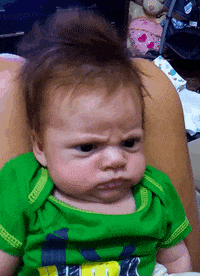
All of these gaming companies that are producing OGLs knowing full well that they’re probably not enforceable, and in any event can be done in a better way (public domain).

So, when (for example) both Paizo and WotC claim, implicitly or expressly, that single words can be copyrighted, or even that short phrases can be copyrighted, it’s no small matter. Too many people, whether they understand the ridiculousness of the claim or not, abide by their wishes and self-censor, as do the multitude of those that do believe that to be true.*** That’s utter horseshit. The purpose of copyright isn’t to reward artists for their hard work; that’s just a mechanism to achieve the true goal. The true goal is to give us, the public in general, an environment rich in art. But if copyright is used to suppress the creativity of artists, why have it? In fact, doing so is copyright misuse, but how often is that punished?

*** My point is that, while I can’t fix economic issues that cause your self-censorship, I can certainly fix legal misunderstandings that cause it, but you have to be willing to accept that you’ve been fooled all these years.

What we really need is a cheap tribunal (think small claims court of copyright infringement) that’s not as narrowly useful as what we currently have. People should be able to fight frivolous claims of copyright infringement regardless of their financial means or legal sophistication, and they should be able to do so relatively quickly. That’s far easier said than done, but our system doesn’t even try, and as much as it pains me to say this, if the copyright (or any) system runs contrary to its own purpose for existing, it shouldn’t exist. I don’t want that, because a properly constructed copyright system can be extremely beneficial to society. So, I’d desperately like to see us fix it, and the RPG industry’s misstatements of the law are an unnecessary barrier to that goal.

Stop believing lies.

Follow me on Twitter @gsllc

Dungeons & Dragons is a trademark of Wizards of the Coast, LLC, who neither contributed to nor endorsed the contents of this post. (Okay, jackasses?)


Vlog: Acceptance and the ORC License #Copyright #OGL #TTRPG #RPG #Pathfinder #ORC #Contract #license #game #gaming #Paizo #vlog

If you enjoy this post, please retweet it and/or boost it.

This is the second of my two planned videos about Paizo’s ORC license. This one summarizes the issues I raised in the last video, follows up on one of those issues, then discusses an entirely different topic. I take a side trek towards shrink wrap licenses, but as long as this video is (41:00), I tried to keep it as brief as possible, so I didn’t mention the mild circuit split on shrink wrap licenses. Basically, sometimes the courts uphold them, and sometimes their skepticism has them strike them down. In other words, the concerns I expressed aren’t merely speculation, but rather based on actual disagreement between different courts. But hey; just watch the video. I wasn’t nearly as fired up in this one.

EDIT: After you watch the video, come back here for point of clarification. I say that shrink wrap licenses are being used in a weird way with respect to RPGs. Here’s another way to phrase it. With software, the licensor places a unilateral contract on their product and says, “This product is paired with this license. Use the product, and you accept the license.” With RPGs, the licensor (e.g., Paizo) isn’t putting their license on their own product, but even if they do, it’s not capable of being accepted at that point anyway, so it means nothing so far. Instead, the licensee (e.g., you) are putting Paizo’s unilateral contract on your own product, and in doing so effective saying, “Yeah, I accept this.” But you never actually say that to the licensor. Moreover, if Paizo accidentally figures out that you used the license on the product, they’re never going to contact you. Everyone is in a contractual relationship with everyone else, but most of us don’t actually know it. That’s weird.

Remember, shrink wrap licenses are unproven where it counts, and there are legitimate reasons not to trust them, not the least of which is that they’re unilateral. Now you’re using them in a way unique to an industry that’s rarely subject to litigation of this sort. That’s even more suspect.

References:

Idea v Expression in Tabletop Role-playing Games
The Merger Doctrine
My One-Stop Stat Block Posts
Something Stupid, and Something Odd

Tread lightly.

Follow me on Twitter @gsllc
Follow me on Mastodon @gsllc

Dungeons & Dragons is a trademark of Wizards of the Coast, LLC, who neither contributed to nor endorsed the contents of this post. (Okay, jackasses?)

Vlog: Idea v. Expression, Consideration, and the ORC License #Copyright #OGL #TTRPG #RPG #Pathfinder #ORC #Contract #license #game #gaming #Paizo #vlog

If you enjoy this post, please retweet it and/or boost it.

This is the first of my two videos about Paizo’s ORC license. This one rehashes (far more than it should have) the idea v. expression dichotomy, and then discusses problems with consideration within the license. I did it off the top of my head, which is never a good idea (over 40 minutes of ums and ahs), so watch it at at least 1.25 speed and expect to take breaks.

This is just the tip of the iceberg as far as how animated I get.

My second video on acceptance was just recorded, so that will go up tomorrow. It summarizes the issues I raise in this video, follows up on one of those issues, then discusses an entirely different topic. If you have any other questions on either what I’ve discussed in these two videos or what I haven’t, please let me know. I know there are other issues people are contemplating.

References:

Idea v Expression in Tabletop Role-playing Games
The Merger Doctrine
My One-Stop Stat Block Posts
Something Stupid, and Something Odd

Follow me on Twitter @gsllc
Follow me on Mastodon @gsllc

Dungeons & Dragons is a trademark of Wizards of the Coast, LLC, who neither contributed to nor endorsed the contents of this post. (Okay, jackasses?)

Idea v Expression in Tabletop Role-playing Games #Copyright #OGL #TTRPG #RPG #Pathfinder #ORC #Contract #license #game #gaming

If you enjoy this post, please retweet it and/or boost it.

I’ll be recording a video about Paizo’s ORC license soon. This serves as a prologue to that video. Here, I discuss the distinction between ideas and expressions in copyright law.

I recorded this while procrastinating; I didn’t want to go to the gym. Therefore, I didn’t do any research or write a script, so don’t expect any justification for my statements or structure to my words. I just want to make sure you understand a critical issue about copyright law, in layman’s terms, before dealing with the ORC.

But I’d really like some royalty checks.

References:

The Merger Doctrine
My One-Stop Stat Block Posts
Something Stupid, and Something Odd

Follow me on Twitter @gsllc
Follow me on Mastodon @gsllc

Dungeons & Dragons is a trademark of Wizards of the Coast, LLC, who neither contributed to nor endorsed the contents of this post. (Okay, jackasses?)

Rotting Toes: An #Orcish Dice Game #DnD #4e CC: @Erik_Nowak

Yeah, this game is probably fair.

This is a guest post from DM extraordinaire, Erik Nowak. I was one of the players in this game and have used Rotting Toes in the last season of D&D Encounters. I hope you enjoy it as much as we did.

==============================

In a recent D&D 4E session set in Neverwinter, the players needed access to the city’s orc-controlled River District. They approached a gate guarded by several bored orc soldiers. Some of the orcs were lightly dozing, while others were gambling, playing a dice game in the dirt. It was to be a simple role-playing exchange: the orcs act tough and demand 10 gold pieces per character to enter their territory – either the heroes paid, or they act tough and refuse and a fight breaks out. Instead it went like this:

“Can I make a check to see what game they are playing?”, one player asked.
[Rolls a skill check; super high result, of course.]

I responded, “Um… sure. It’s called, uh, rotting toes.” That sounded fittingly orcish.

“How is it played? And can we join in?”

“Sure, the orcs are happy to take your gold.”

Then I found myself in a pickle: I needed a dice game! I don’t know any dice games other than craps, and I didn’t want to use that.

So I made one up on the spot.

The first thing I thought of was the old school AD&D method of rolling for ability scores: roll 4d6 and drop the lowest die. I started there and was able to tie it in with the name by thinking that the die-dropping represented a toe rotting away from a diseased foot. Then I made the rest up right there and let the players have a go!

History

The game has its root in the story of an orc warrior who was suffering from a wasting disease of the foot that resisted magical healing. A shaman of Yurtrus, the orc god of death and disease, told the warrior that his fate was in the hand of Yurtrus alone, and the inscrutable, silent god would do as he pleased, unmovable by deed or prayer. All the other orcs could do was bet on whether or not the warrior’s toes would rot off.

(What happened to the orc, you ask? His toes all rotted off. Then his foot, followed by the rest of the leg. Then he died. Orc tales don’t have happy endings, people.)

Pictured: Someone who didn’t take the feat, Skill Training: Math.

Playing the Game

To play rotting toes, you need 4 six-sided dice and a group of several players with coin, one of whom is the Hand of Yurtrus, or “the Hand” (the dice roller). The role of the Hand switches to a new player each round.

The Hand places a bet, typically 1 gold piece. Other players place bets on whether the Hand will lose or win (“rot” or “not”). The Hand has three chances to roll doubles in 2 separate throws of the dice. If 2 throws yield doubles, the Hand wins, and the players who bet on a loss lose their coins, which are distributed evenly amongst the Hand and the players who bet on a win. Otherwise, the Hand loses, and his coins, plus the coins of the players who bet on a win, are evenly distributed amongst the players who bet on a loss.

Order of Play

1)      First Throw: The Hand rolls 4 dice, looking for any set of doubles. Regardless of whether or not doubles were rolled, the lowest die is removed from play (a “toe” has “rotted away”), and the Hand rolls again.

2)      Second Throw: The Hand rolls 3 dice, again looking for a set of doubles.

  • If doubles were rolled previously, and doubles are rolled here, the round ends and the Hand wins.
  • If neither throw yielded a set of doubles, the game ends and the Hand loses.
  • If doubles were rolled in one of the throws, play continues to a third throw with the lowest die removed from play.

3)      Third Throw: The Hand rolls 2 dice, again looking for a set of doubles.

  • If doubles were rolled previously, and doubles are rolled here, the round ends and the Hand wins.
  • If a second set of doubles is not rolled, the Hand loses.

Playing Rotting Toes in Your Campaign

To play rotting toes in your D&D game, have a PC take the role of the Hand and place a bet. Allow other PCs to make win or lose bets as well, but these bets are optional.

The Hand then rolls the dice until he wins or loses, as outlined above. For ease of use, I didn’t bother recording the number of actual rotting toes players or how each one of them bet. I simply said that when the Hand won on a 1 gp bet, he gained 2d4 gp to represent the winnings taken from the pot. Anyone betting on the Hand to win gains the same amount. If the Hand loses, any PC who bet on the Hand to lose gains 2d4 gp.

Cheating

One character in my game – the rogue, of course – asked if he could cheat. I allowed for it, but due to the number of eyes on the dice, it would be difficult to do unless the cheater brought his own weighted dice – which the orcs would never allow! To cheat, the Hand throws the dice and makes a Hard DC Thievery check. On a success, the Hand may change the result of one die thrown. A failed check makes the other players suspicious, and the DC for future checks increases by +2. A second failed check confirms the players’ suspicions, and will get the thrower ejected from the game (at best), or attacked. When playing with orcs, a Hand caught cheating is very likely to be killed immediately.

Additionally, it is a little-known fact that when playing with orcs, winning too many times as the Hand will also arouse suspicions of cheating, whether the winner actually cheated or not. Typically, if a player wins more than 3 times in a row as the Hand, he is given a savage beating – even if there is no evidence at all of cheating – just for being “too lucky” and making a mockery of Yurtrus’ judgment.

Follow Erik @Erik_Nowak
Follow me @GSLLC