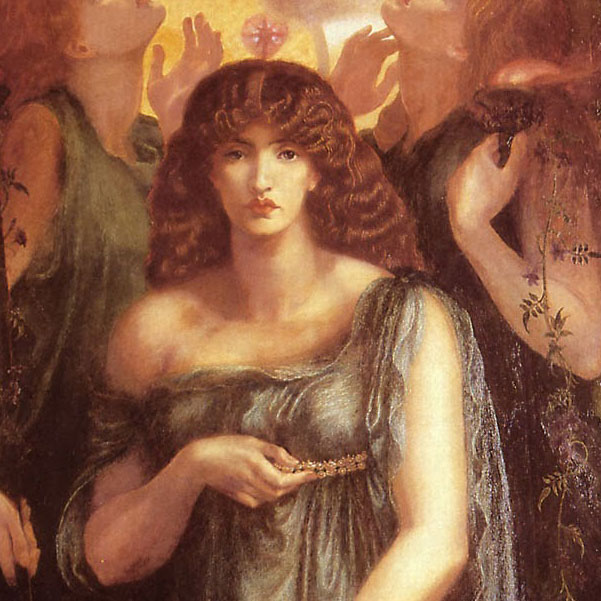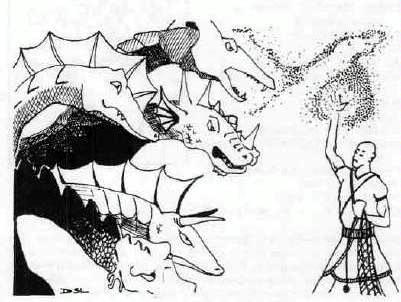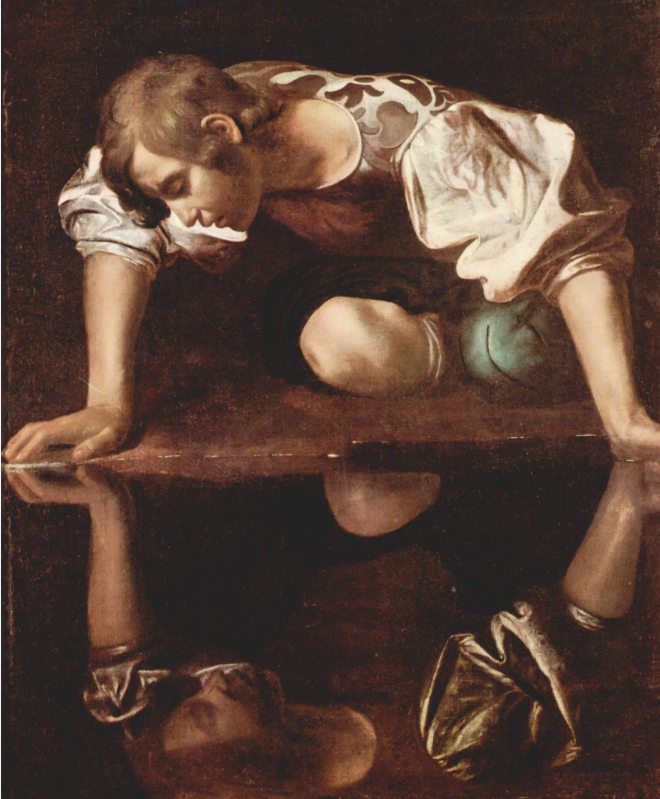
The Mythology of Baledaar #4e #DnD #TTRPG #RPG #MythologyMonday #MythologyMonandæg #folklore #baledaar @Luddite_Vic

If you enjoy this post, please retweet it and/or boost it.

My buddy, Vic, and I are starting a new 4th Edition Dungeons & Dragons (“4e”) campaign for which we’ll be alternating as dungeon masters. The campaign will be set in a game world of our own creation called Baledaar (BA-leh-dar). I spent all weekend entering the cosmology into Masterplan. Doing so required that I fill in some (not all) of the gaps in our, well, master plan for the campaign setting. I’m really happy about where were taking this.

We created several Twitter/X handles for many of the deities and locations of the campaign world. To keep them active, I posted some goofy, soap opera-like back and forth, but going forward, a lot of the tweets/exes(?) will represent updates for the progress, as well as some in-character interaction that isn’t necessarily as goofy. The idea will be to give people a feel for the setting elements in case we ever publish it.

In light of the direction in which Elon is going, I’ll probably create a few of these on Mastodon as well.

Follow me on Twitter @gsllc
Follow Baledaar @baledaar

Follow Aacrisia @aacrisia
Follow Aamaharr @Aamaharr
Follow Aanhurr @aanhurr
Follow Dozekaah @dozekaah
Follow Draaxis @Draaxiss
Follow Ishcaar @Ishcaar
Follow Lenaaqq @Lenaaqq
Follow Maardoc @Maardoc
Follow Mixaalian @Mixaalian
Follow Nerraada @Nerraada
Follow Plaaetin @Plaaetin
Follow Saarffe @Saarffe
Follow Skoviathan @Skoviathan
Follow Sylliaan @Sylliaan
Follow Taarkath @taarkath
Follow Thaanot @Thaanot
Follow Tiamaad @Tiamaad
Follow Veraanje @Veraanje
Follow Vraanetor @Vraanetor
Follow Xaacrish @Xaacrish
Follow Xovitaan @Xovitaan
Follow Ymitraa @Ymitraa

Follow the Aeterial Sea @AeterialSea
Follow the Aeternal Realms @AeternalRealms
Follow the Black Repository @BlackRepository
Follow the Churning Vast @ChurningVast
Follow the Colorless Beyond @ColorlessBeyond
Follow the Cupola of the Heavens @CupolaofHeavens
Follow the Grand Stairwell @GrandStairwell
Follow the Great Maelstrom @GreatMaelstrom
Follow the Middle Realms @MiddleRealms
Follow the Seat of the Stars @SeatoftheStars
Follow the Vivid Dreamlands @VividDreamlands
Follow the Wightstone Fissure @TheWightstone
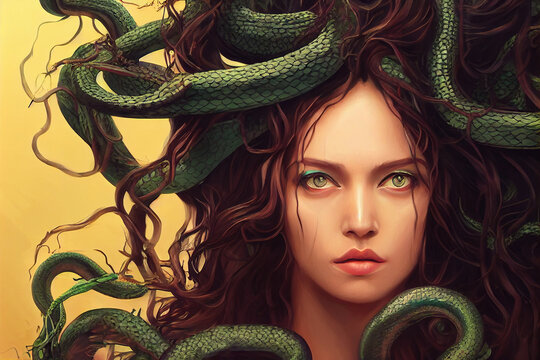
Dungeons & Dragon’s (and My 1st Edition) Treatment of Medusae #ADnD #1e #3e #4e #DnD #RPG #TTRPG #Medusa #Greek #mythology

If you enjoy this post, please retweet it and/or boost it.

One of my favorite villains is fantasy roleplaying is Medusa. In Dungeons & Dragons (“D&D”), that’s a species of creature. In Greek mythology, that’s the name of one of three of her kind, known as Gorgons. Most of you know this, but for those that don’t, here’s one of many videos on them. While I respect the work game designers do, I’m always going to prefer mythological creatures to those game designers invent. Mythology got me into D&D, not the other way around.

3.5 Edition D&D

I love the way D&D has treated medusae generally. I vaguely remember an article in Dragon Magazine during the 3.5 Edition D&D (“3.5e”) days with a writeup on their ecology, which included their male counterparts, the maedar. I never got to use that article because it came towards the end of 3.5e, and I was so caught up in running Living Forgotten Realms and other canned adventures that I didn’t write much of my own material. I always wanted to write a medusa as a BBEG.

4th Edition D&D

In 4th Edition D&D (“4e”), I loved how 4e’s game mechanic was applied to the medusa’s petrifying gaze attack. In 4e, save or die was jettisoned and replaced by what you could call “save thrice in a row or die.” That is, you got three saves over three turns before you were killed, dominated, or whatever. If you saved successfully once during that run, you shook off the effects (though relatively rarely, you still might be subject to an aftereffect on a successful save). This worked really well with the medusa because each failed save during that three-round process resulted in increasingly bad effects. That is, on the first failed save, you were slowed (i.e., speed cut in half). On the second, you were immobilized (i.e., speed of 0). On the third failed save, you were petrified. This gives the player a means to immerse oneself in the action, as the cascade of worsening effects can give you the feeling of slowly turning to stone. (FYI, medusae weren’t the only creature to use this cascade.)

1st Edition D&D

I’m running 1st Edition D&D (“1e”) for the first time in 40 years, so I had forgotten quite a bit. There are a couple of things about medusae that I relearned. First, their gaze attack targets a single creature, whereas in later editions it attacks multiple targets. Second, the gaze is active, not passive. That is, a character merely gazing upon a medusa doesn’t harm the character; the medusa has to intend to petrify the opponent. (See Monster Manual II, page 55 for more information.) While these represent a break from mythology, as you’ll see, they worked to my advantage. One other thing to note is that I house ruled petrification to use the 4e system of slow progression to being petrified.

B2: The Keep on the Borderlands

Going into last session, my group and I knew that we had reached the end of the adventure. So, I told them that I’d be railroading them a little bit to make sure we wrapped things up and that a particular encounter occurred. That encounter was with spoiler alert! a medusa – I named her Xisper – who was captured by inhabitants of the Caves of Chaos and chained to a wall. She used her gaze attack against one PC, but he saved successfully. Some of the PCs held true to their good alignment and refused to allow anyone to kill her but indicated that they’d leave her to her fate, so Xisper immediately went into negotiation mode. Long story short, that negotiation led to them freeing her to clear out the gnoll infestation (the one area the PCs never addressed) and gave me the perfect recurring NPC to bring back at a later date. She’s undoubtably evil, but alignment in my game world is always more complicated than the books present, so she could still be of use to them, and them to her. This is even better than a BBEG.

Xisper will return.

Follow me on Twitter @gsllc
Follow me on Mastodon @gsllc

Dungeons & Dragons is a trademark of Wizards of the Coast, LLC, who neither contributed to nor endorsed the contents of this post. (Okay, jackasses?)

Pluto, the Roman God of the Underworld #MythologyMonday #MythologyMonandæg #folklore #Greek #Roman @MythsExplained

If you enjoy this post, please retweet it.

Normally, I’d have titled this post, Hades, the Greek God of the Underworld, but then it wouldn’t be a good lead in for tomorrow’s post.

Unfortunately, Mythology & Fiction Explained goes with the norm, so here’s a video on “Hades.”

Tomorrow will be equally as dark, but in a different way.

Follow me on Twitter @gsllc
Follow Mythology & Fiction Explained @MythsExplained


Loki Was a Dick #MythologyMonday #MythologyMonandæg #folklore #norse #god #FrostGiant #mischief

If you enjoy this post, please retweet it.

Here’s something simple.

His fixes were never quite up to snuff, and everyone would suffer come Ragnarök.

We all know people like this.

Follow me on Twitter @gsllc


Aergia, the Greek Goddess of Laziness #MythologyMonday #MythologyMonandæg #folklore #god #lazy #laziness

If you enjoy this post, please retweet it.

I’m feeling lazy, so on Mythology Monday, I’m sharing a short wiki post and a YouTube short (below) on the Greek goddess, Aergia, who presided over laziness. If you don’t consider yourself lazy, fear not. The video also mentions her opposite, the goddess Horme.

In fact, most of the articles I found on Aergia mention Horme. This makes sense because she’s the goddess of effort, so she’s clearly willing to put in the work to hog Aergia’s spotlight, and Aergia isn’t willing to lift a finger to stop her.

None of the articles I found said much to say about Aergia, which also makes sense.

Follow me on Twitter @gsllc


Mnemosyne #MythologyMonday #MythologyMonandæg #folklore #god #titan #memory @mythsexplained

If you enjoy this post, please retweet it.

The past couple days have discussed memory, so for Mythology Monday, here’s a video on Mnemosyne, a titan whose define sphere of influence was memory (and time).

I had forgotten about her. Ba-dum-tsss.

Follow me on Twitter @gsllc
Follow Mythology & Fiction Explained @mythsexplained


The Enūma Eliš #MythologyMonday #MythologyMonandæg #folklore #god #love @mythsexplained

If you enjoy this post, please retweet it.

YouTube suggested this video on Tiamat by Mythology & Fiction Explained.

This video got me thinking (always dangerous). Decades of Dungeons & Dragons lore (whether playing or not) led me to thinking Tiamat was a purely evil creature.

I found it funny that one of her heads appears to be smiling.

I had forgotten that things aren’t so simple with her. So, I decided to re-read the Enūma Eliš. You can find one translation of it here. Considering how relatively little we have to work with, it remains the best look into the minds of Sumerian culture, and it paints a more complex picture of Tiamat. You have to remember that ancient cultures held very different ideas about right and wrong, so someone we’d consider evil can be responsible for very important things, some of which were quite generous or otherwise “good.”

This is my nerdly obsession.

Follow me on Twitter @gsllc
Follow Mythology & Fiction Explained @mythsexplained

Dungeons & Dragons is a trademark of Wizards of the Coast, LLC, who neither contributed to nor endorsed the contents of this post. (Okay, jackasses?)


Eros and Psyche #MythologyMonday #MythologyMonandæg #folklore #god #love @mythsexplained

If you enjoy this post, please retweet it.

Today is Mythology Monday, and tomorrow is Valentine’s Day, so . . . duh.

Happy Valentine’s Day!

Follow me on Twitter @gsllc
Follow Mythology & Fiction Explained @mythsexplained


The Manticore and Kelpie #MythologyMonday #MythologyMonandæg #folklore #WotC #RPG #TTRPG #DnD @mythsexplained

If you enjoy this post, please retweet it.

Today, I’m riding home from Winter Fantasy in a van running 1st Edition Dungeons & Dragons. The adventure is S2: White Plume Mountain, and one of the iconic monsters from that mod is the manticore. Here’s a short video on the manticore care of Mythology & Fiction Explained.

Another iconic monster from White Plume Mountain is the kelpie, which was created for the adventure. Here’s a significantly longer video on the kelpie.

It’s a brilliant adventure mod.

Follow me on Twitter @gsllc
Follow Mythology & Fiction Explained @mythsexplained

Dungeons & Dragons is a trademark of Wizards of the Coast, LLC, who neither contributed to nor endorsed the contents of this post. (Okay, jackasses?)


Narcissus, the Greek God of Vanity #MythologyMonday #MythologyMonandæg #folklore #god #arrogance #vanity #OGL #WotC #RPG #TTRPG #DnD @mythsexplained @Wizards_DnD

If you enjoy this post, please retweet it.

While the hubbub over the OGL is finally settling, it inspires yet another video for Mythology Monday. Today, it’s the Greek, Narcissus, the god of vanity and arrogance.

Yet another candidate for the patron god of Wizards of the Coast.

They really suck.

Follow me on Twitter @gsllc
Follow Mythology & Fiction Explained @mythsexplained
Follow Wizards (D&D) at @Wizards_DnD

Dungeons & Dragons is a trademark of Wizards of the Coast, LLC, who neither contributed to nor endorsed the contents of this post. (Okay, jackasses?)