Dungeons & Dragon’s (and My 1st Edition) Treatment of Medusae #ADnD #1e #3e #4e #DnD #RPG #TTRPG #Medusa #Greek #mythology

If you enjoy this post, please retweet it and/or boost it.

One of my favorite villains is fantasy roleplaying is Medusa. In Dungeons & Dragons (“D&D”), that’s a species of creature. In Greek mythology, that’s the name of one of three of her kind, known as Gorgons. Most of you know this, but for those that don’t, here’s one of many videos on them. While I respect the work game designers do, I’m always going to prefer mythological creatures to those game designers invent. Mythology got me into D&D, not the other way around.

3.5 Edition D&D

I love the way D&D has treated medusae generally. I vaguely remember an article in Dragon Magazine during the 3.5 Edition D&D (“3.5e”) days with a writeup on their ecology, which included their male counterparts, the maedar. I never got to use that article because it came towards the end of 3.5e, and I was so caught up in running Living Forgotten Realms and other canned adventures that I didn’t write much of my own material. I always wanted to write a medusa as a BBEG.

4th Edition D&D

In 4th Edition D&D (“4e”), I loved how 4e’s game mechanic was applied to the medusa’s petrifying gaze attack. In 4e, save or die was jettisoned and replaced by what you could call “save thrice in a row or die.” That is, you got three saves over three turns before you were killed, dominated, or whatever. If you saved successfully once during that run, you shook off the effects (though relatively rarely, you still might be subject to an aftereffect on a successful save). This worked really well with the medusa because each failed save during that three-round process resulted in increasingly bad effects. That is, on the first failed save, you were slowed (i.e., speed cut in half). On the second, you were immobilized (i.e., speed of 0). On the third failed save, you were petrified. This gives the player a means to immerse oneself in the action, as the cascade of worsening effects can give you the feeling of slowly turning to stone. (FYI, medusae weren’t the only creature to use this cascade.)

1st Edition D&D

I’m running 1st Edition D&D (“1e”) for the first time in 40 years, so I had forgotten quite a bit. There are a couple of things about medusae that I relearned. First, their gaze attack targets a single creature, whereas in later editions it attacks multiple targets. Second, the gaze is active, not passive. That is, a character merely gazing upon a medusa doesn’t harm the character; the medusa has to intend to petrify the opponent. (See Monster Manual II, page 55 for more information.) While these represent a break from mythology, as you’ll see, they worked to my advantage. One other thing to note is that I house ruled petrification to use the 4e system of slow progression to being petrified.

B2: The Keep on the Borderlands

Going into last session, my group and I knew that we had reached the end of the adventure. So, I told them that I’d be railroading them a little bit to make sure we wrapped things up and that a particular encounter occurred. That encounter was with spoiler alert! a medusa – I named her Xisper – who was captured by inhabitants of the Caves of Chaos and chained to a wall. She used her gaze attack against one PC, but he saved successfully. Some of the PCs held true to their good alignment and refused to allow anyone to kill her but indicated that they’d leave her to her fate, so Xisper immediately went into negotiation mode. Long story short, that negotiation led to them freeing her to clear out the gnoll infestation (the one area the PCs never addressed) and gave me the perfect recurring NPC to bring back at a later date. She’s undoubtably evil, but alignment in my game world is always more complicated than the books present, so she could still be of use to them, and them to her. This is even better than a BBEG.

Xisper will return.

Follow me on Twitter @gsllc
Follow me on Mastodon @gsllc

Dungeons & Dragons is a trademark of Wizards of the Coast, LLC, who neither contributed to nor endorsed the contents of this post. (Okay, jackasses?)

Pluto, the Roman God of the Underworld #MythologyMonday #MythologyMonandæg #folklore #Greek #Roman @MythsExplained

If you enjoy this post, please retweet it.

Normally, I’d have titled this post, Hades, the Greek God of the Underworld, but then it wouldn’t be a good lead in for tomorrow’s post.

Unfortunately, Mythology & Fiction Explained goes with the norm, so here’s a video on “Hades.”

Tomorrow will be equally as dark, but in a different way.

Follow me on Twitter @gsllc
Follow Mythology & Fiction Explained @MythsExplained


Eros and Psyche #MythologyMonday #MythologyMonandæg #folklore #god #love @mythsexplained

If you enjoy this post, please retweet it.

Today is Mythology Monday, and tomorrow is Valentine’s Day, so . . . duh.

Happy Valentine’s Day!

Follow me on Twitter @gsllc
Follow Mythology & Fiction Explained @mythsexplained


Narcissus, the Greek God of Vanity #MythologyMonday #MythologyMonandæg #folklore #god #arrogance #vanity #OGL #WotC #RPG #TTRPG #DnD @mythsexplained @Wizards_DnD

If you enjoy this post, please retweet it.

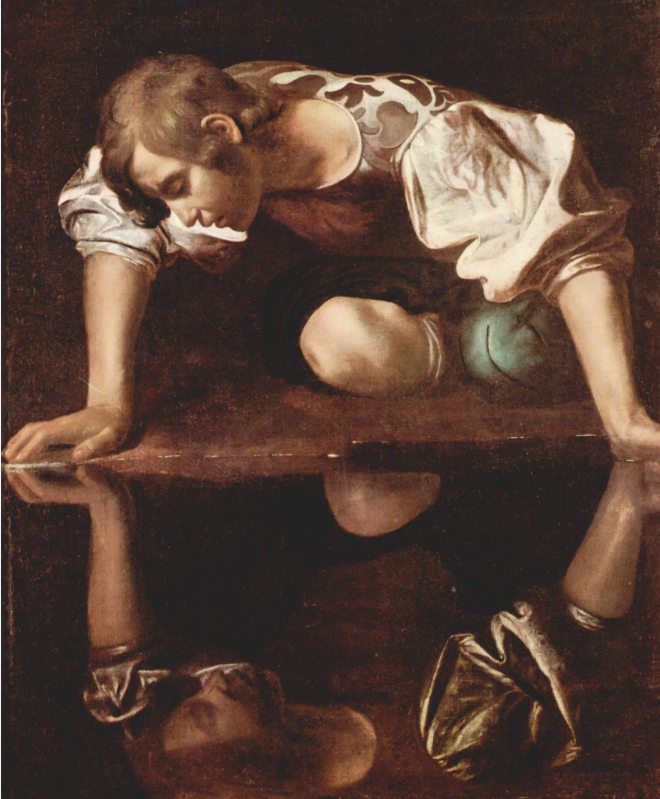
While the hubbub over the OGL is finally settling, it inspires yet another video for Mythology Monday. Today, it’s the Greek, Narcissus, the god of vanity and arrogance.

Yet another candidate for the patron god of Wizards of the Coast.

They really suck.

Follow me on Twitter @gsllc
Follow Mythology & Fiction Explained @mythsexplained
Follow Wizards (D&D) at @Wizards_DnD

Dungeons & Dragons is a trademark of Wizards of the Coast, LLC, who neither contributed to nor endorsed the contents of this post. (Okay, jackasses?)


Koalemos, the Greek God of Stupidity @Wizards_DnD #MythologyMonday #MythologyMonandæg #folklore #god #stupidity #OGL #WotC #RPG #TTRPG #DnD

If you enjoy this post, please retweet it.

Once again, the hubbub over the OGL inspires a particular video for Mythology Monday. Today, it’s the Greek, Koalemos, the god of stupidity.

You must admit; he seems like another candidate for the patron god of Wizards of the Coast.

I see nothing wrong with this plan.

Follow me on Twitter @gsllc
Follow Wizards (D&D) at @Wizards_DnD and tell them what you think of their plans.

Dungeons & Dragons is a trademark of Wizards of the Coast, LLC, who neither contributed to nor endorsed the contents of this post. (Okay, jackasses?)


Hermes, the God of, Inter Alia, Commerce and Thievery @MythsExplained #MythologyMonday #MythologyMonandæg #folklore #thief #commerce

If you enjoy this post, please retweet it.

Once again, the hubbub over the OGL inspires a particular video for Mythology Monday, care of our pals at Mythology & Fiction Explained. Today, it’s the Greek, Hermes, who was the patron of everything that the rest of the pantheon doesn’t already cover. So, he covers both commerce and thievery. Perhaps he should be the patron god of Wizards of the Coast. He also delivers messages regardless of the quality of its content.

Even Hermes occasionally needs to take a breather.

Put on some clothes, hippie.

Follow me on Twitter @gsllc
Follow Mythology & Fiction Explained @MythsExplained


Themis, a Divine Attorney @MythsExplained #MythologyMonday #MythologyMonandæg #folklore #law #justice

If you enjoy this post, please retweet it.

Judge, attorney. Same thing. In light of all the hubbub over the OGL, for Mythology Monday, let’s dive into Greek titan/goddess of justice, the personification of law, care of our pals at Mythology & Fiction Explained.

She’s my patron.

Follow me on Twitter @gsllc
Follow Mythology & Fiction Explained @MythsExplained


Euphrosyne, the Greek Goddess of Good Cheer, Mirth, and Merriment #MythologyMonday #MythologyMonandæg #folklore #Greek

If you enjoy this post, please retweet it.

With the holiday season upon us, it seems appropriate to mention one of the three charities, Euphrosyne. Along with her sisters, she was tasked to fill the world with joy and pleasant times. More specifically, she’s the goddess of good cheer, mirth, and merriment. Like many figures in Greek mythology, NASA has named a heavenly body after her. Euphrosyne is the 7th largest asteroid NASA has catalogued.

I wish you her blessings during this holiday season.

Not really. She’s not real. I just hope you enjoy yourselves.

Follow me on Twitter @gsllc


You Forgot Orthrus #MythologyMonday #MythologyMonandæg #Orthrus

If you enjoy this post, please retweet it.

100th day in a row with a post!

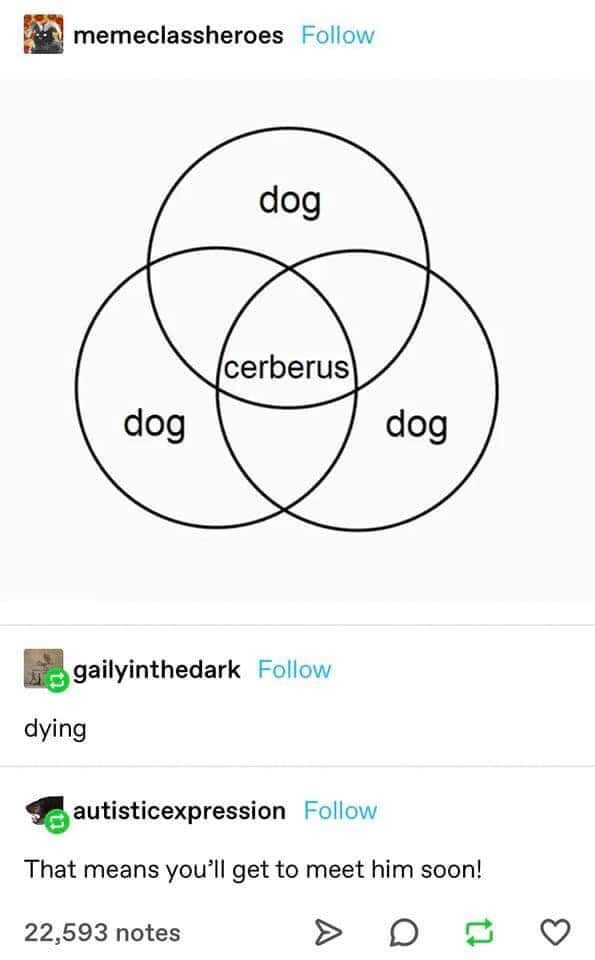
I found this moderately funny Venn diagram.

Cute, right? Well, as any fan of Clash of the Titans will tell you, it’s incomplete. Here’s my revised version.

C’mon, man. Orthrus was a player in the 10th labor of Heracles. He deserves your remembrance.

Capitalization matters too.

Follow me on Twitter @gsllc


NASA Is Sexist! @NASA #NASA #Artemis #MythologyMonday #MythologyMonandæg

If you enjoy this post, please retweet it.

Seriously, how hard was it to get this right, space nerds?

I’m actually more offended that the meme-maker didn’t capitalize, “Apollo.”

Follow me on Twitter @gsllc
Follow NASA @NASA