Let's roll some dice, watch some movies, or generally just geek out. New posts at 6:30 pm ET but only if I have something to say. Menu at the top. gsllc@chirp.enworld.org on Mastodon and @gsllc on Twitter.
FYI, I’ve updated my (modest) 4e resources page. It includes support for the Masterplan campaign manager. For those that don’t know, some guy (a pro software engineer) built a campaign manager for 4e and left it on GitHub for all to use. It’s a great tool. The glaring problem it has is that some of the monster files cause the application to crash if you try to open them. (A good example are several of the hobgoblin files from the Monster Manual.) Well, I’ve fixed a lot of those. I can’t say whether I’ve fixed even half of the issues, but I’ve made a ton of progress. I’ve also updated a lot of the stat blocks to Monster Manual 3 format. My edited libraries are available on that page.
In addition, I ran convention in 2010 and 2011 (synDCon), and one of the events I created was a dungeon delve we called synDClash. These were common in cons. All combat. Just try to finish three combat encounters in 45 minutes. Rather than have only one adventure that people would have to play over and over again, I created six, each based on a classic 1e adventure. (In hindsight, I wish I had added “Revisiting the Mountain” or whatever as a homage to S2: White Plume Mountain.) Those files are up there too as separate Masterplan projects.
In other words, there are project files and libraries available for download. Moreover, the character sheets — both the ones used for synDClash and the offline Character Builder versions I created over the past couple days — are linked to there. (Please let me know if the link to my dropbox file works.)
All of this is a work in progress. I’ll continue to create whatever fixes are necessary and update sourcebook stat blocks to Monster Manual 3 format, but if you’re running an in-person 4e game and weren’t aware of Masterplan, you should consider it for tracking initiative, etc. We use it with a big screen TV as our battle map. This was my goofy way of letting everyone know that the set up was ready for what was the upcoming session: Reveal.
My thoughts on Gary Con will be brief. I doubt I’ll return. This isn’t a criticism of the con anymore than a non-football fan not liking a football game is a criticism of how good of a job the NFL is doing. It’s simply something that doesn’t appeal to me. I know a few industry insiders — two were my roommates — which means I’m within a degree of separation of almost all of the legacy ones. For me, the highlight of the trip was talking about the past, present, and future of the industry with Stephen Radney-MacFarland, James Lowder, and Dave Christ. The direct topic is interesting to me, but even more, this conversation inevitability leads to a back-and-forth on intellectual property law (usually copyrights). So, yeah; I’m in for that. Other highlights are conversations with Stephen and Jason Dandy (a non-industry friend) and with Jason and his friend, Mark, on sociopolitical issues. These guys think very differently than I do on most issues, but we engage in a form of constructive dialogue that’s very rare today. I even discussed abortion and Citizen’s United with no fear of generating anger from any of them.
But I can do all of that over Zoom. I don’t need to spend hundreds of dollars on airfare, lodging, a convention badge, and grossly overpriced convention food to have these conversations. One could say the same thing about Winter Fantasy, but that’s a different animal. Just eyeballing it, I’d say I know about 50% of the people that attend, and when I’m not hanging out with them, I’m relaxing. It’s a genuinely relaxing vacation. The food is good, and the whole trip is just an awesome ritual. While Gary Con could become the same thing for me, I don’t need two of them. Winter Fantasy is enough.
YMMV
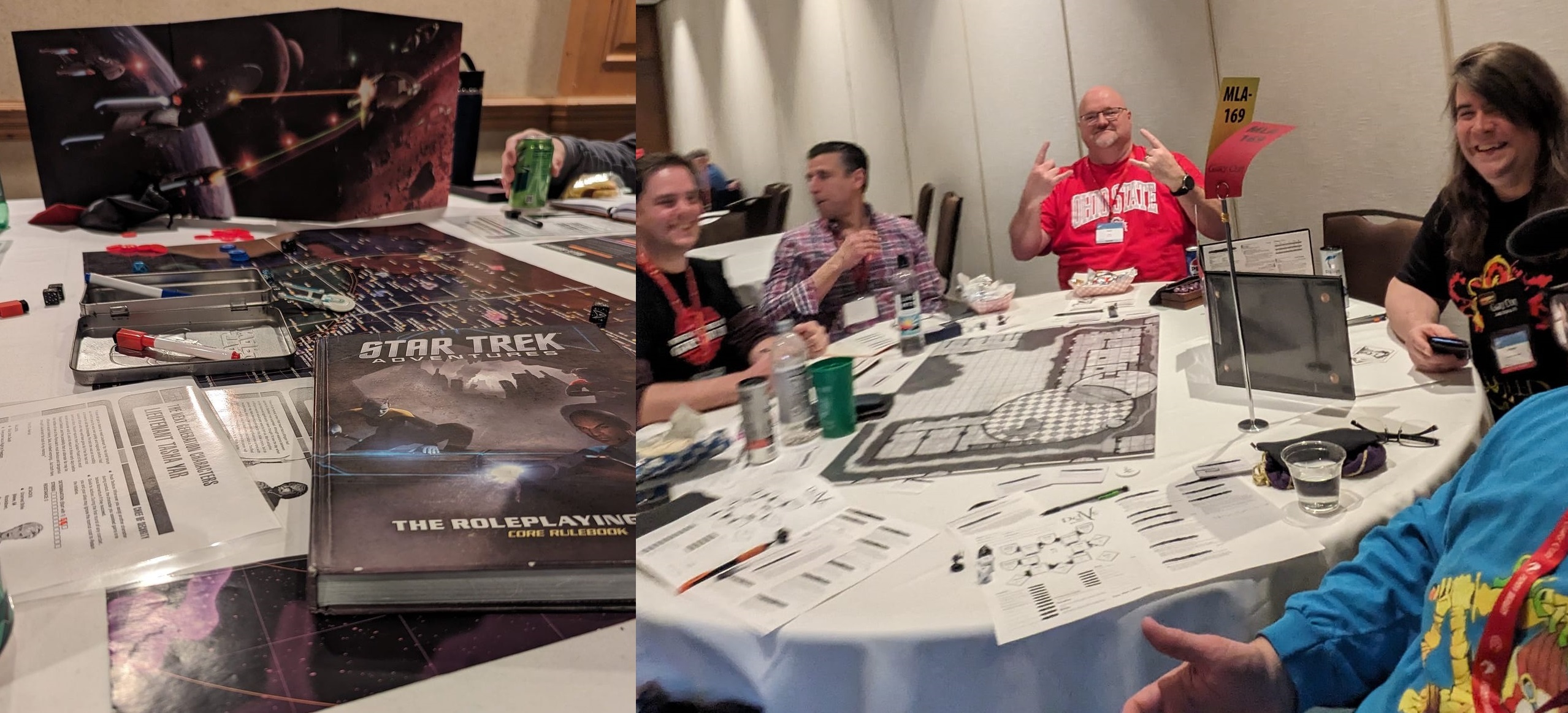
I hope it’s clear that I’m not saying I didn’t have a good time, and it’s certainly not to say that you wouldn’t. It’s a small-ish con, which is what I like about Winter Fantasy. I went with a mission to get to play (as opposed to DM) 1st Edition AD&D, and I played in three such games. I actually got to play the Dragon #56 bard in two of them. How many people can say they’ve done that? I got to play Stephen’s Delve game that uses a few mechanics that Vic and I added to our 4th Edition D&D game (e.g., “gang-up”), so I liked that. I got to finally make use of my Star Trek Adventures purchase by playing that game (granted, mere months before it’s rendered somewhat obsolete by its second edition). The only objective criticism I have is that there were too many tables in the rooms, which made it very difficult to hear your own DM/GM/judge, and I’m not alone in expressing that concern.
I saw only one celebrity (Pat Kilbane formerly of MadTV, with whom I spoke briefly), but I wasn’t looking for them. If that’s your thing, you may run into them for a selfie. The con was fairly easy to navigate, and I had no administrative difficulties at all.
All of this was good, but now that I’ve been there and done that, there’s no need to go back. I’m quite happy to have left Saturday so that I have all day Sunday to recover, and I return with added appreciation for both Winter Fantasy and my home gaming group. I don’t need this to be a regular thing, or even a sporadic thing, but if you’re a gamer, especially with an appreciation for its history, this is as good a con as any to attend.
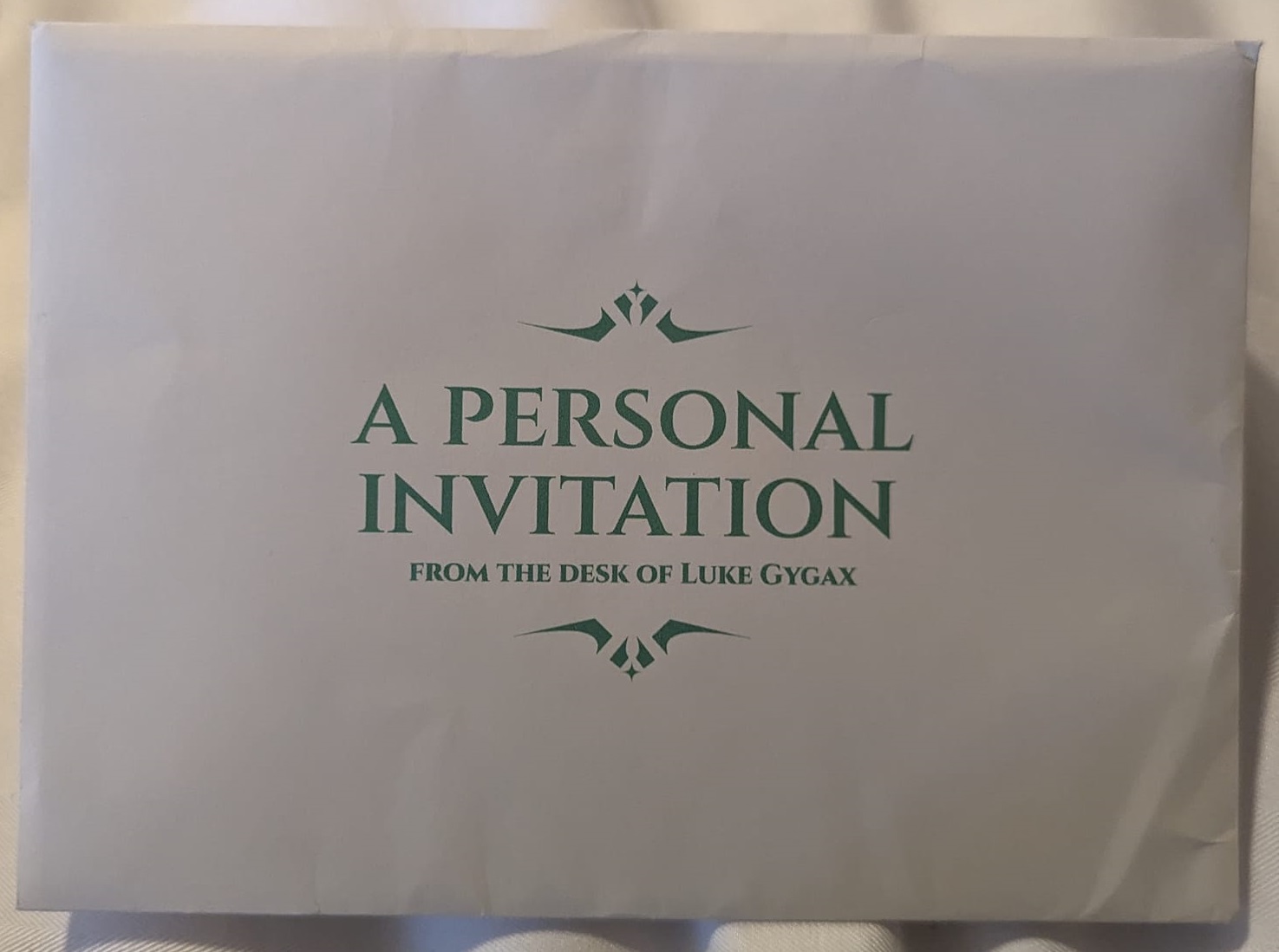
Just expect to be inundated with some silliness. Every attendee got one of these.
This is the second of my two planned videos about Paizo’s ORC license. This one summarizes the issues I raised in the last video, follows up on one of those issues, then discusses an entirely different topic. I take a side trek towards shrink wrap licenses, but as long as this video is (41:00), I tried to keep it as brief as possible, so I didn’t mention the mild circuit split on shrink wrap licenses. Basically, sometimes the courts uphold them, and sometimes their skepticism has them strike them down. In other words, the concerns I expressed aren’t merely speculation, but rather based on actual disagreement between different courts. But hey; just watch the video. I wasn’t nearly as fired up in this one.
EDIT: After you watch the video, come back here for point of clarification. I say that shrink wrap licenses are being used in a weird way with respect to RPGs. Here’s another way to phrase it. With software, the licensor places a unilateral contract on their product and says, “This product is paired with this license. Use the product, and you accept the license.” With RPGs, the licensor (e.g., Paizo) isn’t putting their license on their own product, but even if they do, it’s not capable of being accepted at that point anyway, so it means nothing so far. Instead, the licensee (e.g., you) are putting Paizo’s unilateral contract on your own product, and in doing so effective saying, “Yeah, I accept this.” But you never actually say that to the licensor. Moreover, if Paizo accidentally figures out that you used the license on the product, they’re never going to contact you. Everyone is in a contractual relationship with everyone else, but most of us don’t actually know it. That’s weird.
Remember, shrink wrap licenses are unproven where it counts, and there are legitimate reasons not to trust them, not the least of which is that they’re unilateral. Now you’re using them in a way unique to an industry that’s rarely subject to litigation of this sort. That’s even more suspect.
This is the first of my two videos about Paizo’s ORC license. This one rehashes (far more than it should have) the idea v. expression dichotomy, and then discusses problems with consideration within the license. I did it off the top of my head, which is never a good idea (over 40 minutes of ums and ahs), so watch it at at least 1.25 speed and expect to take breaks.
This is just the tip of the iceberg as far as how animated I get.
My second video on acceptance was just recorded, so that will go up tomorrow. It summarizes the issues I raise in this video, follows up on one of those issues, then discusses an entirely different topic. If you have any other questions on either what I’ve discussed in these two videos or what I haven’t, please let me know. I know there are other issues people are contemplating.
I’ll be recording a video about Paizo’s ORC license soon. This serves as a prologue to that video. Here, I discuss the distinction between ideas and expressions in copyright law.
I recorded this while procrastinating; I didn’t want to go to the gym. Therefore, I didn’t do any research or write a script, so don’t expect any justification for my statements or structure to my words. I just want to make sure you understand a critical issue about copyright law, in layman’s terms, before dealing with the ORC.
Upper Deck (“UD”) sued a former employee, Ryan Miller (“Miller”) and a competitor, Ravensburger North America, Inc. (“Ravensburger”) over a “stolen game.” If you’ve ever read this blog, you know that game rules can’t be copyrighted. They can be patented, so UD’s claim that their game was “stolen” may prove correct. I’m going to try to answer the questions that people have addressed to me.
Facts
Briefly, UD employs Miller to design a trading card game (“TCG”). Miller sings an employment contract that contains a nondisclosure provision. Miller leaves UD, joins Ravensburger, and designs a similar game there. UD’s game hasn’t been released, but Ravensburger has publicly shared their ruleset for playtesting at conventions and has sold packs of cards for it (or so the complaint alleges).
I’m just going to deal with the intellectual property law issues because the question that everyone seems to be asking (me) is one related to IP: Is this a valid basis complaint in the first place? That’s a question I can answer without knowing both sides of the story. That is, I can’t say who’s right and wrong, but I can opine as to whether or not the philosophical basis of the suit is valid.
Trade Secrets: The Forgotten IP
Part of this case falls under trade secret law, which I address in this post covering all forms of IP. The defendant’s employment contract had a non-disclosure/secrecy provision, and that’s the basis of the suit. Game mechanics can be protected under trade secret law, which basically says, “Don’t tell anyone what we’re doing,” or “Don’t tell anyone how we do what we do.” This is very much unlike copyrights because copyrights often have little to no value unless they’re made publicly available. Trade secrets are valuable because they’re kept secret. One of the most valuable trade secrets in the world is the formula for Coca-Cola. If it were patented, it would be published, and thus have at most 17 years of protection. Instead, they keep it secret, so it has value for as long as it remains so. That’s an important point: Once a trade secret is made public, it can no longer be a trade secret. You can sue someone for publishing it, but you can’t put the genie back in the bottle. Once it’s out there, it’s no longer protectable. Ever.
So, the defendant in this case was (allegedly) bound by contract not to share the mechanics until after they were released by UD. It’s reasonable to infer that Miller must have shared those trade secrets when designing a game that was remarkably similar to what he did with UD. Miller and Ravensburger could argue that the similarities are ones shared by all card games, and so none of them are trade secrets. The complaint details the game mechanics, but I haven’t really read through them, so I can’t evaluate that defense.
Of course, even if those mechanics are identical to other games, this may not get the defendants off the hook. Games have several elements, so the difference between most games is essentially which specific combination of known elements you’ve chosen for your game. That combination may be unique. Even if not patentable, it may be marketable, and thus have value. If, for the reasons stated above, the sharing of that combination hurt UD’s market for the game, there’s still a lawsuit to be had.
You might ask, “How would it hurt the market?” Well, think about it. Games have limited shelf lives. Their first push in the market is often where they make their most money. If someone learns of your game system and publishes a quick-and-dirty version of it first, they’ll grab most, if not all, the market before your more well-designed version even gets there. Maybe you’ll enjoy a secondary push in a few years, but you’ll still have lost that first market. Also, the first game company to get their game to market can always accuse the other company of plagiarism. As for patent infringement, depending on the timing, a game company could actually lose their ability to patent a mechanic because the mechanic was published long before the application was filed. There are time limits on these things, so it’s best to keep your designs secret.
Patents
Of course, as I mentioned above, UD filed for a patent in April, 2023. I have no opinion as to whether that will be granted. Even after I eventually read through the game mechanics, there’s a lot of “prior art” (i.e., existing games) I’d have to analyze to form an opinion, and I’m not going to do that. I don’t play TCGs. Even if I did form an opinion, patent law is a tricky thing. There are very few obviously good or bad patents. My opinion wouldn’t mean squat; we’d have to wait for a judge’s decision, and then an appellate court’s opinion before we get a real answer. Either way, claiming that the game was stolen is at best premature. That’s not to say I don’t understand why UD is saying it. I’m simply acknowledging the basis for your confusion by that claim.
There’s far more to consider here than I could possibly address. I lack information and the desire to dig any deeper at the moment. The takeaway here, though, is that game mechanics can absolutely be protected by trade secret until they’re published. If the trade secrets are deemed valid, their publication by Miller and Ravensburger would constitute a legitimate cause of action for UD. We’ll just have to wait and see whether it sticks.
I’ll continue to go through the complaint and provide more information as I learn it (if it’s interesting). For now, back to work I go.
Today (well, by the time this post is published, yesterday) I asked a question of the nerd hive mind. To summarize, the basic question was this: Has anyone ever conducted combats between the various pantheons from the 1st Edition AD&D (“1e”) Deities & Demigods to see which pantheon was the most powerful?
Some say he’s a god.
Here’s the full post:
I wonder what would happen if we held a combat tournament of the pantheons in the 1st Edition AD&D Deities and Demigods. Who would win? Maybe have a randomly-paired, single elimination tournament leading to a round-robin final four where each battled the other three. That way, the final four at least would minimize the effect of a particularly poor match up for a specific pantheon. Or maybe do it like the soccer World Cup where the round-robin occurs at the beginning of the tournament, and then it’s single elimination from there on out. I don’t like that as much because you couldn’t get a fair sense of who’s really second best. Ideally, it would be far more complicated, but I’d be surprised if anyone would be willing to play all that out (or design software to handle it).
Has anyone here ever done that for even two pantheons? I’m just curious which pantheon would have the last man standing.
EDIT: Another related question is whether the monstrous entities would be involved even if not summoned by a god. If not, the entire Cthulhu mythos and gods for nonhumans might be disqualified. 🙂 There’s certainly have to be some sort of criteria to make the whole thing reasonably fair.
The most colorful response was, “Dude you need to get laid,” to which I responded, “True, but irrelevant.”
This coming from a member of the self-professed “official” 1e group on Facebook. My answer was a serious one, but I should probably say more; hence this post.
Wait a second! He’s just a demigod.
My question springs from a general sentiment in our gaming community, but voiced as well as anyone by the author of the 1e Deities & Demigods, James Ward:
DDG (for short) may resemble MONSTER MANUAL, and in fact does include some monsters. However, the purpose of this book is not to provide adversaries for the players’ characters. The information listed herein is primarily for the Dungeon Master’s use in creating, intensifying, or expanding his or her campaign.
1e Deities & Demigods, page 5.
Yes, there are a lot of quotes in this post.
Anyway, given James’ explanation, he still isn’t giving a good reason as to why there are stat blocks at all. If the PCs aren’t expected to fight them because it wouldn’t be appropriate to do so, then who is? Well, how about the gods fighting each other? It would be an interesting experiment, but without software designed to simulate combats in 1e, that would be a lot of work just to satisfy one’s curiosity.
But it would be cool. I’m curious as to what bias James had in creating these characters. He obviously tried to stay true to the general nature of the gods, and to an admitted lesser extent, their legends.
While DEITIES & DEMIGODS is ideally suited to the task of working deities into an AD&D campaign format, everything has not been covered in the book. In the 6,000-year plus span of this work mankind has spent a lot of that time adding to the myths dealt with herein. We did not try to encompass everything, and it is silly to assume that the five years or so of research that created DEITIES & DEMIGODS could suffice.
1e Deities & Demigods, page 4.
In our research and compilation of this book, we ourselves hove altered many facts, either for reasons of game balance and consistency or because sources conflict. DEITIES & DEMIGODS is not a scholarly work or reference – it is a game accessory.
1e Deities & Demigods, page 5.
The Rules
Of course, even Fight Club has to have rules. Do we include monsters? If so, then doesn’t that completely remove the Cthulhu and nonhuman pantheons? Can’t do that, so maybe there’d be an exception for those two pantheons. We’d also have to assume that the nonhuman gods cooperated, which usually makes no sense, but doesn’t always make sense with gods. I can live with that nonsense; this is all nonsense. Besides, the monsters from other pantheons could still play a role to the extent that the gods would choose to summon them if they have summoning powers, or if those monsters are actually more powerful than gods. Why does the latter matter? (Tee-hee.) Someone pointed out that the Greek pantheon had to win simply because there were so many gods (damn titans always screw up everything). The Norse pantheon is a distant second.
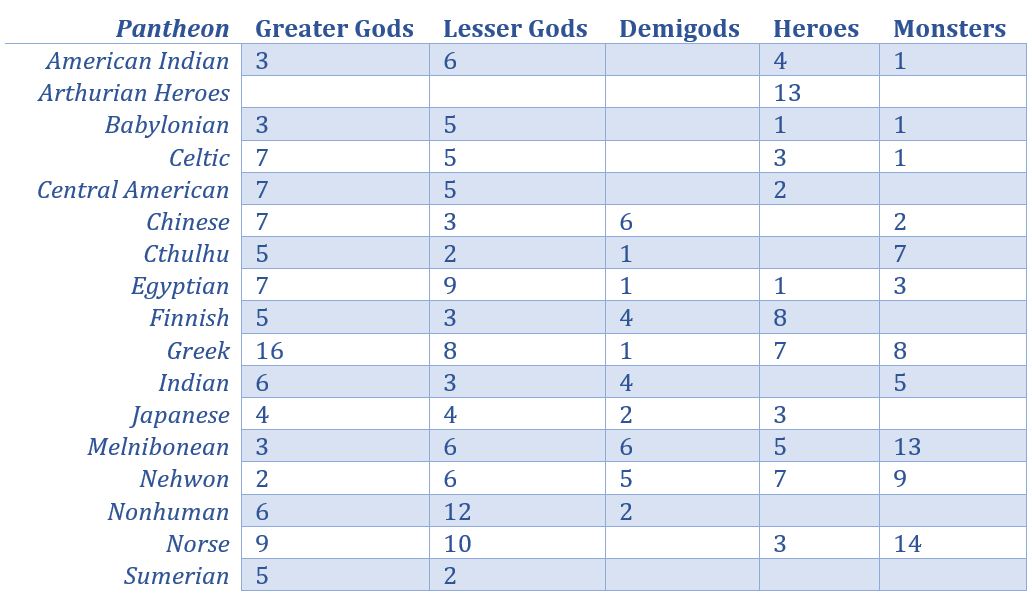
Even this chart is controversial in terms of counts and categorization of heroes v. monsters.
To balance that, we’d want to give each side the same number of combatants, but we’d first have to determine which gods from each pantheon would make the cut. They should be the most powerful among them, so I guess we’d have to first have internal fights for each pantheon.
Ack!
And, of course, if we could somehow develop software to run these simulations, we’d want to run 1,001 simulations for each fight so that we minimize the effects of rolls on either end of the bell curve.
Ack!
It appears that some pantheons have no chance of competing (e.g., Arthurian). For example, the Greek and Norse pantheons lean towards greater gods, so whatever number of gods we assign to fight, they have an advantage. On the other hand, it looks like the Babylonian and Nehwon pantheons cap our gods-only battle at only 8 gods, and because the Egyptian pantheon has seven greater gods, they’re at no disadvantage despite being slightly lesser-god-heavy. In fact, such a hard cap leaves many pantheons relying on greater gods for the most part. Of course, all of this assumes that lesser gods, demigods, and monsters are weaker in combat than greater gods, but I have no idea if this is true. That’s what this experiment would be about.
Puny gods.
The Map
Someone on MeWe raised the issue of terrain. My knee-jerk reaction was a blank battlemap with no terrain, but under the assumption that the lack of terrain shouldn’t restrict the use of any ability or spell that a god has. For example, the web spell should work even thought there aren’t any walls. I’m not asking the question of which pantheon is more powerful in, let’s say, the desert. You just have to handwave a bit of in-game logic to make sure the stat blocks are being tested for something akin to an average level of power across all combinations of obstacles, terrains, and weather.
Further Basis for My Curiosity
Besides the fact that I’ve started running 1e for the first time in decades, there’s another inspiration for the question. As a mythology nut, but also an MCU nut, I really want the MCU to expand on the pantheons. They made a Disney+ series I really wanted to see, Moon Knight, and made the Egyptian Pantheon part of that show. This continued (modestly) in Thor: Love and Thunder, and will continue to some yet-unknown extent in Wakanda Forever. We also got to scratch the surface of eastern mythology and folklore in Shang Chi. Speaking of Wakanda Forever, I was also thrilled to find out that Namor is being played by a Mexican-American so that they can expand on a central American pantheon. (I’ve never read comics, so I don’t give a rat’s ass about canon.) I want to see this expansion, so naturally my brain is always looking for an excuse to think about issues like this one.
So, you see, I absolutely need to get laid (or at least choose more appropriate photos), but since that’s not in my immediate future, I’m thinking about this.
In any event, this interesting experiment would finally give us a good use for the stat blocks.
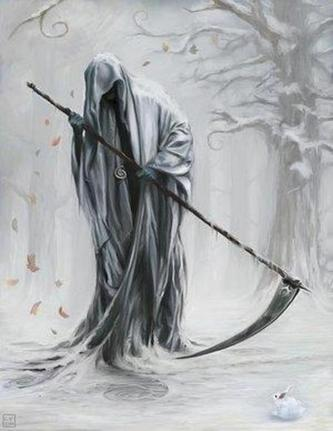
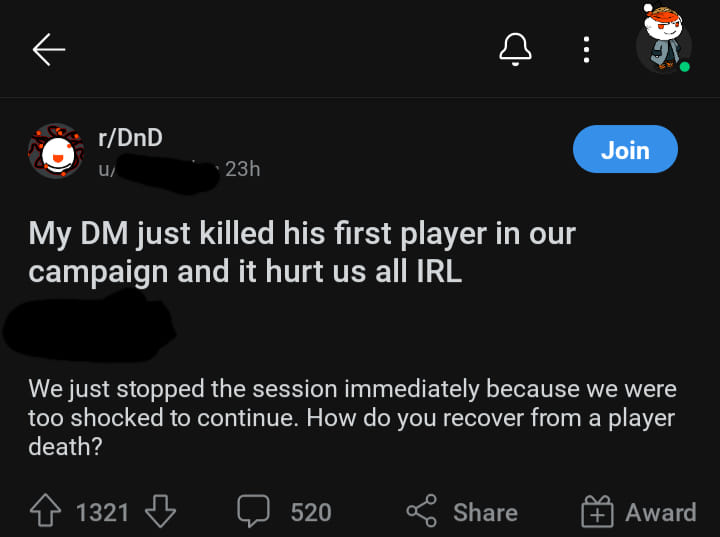
Today, I kick off my death theme for the last throes of my one-year streak of daily posting to this blog, I’m going to reiterate and summarize the content from a couple other posts. More detail on my positions can be found by clicking through.
I’ve spoken about how dumb I feel the save or die mechanic is (though my stance has softened a bit since I wrote that and started playing 1st Edition D&D [“1e“]). Moreover, in that same post I’ve talked about how much I enjoy the way 4th Edition D&D (“4e”) applied their remedial mechanic (“save three times or die”) to one of my favorite creatures, the medusa: slowed on first failed save, immobilized on the second failed save, and petrified on the third failed save. In fact, I’ve adapted that mechanic to my medusa in my 1e game simply because I enjoy it. Even if you prefer save or die, petrification is far more dramatic when the character (and player) can feel it slowly taking over. That’s dramatic and immersive.
Seriously?
All that said, I never understood the aversion modern gamers have towards character death (at least among those that play D&D). I have a friend who refused to kill my character even though he knew I didn’t mind it. He minded. There are two reasons I’m completely okay with character death. First, without risk, the reward loses meaning (at least to anyone with an ego). Second, as with other forms of failure, it presents new opportunities. I can switch to playing a completely different character before having the chance to grow tired of the now-dead character. Moreover, the one time I convinced that friend to kill one of my characters, it was because I wasn’t enjoying playing the character. This character is the brother of two of my other characters, one of whom I played as recently as this year’s Winter Fantasy. His death was not only heroic, but has now enhanced my other characters’ backstories. Win-win. Besides, it’s not as if anyone is actually dying. This is a fantasy world and should be viewed as such.
Now, all that said, we can have overkill. I was in a 4e Dark Sun campaign where, over 9 weeks of gaming, I lost five characters. My barbarian died in week one, so I rolled up a new character that lasted two weeks, then another that lasted two weeks, and so on. Each of those deaths meant that I had to write one of my one-page-or-more backstories. To paraphrase a friend, I shouldn’t have to write that much for you unless the result is money or a university degree. Full disclosure: One of my characters was a reanimated revenant of the one that died the week prior. So, I prefer a balance between the two rather than choosing one at the exclusion of the other. As with most things, the answer lies somewhere in the middle.
This is a short one. I really love that there’s technology available for people to play long-distance. It allows you to reconnect with friends or make new ones. It also proved very useful in the pandemic. We all know these things, but they just don’t matter to me. I hate online gaming.
Gaming is a social affair. It’s about sitting around a table, eating pizza, drinking Mountain Dew, and rolling a physical set of dice. I’ve done it online, and at times it was better than nothing, but only barely. I’m forced to do it again this weekend, as a player in my new home game will be dialing in from out of state. Our first session was about a month ago, and I don’t want to put this one off any further, but I just don’t like it. On the other hand, I like having online hangouts with friends. Perhaps the difference is that I grew up with a telephone that allowed for (quasi-)hanging out when not in person, but gaming has always in person.
Whatever the reason, it’s just how I feel. I don’t expect you to feel the same way. It’s not an objective truth, so as with all things, YMMV.
And that was your purely destructive post for the day.
This unboxing is for the very last thing I plan to purchase for 1st Edition AD&D. I have everything I want for sentimental reasons, and there’s nothing left that I need to actually run the game.









 Play What You Want