Let's roll some dice, watch some movies, or generally just geek out. New posts at 6:30 pm ET but only if I have something to say. Menu at the top. gsllc@chirp.enworld.org on Mastodon and @gsllc on Twitter.
Certain moments in history define a decade, such as John F. Kennedy getting shot and 9-11. Almost everyone remembers where they were when these events happened, or at least when they heard about them.
In 1986, I was a high school senior. I had transferred from a private (Catholic) high school to a public one, Walter Johnson, for my senior year. (I had to pay for my high school tuition, and knowing that I had to pay for college, needed a financial break.) I entered 5th period Chemistry class, and the teacher said, “The Challenger vaporized on launch.”
“Wasn’t that the one with a teacher on it?” asked a more dimwitted classmate.
“Yep. I don’t see how anyone could have survived.”
In 6th period architectural drawing class, the teacher brought in a TV, and we watched the coverage. I remember exactly how I felt. Challenger on Netflix brought all of that back to me.
The four-episode limited series covers the country’s excitement over the space shuttle program generally, and the Challenger mission in particular. It was the first time an “ordinary” citizen, in this case a teacher, was going into space. The thought around the country was that this was the first step towards space travel becoming an ordinary event for ordinary people. Everyone was in for one hell of a rude awakening.
I hate courtroom dramas. While I’m not a litigator, I can spot the nonsense when I see it, and legal dramas are always about “drama” first and “legal” last. The same is true for any industry. Some liberties were taken with the story, but based on a little research, this movie largely gets it right. And that story is frustrating. From Wikipedia:
Based on the story of the Chicago Seven, a group of eight defendants charged by the federal government with conspiracy in 1969 and 1970, inciting to riot, and other charges related to anti-Vietnam War and countercultural protests that took place in Chicago, Illinois, on the occasion of the 1968 Democratic National Convention.
The trial was a mess. The judge (ironically) showed nothing but contempt for the defense. All of the charges, including the numerous contempt charges, were overturned on appeal. The Seventh Circuit ordered a new trial, which the Attorney General declined to pursue.
Sacha Baron Cohen was awesome. Joseph Gordon-Levitt was awesome. Yahya Abdul-Mateen II was awesome. Mark Rylance was awesome. Frank Langella was awesome.
The Trial of the Chicago 7 is streaming on Netflix. There’s no reason not to watch this movie. As always, YMMV.
I’m one of a wake of attorneys that was asked to comment on the recent filing of the above-referenced lawsuit. I’ve spoken my mind but always included my statements with the stereotypical legal caveat that we don’t have all the facts yet. This caveat exists for good reason and is clearly applicable here. All we have is one side of the story, and we don’t have the licensing agreement on which the entire case turns. Ergo, everything at this point is speculation, and I feel that there are enough people commenting that I don’t need to add to the chorus.
That said, there’s one thing that came up in a Twitter conversation that’s important to me, and I felt it was important to expand on it.
I have no vested interest in #Dragonlance, not even as a consumer. My concern is that #WotC has used their ownership of the DL IP to suppress the material rather than market it. That's the opposite of the point of IP. I'd bet good money the authors would publish it if they could.
As I’ve written before, I no longer play D&D, but in my 19 years of playing it, I’ve never played anything in the Dragonlance setting, and I’ve certainly never read one of their novels. (I prefer non-fiction.) This suit has no bearing on my life personally, but certainly does so philosophically.
Why Do We Have Intellectual Property (“IP”)?
Many people assume that the goal of IP is to reward the creator, inventor, or producer. That’s incorrect. The reward is the means to achieve the real goal, which is to make sure that the public — you and I — has access to plenty of art (copyrights) and technology (patents); can instantly know whether they want to purchase particular goods or services based on brand names (trademarks); and have access to lots of other products not otherwise protectable (trade secrets). We assure that goal is reached by giving those creators, inventors, and producers a financial incentive to do what they do by granting them a “limited monopoly” on their endeavors. However, in the end, the point is to serve the public interest. If that interest isn’t being served, why grant the limited monopoly in the first place? There are several exceptions to IP that prove my point, but they’re not relevant here.
Campaign Settings Gone AWOL
Wizards of the Coast (“WotC”) owns the rights to several campaign settings that haven’t had anything significant published in years. We know that WotC will be publishing works within three classic campaign settings in the near future, but we don’t know how extensive those efforts will be, or what their nature will be (e.g., novels, campaign settings, living campaigns). However, it’s been a long time coming, and there are still plenty of other campaign settings that won’t be published soon. How long will we have to wait for those?
When I raised that issue via Twitter, someone with a better sense of their profitability pointed out that it made no financial sense for WotC to publish them. I believe him, and in fact it’s hard not to. After all, WotC isn’t publishing them (or is just getting around to doing so). Obviously, despite their popularity, WotC can’t financially justify producing them. A smaller (yet still competent) company could do so, but only if WotC’s contract terms aren’t so draconian as to make it unprofitably even for them. To my knowledge, this licensing is open only for novels anyway, so we’re still looking at the suppression of the IP with respect to the actual game where they belong.
My Philosophical Issue
The entire point of IP is to get that IP to the public. As steward of these properties, WotC should (not must) get that material to the public. However, the situation effectively uses IP to do the very opposite. The limited monopolies are being used to horde the material, so there’s no legal, viable means through which that material can be marketed to the public. That’s a big problem for me. As I asked above, what’s the point of granting the rights if it means the public won’t get access to the material?
Wies/Hickman v. WotC
According to the Complaint, WotC wants to walk away from the deal altogether. If that’s true, then WotC stands to gain nothing from the Dragonlance IP. We’re right back to square one with that property, but the important point is that WotC themselves have nothing to gain from the property, so they have nothing to lose if the property is transferred to Weis and Hickman.
There’s no legal basis of which I’m aware for stripping WotC of their copyrights in these other campaign settings, so I don’t want to see that happen by force. They acquired the property fair and square. However, if WotC is in the wrong here, and this suit gives Weis and Hickman the leverage to take ownership of the Dragonlance IP, WotC breaks even, and everyone else wins. I wouldn’t be upset if that happened. I suspect that if Weis and Hickman did get the license back, then they’d produce a lot more Dragonlance content than WotC ever would. When I suggested that on Twitter, I received this response:
I’ve decided to steal the Inktober hashtag for myself, and I promise, the artsy-fartsy types will never recover. Here’s my interpretation of a visit to the park in autumn.
I actually drew this. I shit you not.
When I was an undergraduate, I took an Art History course. I showed up to the first class, and then to the last class, which was the final exam. I’m going to analyze my art like I did the art in the museum for the final.
The artist uses omegas for the lower part of the body so that he doesn’t forget to draw the feet. Brilliant. Notice the use of perspective. Notice the lines. So curvy and inspiring. And the colors. Blue and white. So inspiring. I’m inspired. Trees are great. Art is great. You were a great teacher.
I passed Art History. True story.
Art is in the eye of the beholder, so is Kirk punching Obi-Wan or Bid Laden?
I’m excited to watch the season premiere of Star Trek Discovery tonight. Why? Because the alternative is a town hall with either Biden or Trump (written on 10/15/2020). Plus, I love Star Trek. This is, after all, why I bought a subscription to CBS All Access. I don’t plan on doing viewing notes for every episode; just this one.
Burnham arrives in the future. This is something every space show gets wrong. If you choose a random point in the universe, the overwhelming odds are that it’ll be empty. Yet here she is, showing up in a mess of junk and running directly into a ship.
Gee. It’s a good thing Burnham landed on a class M planet. What are the odds? See above.
Book really can’t fight. Give me the first punch, and you’re going to sleep. Plus, phasers have greater range than knives. It’s not an even trade to separate. She’s still a threat, and you’re no longer one. Dipshit.
The Burn!
A dilithium recrystallizer?
Oh, wait. Nevermind.
In other news, my spell check doesn’t recognize “dilithium” or “recrystallizer.”
I just saw Morn!
Yep. That’s Morn (you know what I mean).
Amazing that the animal’s goo is everywhere but on Michael’s face.
The red-leaved trees are an obvious homage to the opening scene of Star Trek Into Darkness. That movie deserves no references.
Why is everyone whispering? Speak up. I can’t make out what you’re saying.
Overall, this is a very interesting take on the Star Trek universe. I’m eager to see where this season goes.
This week I’m taking Monday, Tuesday, and Wednesday off from work. The pandemic eliminates most vacation spots of interest to me, so it’s going to be a staycation. Sadly, I have missions to complete — I got my passport renewed today, am having my annual eye appointment, etc. — but for the most part am just relaxing. As someone who used to never use my vacation hours, I can assure you that this is important, even if I’m not going anywhere.
In case a three-day vacation seems strange, the idea is to avoid making life miserable for my coworkers — Thursdays and Fridays are almost always busy — and to save a few vacation days. I can carry over only one week into the next year, and I intend to do that every year for my annual February vacation. I’ll have a little over two days left, which I’ll burn up over the holiday season. It makes sense, and I’m not going to give up any of my time.
Even if you’ve been working throughout the pandemic, take your vacation. Maybe watch some of the movies and shows I’ve been reviewing.
Sundays are now lazy days for me. Going forward, I’m just going to re-post other people’s work or just do something silly. Today, however, it’s serious. Neil DeGrasse Tyson and other assorted space scientists always caution us about the “unknown unknown” perils of space travel. This is an example of such a peril. Who could possibly have anticipated this?
At least now we know to look for space rabbits. You’re welcome.
Today’s post is about a reckless attempt I made to have a Twitter conversation. As I said yesterday, that never ends well. The initial tweet occurred during a quarantine watch party in which I was trying to keep my commentary quick and to the point so I wouldn’t fall out of step with everyone else. As a result, I didn’t have the time to post a string of tweets. All I gave was 280 characters.
Outside of combat, what superhero (in the movies) rides a motorcycle? I can't think of any. Does it have to do with the fact that Venom is an anti-hero? Directors and screenwriters make these choices intentionally. #QuarantineWatchParty#Venom@ComicBook@BrandonDavisBD
— Rob Bodine, Attorney by Day, #Nerd by Day & Night (@GSLLC) October 14, 2020
Of course, that’s the only tweet many people read. Here’s my complete hypothesis in 281 characters or more. Note well that this could be expanded far beyond the superhero genre, but there’s no point in doing that here.
The Hypothesis
Filmmakers are very particular about what they place in their films. If they’re successful, every single element of every single frame of their film has a purpose (an unobtainable goal, I know). There are very few accidents. When I was watching Venom, I noticed that Eddie Brock’s primary vehicle was a motorcycle. As he was destined to become the titular anti-hero, I couldn’t think of another primary character in a recent superhero movie that used a motorcycle to drive to work, visit the gym, etc. Hence, the tweet.
I knew there were plenty of examples of motorcycle use in superhero movies, which was why I asked whether there were examples “outside of combat.” In a fight scene, the motorcycle’s purpose is to create great stunts like sliding underneath an 18-wheeler or picking up Captain America’s shield — even a compact car couldn’t do those — and that’s the effect it would have on the audience. In those scenes, the motorcycle is about defining the action, not defining the character riding it. On the other hand, if the character uses a motorcycle to get to the dentist’s office, it says something about the character him or herself as far as the audience is concerned.
So, you can give Cyclops a motorcycle. You can even give him a garage full of them and have him show them off to a friend. But because he’s a goody-goody hero type, you’ll never see him drive one to the grocery store. Should Cyclops be a tough guy? Maybe, but for whatever reason, they don’t want him to be, and in that respect it’s no coincidence that we never see him ride a motorcycle that way. Having him do so would break his intended character.
None of this is a value judgment; it’s just an observation. I don’t care whether I’m right. I’m merely curious as to the answer. So . . .
Am I Wrong?
The purpose of raising this point was to see if this hypothesis held up. Were the various filmmakers avoiding having the heroes using motorcycles that way? There were several examples of motorcycle use given.
Wolverine
Wolverine isn’t an anti-hero, but he certainly borders on it. In any case, he’s not a goody-goody, sickeningly sweet hero, so his use of a motorcycle wouldn’t cut against my hypothesis very much. That said, there are only two times I remember him using a motorcycle outside of a fight scene. First, in X-Men, he steals one. His use of a motorcycle is technically part of a crime. Second, in X-Men Origins: Wolverine, he was given a motorcycle by the elderly couple he met. It wasn’t something he chose for himself, and very quickly after receiving it, he was using it in combat. As you can see, his particular uses of a motorcycle aren’t going to reverse the way the audience sees him. Side Note: It’s too bad that movie was so poorly received. A series of “Origins” movies for the other X-Men could have been an interesting way to bring origin stories into the cinematic universe after the ensemble movies.
Batman
This was my suggestion, and it’s not a particularly good one. Batman never uses a motorcycle outside of combat, so he’s clearly consistent with my hypothesis. Moreover, he also is as close to an anti-hero as you can get. The only time he uses the Bat Bike (or whatever you call it) is when he’s engaged in vigilantism. As Bruce Wayne, he rode one once in the Dark Knight, but that was part of a crime fighting mission, and it was more about showing his wealth — you never see Bruce Wayne drive the same car twice — then it is about establishing his personal characteristics. Ergo, this is explainable even within the context of my hypothesis, though it’s arguably an exception.
Captain America
At the end of the first Avengers movie, Captain America drove away into the sunset on a motorcycle. This is a clear exception to my hypothesis. Now, despite the nonsense I hear from people every day, one exception does not invalidate a rule. If it did, there’d be no rules, because they all have exceptions. But how could they be exceptions if there are no rules to except?
Sorry. Let me finish. Captain America is clearly an exception, but is there a reason for that? My best guess is that it’s because he’s a man out of time. He was frozen for 70 years. Would a modern audience have a different reaction to a person from the 1940s riding a motorcycle? Would that be expected of someone from that period (whether based on history or the modern viewer’s ignorance)? Does it matter that he’s a soldier? I suspect the answer to all of these could be “yes,” but again, it doesn’t matter. As far as I can tell, he’s still the only clear exception I’ve found or been provided.
Can you think of any others? If not, then the pattern is evident. Only the baddest of boys, anti-heroes, and villains ride motorcycles to market, and that must be intentional. Perhaps one day, one of these screenwriters will shake up the status quo. After all, it’s just a motorcycle.
Now look what you jackasses made me do. This post was way too long.
If you enjoy this post, please retweet it even though you shouldn’t.
We all know how humans argue. We don’t listen; we just wait for our turn to speak so we can claim our opponent is wrong. As a result, we hear maybe a sentence or two of an argument, then fill in the missing pieces with our own assumptions and prejudgments about what we think our opponent is arguing. The result is that we hear only a portion of what they say, and even worse interpret their argument in the opposite way in which it was intended.
But it’s not completely our fault. Twitter gives us only 280 characters per tweet, and even if we chain them together, people will usually see only a single tweet in that chain. This reinforces our tendency to address only a portion of our opponent’s argument. As the conversation continues and others contribute, the effect snowballs into a real mess, and you don’t always remember to whom you’ve already clarified your points, meaning you make assumptions about what they understand.
A flowchart of a typical Twitter conversation.
I don’t think it’s a coincidence that Twitter is so popular and that it’s effect on dialogue mirrors the way we choose to discuss politics and religion. We choose to use Twitter because it’s how we argue. The cure to this social disease is to address only those topics that can be covered in 280 characters. If you want to blog, then blog. If you want to write a PhD dissertation, go back to school. Then it’s not your fault when people choose to miss the point. Otherwise, it is your fault.
It’s October, so all of my streaming services are suggesting horror (or horror-adjacent). I’m not a fan of the genre, or at least not of slasher films or any film relying on stupid behavior to advance the plot. Also, while I’m more than willing to suspend disbelief, I require something … anything … to provide a basis for that suspension. I don’t get that from most horror movies.
That said, I’ve had a recent string of fairly good luck with the genre, and the 2020 reboot(?) of the Invisible Man continues that trend. It’s spooky and scary in a way that preys on my own fears. Mild spoilers ahead. I don’t need people snooping on me, and the technology at the center of this movie (currently being researched in the real world) takes that to another level. It can also be used to frame you for a crime. Also spooky. The only thing missing was the use of Deep Fake to have the main character destroyed by cancel culture. That would have been the scariest thing of all, but maybe they didn’t include it to avoid an NC-17 rating. 🙂
So, how did Dungeons & Dragons almost ruin it? It took away from, dare I say, the believability of this film even after you suspend your disbelief in the underlying technology. The technology makes you invisible. Okay, I can accept that. However, every edition of D&D has taught us (you know, the nerds) that invisibility definitely does not hide the sounds you make, and it doesn’t give you superhuman strength. The villain was far too quiet and far too strong. The technology consists of a ton of cameras. There’s no noise dampening apparent from its design, and if that’s what they were going with, they should have justified it within the script by both an association with someone well-versed in that technology and something apparent in the design. Instead, presumably for dramatic effect, they actually made the technology loud when the main character first discovers it.
But I know this is just me, so even I just let that go. Accordingly, with only a couple of exceptions, stupidity isn’t necessary to advance the plot, and there’s only one instance that I noticed where the villain (sort of) appears to be in two places at the same time. Also, once an invisible person grabs you, it becomes a grappling match, and you’re not at nearly as much of a disadvantage as a fist fight. I seem to be talking myself out of liking this movie, but I still liked it. I guess I’m just a sucker.
The misdirection about 20 minutes before the end of the movie was pretty good even though I saw it coming, and the ending was satisfying if not realistic. (C’mon. The guy’s a cop.)
There are no mid-credits or after-credits scenes. You’re welcome. As always, YMMV.



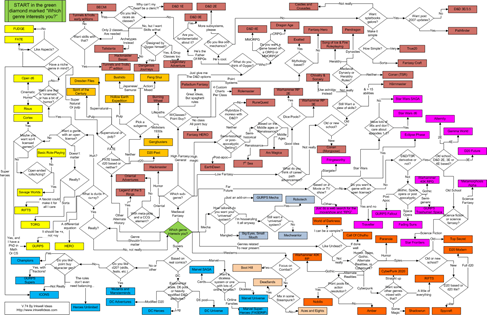
 Play What You Want