Let's roll some dice, watch some movies, or generally just geek out. New posts at 6:30 pm ET but only if I have something to say. Menu at the top. gsllc@chirp.enworld.org on Mastodon and @gsllc on Twitter.
This post is for me, not you. It’s a convenient place to keep a list of enhancements I’d like to see to Masterplan. Consequently, I won’t be promoting this post via social media. It’s simply here so that I can add to it no matter where I am, and if Andy ever agrees to apply them to Masterplan, he can come to one place with all my thoughts organized neatly.
Magic Items
In the library window, allow a user to filter the list.
Adding Price as a built-in field for magic items so that it doesn’t need to be added as a section.
A button allowing you to assign the default cost to a magic item based on its type (e.g., ammunition, armor, weapon). (Most magic items have the same cost at the same level. Ammunition uses it’s own formula. I’m not certain if there are any other exceptions, but in case future work creates exceptions, or an item is assigned no cost, it would be easier to be able to just hit a button to assign the cost rather than set it automatically.)
Add “Consumable (Other)” and “Consumable (Elixir)” each as a type of magic item.
Add “Alchemical Item (Oil),” “Alchemical Item (Poison),” and “Alchemical Item (Volatile)” as a type of magic item, while leaving “Alchemical Item” (without a subtype) for ones without a designation.
Add “Critical” as a magic item section header in the drop down list box.
Artifacts
When a new section is created, it can’t be removed. See, Jacinth of Inestimable Beauty, in Mordenkainen’s Magnificent Emporium. Do not delete the built-in sections (e.g., “Pleased (16-20),” “Moving On”).
Add “Critical” as a magic item section header in the drop down list box.
Projects
PC data should be exportable so that a PC doesn’t have to be imported multiple times to be used in multiple projects.
If a PC is imported from a *.4ednd file, import its portrait along with it.
Combat
If a token represents a swarm or tiny creature, or a creature currently subject to the prone condition, or a creature at a different altitude, allow that token to occupy the same space as another token.
Monsters
Increase the list of available, stock choices for range in the Power Range drop down list to include Melee N (one creature), Ranged N (one creature), Area Burst N within Y (creatures in burst), Area Burst N within N (enemies in burst), Close Blast N (creatures in blast), and Close Blast N (enemies in blast). These could replace some of the ones already in there.
Libraries
Allow an option for larger text in, for example, the Libraries window.
If you enjoy this post, please retweet it (Twitter/X), boost it (Mastodon), repost it (MeWe), or repost it (BlueSky).
The skill checks of 4th Edition Dungeons & Dragons (“4e“) were hated by many people, in part because they felt skill challenges were mixing skills into a system best suited for combat. I think it was Chris Perkins that analogized the criticism to people saying, “Keep your peanut butter out of my chocolate!” (and vice versa). While I don’t have a problem with the notion of a skill challenge, I do things a bit differently in my games, referring to them instead as “group checks.”
The Problems with Skill Challenges
In creating a model for group checks, Luddite Vic and I first had to identify what we didn’t like about skill challenges. First, they failed to discourage boring encounter design, which means most designs were boring. Second, the process itself became rote. Let’s deal with each separately.
Boring Writing
Let’s say the party is scaling a 100′ cliff. The fighter-type isn’t going to have much difficulty, and the wizard is going to be miserable, but we’ll deal with that later. In a skill challenge, you calculate how fast a character can climb (let’s say 15′ in a round), then divide that into the height of the cliff, and require a number of check equal to the quotient plus the remainder. That is, we divide 100′ by 15′ and get 6 and 2/3, which we round up to 7. The specific structures of skill challenges would give the DM two options: either “6 successes before 3 failures” or “8 successes before 4 failures.” Select one option and then select an appropriate set of skills a player can use to accomplish it. The obvious choices of skill are Acrobatics and Athletics. A character with poor bonuses for those will have to engage in some serious bullshit to convince the DM to allow a different skill instead. Even if the DM agrees, the target number the player will have to roll (the “DC”) using a less-than-relevant skill will be higher. But okay, that works. Everyone rolls.
However, consider conceptually what’s going on. They’re scaling a vertical cliff. That’s it, and that’s boring. Why not mix it up a bit? I’ll tell you why: There’s no motivation to do so. You can write this skill challenge as I have, and it does the intended job, just in a supremely boring way.
Boring Process
So, how does this play out? An experienced player knowing that they just need to roll, let’s say, 8 successful Athletics checks before rolling 4 failures will get out his d20 and just start rolling. “Success. Success. Failure. Success. Failure. Success. Success. Failure. Success. Success. Success. Yay. What did I win?” There’s no fun to this, and this is exactly how they all played out at tables on which I either played or ran. Everyone just wanted to get it done and move on to the fight at the top of the cliff.
Enter the Group Check
Let’s fix both of these, starting in reverse order. How about instead of rolling 8 successes before 4 failures, every character rolls just once regardless of the height of the cliff? This prevents that boring repetition. While you may agree that the repetition is boring, you may ask how a single roll by each player justifies the XP or story reward associated with the success. Well, first off, if it doesn’t justify the reward, don’t award it. Just view the success as moving the story forward. If that’s all that makes sense, don’t force the issue further than it should go. It’s a game, not a physics lesson. Second, leading to the second fix, write more interesting skill encounters. Sticking with our example, have the first part of the encounter scaling a vertical cliff face as suggested above. However, once you get beyond that, you then have a less steep climb through a sandy area where identifying strong-rooted bushes (a Nature check) is more important than sheer physicality (an Athletics or Acrobatics check). After that, you’ll obviously need to sneak up on the castle without being seen, which brings us to Stealth checks as the primary skill. Now the encounters are more interesting, and more players get their chance to shine and carry everyone on their shoulders (see Assists below). However, the important point is that each phase is a single roll for each player. If the majority of players are successful, the group is successful.
In other words, divide your encounter into multiple phases (until you run out of ideas), each of which feels very different both in terms of the description of the action and the skills being used. Do so regardless of whether the result is a skill encounter with 2, 5, or 25 phases. Obviously, there are plenty of instances where only one skill roll is needed (and few where 25 are needed 🙂 ), and there’s nothing wrong with that, but rather than succumb to boring processes to justify rewards, up your writing game to include more interesting encounters. Only where that occurs should you call it a skill challenge or group check and grant a reward.
I’m sure many games handle skill checks this way, but what 4e was trying to do with skill challenges was make an entire encounter out of skill checks in a cohesive way where the checks were related. That was a noble cause. The problem is that those checks were usually identical. The group check takes that idea and mixes it up a bit so that an experience point or story award is justified when based entirely on skill checks, yet keeps it interesting.
Assists
There’s another useful addition to this process. If the mathematical framework of the system supports it, a character’s remarkable success should allow assists as part of that process. If the DC for the Athletics check is 15, and the fighter scores a 20, then the fighter should be able to give a +2 bonus to the Wizard’s roll. For each 5 above the DC, the fighter will have another +2 bonus to grant to the Wizard or anyone else. This way, the fighter’s roll matters; he’s not trying to succeed, which is trivial, but instead to accumulate assists. Moreover, the wizard’s roll matters; he’s not trying to succeed, which is impossible, but instead to lose by a small enough margin to take advantage of the fighter’s success. Obviously, the amount of the bonus depends on the system’s mathematical framework, and there are such wide margins between the skill bonuses of 4e classes that it can be challenging (pun intended) to apply this in 4e, but it can be done if based on the specific players around the table. But make no mistake about it: This will work best if the game designer incorporates it into the framework ab initio.
Failure
I want to add one other thing that’s related. When players fail, there must be consequences. Failing while climbing a cliff shouldn’t mean a character falling to its death. That’s no way for a hero to die. So what do you do? To an extent, you can have mechanical consequences such lost healing surges, but often the most appropriate consequence is story based. For example, if you fail while climbing the cliff, you still make it to the top; it just takes too long. The result is that many of the people you’re trying to save are killed even if you successfully sneak in. They were scheduled for execution, and you didn’t get there on time.
Unfortunately, many players today don’t really care about story losses. If an NPC doesn’t have money or information to offer to PCs, the players often won’t prioritize the NPC’s health over their own. That’s not heroic, but that’s the way many people play. If they aren’t emotionally invested in the story, they aren’t going to care. So, sometimes failure can’t have consequences. In those situations, you need instead to reward successes beyond the obvious. On a success, you make it to the top of the cliff because that’s the entire point of the exercise, but if the characters aren’t fighting to prevent consequences, they can instead fight for an additional reward (without necessarily realizing it). In revisiting 4e sourcebooks I didn’t give proper attention in the day, I’m discovering some really interesting ideas that serve that purpose. Scrolls of power and dungeon companions from Into the Unknown: The Dungeon Survival Handbook (page 145), fey magic gifts from Heroes of the Feywild (page 140), intelligent items from Dragon 367 (page 22), and various alternative awards from the Dark Sun Campaign Setting (page 210) don’t significantly screw up a game’s balance, but they make for legitimate mechanical rewards and provide depth to the story. (Many items have levels, but they add a bit more flavor than an typical item of the same level.) On the other hand, as long as you don’t give away the surprise, dark rewards (i.e., cursed items and sinister items) from the Book of Vile Darkness (page 72) may serve as proper mechanical consequences.
I ran a dungeon delve again last night. TL;D[click through], each of these delves consist of three, 4rh Edition D&D combat encounters with not much backstory, and no role-play or skill challenges. Each delve is based on a classic 1st Edition D&D adventure, so the backstory is built in for old guys like me. Between both sessions, I learned something. These delves are fine as is for a convention competition, but I’m not running them as a convention competition. Nowadays, I’m running them just to have a good time, so I need to rewrite the encounters as if they’re for an ordinary campaign.
In addition, I decided that for my rewrites, instead of making them easy, medium, hard, and impossible (again, it’s not a competition), I’ll instead write them each at different levels, accommodating players that want to play at different levels. In no event am I going to make any of these higher than low paragon, so the nine delves will run from 2nd level to no higher than 13th level. When all is said and done, I’ll probably have only two that are in paragon tier. I don’t want them to play too slowly. The only downside is that I probably won’t have pregens available, but it seems like most people want to create their own characters anyway. Maybe I’ll create just a couple of pregens to adapt if someone jumps in at the last second, but for the most part, I’ll leave it to the players.
If you’re interested in playing them, I have a thread on the “D&D 4e” Discord server where I organize them. You can also just contact me through this blog. I use MS Teams to connect to everyone, using the screen sharing feature to provide the battle map via Masterplan. There are still some minor kinks to work out with that set up — I’m not fond of online play — but it does the job. I need to make this technical solution work to accommodate a player in my home game that’s moved from the good Washington (DC) to the bad Washington (state).
I love 4th Edition Dungeons & Dragons (“4e“). If you don’t, that’s fine, but did, and I still do. During the 4e days, which I consider the best years for organized play, I was one of the primary organizers for Gamers Syndicate game days in the DC area. We organized Living Forgotten Realms games at as many as five sites a month on as many as every weekend each of those months. We also ran D&D Encounters on the weekdays. We got a little time off, but not much. As a result of my efforts, and the rather generous rewards program offered by Wizards of the Coast (“WotC“) that you’ll never see again, I received a lot of free product, so there were very few publications I don’t own. I own multiple copies for many, and some are still in the original wrapping to this day (e.g., the Dungeon Command Sting of Lolth package; several game day, D&D Encounters, and Ashes of Athas adventures). Needless to say, I’ve seen a lot of game play and, you’d think, I’d see it all. Well, nope.
A Little More Context for This Post
In September of 2023, I started hosting 4e games at my house (which I bought primarily so I could easily host games on my own terms). The other primary organizer of the game days I mentioned (Vic) and I created a game world and cosmology (largely based on his own game world), and are serving as alternating DMs for the campaign. Because of how seldom we meet, Vic is only now finishing up his first leg of the campaign, so I’m about to start my first leg at level 4. In preparation for the whole thing, I’ve been cleaning up, and adding to, the Masterplan campaign manager, which we use for running the games. (I know I just said I haven’t had my chance to DM yet, but I’ve had the chance to run my 4e delves based on classic 1st Edition adventures.) I’ve added several libraries for sourcebooks that aren’t part of the base Masterplan product because the author gave up on the project before those sourcebooks were released. At the moment, I’m adding the Dark Sun Creature Catalog library to it. By my count, there are 11 more publications I need to add to get the Masterplan files complete. That said, even when I do, I’ll still have to go back to the existing libraries to continue to clean them up. All my work is available here.
And Finally, My Point
When 5th Edition was announced, I had a conversation with a friend. We both agreed that 4e was ending too soon because there was too much we hadn’t yet done. As gamers plugged into organized play, we knew that we’d be moving on to the next system, and if we didn’t, we’d have no one with whom to play because we knew our gaming friends would be. As I mentioned, I’m currently entering creatures from the Dark Sun Creature Catalog into Masterplan. Despite having played in two 4eDark Sun campaigns during the 4e days, I’m still running into monsters and other material that I’ve never even heard of, and it reminds me of the conversation. Note well that I never played 2nd Edition due to the Satanic Panic, so I imagine anyone that played it would at least have heard of those creatures, but a lot of this material is still new to me, and not just the Dark Sun material. There was just a ton of material that I never got to use. Some of my Shadowfell materials are among those still unopened.
If this sounds like I’m complaining, I’m really not. Despite WotC moving on from 4e relatively quickly, I still have a ton of material from which to draw. Guys like Rob Schwalb and Stephen Radney-McFarland had their dirty little hands all over that edition, so it’s no surprise that the things I’m discovering are really clever and interesting.
So, Winter Fantasy 49 is in the books. This is one of two vacations I take every year, and it’s probably the most fun. The nerds don’t see how that’s possible. I go to a gaming convention and play few (if any) games. This year, I had one game on the schedule, and it was canceled due to a car accident. (Everyone’s okay.) I didn’t put anything in its place. I don’t go to Winter Fantasy to game; I go to hang out with people and, for the only time of the year, drink like a fish. I probably had more to drink this week than I’ll have for the remainder of the year.
One more piece of flair for the den.
Good Habits
I’m a part of Winter Vantasy. In fact, I’m one of only two members that was there from the beginning. A bunch of people pile into a van and play D&D most of the way to Ft. Wayne. It’s the best 10 hours in gaming. We have certain rituals we follow, like lunch at Black Bear Burritos in Morgantown, WV, Sunday dinner at Portillo’s, and after hours drinking at the Brass Rail (best bar ever). It seems we add a new ritual to the trip every year.
Our new Monday-morning ritual.
Bad Habits
I also didn’t eat particularly well, but my blood pressure is still optimal, and I came home weighing what I weighed when I left. I believe I can credit that to the fact that I went to the gym all five mornings that I was in Ft. Wayne, including the morning we left. I’ve never done that before. Drinking and eating until late Sunday night and having to get up early the next morning to drive home, there’s very little chance of getting up early enough for the gym, but I did it.
The Downside
The only bad thing about the show this year is something that was beyond Baldman’s control. The convenient watering hole shut down and has yet to be replaced. That means that people are either reliant on hotel bars (which close early) or have to walk a few blocks in arctic weather to get to a good one. In gaming parlance, that means we “split the party,” which created a (not so) funny vibe, and combined with the lower attendance this year, meant that I didn’t see a bunch of my friends. The Baldman will try to make arrangements next year to create a good space for us to meet, and I have confidence he’ll succeed. Also, see What’s Next? below.
What Did I Do All Day?
I heard this question a lot. Almost 15 years ago (the days of 4th Edition D&D), I, and others, organized a convention, synDCon, and in our second year, I created synDClash, which were a set of six dungeon delves each based on a different classic 1st Edition adventure. The Saturday before Winter Fantasy, I ran a couple of them for my 4e group. They were a hit, and I suspect the group will play them again when we don’t have a quorum. This inspired me to write two more delves during my downtime in Ft. Wayne. I finished Tomoachan’s Treasure (based on C2: The Hidden Shrine of Tomoachan) and finished two of the three encounters for White Plume Beckons (based on S2: White Plume Mountain). I’ll finish up White Plume Beckons today (EDIT: Done!), at which point I’ll have eight of them.
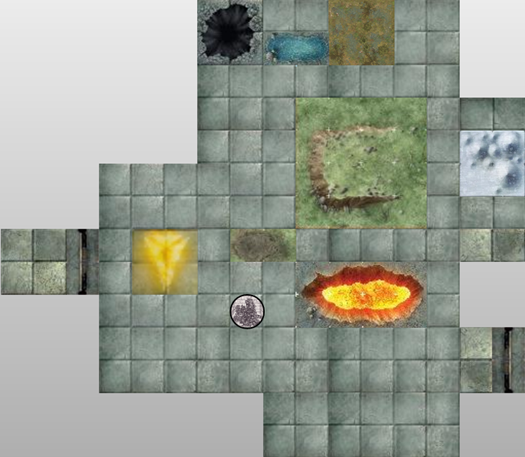
I love encounter #2 of Tomoachan’s Treasure.
I put in a couple twists to the two I wrote this week. For Tomoachan, I gave it a bit of a Raiders of the Lost Ark vibe. For White Plume, I allow the players to determine the order of the encounters and to gain use of the artifact they obtain. For those that metagame that decision, they may be a bit surprised.
I’m mulling about writing delves for B1: Into the Unknown (perhaps called, “You Still Don’t Know Shit!”) and S1: Tomb of Horrors (maybe adding a twelfth pre-gen named Lara Croft), but I’m not sure if those are well-suited as delves. I could imagine people might be interested in me creating them for the A series (i.e., the “slavers’ series”) and perhaps X1: Isle of the Dread, and I know one member of my 4e group that would be particularly interested in I3: Pharoah, but I never played any of those mods, so I’m not sure I could do them justice. The same with T1: The Village of Hommlet and U1: The Sinister Secret of Saltmarsh. However, I enjoy the writing, so in time I might give at least some of them a shot.
What’s Next?
Next year, I may play a couple of games. Hell, I might even run one (based on a silly promise I made). Next year’s show will be #50, and they’re creating a new living campaign set in Greyhawk using 5th Edition D&D rules. I might as well give it a try even though I’m not much of a 5e guy. After all, I hate 3rd Edition, but I’ll play it with the right group of people. The thing about Winter Fantasy is, for lack of a better word, that it’s cozy. It’s small enough that you’ll always (except this year) see your friends, but it’s large enough that there’s a decent number of things to do and you’ll always make new friends. If you haven’t been to Winter Fantasy, next year may be the best year to attend. If so, I’ll see you there.
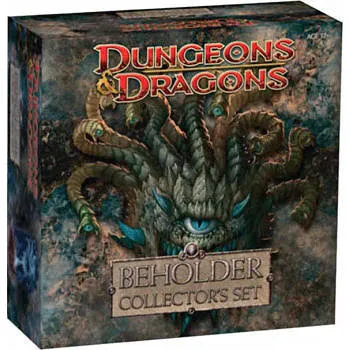
Last Saturday (February 1, 2025), to give myself some practice running 4th edition Dungeons & Dragons using the Masterplan software, I ran a couple of my synDClash delves. TL;DR: They were written for my convention, synDCon, as competitive, 4th edition delves. Five players playing one pre-generated character each goes through three combats, and whichever group of five players goes the farthest is the winner. My friend, Dusty, won, but I never got the prize to him (i.e., the set of five beholder mins). If I ever see him again, it’s his. But I digress . . . .
I think this is the one. I mention it only because my shame is my penance.
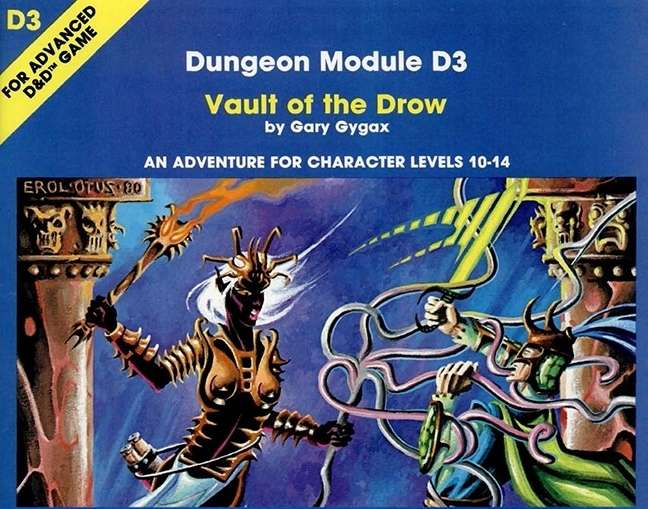
Each of the delves was based on classic 1st edition adventure module (what I always called a “mod,” which has strangely generated some grief on the internet). Why did I based them on 1e mods? Because I’m old. The mods were based on B2: The Keep on the Borderlands (easy), C2: The Ghost Tower of Inverness (moderate), G1-2-3: Against the Giants (moderate), D1-2-3: The Drow Series (difficult), S3: Expedition to the Barrier Peaks (difficult), and Q1: Queen of the Demonweb Pits (impossibly difficult). I converted those delves into Masterplan project files, which can be found on my D&D 4e Resources page along with the pre-generated characters.
How It Went
In short, it went tremendously well. Everyone had a blast, and the software was smooth almost all the time. There were only two downsides. First, 4e is inherently slow, and despite delves being relatively fast, this particular group really likes to have side conversations. This meant that we got through only two: Return to the Borderlands (based on B2) and The Great Metal Dungeon (based on S3). Second, there was a clear error in my math for skill checks during the second encounter of The Great Metal Dungeon, which resulted in an unfair TPK. (Revisions have already been made but not yet uploaded.) The delve is labeled as “difficult,” but I assure you that those numbers were still unfair.
You know what I’m talking about.
But what this means is that there are still four more (plus perhaps a retry of The Great Metal Dungeon) available for my group to play during weekends on which we can’t get a quorum for our regular gaming.
New Delves?
Over on BlueSky, someone posted an image of his four copies of the original versions of C2: The Hidden Shrine of Tomoachan. That triggered a thought inside my soft human brain. If we get through these delves, I’m going to write at least two more based on Tomoachan and S2: White Plume Mountain. I don’t think there are any other mods that, though iconic, have much special meaning to me. Even Keep on the Borderlands didn’t, but I needed an easy one, I knew it was special to a lot of people, and I knew what the three best encounters to use would be. Perhaps I’ll convert S1: Tomb of Horrors as well considering that Wizards of the Coast already converted it to 4e, though that one would be hard to run as a delve. If so, for obvious reasons, I’d have to make it as impossibly difficult as The Demonweb Pits was. If I convert them, I’ll post the to my D&D 4e Resources page as Masterplan files.
And now for something completely off topic for this blog.
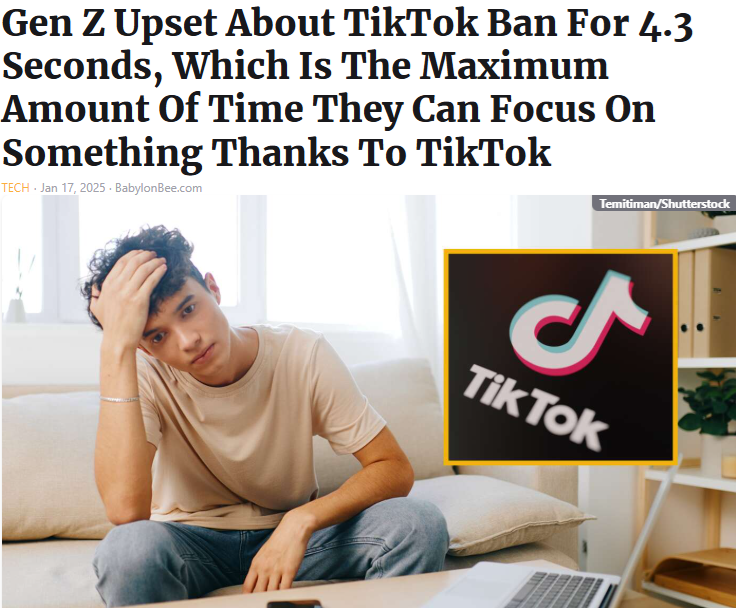
The Supreme Court of the United States (“SCOTUS”) allowed the so-called ban on TikTok to go through. I refer to it as “so-called” because, as the holding states, it’s not a true ban; it’s a conditional ban. Political rhetoric always clouds the truth, so despite this being a unanimous decision of the Court, I still feel the need to preface this discussion with a brief discussion of the role of appellate courts.
Some Pontificating
The reason most of you are so angry at SCOTUS, or particular justices, is at least in part because you don’t understand (or care about) its role. Appellate courts, including SCOTUS, aren’t there to make policy decisions. They don’t make law. That would be a violation of the Separation of Powers principle, a violation of their individual oaths of office, and anti-democratic. In other words, SCOTUS doesn’t ask what the law should be; they ask what it actually is, for better or worse. What the law is, whether statutory or constitutional, is determined by Congress (and state legislatures). All the appellate courts do (that’s relevant to this conversation) is interpret that law, resolving ambiguities in the language or in how it might apply to a particular set of facts. So, you may absolutely be upset that TikTok is banned if you want, but the blame for that doesn’t lie on SCOTUS, and it would be horribly inappropriate if the justices sitting on that bench changed the law because they didn’t like it either. Stop shooting the messenger. That includes me. Much like SCOTUS just tells you what Congress says, I’m just telling you what SCOTUS said.
Enough of that. Let’s talk about what they said.
The Facts and the Law
In the interests of brevity and clarity, I’m just going to get right to the point, simplifying everything and leaving out a lot of fluff (and perhaps some important nuance).
TikTok, Inc. (“TikTok”) is an American company, but it’s owned by ByteDance, Ltd. (“ByteDance”), which means, like ByteDance, TikTok is subject to Chinese laws. This means that TikTok must “assist and cooperate” with the Chinese government, granting them “the power to access and control private data.” In other words, not a single piece of information you put on TikTok, even data indirectly coming from other connected social media platforms, is truly private. The Chinese government has access to all of it.
Important: This information includes age, phone number, precise location, internet address, device used, phone contacts, social network connections, the content of private messages, videos watched, and behavioral data (e.g., keystroke patterns and rhythms). Remember this list or come back to review it if necessary.
Trump tried to shut down TikTok, but the appellate courts stopped that, seeing that as outside the scope of executive power. Biden took office and tried to negotiate with ByteDance, but that went nowhere. In the meantime, Congress than passed the Protecting Americans from Foreign Adversary Controlled Applications Act (the “Act”). Under the Act, entities may not “distribute, maintain, or update a foreign adversary-controlled application” in the USA. There were some other details, including exceptions, but the point, of course, is that TikTok fit the definition.
I mentioned “conditional ban” above. TikTok could continue to operate under the Act if it underwent a “qualified divestiture.” That means that ByteDance would have to sever its control over TikTok, which would prevent ByteDance, and thus the Chinese government, from accessing your data on TikTok.
Applying the Law to the Facts
This gets complicated for the non-lawyer, so I’m going to leave it up to you to ask questions if you want a more detailed analysis. Here’s the short version. The first issue was whether the First Amendment applied to the Act, and SCOTUS said yes. The second issue was whether the Act’s constitutionality was subject to strict scrutiny or intermediate scrutiny. The Court said intermediate scrutiny, which is an easier test to pass, in part because the Act didn’t impose restrictions based on the content of any speech. In fact, the Act doesn’t care what was being said at all. In legalese, it was “content neutral” as opposed to “content based,” so it would be easier for the Court to find the Act constitutional (though not “easy”).
Applying intermediate scrutiny, the Court asked whether the Act 1) “advances important governmental interests”; that 2) don’t “burden substantially more speech than necessary”; 3) “to further those interests.” In other words, the goal must be important, and there must be a causal connection between the restriction and achieving the goal.
The Entire Point
I’ve been discussing this case with a coworker, and I know what she’s going to want to know. It isn’t going to be all the details on how all the conclusions above were reached. I imagine you want the same thing. Here it is. Congress passed the Act to prevent China from “track[ing] the locations of Federal employees and contractors, build[ing] dossiers of personal information for blackmail, and conduct[ing] corporate espionage.” This isn’t unreasonable. The Free Speech clause could certainly interfere with legislative acts that prevent such employees and contractors from using the TikTok app, so prohibiting the app’s availability is the only way to protect national security.
Or is it? Well, no, there are indeed other ways to do so, but under SCOTUS precedent, Congress is under no obligation to select those other ways. Congress made this choice after extensive hearings and other fact-finding processes and determined that all the evidence suggested that this is the best way, all while doing so in a way that satisfies intermediate scrutiny.
You may also want to know whether other platforms are next. It should be obvious that US companies are clearly outside the scope of this law, so Facebook, the platform formerly known as Twitter, and MeWe are safe. As for other foreign entities, SCOTUS points out that TikTok has “special characteristics” (i.e., foreign control over large amounts of private data) that have always justified a different analysis. This is why SCOTUS chose to “emphasize the inherent narrowness of [the] holding. . . . A law targeting another speaker would by necessity ential a distinct inquiry and separate considerations.” This case won’t immediately affect any other social media platform.
c/o The Babylon Bee
Is This a Good Idea?
As I said, SCOTUS doesn’t ask what the law should be, but we certainly can. I read somewhere (but didn’t verify) that a content creator can make 10 times on TikTok what they can make on Facebook, and YouTube is even less generous than that. This will certainly hurt content creators, but is your profit more important to you than your own privacy? What about the names and phone numbers of your friends that will also be exposed without realizing it? With everyone complaining about Facebook tracking confidential information, you’d think you’d be even more concerned with a foreign adversary doing so. All that considered, and putting aside matters of censorship, is this a good idea?
This is a decision you must make for yourself, and you can let your congressperson know how you feel about it. SCOTUS did not tell Congress it had to keep the Act; it just said it could. There is nothing stopping Congress from repealing or amending the law. That said, please keep in mind that Congress made its decision based on extensive research I’m sure you haven’t done, and arguments without specifics will fall on deaf ears. The nature of a republic is that you elect people you trust to do that research and make those decisions, because you don’t have time for a proper analysis. But they still must answer to you.
Final Note: I’ve left out a lot of details. However, I’ve uploaded a PDF of the decision with highlighted text and commentary from me. If you want to dive into the detail and have all your “Why?” questions answered, download it here. I’m happy to discuss the Court’s reasoning in greater detail. As long as you’re polite. 🙂
There are a ton of movies I’ve never seen, and I try to watch as many of them as possible. This means not watching movies I’ve already seen. Of course, like all of you, there are still some movies I like to rewatch. One of them I’m watched again tonight: The Devil’s Own.
This is the first I’ve seen it since quite some time before everything switched from DVDs to streaming (well over a decade). I saw it was available on Hulu/Disney+, so I figure it was about time to give it another watch. Brad Pitt stars as a member of the IRA beside Harrison Ford’s Irish-American New York City cop. Ford’s wife was played by Margaret Colin just off her breakout role in Independence Day, and his eldest daughter was played by a young Julia Stiles. Treat Williams, Ruben Blades, and (of all people) Rob McElhenney round out the lead cast. I love the movie, and I love the soundtrack even more. James Horner is probably my favorite musical writer of the 90s. His soundtracks are more valuable to me than any of the popular music that came out in that decade.
A Weird Connection
Right before law school, I moved to Westchester County, NY and worked in the Wall Street district of Manhattan. I was intending to attend the New York Law School, but the more prestigious Chicago-Kent College of Law accepted me two weeks before class started. I changed gears and moved to Chicago the day classes started. However, during the four months I was working in Manhattan, there was an area blocked off for the filming of a “new Brad Pitt movie.” I never saw Pitt because I never had the desire to hang out and watch filming, but I saw the set up for the scene when (spoiler alert!) Diaz was killed. It was filmed right outside my office, and whenever I watch the scene, it reminds me of the lead in to what was probably the best time in my life.
I spent a lot of time here.
In any event, it didn’t have very good reviews, but I thought it was great.
I recently came across an article about 10 songs that wouldn’t work in today’s social climate. Sure, I’m kind of old (56), so for the most part, those songs didn’t bother me, but culture revolves around the young, so my opinions don’t matter. However, I never understood the stupidity of the objections to one song in particular that appeared in the article: Suicide Solution by Ozzy Osbourne.
I post this with no fear any of you will kill yourselves after listening.
Ozzy was famously sued for causing the suicide of one of his fans by releasing the song. (That was the dumbest sentence I’ve ever written.) The article seemed apologetic to those from the 80s and today who objected to the release of the song. The idea is that Ozzy is trying to advertise suicide as the solution to your problems. Moreover, there’s a part of the song where Ozzy stutters over the word suicide, saying, “Su, su, su . . . .” I remember the attorney representing the plaintiffs saying that it sounded too close to “Shoot, shoot, shoot,” which, of course, is how the fan committed suicide. Ozzy fought back saying that the song was about the dangers of alcoholism, which is a sort of slow suicide by way of the chemical solution of alcohol. (I know there’s some disagreement on whether alcoholic beverages are “solutions” or “mixtures,” but that’s not a concern of this post.)
So, who’s right? (I am right.) Well, form your own opinion. (Your opinion will be stupid unless you admit I am right.) Here’s the opening lyric to the song.
Wine is fine, but whiskey’s quicker. Suicide is slow with liquor.
Do I really need to post the rest of the lyrics for you to understand what this song is about? Well, just in case . . . .
Take a bottle, drown your sorrows. Then it floods away tomorrows. . . . Now you live inside a bottle. The reaper’s traveling at full throttle.
Seriously, may I stop? While the other lyrics can be interpreted in a multitude of ways, they should be interpreted within the context of what you just read. Clearly, this song is about the dangers of alcohol excess. It’s actually a fucking public service announcement, but because a couple of parents couldn’t accept that the life they provided their child with a life he felt wasn’t worth living, they needed a scapegoat. That’s some serious cognitive dissonance, but their personal failings carried potential consequences for society at large, and ideas like this still swirl around in people’s insecure brains.
Of course, there could be even more to this argument. Suicide requires a complex combination of circumstances and emotions. No song could be causally linked to a suicide. Free fucking speech. But none of that should matter because the song itself is telling you not to commit suicide through irresponsible alcohol use. Ozzy knew something about this, as a fellow musician he knew had recently drank himself to death (so to speak). This song was absolutely the wrong target to attack.
I’m probably preaching to the choir among my few readers, but apparently there are still plenty of people who cling to this incredibly stupid position. Even my YouTube search warned me about what’s coming.
I don’t mind the phone number going viral, but I really don’t need the warning at the very bottom. Duh.
Because it came up on Facebook, I want to share a funny story that might give you a little laugh. It relates to the only time in my life I went skiing.
Not just thematic. Foreshadowing!
Context
It was the early 1990s. I was newly-graduated from the University of Maryland, as was my cousin, Mike, but from the University of Virginia. Mike and I were taking occasional trips to Boston where his younger brother was attending MIT. Mike had been skiing before and suggested driving up to the Killington Resort in Killington, VT. (Spare me your “East Coast skiing sucks” claims. They mean nothing to me.) This was a relatively expensive trip for me, because I didn’t have much disposable income, and I was on my own financially, suddenly having to buy things for myself previously taken for granted. Bill Clinton had gone on late night television and when asked, “Boxers or briefs?” said “Briefs.” While that seems like a diversion, it really isn’t. On with the story.
Killington Resort
Mike took me on the bunny slope so I could get the feel for skiing, but we both agreed that if I were to learn, I’d just have to get on a real slope, so I did. I went down the slope the first time and thought, “DId the temperature suddenly drop? My legs are a bit cold all of the sudden. And why are people staring at me?”
I chalked up the latter concern to me being paranoid for being a new skier, and I got back on the lift for another run. Halfway up, I realized my jeans had ripped. Yes, I was wearing jeans because I didn’t want to spend money I didn’t have on skiing equipment I might never use again. Also, I was wearing gaudy, bright-red briefs, which were hard not to see in clear weather. To me, brightly-colored briefs were new and cool.
Never accuse me of being cool.
So, I took off my jacket, tied it around my waist, and made one more run down the hill. Mike tried to get me to change my pants and try again, but I had only one more pair of jeans with me, and as far as I knew, there were no clothing stores nearby the resort. With limited time to ski, driving off site didn’t seem practical. I changed my pants and spent the rest of the day in the resort, hanging out and bored out of my mind.