Mixed Bag Watch: I Saw Three Movies This Weekend @65movie @cocainebear @creedmovie #GoodWatch

If you enjoy this post, please retweet it. Other posts in this Good Watch series can be accessed by clicking here.

I had a goal to see three movies this past weekend. This isn’t something I’ve ever done, but I wanted a lazy weekend where I didn’t have to do anything. No fixing up the home. No significant work on my 1st Edition Dungeons & Dragons database. Hell, I didn’t even go to the gym, and my martial arts class was cancelled, so no work out. Just pure laziness. I needed the break anyway. Now I’m going to ruin it by, instead of just posting a stupid meme, writing this post. This is far more thinking than I wanted to do this weekend. Yeah, it’s a low bar.

65 Million Years Ago

First up Friday night was 65 Million Years Ago. This movie will not win any Oscars, not even for special effects, cinematography, or costume design, but it’s only about 90 minutes long, which is about how much you can take before wanting to tap out. The story was as original as a movie can be nowadays, and the fact that this ship crashed within a day of the dinosaur-killing meteor hitting the Earth is reasonably explained. It’s still a crazy coincidence, but there’s some sense to it. The movie is, as you probably know, about a spaceship that crashes to the Earth, and so a guy with some sort of hand-held rail gun(?) and hi-tech grenades takes on a bunch of dinosaurs. So, it is what it is, and you all know what it is going into it, so if that interests you, I think you’ll be (just) okay with it. I was.

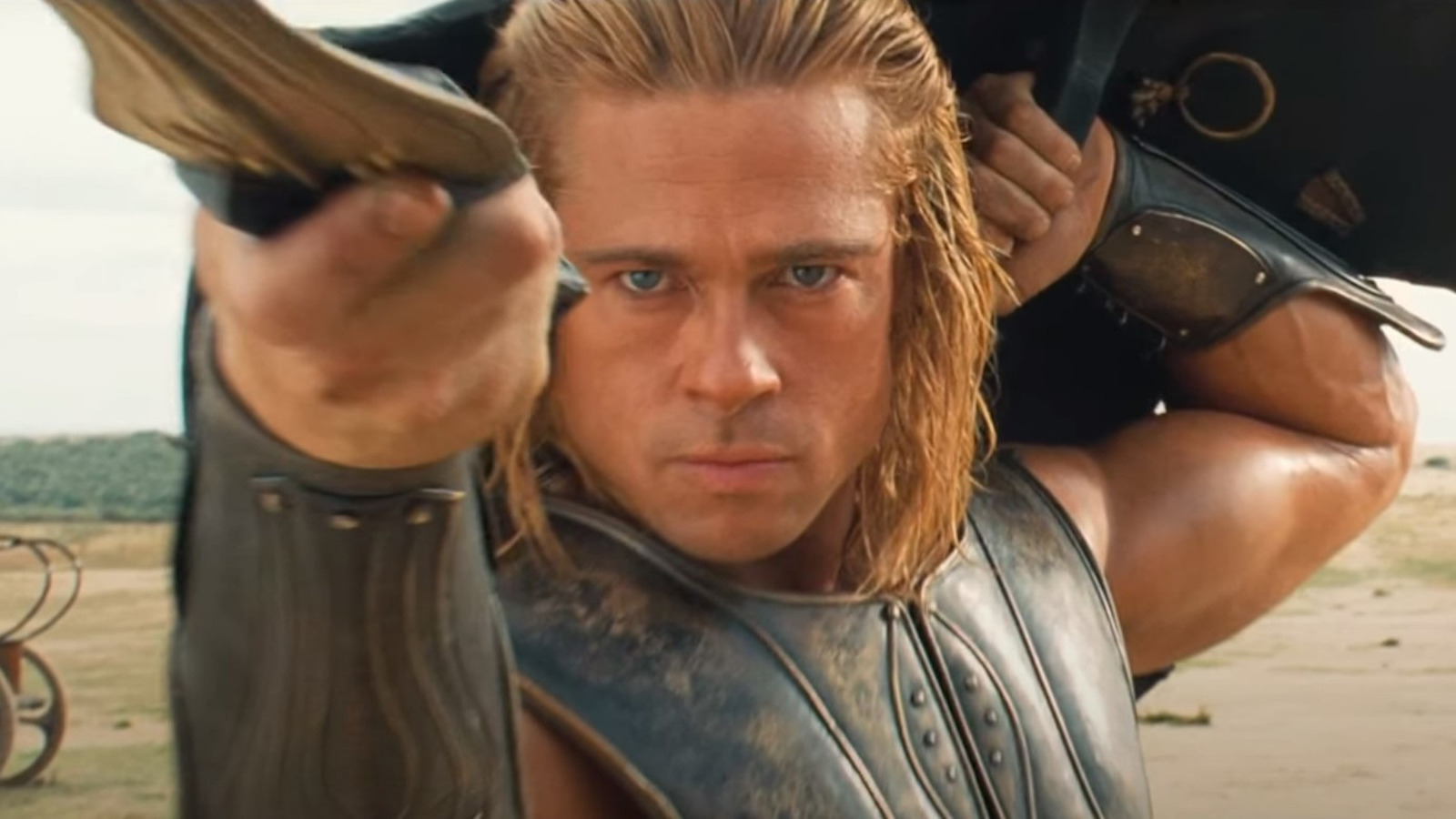
These were the scariest dinosaurs. Think really energetic Komodo dragons.

There were no scenes during or after the credits, but there are some visuals during the first part of the credits that you may want to watch.

Cocaine Bear

Because 65 took only 93 minutes, and Cocaine Bear — only 95 minutes — was about to start, I bought a ticket will sitting in my seat (while the credits were rolling; shut up). Future students in film school will be shown this movie to show them how not to make a movie. The pacing was off. There was a part of the movie that dragged. It was terribly unrealistic, and not at all faithful to the story on which it’s based. None of the characters were sympathetic (maybe one exception). Several bad guys got away, and we were expected to sympathize them. Despite all of that, it was an incredibly fun watch. I don’t regret a single minute of the 95 I spent watching it.

I even rooted for the paramedics to die. I hate exceptionally stupid characters.

There are two mid-credit scenes.

Creed III

Knowing that I was going to see this movie, if for no other reason, because Hollywood’s next big thing, Jonathan Majors, is in it, I decided to watch Creed and Creed II this week, and I loved them both. They represented the perfect start to a sequel trilogy. They used Sylvester Stallone, and they followed the basic formula of the good Rocky movies while still carving out their own path, both structurally and artistically. Great idea, and great execution. I was looking forward to Creed III. Unfortunately, this movie was a huge disappointment, which is weird. Besides Jonathan Majors, the backstory is strong as hell. This won’t be a spoiler if you’ve seen the trailers: Majors plays Damian Anderson, a childhood friend of Michael B. Jordan’s Adonis Creed. He took care of Creed, and was the #1 rated amateur boxer ever. (Seriously, he said that in the movie.) Adonis lost his temper and created a bad situation, and when Damian bailed him out, he was the one that got in trouble. He spent 18 years in jail watching Adonis climb to the top, and now he wants revenge. All of this is interesting, and the cast is pretty good, but there’s no Sylvester Stallone, and the execution on the main story is piss poor. It was rushed and unrealistic. Don’t misunderstand me. I can go into a movie like Blade and say, “I’m going to suspend my disbelief and accept vampires exist.” Not everything has to be realistic in that sense, but once you commit to your premise, you have to follow through. You can’t just blow up shit, especially in ways that defy logic, and expect me to roll with it. It was just stupid at times, and I’m too smart for that. Honestly, I wouldn’t recommend it to anyone even if you like this kind of movie.
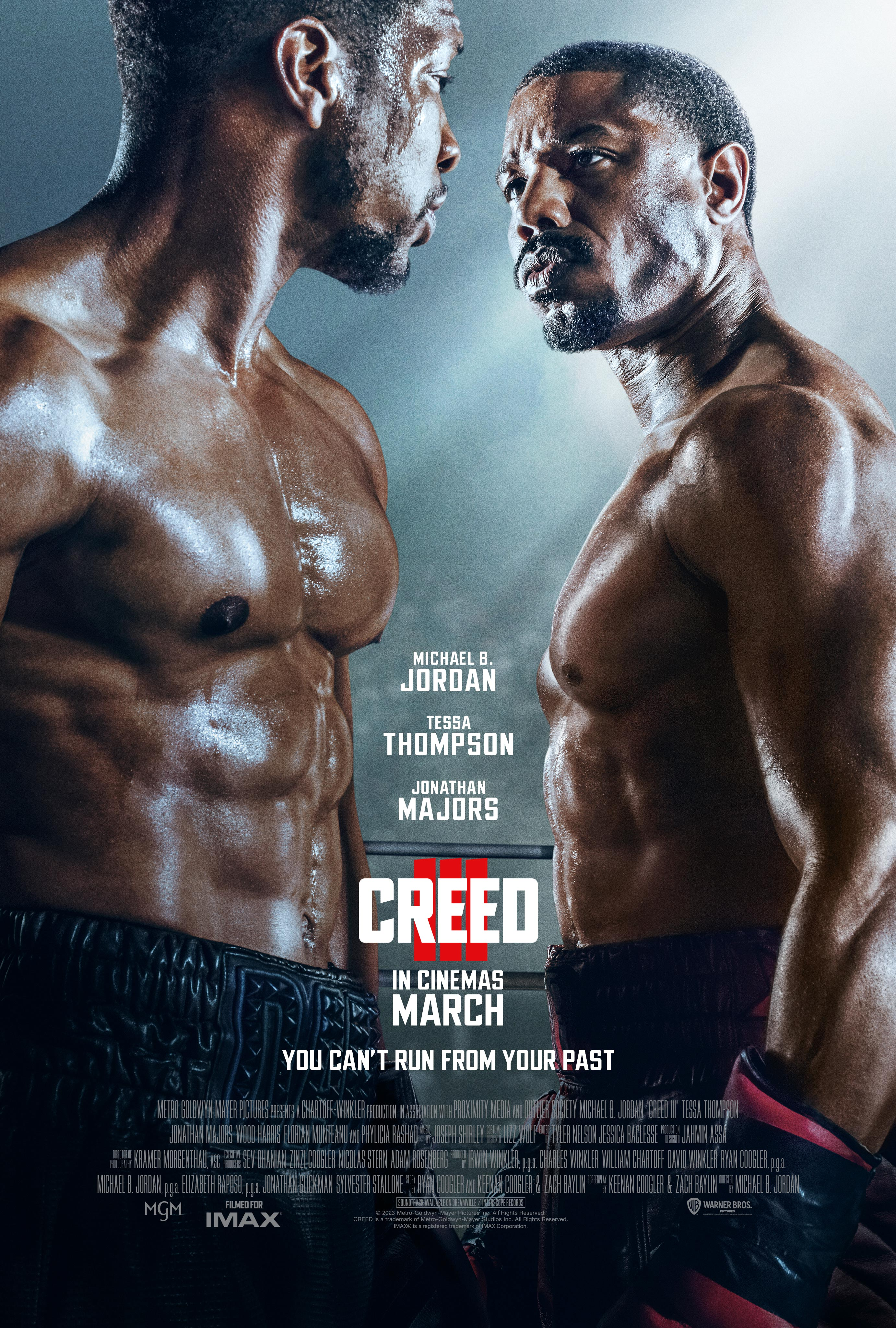
It could’ve been much better.

There are no mid- or post-credit scenes.

Rounding out the month for me are three movies I want to see: Shazam! Fury of the Gods (opens Friday), John Wick 4: Chapter 4 (opens the following Friday), and Dungeons & Dragons: Honor Among Thieves (opens the Friday after that one). April will be a slow month with only one movie, Renfield, worth seeing in the theater, but then May brings what should be my favorite movie of the year, Guardians of the Galaxy Volume 3. June has only two movies of interest: The Flash (June 16) and Indiana Jones and the Dial of Destiny (June 30), so things will definitely be normal after this month.

That, the Washington Capitals, the Winnipeg Jets, and the XFL were the basis of my lazy weekend.

Follow me on Twitter @gsllc
Follow 65 Million Years Ago @65movie
Follow Cocaine Bear @cocainebear
Follow Creed 3 @creedmovie


Dwindling Watch: Scorpion @paramountplus #ParamountPlus #GoodWatch #television #science #math #computer #scorpion

If you enjoy this post, please retweet it. Other posts in this series can be accessed by clicking here.

Welcome to post #1,001!

I have a really annoying habit. Actually, I have several, but this one annoys me. I have to finish what I start. In the context of this post, it means that, once I’ve set my mind to binging the entire run of a television show, I can’t stop until I’m finished no matter how bad the show is. That’s what happened with Scorpion.

Scorpion aired on CBS from 2014-2017, and now you can watch it on demand on Paramount Plus. It centered on a team of underachieving, supra-geniuses who finally get their big break when the Department of Homeland Security designates them a contractor. It started off well enough, and the ratings were some of the best CBS enjoyed during its run. One executive referred to it as “our Big Bang Theory, but as a drama.” However, by season four, the ratings were terrible, and despite a cult following and a tense cliffhanger to end season four, the show was cancelled.

Good riddance.

The show was wildly unrealistic. As anyone with a physics degree, a first career in software engineering, and a current career as an attorney can tell you, most shows are. I have no problem with that. You have to enter into any television show or movie with a certain suspension of disbelief, and I’m happy to do so for the sake of drama. After all, despite not being a comics reader, I’m a huge fan of the MCU and DCEU. What could be less realistic?

I called a fair game today.

But this show dives into many different branches of science, and it gets them all terribly wrong. Moreover, while each episode presents a preexisting peril to be solved, while addressing the peril, the Scorpion team members always make things worse, and usually in the most ridiculous or unrealistic of ways. It’s terrible writing that eventually grates on the viewer. Sharks don’t act that way. Computers don’t act that way. Gravity doesn’t act that way. How is it that you’re always getting your jacket caught right before you have to make a getaway? You’ve been on a deserted island for three weeks; how are you all so clean, and why is Cabe still wearing a suit and tie?

As the charm of the show tends to wane, there’s little left to keep the viewer interested. But I have to say, if there were a season five, I’d have watched it.

Sometimes I hate myself.

Follow me on Twitter @gsllc
Follow Paramount+ @paramountplus

AD&D Divine Fight Club #ADnD #DnD #RPG #TTRPG #1e

If you enjoy this post, please retweet it, and please visit my 1st Edition D&D resources page.

Today (well, by the time this post is published, yesterday) I asked a question of the nerd hive mind. To summarize, the basic question was this: Has anyone ever conducted combats between the various pantheons from the 1st Edition AD&D (“1e”) Deities & Demigods to see which pantheon was the most powerful?

Some say he’s a god.

Here’s the full post:

I wonder what would happen if we held a combat tournament of the pantheons in the 1st Edition AD&D Deities and Demigods. Who would win? Maybe have a randomly-paired, single elimination tournament leading to a round-robin final four where each battled the other three. That way, the final four at least would minimize the effect of a particularly poor match up for a specific pantheon. Or maybe do it like the soccer World Cup where the round-robin occurs at the beginning of the tournament, and then it’s single elimination from there on out. I don’t like that as much because you couldn’t get a fair sense of who’s really second best. Ideally, it would be far more complicated, but I’d be surprised if anyone would be willing to play all that out (or design software to handle it).

Has anyone here ever done that for even two pantheons? I’m just curious which pantheon would have the last man standing.

EDIT: Another related question is whether the monstrous entities would be involved even if not summoned by a god. If not, the entire Cthulhu mythos and gods for nonhumans might be disqualified. 🙂 There’s certainly have to be some sort of criteria to make the whole thing reasonably fair.

The most colorful response was, “Dude you need to get laid,” to which I responded, “True, but irrelevant.”

This coming from a member of the self-professed “official” 1e group on Facebook. My answer was a serious one, but I should probably say more; hence this post.

Wait a second! He’s just a demigod.

My question springs from a general sentiment in our gaming community, but voiced as well as anyone by the author of the 1e Deities & Demigods, James Ward:

DDG (for short) may resemble MONSTER MANUAL, and in fact does include some monsters. However, the purpose of this book is not to provide adversaries for the players’ characters. The information listed herein is primarily for the Dungeon Master’s use in creating, intensifying, or expanding his or her campaign.

1e Deities & Demigods, page 5.

Yes, there are a lot of quotes in this post.

Anyway, given James’ explanation, he still isn’t giving a good reason as to why there are stat blocks at all. If the PCs aren’t expected to fight them because it wouldn’t be appropriate to do so, then who is? Well, how about the gods fighting each other? It would be an interesting experiment, but without software designed to simulate combats in 1e, that would be a lot of work just to satisfy one’s curiosity.

But it would be cool. I’m curious as to what bias James had in creating these characters. He obviously tried to stay true to the general nature of the gods, and to an admitted lesser extent, their legends.

While DEITIES & DEMIGODS is ideally suited to the task of working deities into an AD&D campaign format, everything has not been covered in the book. In the 6,000-year plus span of this work mankind has spent a lot of that time adding to the myths dealt with herein. We did not try to encompass everything, and it is silly to assume that the five years or so of research that created DEITIES & DEMIGODS could suffice.

1e Deities & Demigods, page 4.

In our research and compilation of this book, we ourselves hove altered many facts, either for reasons of game balance and consistency or because sources conflict. DEITIES & DEMIGODS is not a scholarly work or reference – it is a game accessory.

1e Deities & Demigods, page 5.

The Rules

Of course, even Fight Club has to have rules. Do we include monsters? If so, then doesn’t that completely remove the Cthulhu and nonhuman pantheons? Can’t do that, so maybe there’d be an exception for those two pantheons. We’d also have to assume that the nonhuman gods cooperated, which usually makes no sense, but doesn’t always make sense with gods. I can live with that nonsense; this is all nonsense. Besides, the monsters from other pantheons could still play a role to the extent that the gods would choose to summon them if they have summoning powers, or if those monsters are actually more powerful than gods. Why does the latter matter? (Tee-hee.) Someone pointed out that the Greek pantheon had to win simply because there were so many gods (damn titans always screw up everything). The Norse pantheon is a distant second.

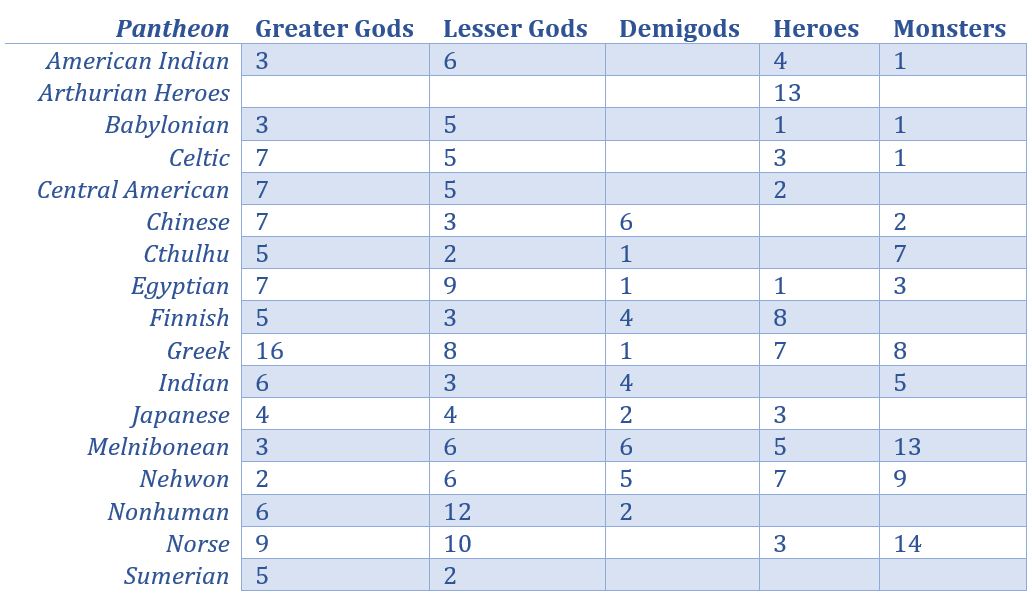
Even this chart is controversial in terms of counts and categorization of heroes v. monsters.

To balance that, we’d want to give each side the same number of combatants, but we’d first have to determine which gods from each pantheon would make the cut. They should be the most powerful among them, so I guess we’d have to first have internal fights for each pantheon.

Ack!

And, of course, if we could somehow develop software to run these simulations, we’d want to run 1,001 simulations for each fight so that we minimize the effects of rolls on either end of the bell curve.

Ack!

It appears that some pantheons have no chance of competing (e.g., Arthurian). For example, the Greek and Norse pantheons lean towards greater gods, so whatever number of gods we assign to fight, they have an advantage. On the other hand, it looks like the Babylonian and Nehwon pantheons cap our gods-only battle at only 8 gods, and because the Egyptian pantheon has seven greater gods, they’re at no disadvantage despite being slightly lesser-god-heavy. In fact, such a hard cap leaves many pantheons relying on greater gods for the most part. Of course, all of this assumes that lesser gods, demigods, and monsters are weaker in combat than greater gods, but I have no idea if this is true. That’s what this experiment would be about.

Puny gods.

The Map

Someone on MeWe raised the issue of terrain. My knee-jerk reaction was a blank battlemap with no terrain, but under the assumption that the lack of terrain shouldn’t restrict the use of any ability or spell that a god has. For example, the web spell should work even thought there aren’t any walls. I’m not asking the question of which pantheon is more powerful in, let’s say, the desert. You just have to handwave a bit of in-game logic to make sure the stat blocks are being tested for something akin to an average level of power across all combinations of obstacles, terrains, and weather.

Further Basis for My Curiosity

Besides the fact that I’ve started running 1e for the first time in decades, there’s another inspiration for the question. As a mythology nut, but also an MCU nut, I really want the MCU to expand on the pantheons. They made a Disney+ series I really wanted to see, Moon Knight, and made the Egyptian Pantheon part of that show. This continued (modestly) in Thor: Love and Thunder, and will continue to some yet-unknown extent in Wakanda Forever. We also got to scratch the surface of eastern mythology and folklore in Shang Chi. Speaking of Wakanda Forever, I was also thrilled to find out that Namor is being played by a Mexican-American so that they can expand on a central American pantheon. (I’ve never read comics, so I don’t give a rat’s ass about canon.) I want to see this expansion, so naturally my brain is always looking for an excuse to think about issues like this one.

So, you see, I absolutely need to get laid (or at least choose more appropriate photos), but since that’s not in my immediate future, I’m thinking about this.

In any event, this interesting experiment would finally give us a good use for the stat blocks.

Follow me on Twitter @gsllc

Dungeons & Dragons is a trademark of Wizards of the Coast, LLC, who neither contributed to nor endorsed the contents of this post. (Okay, jackasses?)


Character Death in RPGs #ADnD #DnD #RPG #TTRPG #1e

If you enjoy this post, please retweet it, and please visit my 1st Edition D&D resources page.

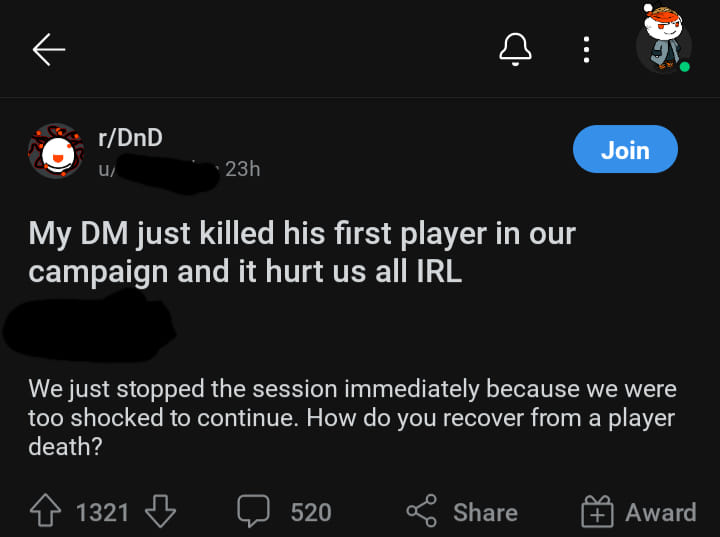
Today, I kick off my death theme for the last throes of my one-year streak of daily posting to this blog, I’m going to reiterate and summarize the content from a couple other posts. More detail on my positions can be found by clicking through.

I’ve spoken about how dumb I feel the save or die mechanic is (though my stance has softened a bit since I wrote that and started playing 1st Edition D&D [“1e“]). Moreover, in that same post I’ve talked about how much I enjoy the way 4th Edition D&D (“4e”) applied their remedial mechanic (“save three times or die”) to one of my favorite creatures, the medusa: slowed on first failed save, immobilized on the second failed save, and petrified on the third failed save. In fact, I’ve adapted that mechanic to my medusa in my 1e game simply because I enjoy it. Even if you prefer save or die, petrification is far more dramatic when the character (and player) can feel it slowly taking over. That’s dramatic and immersive.

Seriously?

All that said, I never understood the aversion modern gamers have towards character death (at least among those that play D&D). I have a friend who refused to kill my character even though he knew I didn’t mind it. He minded. There are two reasons I’m completely okay with character death. First, without risk, the reward loses meaning (at least to anyone with an ego). Second, as with other forms of failure, it presents new opportunities. I can switch to playing a completely different character before having the chance to grow tired of the now-dead character. Moreover, the one time I convinced that friend to kill one of my characters, it was because I wasn’t enjoying playing the character. This character is the brother of two of my other characters, one of whom I played as recently as this year’s Winter Fantasy. His death was not only heroic, but has now enhanced my other characters’ backstories. Win-win. Besides, it’s not as if anyone is actually dying. This is a fantasy world and should be viewed as such.

Now, all that said, we can have overkill. I was in a 4e Dark Sun campaign where, over 9 weeks of gaming, I lost five characters. My barbarian died in week one, so I rolled up a new character that lasted two weeks, then another that lasted two weeks, and so on. Each of those deaths meant that I had to write one of my one-page-or-more backstories. To paraphrase a friend, I shouldn’t have to write that much for you unless the result is money or a university degree. Full disclosure: One of my characters was a reanimated revenant of the one that died the week prior. So, I prefer a balance between the two rather than choosing one at the exclusion of the other. As with most things, the answer lies somewhere in the middle.

This streak of daily blog posts is almost dead.

Follow me on Twitter @gsllc

Dungeons & Dragons is a trademark of Wizards of the Coast, LLC, who neither contributed to nor endorsed the contents of this post. (Okay, jackasses?)


Puzzles and Cistercian Numerals @dCode_fr #ADnD #DnD #RPG #TTRPG #1e

If you enjoy this post, please retweet it, and please visit my 1st Edition D&D resources page.

It’s been a minute since I’ve written about D&D, and it’s going to be a little while before I do so again. (The next couple weeks of posts have been written.) So, I wanted to get back on track. I’ve talked about how I prefer to play D&D, and why that drove me from the game for a while, and in that post I discussed puzzles a bit. This expands on that.

I like puzzles.

Acrostics, sudoku, crosswords, Wordle . . . you name it, I love to solve them or write them. I also like to be challenged, which means if I always succeed, I lose interest. I’ve noticed that many players don’t like puzzles, and that many who do like them will get frustrated unless they always succeed. That’s fine, of course; play what you like, but it’s part of why I stopped playing altogether, and even now am just running games. I seem to be in a small minority among the nerd circles I frequent. Crafting puzzles is as much about finding the right level of difficulty for the group as it is about the logic of its design.

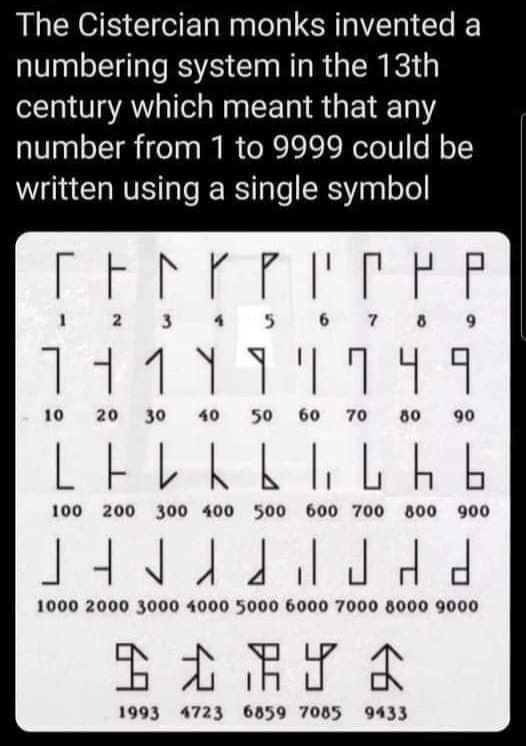
I think I found the basis for a puzzle that many people can enjoy. I present to you the Cistercian numbers.

If you have a group that doesn’t like hard puzzles, then simply writing a number can be the puzzle itself. To make sure you get it write (intentional typo, because I think I’m funny), here’s a converter care of @dCode_fr. If you have a group that likes hard puzzles, this can throw a wrinkle into the mix. If they need to calculate or otherwise decode a number, make them read the puzzle, or write the answer, in this system. You could also provide a hint that the characters must add the appropriate markings in the order in which they appear in the Arabic numerals (i.e., if the number is 12, add the horizontal line running left first, and then the one running right second — 10 than 2). Perhaps a Cistercian clock could be counting down, so that you don’t know how much time you have. That would probably require some software engineering on your part, but if you can code and you like puzzles, why not?

I like puzzles.

Follow me on Twitter @gsllc
Follow dCode @dCode_fr

Dungeons & Dragons is a trademark of Wizards of the Coast, LLC, who neither contributed to nor endorsed the contents of this post. (Okay, jackasses?)


Why Explore Space? @tweetsauce #math #space #biology

If you enjoy this post, please retweet it.

Vsauce had once again popped into my stream, but this time I’m not sharing this video for its primary theme. I point you to the end; specifically the 17:41 mark.

To summarize, as neanderthals grew in numbers, they moved outward but always stopped when they reached a significant geographical barrier, such as an ocean, sea, or mountain range. Homo sapiens seems to have seen such barriers as challenges, so we pushed forward.

My favorite quote is often attributed to the founder of McDonald’s, Ray Kroc, but he got it from Calvin Coolidge. It’s relevant here and #1 on this list.

Nothing in this world can take the place of persistence. Talent will not; nothing is more common than unsuccessful men with talent. Genius will not; unrewarded genius is almost a proverb. Education will not; the world is full of educated derelicts. Persistence and determination alone are omnipotent. The slogan Press On! has solved and always will solve the problems of the human race.

So, what’s the point? Many have asked why space travel is worth the expense in such trying economic times. Most scientist give a terrible answer, reducing our need to explore to a mere psychological curiosity. Here’s the better answer: It’s because our persistence and need to explore is our best means of survival. An easy way to think about this is that our population and individual gluttony continue to grow, but our planet’s space and resources don’t. The barrier we face in dealing with this problem is far more imposing than any ocean, and focusing on our gluttony (as so many do) will only delay the inevitable. Evolution always requires that we are in a constant state of pushing forward, and that means addressing colonization of space sooner rather than later. Press on!

Don’t be a neanderthal.

Follow me on Twitter @gsllc
Follow VSauce @tweetsauce

How Many Holes Does a Human Have? @tweetsauce #math #topology #biology

If you enjoy this post, please retweet it.

Vsauce asks the most ridiculous questions, but in doing so addresses some great science.

I studied a little bit of topology in Calculus III and did fairly well in the class, but that was a long time ago, and it was never really my thing.

I am a seven-holed doughnut.

Follow me on Twitter @gsllc
Follow VSauce @tweetsauce

There’s a Hole at the Bottom of Math @veritasium #math #MTG

If you enjoy this post, please retweet it.

This is an interesting video about how math with always have unanswered questions.

Just watching the first minute gives you something to think about. Gaming nerds will appreciate the mention around 3:28. Beyond that, you have to enjoy math to tolerate this, as it doesn’t make its point until 20:25 (fortunately, I do), but this may appeal to hardcore history nerds as well. Beyond the point of the video, this reminded me that many of the views we hold aren’t actually objective truths. We just really want to be right, so much so that we fracture into factions and hate on the others. Just an observation. Make of it what you will.

People are weird.

Follow me on Twitter @gsllc
Follow Derek Muller @veritasium