Organized Play Ain’t What It Used to Be #DnD #TTRPG #RPG

A little over a year ago, I wrote a post about my glory days of Dungeons & Dragons (“D&D“) living campaigns. I left D&D in 1982 due to the Satanic Panic and didn’t return until 2005. When I came back, Living Greyhawk was ongoing, and the TTRPG culture surrounding it was great. A little later, Living Forgotten Realms came along, and not only did Wizards of the Coast (“WotC“) up their game, but so did my friends and I, running weekly games at up to six Washington, DC area sites for 250+ RPG Gamers’ Syndicate members, plus weeknight stuff (i.e., D&D Encounters), and for two years, a convention. The entire experience was robust, which I think is a perfect word to describe it. Because I quickly grew tired of 5th Edition D&D, all of that fell off the radar for me.

Fast forward to this past week. A new coworker saw a d20 on my desk and asked if I play D&D. The conversation turned to those glory days, and she asked if that stuff was still going on. I told her I’d look into it. I asked around my old channels and got no reply. I went to the WotC store locator, and long story short, there were no official D&D Adventure League retailers in Northen Virginia. Huzzah Hobbies still exists, but there are no D&D games on their events schedule. Everything I came back to in 2005, and last dealt with in maybe 2019, is gone. The only infrastructure is online through social media sites in which my coworker isn’t interested (e.g., Facebook), and as I mentioned above, reaching out to Facebook groups resulted in no responses. She and her husband are in a single online game via Discord but want to sit around a table and throw dice. When I explained how living campaigns worked, she found that incredibly intriguing.

Something wonderful is missing. The community seems disjointed because more than just the game itself has been relegated to technology. TTRPGs have always been social in nature.

You’re probably prone to think this is a function of my age; however, before I was an attorney, I was a database geek. Not only do I not fear technology; I love it. After all, I’m currently creating digital character builders for various games. Applying technology to game play itself is a great thing. I don’t like playing games without digital character builders (hence, my projects). Moreover, my coworker is probably 25 years younger than I (maybe more) and has been playing D&D for less than a year. She has no nostalgic ties to the early 2000s culture. She simply knows that she wants what I used to take for granted, but it’s no longer available in Northern Virginia. Despite not personally needing this real sense of community, I find that sad. Maybe there’s a timely lesson in this that applies to more than just TTRPGs.

You don’t know what you’re missing.

Follow me on Twitter/X @gsllc
Follow me on Mastadon chirp.enworld.org/@gsllc
Follow me on MeWe robertbodine.52
Follow me on Blue Sky @robbodine

Winter Fantasy 49 is in the Books #RPG #TTRPG #DnD #DDAL #WinterFantasy #nerd #4e #5e @baldmangames

If you enjoy this post, please retweet it (Twitter/X), boost it (Mastodon), repost it (MeWe), or repost it (BlueSky).

So, Winter Fantasy 49 is in the books. This is one of two vacations I take every year, and it’s probably the most fun. The nerds don’t see how that’s possible. I go to a gaming convention and play few (if any) games. This year, I had one game on the schedule, and it was canceled due to a car accident. (Everyone’s okay.) I didn’t put anything in its place. I don’t go to Winter Fantasy to game; I go to hang out with people and, for the only time of the year, drink like a fish. I probably had more to drink this week than I’ll have for the remainder of the year.

One more piece of flair for the den.

Good Habits

I’m a part of Winter Vantasy. In fact, I’m one of only two members that was there from the beginning. A bunch of people pile into a van and play D&D most of the way to Ft. Wayne. It’s the best 10 hours in gaming. We have certain rituals we follow, like lunch at Black Bear Burritos in Morgantown, WV, Sunday dinner at Portillo’s, and after hours drinking at the Brass Rail (best bar ever). It seems we add a new ritual to the trip every year.

Our new Monday-morning ritual.

Bad Habits

I also didn’t eat particularly well, but my blood pressure is still optimal, and I came home weighing what I weighed when I left. I believe I can credit that to the fact that I went to the gym all five mornings that I was in Ft. Wayne, including the morning we left. I’ve never done that before. Drinking and eating until late Sunday night and having to get up early the next morning to drive home, there’s very little chance of getting up early enough for the gym, but I did it.

The Downside

The only bad thing about the show this year is something that was beyond Baldman’s control. The convenient watering hole shut down and has yet to be replaced. That means that people are either reliant on hotel bars (which close early) or have to walk a few blocks in arctic weather to get to a good one. In gaming parlance, that means we “split the party,” which created a (not so) funny vibe, and combined with the lower attendance this year, meant that I didn’t see a bunch of my friends. The Baldman will try to make arrangements next year to create a good space for us to meet, and I have confidence he’ll succeed. Also, see What’s Next? below.

What Did I Do All Day?

I heard this question a lot. Almost 15 years ago (the days of 4th Edition D&D), I, and others, organized a convention, synDCon, and in our second year, I created synDClash, which were a set of six dungeon delves each based on a different classic 1st Edition adventure. The Saturday before Winter Fantasy, I ran a couple of them for my 4e group. They were a hit, and I suspect the group will play them again when we don’t have a quorum. This inspired me to write two more delves during my downtime in Ft. Wayne. I finished Tomoachan’s Treasure (based on C2: The Hidden Shrine of Tomoachan) and finished two of the three encounters for White Plume Beckons (based on S2: White Plume Mountain). I’ll finish up White Plume Beckons today (EDIT: Done!), at which point I’ll have eight of them.

I love encounter #2 of Tomoachan’s Treasure.

I put in a couple twists to the two I wrote this week. For Tomoachan, I gave it a bit of a Raiders of the Lost Ark vibe. For White Plume, I allow the players to determine the order of the encounters and to gain use of the artifact they obtain. For those that metagame that decision, they may be a bit surprised.

I’m mulling about writing delves for B1: Into the Unknown (perhaps called, “You Still Don’t Know Shit!”) and S1: Tomb of Horrors (maybe adding a twelfth pre-gen named Lara Croft), but I’m not sure if those are well-suited as delves. I could imagine people might be interested in me creating them for the A series (i.e., the “slavers’ series”) and perhaps X1: Isle of the Dread, and I know one member of my 4e group that would be particularly interested in I3: Pharoah, but I never played any of those mods, so I’m not sure I could do them justice. The same with T1: The Village of Hommlet and U1: The Sinister Secret of Saltmarsh. However, I enjoy the writing, so in time I might give at least some of them a shot.

What’s Next?

Next year, I may play a couple of games. Hell, I might even run one (based on a silly promise I made). Next year’s show will be #50, and they’re creating a new living campaign set in Greyhawk using 5th Edition D&D rules. I might as well give it a try even though I’m not much of a 5e guy. After all, I hate 3rd Edition, but I’ll play it with the right group of people. The thing about Winter Fantasy is, for lack of a better word, that it’s cozy. It’s small enough that you’ll always (except this year) see your friends, but it’s large enough that there’s a decent number of things to do and you’ll always make new friends. If you haven’t been to Winter Fantasy, next year may be the best year to attend. If so, I’ll see you there.

Next year’s show will be fun.

Follow me on Twitter/X @gsllc
Follow me on Mastadon chirp.enworld.org/@gsllc
Follow me on MeWe robertbodine.52
Follow me on Blue Sky @robbodine

Follow Baldman Games on Twitter @baldmangames and BlueSky @baldmangames.bsky.social
Follow the Brass Rail on Twitter @brassrailfw
Follow Black Bear Burritos on Twitter @BlackBearMotown
Follow Portillo’s on Twitter @portilloshotdog and BlueSky @portilloshotdog.bsky.social (maybe; no activity yet)

The Golden Age of Living Campaigns (for Me Anyway) #DnD #4e #TTRPG #RPG #gaming #Pathfinder #Shadowrun #L5R #Rokugan #WotC @Luddite_Vic

If you enjoy this post, please retweet it (Twitter/X), boost it (Mastodon), repost it (MeWe), or repost it (BlueSky).

Still my favorite 4e image (PHB, page 177).

Last night, I hosted the 7th session of a 4th Edition D&D (“4e“) campaign that’s being run by my friend, Luddite Vic, but is based on a campaign setting that he and I created (still a work in progress). We’ll be alternating DMing duties, so I’ll get to run and play the game. As always, this led to reminiscing about the 4e days. For example, one of the players is almost finished converting Teos’s Ashes of Athas adventures to 5th Edition D&D. The conversations got me thinking (as always). I know that 4e is probably the most maligned edition of the game. It’s accused of not being “real D&D” by those who constantly complain when others say “you’re playing D&D wrong.” The hypocrisy keeps me from caring about that, but the reality is that it wasn’t nearly as popular as the other editions during each edition’s heyday. Nevertheless, for the Washington, DC area, the era of 4e was, as far as I can tell, the golden era of organized play and was the best the TTRPG community was ever organized.

Vic and I were two of the founders of the Gamers’ Syndicate gaming club that boasted about 250 members. With a lot of help from too many people to list here, we organized gamedays every single Saturday at, if I recall correctly, six different sites. We additionally organized and ran Wizard of the Coast‘s Encounters program at some of those sites one weekday a week. We (and Stephen and Cassandra) put on a convention, synDCon for two years. Nevertheless, I realize my experience is ultimately anecdotal, and I haven’t taken any polls to back up these claims, so take this with a grain of salt.

So, during the 4e era, we had two events regularly occurring every week in Chantilly, VA; Woodbridge, VA; Rockville, MD; Ashburn, VA; and some other spots occasionally. Every event had two to six tables of games being run, but we occasionally ran special events (i.e., battle interactives) that doubled the number of tables. (Somewhere out there is an embarrassing video of me being forced to LARP the introductory scene to a battle interactive. LARPs have never been my thing.) I can’t explain how, but we never turned away a single player. If someone showed up without registering, either Vic or I immediately organized another table and ran it ourselves if no one else could. We always organized with that possibility in mind.

What Edition Warriors Don’t Get

Our success came not only through organizing the 4e living campaign, Living Forgotten Realms (“LFR“), but also by including Pathfinder Society, Greyhawk Reborn, Shadowrun Missions, and Heroes of Rokugan living campaigns in our organizing. I even ran my own 4th Edition Gamma World adventure at one weekend gameday. Community interaction exploded even beyond what we experienced for Living Greyhawk, and everyone was happier for it. I don’t think anyone in the DC area brought TTRPG gamers together more than we did, but even after they formed home games from their new connections, these players still showed up to our events. They were just too much fun.

There were a couple other gaming groups nearby with whom we didn’t coordinate at all. We shared members with these groups, so it’s hard to really know who organized more people, but I’d bet good money we organized more events. We were at it literally every weekend for years.

Fast Forward to Today

This isn’t happening nearly as much today as far as I can tell, and if I’m right, there are at least a few reasons I can think of for the waning of these events. First, to a non-negligible extent, gaming is moving online. Face-to-face gaming, while still a majority of gaming, is slowly being chipped away by modern technology. Second, despite all its PR disasters, Wizards of the Coast (“WotC“) still dictates the industry (and by extension, the community) because they have the most valuable TTRPG trademark, Dungeons and Dragons. Because there are more people playing in general, the need for supporting game day organizers, or even game stores, has diminished. It simply makes less fiscal sense to worry about whether people like Vic and I are putting butts into public play seats. To the extent that’s still useful, WotC is going to rely on conventions, not game days, for organized play, and those are neither cheap nor as personal (but see Winter Fantasy hosted by Baldman Games). The Encounters program and the true DM rewards program no longer even exist, so what’s the point of game store gamedays? Third, this has led to a reduction of the number of game stores, at least in the DC area, so there aren’t a lot of affordable places for large crowds to organize. Fourth, and most importantly, I don’t think anyone was willing to work as hard as Vic and I at putting these events together. As I said above, we had a lot of help, and sometimes those people did an admirable amount of work without compensation, but every single one of them would tell you that they weren’t willing to do nearly as much work that Vic and I did. Today, neither of us has time for that, nor do we have the motivation considering WotC‘s approach, but if someone else did, I think the first three causes I mentioned would be rendered moot. Hard work cures almost all that ails us.

Change is Inevitable

It’s really not like this.

This is largely just an old guy rant, but not in the stereotypical way. I’m not angry. In fact, I’m doing great. I’m hosting a 1st Edition D&D game I run, and I’m hosting the 4e game I mentioned above. I’m getting exactly what I want. As for the newer gamers, if they don’t realize what type of an awesome community we had in those days and and are happy because they don’t know what they’re missing, that’s fine too. I do feel bad for my contemporaries from those days that no longer play because what I’m describing is no longer largely available, but ultimately that’s their choice, and if they’re weren’t happy, they’d make another choice. As long as everyone is happy, regardless of what they’re playing or whether they’re playing, all is well, but if they ever ask me, I’ll make it clear to them that it could be better.

One hell of a lot better.

Follow me on Mastadon chirp.enworld.org/@gsllc
Follow me on MeWe robertbodine.52
Follow me on Blue Sky @robbodine

The Graveyard Scene from the D&D Movie #DnDMovie #DnD #ADnD #RPG #TTRPG

If you enjoy this post, please boost it via Bluesky, Mastodon, or Twitter.

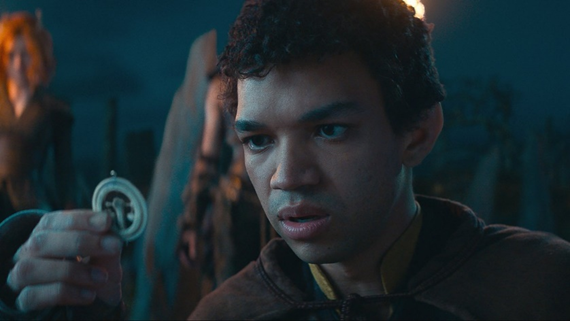
Timing is apparently not my strong suit. A few days ago, someone mentioned how much they loved the graveyard scene in the Dungeons & Dragons: Honor Among Thieves. Watch the scene here before it disappears.

I wasn’t as big a fan of the scene. Sure, it was funny, but it exemplifies the difference between legacy and modern gamers. Okay, I mean old people and young people. Whatever. As D&D players, we all want this movie to emulate the game, so our different approaches to the game affect our reactions to the movie or individual scenes. In the old days, failure was a thing in RPGs. If a magic user (that’s a wizard for the young’uns) wanted to learn a new spell, the player rolled percentile dice with a target number dependent on the character’s intelligence. If the roll failed, the wizard not only didn’t learn the spell, but could never learn it. Ever. That’s failure. The dice giveth, and the dice taketh away.

Nowadays, failure has fallen out of favor, granted to different degrees depending on the individual. Today, if a player were told that they could never learn the fireball spell, they’d be furious. If they couldn’t deduce a password from a riddle, it’s possible they’d quit your game. As I’ve discussed before (see the section, Another Example: The Puzzle Encounter), I once had players get angry at me because they couldn’t solve a puzzle trap, and as a result, the trap went off doing zero (0) points of damage to them.

Yeah, you read that right, but read it again if you don’t think you did.

Play whatever game you want — that’s the name of this blog — but I find this approach boring. I don’t try to solve easy sudoku puzzles; I go for the hard ones. I want the chance of failure because that’s how I improve. But even from a purely entertainment perspective, what’s the point of rolling the dice or even showing up to the game if you know the outcome? The players should instead tell the DM how they want the session to go, and the DM respond, “Sure, that’s what happened. Congratulations. You won D&D. Now get out of here and play some miniature golf or something.” Where’s the excitement in that? I really don’t get it, and it’s why I’m not involved in organized play anymore. Most tables just hand the players the victories.

This is not to say that I enjoy the notion of a character dying during character creation as in Traveler. There should be a chance of success, and the chances should tilt in favor of the players, but when the players don’t start enjoying my game until I remove all the challenge from it, I think the pendulum has swung too far in the other direction.

Nowadays, players don’t accept near enough failure in their games for them to be of interest to me, and the graveyard scene demonstrates this point. The point of the scene was to do something funny, and it succeeded, at least at first. I have no problem with that. However, after they failed, they simply tried again. And again. And again. The resource allowing them to speak with the dead was apparently unlimited, which means they couldn’t fail. Not only did that remove all consequences, and thus appear non-heroic, but it also detracted from the joke itself. Repeating a joke too many times is one way to ruin it. Why is the screw up funny if this is an unlimited trial-and-error.

The resource.

I would have written the scene in one of two alternative ways, and this is how my game would play out. First, they fail, so they have to be clever and come up with a different way to learn the information they need. Because this is a movie, that may not work. The movie could get really long, and no one really wants to watch a movie about people studying at a library. Second, they fail, but they get only one more bite at the apple. This time, they plan it out, come up with the five questions, assign one person to ask them, and everyone else shuts their annoying mouths (that’s another issue altogether).

That’s funny and heroic because the characters still had to rise to the occasion. But I really don’t think people want true heroes anymore, which is also demonstrated by this scene. They want to see idiots . . . .

. . . like him . . .

. . . win the day despite having none of the tools, including the personality and strength of character, to succeed. The only reason he succeeds is because the script says so. There’s nothing about him, even in a world of magic and monsters, that justifies his success logically. Even within that world, he’s a screw up, but he suddenly succeeds, because the screenwriters know that’s what the modern gamer wants to see, and they’re the foundation of the audience for this movie. After his success, he returns to being the same idiot that shouldn’t have succeeded in the first place. He didn’t improve; he was just handed success by the writers. This reminds me of another example.

None of us are perfect; some of us just can’t handle being reminded of that.

Follow me on Twitter @gsllc

The Suburbs of Washington, DC Need a Cozy, RPG-Focused Convention @Luddite_Vic #RPG #TTRPG #DnD #Pathfinder #L5R #synDCon

If you enjoy this post, please retweet it.

This one comes from the heart.

A few weeks ago, I hosted another 1st Edition Dungeons & Dragons (“1e”) game at my home. The group spent over an hour at the start of the session just reminiscing about the good old days when most of us first met. This was during the era of 4th Edition. Inevitably, the subject of synDCon came up. synDCon was the gaming convention financed primarily by Vic and me. The two of us did almost all the work of running the convention once it began. It was large enough that we had everything represented (see below), yet still maintained the coziness of conventions like Winter Fantasy.

synDCon Was Awesome

I need to put my modesty aside for a bit and say that we pulled off something magical (pun absolutely intended). In our first year, we took advantage of a holiday and put on a four-day convention. We provided tons of organized play: Living Forgotten Realms (4e), Pathfinder Society, and Heroes of Rokugan (Legend of the Five Rings). We also had individual games from less popular RPGs being run here and there, tons of card games (including, of course, Magic the Gathering), tons of board games, and we were the official DC-area convention for Munchkin. We had special events, a LARP, dungeon delves I wrote based on classic 1e adventures, and live music on Saturday night for one of the cons. Our slots were staggered so that slots didn’t start every four hours but rather every two hours. If you wanted to sleep in a bit, you could. You’d just start playing at 11 am instead of 9 am, but there were enough 2-hour slots of other things to do that you could still get three slots of gaming in.

It wasn’t run in a convention center, nor in the basement of a mediocre hotel, but rather in a really nice “hotel and executive meeting center” right across the street from a Metro (subway) stop in Rockville, Maryland. As the county seat for Montgomery County, there were tons of restaurants, et al. in the area, including a gaming store down the street. Of course, we had a gaming store as our in-convention vendor both years, and we generated about 200 attendees both years. Our attendees represented everywhere in the United States east of the Mississippi (e.g., Florida, Georgia, and Ohio), but we gave an award to a guy named Matt for having come the farthest for the con (Alaska).

We had tremendous support from volunteers that helped organize the detail while Vic and I focused on the big picture, and we’re forever indebted to those friends, but I’ll be damned if my feet weren’t atrociously sore by the end of both cons.

Seriously, it was stupendous, and everyone that attended and commented on it said so.

A Slight Diversion Before My Point

I’ve been thinking of doing something other than a Vegas blackjack trip for my fall vacation – I say this every year, so we’ll see if I follow through – and was considering an RPG gaming convention instead. Because I wanted to play 1e, I was initially thinking about GaryCon, but a friend pushed me towards GameholeCon. It was an easy sell because the timing would be better. GaryCon would interfere with Winter Fantasy, but GameholeCon would slide right into the Vegas slot (again, pun absolutely intended). The trouble is that Winter Fantasy and synDCon have spoiled me. I have no intention of going to a convention and paying between $100 and $200 per night for my hotel room if I’m staying at least 2 miles from the convention. That’s ridiculous. It’s like GenCon on a smaller scale. The city is obviously not big enough to handle the convention. So, I decided to look into other options.

There Aren’t Any

Sadly, I went through all my options I could find online, and nothing quite matches the magic of Winter Fantasy or synDCon as far as I can tell. The lists were not complete – Winter Fantasy wasn’t even mentioned (?!) – so maybe there are some other cons out there, but I can’t find them. The cons are at least one of the following: in an inconvenient or excessively crowded location, lack inexpensive parking, or focused on only a few things (usually the shiny new things of the day). Some are also not “cozy,” which I define as between 200 and 350 people. It’s large enough that there can be plenty to do, and you can meet new people, but small enough that you’ll always be able to find your friends and hang out with them. Winter Fantasy doesn’t even satisfy all of these characteristics perfectly – I tried to run 1e but only one ticket for only one slot of three was sold – but it’s as close to perfect as I think practical for a cozy con. It’s also in Ft. Wayne, Indiana. I’m fine going out there, and I will every year they’ll have me, but I find it odd that an area with as big a gaming community as DC doesn’t have something like this.

And this is my point. DC needs a convention like synDCon or Winter Fantasy. Such a con isn’t going to hit the radar scope of the big players (i.e., Wizards of the Coast and Paizo), but it’ll appeal to plenty of players. The DC area is filled with them. Our Gamers’ Syndicate gaming club had over 200 people that identified as members, and we ran game days every single weekend in as many as five gaming stores at a time. While organizing synDCon, I learned of several other groups just as large that had never even heard of us. They were organizing at other stores. This area has an abundance of gamers, and I suspect there are even more here over 10 years later.

Will There Be a synDCon III?

That’s the magic question. I’m happy to organize it, but as we discussed at the game session, my demands are high. First off, I want to do it right or not do it at all. I’m not willing to put together a con in “the basement of the Best Western.” No offense to the chain in general, but that happens to be a hotel we visited that would be the site of a con not worth having. It was downright gross but not unlike venues of cons I’ve attended in the early 2000s. No thanks. Second, having learned from my experiences with the first two, the only way I’d do it is if I had a number of additional owners willing to slap down cashier’s checks for at least $2,000 each (or more depending on how many people commit) and having signed an operating agreement that prevents them from every cashing out that initial investment. That is, I need a sizeable stable of people willing to commit whole-heartedly so that I know I’ll have both the funds and the work ethic necessary to make this doable. Trust me when I say that it’s not enough that someone throw money at me. I need to know that they’re committed to doing the work necessary to pull off a great con. Because it’s been over 10 years, I don’t know what the minimum acceptable number of owners would be, especially without knowing exactly how much each would be willing to contribute up front, but I do know $2,000 is enough to motivate most gamers to stay the course and do what they could not to throw that money away. Any of them willing to drop $2,000 are likely to take it seriously.

Another thing I remember is that no one wanted to be the guy, the “convention coordinator” or CEO who had to make the calls when weird situations arose. While I’m happy to be that guy, I’m not willing to be the one that puts out the feelers (beyond this post, I guess) and see if there’s interest. If I thought my odds were better than 50% of finding such interest, I would, but I don’t think there are enough people willing to make this kind of commitment, so why bother trying? I did my part for king and country, and wound up with a small, overworked group. If this is meant to be, then someone else will have to get the ball rolling. So, while I’m not the one destined to put this together, I strongly suspect there’s a market for it, and my recent thoughts and conversations on the matter sure leave me wishing someone would.

If that’s you, drop me an email when you think you’ve got something real.

Follow me on Twitter @gsllc
Follow Vic @Luddite_Vic

Hybrid Creatures @WinterFantasy @mike_amer #MythologyMonday #MythologyMonandæg #folklore #WinterFantasy

If you enjoy this post, please retweet it.

I was at Winter Vantasy/Fantasy these past few days. As I’ve mentioned, I go there to hang out with friends, not to game. I wound up playing two games. One was run by Mike.

That owlbear ass got me thinking about hybrid creatures, which led me to this video. It’s not … the best narrated video — it’s a bit annoying that one of the first things said contradicts the title of the video — but it’ll do.

I was going to post a video about Baalshamin, but the only ones I could find were depressing.

Follow me on Twitter @gsllc
Follow WinterFantasy @WinterFantasy
Follow Mike Amer @mike_amer


Travel Gods @WinterFantasy #MythologyMonday #MythologyMonandæg #folklore #Ganesha #India #WinterFantasy

If you enjoy this post, please retweet it.

Travels GIFs - Get the best GIF on GIPHY

This week is Winter Vantasty/Fantasy, so I needed to come up with something for Mythology Monday that was D&D (or at least RPG) appropriate, but I’ve done a lot of that.

Sexy nerd
I searched for a photo of a sexy nerd, and this is what came up.

Instead, here’s a list of travel deities that should help us on our trek over the Appalachian Mountains on our way to the Arctic Circle (Ft. Wayne, Indiana): Travel Deities: Meet the Gods, Goddesses, and Patron Saints of Travel.

“But Rob, I don’t wanna read!”

Okay, hippy; here’s a video on Ganesha, a sort of jack-of-all-trades among gods, resulting in his inevitable designation as a protector of travelers.

I was going to post a video about Baalshamin, but the only ones I could find were depressing.

Follow me on Twitter @gsllc
Follow WinterFantasy @WinterFantasy


How I Prefer to Play Dungeons and Dragons, and Why I No Longer Do @Raddu76 @Luddite_Vic @SlyFlourish #DnD #RPG

If you enjoy this post, please retweet it.

A couple of weeks ago, one of my posts raised some questions from my social media contacts both on Facebook and Twitter. Specifically, they were wondering what I meant when I said I played Dungeons & Dragons differently from most others. It’s tough to express what I mean by that, but there’s been some back and forth, so I’ve given some thought on how to express it. I’m going to do my best here in an uncharacteristically long post. I’d like to make four quick points for context before I explain.

1. For RPGs, I limit myself to D&D out of necessity. I could play other games (and have), but nothing is more accessible than whatever the current edition of D&D is, especially in light of the living campaign being run for that edition.

2. There’s no right way to play D&D. Nothing I’m saying is a criticism of how other people play except to the extent that I’m saying I don’t prefer to play that way myself. Moreover, I was in Sly Flourish’s home game for years, and people like me can absolutely coexist on the same table as people . . .  not like me. That was probably the best gaming group I’ve ever been in because no matter who was in the group, everyone let everyone else do their own thing. I credit the DM for creating that atmosphere. He certainly guides the game but always places fun ahead of his own ego. Not many DMs do. Unfortunately, my gaming experience has conditioned me to go along with what other people expect, so even in that game I’d often sabotage myself by becoming what I didn’t want to be. But if that’s the way you want to play, then go for it. Some people reading this will know I’m talking about them and their play style. They shouldn’t be offended. None of this is meant as an insult.

3. Combat is part of the game, and I’m capable of enjoying a good combat.

4. Luddite_Vic and I have been designing our own RPG for a few years now. It’ll probably never see the commercial light of day because we’re too busy to meet regularly, but to some extent game design can absolutely accommodate my play style. It can even encourage it, though the best game system is going to be one that allows anyone to play it the way they want to play it.

So, what am I talking about?

I’m an Actor

No, you shouldn’t be asking me for my autograph. I didn’t say that I’m a good actor.

There are several player types. Some players change their type over time, and some fall into several categories at once. I’m certainly what I call an actor. I create a character with at least one notable, obvious personality quirk, and I play that up for maximum effect. Sometimes it’s funny, sometimes it isn’t, but it always defines my character, so much so that years later people reference the quirk by shouting, “Honor duel!”, “Bongos!”, or something referencing a character, when they see me. Whether I’m in combat or not, if I’m not playing up that quirk (or quirks), I’m not having fun.

Sometimes character concepts fail, so in theory I could impose an annoying play style on others, but I don’t. If I make a mistake with a character concept, or if it just doesn’t work within the game system, I move on from it before it becomes a burden. I’m self-aware of the impact I have on others, so if I’m annoying you, it’s intentional 😊, but I avoid doing that with characters.

True Immersion

The key to me having a good time is true immersion in the game world. I don’t think many players do that, and I think the best way for me to explain this is through a few examples.

The simplest and most talked about example of that is alignment. If you’re playing a lawful good character, then your character should act as such. I see far too many players choosing an alignment because of some mechanical bonus it gives, or because it serves a class build well, but then they act according to tactical needs rather than character philosophy, and their alignment goes right out the window. Again, if it makes you happy, fine, but I think you’re losing something valuable by doing that. After all, rolling a critical hit isn’t really an accomplishment. It’s random unless you’re cheating. As the great philosopher, Neil Peart, once wrote, “The point of the journey is not to arrive.” Misplaced modifier aside, by that he meant that how you get somewhere can often be more rewarding than where you wind up.

Assuming your character has roughly the same alignment as you, is that how you’d behave in the real world? If you’re playing a character with vastly different morals than you, is that how such a character would behave in the real world? If not, you’re not immersing yourself in the game world.

Here’s a better example. I openly wanted to test a story line but covertly wanted to test whether others would be interested in my play style, so I took over a 4e campaign when our characters hit paragon level (11th level). This is 4th edition, so even the bard had at least 70 hit points. The first encounter in the paragon campaign was clearly underpowered. It was designed to be a “James Bond” moment, where everything started off with a bang, but the point was to deliver the story hook. Any experienced player could recognize that, and in fact they all did.

The characters were visiting “the Lawns,” which was an area of the city best described as a much smaller version of Central Park. Commoners were everywhere, and I had the PCs place themselves randomly on the board. There were three magical cages containing a bear, a destrachen, and a manticore, all of heroic tier. Collectively, they were no match for the PCs. A blast of energy wipes out the vegetation in the immediate area and causes the cages to burst open. The bard wins initiative. He’s standing near the bear, an elf, the elf’s two small children, and a human. He elects to run over to the manticore to gang up on it with two other PCs. I say, “Just in case neither the minis nor I have described the scene properly, you have the jump on the bear, and the bear has the jump on the commoners. If you run away, those commoners, including two children, are as good as dead.” He said he understood but was going for the better tactical move, and the other players agreed, saying, “Get over here!” (or words to that effect).

I know these players well, so I knew this would happen — this encounter was also designed by me to be an ethical set up — but I couldn’t believe they fell for it. What exactly is the “better tactical move”? In my mind it was to limit as much damage to the citizens as possible. That’s what heroes do. (If I recall correctly, only one character was neutral on the good-evil axis, and I know it wasn’t the bard.) The party instead defined “better tactical move” as personally taking the least amount of damage possible. (Later, I’ll provide more evidence that this is their thinking.) This was the case even though the bard would be looking at taking, at most, one healing surge worth of damage in a one-on-one combat against any one of them.

When the bear got its turn, I described the event in gruesome detail. The elf shouts out, “Run to your mother, children!” right before he’s disemboweled with one claw. Then the human has his face ripped off by the other claw. I don’t expect the players to lose any sleep over make-believe characters getting killed, but not one of the characters expressed the slightest bit of sadness or regret. And don’t think for a second that I missed it. I was watching them carefully and prodding them in character (through NPCs) to let me know what they thought about these events. From a meta perspective, that was the entire point of me taking over the game as DM.

Isn’t a role-playing game supposed to be about writing a story? What kind of a story are these “heroes” writing?

As I said, I knew this would happen because I knew these guys, and part of what I was testing was this principal of immersion. I was trying to see if the right story would change the players’ approach to the game. So, I had some more tricks up my sleeve. I bit my lip for three months waiting for the story to progress to a specific encounter. The players needed to research some very obscure information, so they visited the “Black Library.” This place held all the knowledge of the universe in special crystals, including dreams and memories.

The Black Library was at a very important place in the multiverse. It was near the “Grand Stairwell,” which (as far as mortal minds could perceive) is a stairwell that leads up and down to each of your potential final resting places after death (e.g., the Nine Hells, Archeron, Nirvana). There was always a long line of souls of the recently departed waiting their turns for final instructions. Go up four levels, go down two levels; whatever.

I asked the players to make a Perception check. It didn’t matter what they rolled. I said, “You seem to recognize one of the people in line,” and they took the bait. It was the elf they let die. He confronted them, and once again all of the player characters showed no remorse other than an insincere, “Sorry, but . . . .” I gave them one more shot though. The elf said, “Okay, I don’t agree, but I at least understand the tactical approach. So did you at least make sure my children were okay? Did they find my wife? My wife and three children, one of them a newborn, depended on my farming to earn a living. My wife doesn’t know how to farm, and now she must feed three young children on her own. How are they doing?”

This sounds really sad, and it was somewhat predictable considering the scene in which the elf (and human) were brutally killed. Nevertheless, I received no showing of true sympathy despite closely looking for it. Instead, the characters (players, really) stood their ground and responded (essentially), “It wasn’t our problem.” They were so intent on being right that they couldn’t muster any sympathy for such a tragic circumstance their choices created. And of course, even after this conversation, not one of the characters even suggested checking in on the elf’s family. These were 15th-level characters at this point with more wealth than entire towns, but they just didn’t care. If that’s how they wanted to play, so be it, but that’s not immersion.

As I said, when bad things happen to innocent but make-believe people, I don’t expect players to be sad, but I do expect their characters to be, especially where the bad things were the result of the characters’ own choices.

If you were in an analogous situation in the real world, would you have behaved this way? Would you have any remorse for these circumstances even though there was no financial reward or information to be gained?

Another Example: The Puzzle Encounter

I created a puzzle encounter, which I’ll describe here. There’s a magically charged, metal plate with an array of 100 lighted buttons (10 rows of 10) in front of it. Each button is numbered from 0 to 99 in order (left to right). You must figure out which buttons to push and in what order. If you fail, the plate will light up and zap you (but not your allies) for an amount of damage equal to the number of the button you should have pushed. For example, if you should have guessed 4 but pushed 87, you’d take 4 points of damage (not 87!). You then should push the 4 and continue with the sequence. Remember, at this level, the relatively fragile bard (now at 13th level) has at least 80 hit points, so even a 4 would result in 5% of his total. If you couldn’t figure out the answer before running out of buttons to push, you couldn’t try again in your lifetime, so another player would have to try this level. If you push two correct buttons in a row (something you could pull off by guessing in some cases), the plate acts as an elevator and moves you and your allies up to the next level, where you face the identical situation but with a different code. There are four levels you must pass to get reach your goal.

All this information was deduced care of an easy Arcana check. My intent wasn’t to hold back the nature of the puzzle at all, so if someone was confused, I freely shared any information they needed. What they never got was a hint as to what the code was applicable to each level. The only way to discern the codes were through trial and error, and that was the actual puzzle. Hit some buttons, get zapped for a tiny amount of damage, but figure out how to avoid it and move forward.

Answer: FYI, the codes were based on various sequences. The first sequence was a series of squares (i.e., 1, 4, 9, 16, 25, etc.), the second was a series of cubes (i.e., 1, 8, 27, 64), the third was the Fibonacci series (i.e., 0,1,1,2,3,5,8,13), and the fourth was the digit product series (i.e., 1, 2, 4, 8, 16, 22, 26, 38, etc.). Again, the only way to discern the codes were through trial and error, and the players were angered by that. More on that later.

The point is this: If you truly immersed yourself in the game world, you wouldn’t have a problem with this puzzle. In fact, you’d expect this because of course this is how a puzzle would be designed. These are meant to keep out would-be intruders. They aren’t supposed to give you an out in which you take no damage, and logically you wouldn’t expect there to be any way to deduce a code unless you personally knew the puzzle’s creator and the way he or she thought. If anything, puzzles should be a lot harder (e.g., a simple 6-digit pin impossible to guess), but that makes the game inaccessible, which we don’t want. However, it’s reasonable that 1) you’re not going to be able to reason out the code except through trial and error; and 2) you’ll be punished when you get things wrong; however, 3) the initial punishment is easy in case the puzzle-maker himself makes a mistake or forgets which code goes in which order.

Remember when I said above that I’d provide more evidence that the players define success by how much damage they take? When we were finished with the third level, the players had had enough of my nonsense. They accosted me because the puzzle was unfair. The straw that broke the camel’s back? The third sequence was the Fibonacci sequence, which means when they got the first number in that series wrong, the plate lit up, and one player took a whopping . . . zero (0) points of damage. That’s right. A couple of them actually raised their voices and complained because one of them took 0 hit points of damage. After they were finished complaining, we continued. They pressed the one (per the instructions), then a two (which zapped them for one point of damage), and that’s all the damage one player took. Another player immediately deduced that 0, 1, and 1 were the start of the Fibonacci sequence, so for this sequence, a single 13th-level player with close to 100 hit points took exactly 2 points of damage, and that was unacceptable to all of them. I was so annoyed at this point that I didn’t tell the about the fourth level. I just said that they had reached their goal after the third puzzle (essentially, “Congratulations! You won D&D!”). The digit product series would have been a bit tough anyway, so frustrations aside, that was probably a good call.

Explain that any way you want. To me, it’s as simple as this: Some people just want to win D&D flawlessly, but that won’t always be possible if you immerse yourself in the game world. You always lose at least a little. I don’t get this at all, but I at least respect the fact that some of these players admit that immersion isn’t what they want from the game. Others claim they like immersion, but it seems like nothing but talk to me.

So Why Is This Important?

Why is this important to me? Why do I think this sort of thing would matter to far more players than it does if they ever gave it a try? Simply put because all mechanical bonuses and victories in the game are illusory. The only true successes or failures are story-based.

Let’s first look at the mechanics. Game designers, take note. As a DM, you may want to balance your encounter or campaign to be easy, even, or hard. I don’t care which; that’s not the point. The point is that you want a certain “balance,” which I’m using as a general term that doesn’t necessarily mean having a 50% chance of success. If a game is designed such that a 3rd-level PC is expected to have a +1 sword, then that disturbs your balance. It doesn’t do something cool like 4th edition frost brand weapon does. It simply increases your chances to hit by 5%. To keep the game balanced as you want it, the NPCs must have built within their mechanics a boost to defenses at 3rd-level (more or less). That means that the +1 bonus isn’t a bonus at all; it’s just keeping things consistent. Maybe you’re falling for that, but I’m not. I see it for the poorly-disguised illusion that it is. A frost brand weapon, on the other hand, allows (for example) a fighter to become a wizard for just a moment or two by giving the fighter a limited-use blast attack. It’s not enough to steal the wizard’s thunder, but enough to mix things up a bit. It’s a far more legitimate reward, though even that is still a bit illusory (just not as noticeably). It also allows the fighter to get a nice boost of damage against cold-vulnerable NPCs (if the game designers would ever create such creatures!), which mechanically is balanced by the fighter’s reduced damage against cold-resistant creatures. Thus, the reward is that the fighter has yet another avenue to get their moment to shine within the story. That’s much closer to a real reward.

The same can be said of encounters. If you’re trying to sneak by a campsite but get caught, you have an extra fight on your hands. Worse, if they’re able to sound the alarm to their allies, you have a single fight on your hands against, let’s say, 25 opponents. Levels don’t matter at that point. Even 25 kobolds 5 levels below you will likely be unstoppable. So, what does the DM do? He fudges it. He has the kobolds choose poor tactics by not all rushing the PCs, or he eliminates an encounter or two so that this extra encounter doesn’t upset the balance. Sure, the math allows some wiggle room here, but not a lot. Too many encounters, and you’re facing an inevitable TPK simply because you stepped on a dry twig. Because DMs don’t allow for a single twig to result in a TPK, the punishment is also illusory.

Something Real

So, what’s a real reward or punishment? A story-based one. Let’s say you’re approaching that same campfire, but the kobolds have prisoners. The prisoners are commoners who have no money, no information, and aren’t even important enough to have names. If you immediately charge, one of commoners gets their throat slit before you get there. If you’re sneaking but step on that dry twig, a few get their throats slit. Before you know it, you’ve got a lot of dead kobolds, but also a lot of dead commoners. That shouldn’t be seen as a victory despite the dead kobolds. Instead, the dead commoners should be your punishment for your failure. The more that die, the greater your failure. After all, aren’t you adventuring to save the world (assuming it’s not an evil campaign)? Unfortunately, commoners aren’t a concern to anyone unless they find enjoyment in immersing themselves in the game world. I haven’t met many of you that truly do, or perhaps most of you (like me) have resigned yourself to how things are done, so you don’t play that way despite it being your preference. I don’t know what’s in your heads; I can only guess based on your words and actions, and I’ve never heard anyone voice these specific concerns. Many adventure and game system writers don’t write that way either. Ergo, gaming has grated on me, and I no longer enjoy playing. The one time a year I do is at Winter Fantasy, but if I play too much, I get into a bad mood.

End Rant

That’s it. Rant over. I hope that explains my position. Please keep in mind that if all of this is falling on deaf ears, that’s fine. You don’t have to agree. None of you owe me a game played the way I want it played. If I’m not enjoying the game, I’ll find something else to do. We can still catch a movie together when the pandemic passes. That’d be fun. I rarely drink, so I can be the designated driver if necessary. 🙂

Side Note: 4th Edition D&D

In response to something someone said to me on Facebook, I’ll add that I love 4th edition. It’s my favorite edition of D&D. Despite the way I want to play, and even though it’s largely a combat simulator, I really enjoyed it. The math and logic were largely normalized, meaning you could focus on story above the math, which was easily dealt with as you went along. I wish more people took advantage of that. Instead, I think people prefer the convoluted, illusory math because they want that to be their focus. If true, that’s rather ironic considering the primary criticism of 4th edition is that it’s too rules heavy. But now I’m just picking fights. 🙂

Follow me on Twitter @gsllc
Follow (the other) Robert @Raddu76
Follow Vic @Luddite_Vic
Follow Mike @SlyFlourish

Calling all DMs! D&D, #Pathfinder, and #Starfinder at the All-Star Comic Con (@AllStarComicCon), June 8-9, 2019, Tysons Corner, Virginia #DnD #RPG

We’re still in need of DMs to run D&D at the All-Star Comic Con, on June 8-9, 2019, at the Sheraton in Tysons Corner, Virginia. The gaming schedule is up (available by clicking here), but only the Pathfinder and Starfinder games are allowing sign ups (do so!) because those are the only ones with assigned GMs. We still need DMs for our D&D games.

If you’re interested, please send me an email at rob@syndcon.net. Let me know which games you’re willing to run. I have two half-price badges for the con available to the first ones to sign up as DMs for a few slots.

On another note, I’ve recently been made aware of a 5th edition sequel to my favorite AD&D adventure, the C2: Ghost Tower of Inverness. I’m still reviewing it, but this is faithful to the original in that it’s written as a competitive adventure. If you’d be interested in running that, I can easily replace some adventures with that one, and I’m happy to run a table of it myself. Even if we can’t get signups for multiple tables at the same time, I can keep track of the scoring from session to session and email the results to all involved after the convention is over.

In any case, let me know if, when, and what you’re interested in running.

Follow me on Twitter @gsllc
Follow the All-Star Comic Con @AllStarComicCon