
The Night Before Deadwinter, A Christmas-Themed Adventure #DnD #RPG #TTRPG #4e #holiday #Christmas

If you enjoy this post, please retweet it (Twitter/X), boost it (Mastodon), repost it (MeWe), or repost it (BlueSky).

A few weeks ago, I had a memory pop into my head. It was a stupid song parody my middle school friends and I used to sing around Christmastime.

‘Twas the night before Christmas, and all through the house
not a creature was stirring, except for a mouse.
The children were hung by their stockings with care,
in hopes that Count Dracula soon would be there.
Mommy was screaming, and daddy was dead,
and Junior was splattered all over the bed.

That led to another memory of a friend, John, who wrote a Christmas-themed adventure during the 4th Edition days involving (Drow) elves working for and evil Santa Claus. (Santa might have been under mind control. I don’t remember.) I also recently observed that Jacob Marley is a Kyton (a.k.a., chain devil). These three memories came together to encourage me to write my own Christmas-themed adventure replete with carnage. While I intended to use the poem, a Visit from St. Nicholas, for the narrative, the fact that there were four encounters in a Christmas Carol made that story the better source material for the adventure. The goal was to write the second encounter in 1st Edition D&D, the third in 4th Edition D&D, and the fourth in Gamma World 7e, which is based on the 4th Edition D&D game engine (I hadn’t decided which to use for the first encounter). This in turn would mirror an adventure three of my friends and I wrote called “A Brief Tour of the History of Dungeons & Dragons” in which each of us wrote two hours of adventure each in a different edition of D&D, but all part of the same story. Each encounter was designed to exemplify the general feel of those editions. That was a fun adventure to write and run.

Unfortunately, I didn’t have time to write the encounters in the different editions, so I decided to write them in 4th Edition because I have a group playing that edition, which increased the chances I’d be able to run it. Whether not anyone will have time in December to play remains to be seen, but in any event, I’m publishing it for everyone.

If you prefer another edition (or game system), you’ll have to create your own stat blocks and perhaps modify the poetry to reflect the abilities of the enemies. “The poetry,” you ask? All my box text is written in verse, and it was surprising how much the beginning of a Visit from St. Nicholas synchronized with what I was doing. It inspired me to write everything in verse. So, when a player makes a successful knowledge check to determine what their enemies can do, even that information can be delivered in verse. However, moving from one edition to another may force you to change the enemies’ abilities and thus the verse describing them. On the other hand, you could just dispense with the verse and recite what they know without all the rhyming. For all I know that verse will quickly get annoying.

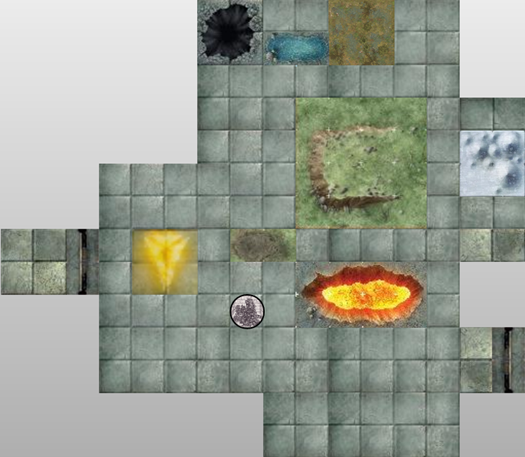
Despite being written for 4th Edition, I didn’t reproduce my Dungeon Tiles maps. Wizards of the Coast owns the copyright to the images on those titles, and while their use is almost certainly fair in this context, WotC is always looking for an excuse to threaten people. So, without the software to make my own maps, I’ve created some terrible ones based on my Dungeon Tiles maps, then told you the sets you could use to recreate them.

Also of note, I acquired the Krampus stat block from Kobold Press as envisioned by the Dread Gazebo.

If you have any doubts as to the legality of what I’m publishing here, or you’re publishing elsewhere, please visit my post here linking to relevant materials.

EDIT: After running the adventure on 12/13, the PCs are being tweaked, but the adventure is getting a major overhaul. In short, this was way too easy. While that doesn’t bother me completely — the primary purpose is to impart a moral lesson — this is D&D, and D&D should be a challenge.

I hope you enjoy the adventure. I had fun writing it. You can download it by clicking here (unless you may be playing it soon with me). The adventure is suitable for 5, 11th-level characters. James generously created pregenerated characters.

  • The Adventure in PDF format
  • The Adventure as a Masterplan Project File. You’ll need to delete the extension “pdf” from the end of “The Night Before Deadwinter.masterplan.pdf,” which will leave the name of the file “The Night Before Deadwinter.masterplan” (to be updated soon with the pre-generated characters).
  • The Masterplan Library with the monster stat blocks. You’ll need to delete the extension “pdf” from the end of “The Night Before Deadwinter.library.pdf,” which will leave the name of the file “The Night Before Deadwinter.library.”
  • Pre-generated characters and tactical advice for their play.

Of the pre-generated characters, Cameron is the most complex, and Argus and Fellick and the easiest to run.

Remember, the maps suck.

Disclaimer: Dungeons & Dragons and D&D are trademarks of Wizards of the Coast, LLC, who neither contributed to, nor endorsed, the contents of this publication. (Okay, jackasses?)

Follow me on Twitter/X @gsllc
Follow me on Mastadon chirp.enworld.org/@gsllc
Follow me on MeWe robertbodine.52
Follow me on Blue Sky @robbodine


Organized Play Ain’t What It Used to Be #DnD #TTRPG #RPG

A little over a year ago, I wrote a post about my glory days of Dungeons & Dragons (“D&D“) living campaigns. I left D&D in 1982 due to the Satanic Panic and didn’t return until 2005. When I came back, Living Greyhawk was ongoing, and the TTRPG culture surrounding it was great. A little later, Living Forgotten Realms came along, and not only did Wizards of the Coast (“WotC“) up their game, but so did my friends and I, running weekly games at up to six Washington, DC area sites for 250+ RPG Gamers’ Syndicate members, plus weeknight stuff (i.e., D&D Encounters), and for two years, a convention. The entire experience was robust, which I think is a perfect word to describe it. Because I quickly grew tired of 5th Edition D&D, all of that fell off the radar for me.

Fast forward to this past week. A new coworker saw a d20 on my desk and asked if I play D&D. The conversation turned to those glory days, and she asked if that stuff was still going on. I told her I’d look into it. I asked around my old channels and got no reply. I went to the WotC store locator, and long story short, there were no official D&D Adventure League retailers in Northen Virginia. Huzzah Hobbies still exists, but there are no D&D games on their events schedule. Everything I came back to in 2005, and last dealt with in maybe 2019, is gone. The only infrastructure is online through social media sites in which my coworker isn’t interested (e.g., Facebook), and as I mentioned above, reaching out to Facebook groups resulted in no responses. She and her husband are in a single online game via Discord but want to sit around a table and throw dice. When I explained how living campaigns worked, she found that incredibly intriguing.

Something wonderful is missing. The community seems disjointed because more than just the game itself has been relegated to technology. TTRPGs have always been social in nature.

You’re probably prone to think this is a function of my age; however, before I was an attorney, I was a database geek. Not only do I not fear technology; I love it. After all, I’m currently creating digital character builders for various games. Applying technology to game play itself is a great thing. I don’t like playing games without digital character builders (hence, my projects). Moreover, my coworker is probably 25 years younger than I (maybe more) and has been playing D&D for less than a year. She has no nostalgic ties to the early 2000s culture. She simply knows that she wants what I used to take for granted, but it’s no longer available in Northern Virginia. Despite not personally needing this real sense of community, I find that sad. Maybe there’s a timely lesson in this that applies to more than just TTRPGs.

You don’t know what you’re missing.

Follow me on Twitter/X @gsllc
Follow me on Mastadon chirp.enworld.org/@gsllc
Follow me on MeWe robertbodine.52
Follow me on Blue Sky @robbodine
My Masterplan Wishlist (Nothing to See Here; Move Along) #4e #DnD #RPG #TTRPG

This post is for me, not you. It’s a convenient place to keep a list of enhancements I’d like to see to Masterplan. Consequently, I won’t be promoting this post via social media. It’s simply here so that I can add to it no matter where I am, and if Andy ever agrees to apply them to Masterplan, he can come to one place with all my thoughts organized neatly.

Magic Items

  1. In the library window, allow a user to filter the list.
  2. Adding Price as a built-in field for magic items so that it doesn’t need to be added as a section.
  3. A button allowing you to assign the default cost to a magic item based on its type (e.g., ammunition, armor, weapon). (Most magic items have the same cost at the same level. Ammunition uses it’s own formula. I’m not certain if there are any other exceptions, but in case future work creates exceptions, or an item is assigned no cost, it would be easier to be able to just hit a button to assign the cost rather than set it automatically.)
  4. Add “Consumable (Other)” and “Consumable (Elixir)” each as a type of magic item.
  5. Add “Alchemical Item (Oil),” “Alchemical Item (Poison),” and “Alchemical Item (Volatile)” as a type of magic item, while leaving “Alchemical Item” (without a subtype) for ones without a designation.
  6. Add “Critical” as a magic item section header in the drop down list box.

Artifacts

  1. When a new section is created, it can’t be removed. See, Jacinth of Inestimable Beauty, in Mordenkainen’s Magnificent Emporium. Do not delete the built-in sections (e.g., “Pleased (16-20),” “Moving On”).
  2. Add “Critical” as a magic item section header in the drop down list box.

Projects

  1. PC data should be exportable so that a PC doesn’t have to be imported multiple times to be used in multiple projects.
  2. If a PC is imported from a *.4ednd file, import its portrait along with it.

Combat

If a token represents a swarm or tiny creature, or a creature currently subject to the prone condition, or a creature at a different altitude, allow that token to occupy the same space as another token.

Monsters

Increase the list of available, stock choices for range in the Power Range drop down list to include Melee N (one creature), Ranged N (one creature), Area Burst N within Y (creatures in burst), Area Burst N within N (enemies in burst), Close Blast N (creatures in blast), and Close Blast N (enemies in blast). These could replace some of the ones already in there.

Libraries

  1. Allow an option for larger text in, for example, the Libraries window.

Follow me on Twitter/X @gsllc
Follow me on Mastadon chirp.enworld.org/@gsllc
Follow me on MeWe robertbodine.52
Follow me on Blue Sky @robbodine

TTRPG Group Checks #RPG #TTRPG #DnD #4e

If you enjoy this post, please retweet it (Twitter/X), boost it (Mastodon), repost it (MeWe), or repost it (BlueSky).

The skill checks of 4th Edition Dungeons & Dragons (“4e“) were hated by many people, in part because they felt skill challenges were mixing skills into a system best suited for combat. I think it was Chris Perkins that analogized the criticism to people saying, “Keep your peanut butter out of my chocolate!” (and vice versa). While I don’t have a problem with the notion of a skill challenge, I do things a bit differently in my games, referring to them instead as “group checks.”

The Problems with Skill Challenges

In creating a model for group checks, Luddite Vic and I first had to identify what we didn’t like about skill challenges. First, they failed to discourage boring encounter design, which means most designs were boring. Second, the process itself became rote. Let’s deal with each separately.

Boring Writing

Let’s say the party is scaling a 100′ cliff. The fighter-type isn’t going to have much difficulty, and the wizard is going to be miserable, but we’ll deal with that later. In a skill challenge, you calculate how fast a character can climb (let’s say 15′ in a round), then divide that into the height of the cliff, and require a number of check equal to the quotient plus the remainder. That is, we divide 100′ by 15′ and get 6 and 2/3, which we round up to 7. The specific structures of skill challenges would give the DM two options: either “6 successes before 3 failures” or “8 successes before 4 failures.” Select one option and then select an appropriate set of skills a player can use to accomplish it. The obvious choices of skill are Acrobatics and Athletics. A character with poor bonuses for those will have to engage in some serious bullshit to convince the DM to allow a different skill instead. Even if the DM agrees, the target number the player will have to roll (the “DC”) using a less-than-relevant skill will be higher. But okay, that works. Everyone rolls.

However, consider conceptually what’s going on. They’re scaling a vertical cliff. That’s it, and that’s boring. Why not mix it up a bit? I’ll tell you why: There’s no motivation to do so. You can write this skill challenge as I have, and it does the intended job, just in a supremely boring way.

Boring Process

So, how does this play out? An experienced player knowing that they just need to roll, let’s say, 8 successful Athletics checks before rolling 4 failures will get out his d20 and just start rolling. “Success. Success. Failure. Success. Failure. Success. Success. Failure. Success. Success. Success. Yay. What did I win?” There’s no fun to this, and this is exactly how they all played out at tables on which I either played or ran. Everyone just wanted to get it done and move on to the fight at the top of the cliff.

Enter the Group Check

Let’s fix both of these, starting in reverse order. How about instead of rolling 8 successes before 4 failures, every character rolls just once regardless of the height of the cliff? This prevents that boring repetition. While you may agree that the repetition is boring, you may ask how a single roll by each player justifies the XP or story reward associated with the success. Well, first off, if it doesn’t justify the reward, don’t award it. Just view the success as moving the story forward. If that’s all that makes sense, don’t force the issue further than it should go. It’s a game, not a physics lesson. Second, leading to the second fix, write more interesting skill encounters. Sticking with our example, have the first part of the encounter scaling a vertical cliff face as suggested above. However, once you get beyond that, you then have a less steep climb through a sandy area where identifying strong-rooted bushes (a Nature check) is more important than sheer physicality (an Athletics or Acrobatics check). After that, you’ll obviously need to sneak up on the castle without being seen, which brings us to Stealth checks as the primary skill. Now the encounters are more interesting, and more players get their chance to shine and carry everyone on their shoulders (see Assists below). However, the important point is that each phase is a single roll for each player. If the majority of players are successful, the group is successful.

In other words, divide your encounter into multiple phases (until you run out of ideas), each of which feels very different both in terms of the description of the action and the skills being used. Do so regardless of whether the result is a skill encounter with 2, 5, or 25 phases. Obviously, there are plenty of instances where only one skill roll is needed (and few where 25 are needed 🙂 ), and there’s nothing wrong with that, but rather than succumb to boring processes to justify rewards, up your writing game to include more interesting encounters. Only where that occurs should you call it a skill challenge or group check and grant a reward.

I’m sure many games handle skill checks this way, but what 4e was trying to do with skill challenges was make an entire encounter out of skill checks in a cohesive way where the checks were related. That was a noble cause. The problem is that those checks were usually identical. The group check takes that idea and mixes it up a bit so that an experience point or story award is justified when based entirely on skill checks, yet keeps it interesting.

Assists

There’s another useful addition to this process. If the mathematical framework of the system supports it, a character’s remarkable success should allow assists as part of that process. If the DC for the Athletics check is 15, and the fighter scores a 20, then the fighter should be able to give a +2 bonus to the Wizard’s roll. For each 5 above the DC, the fighter will have another +2 bonus to grant to the Wizard or anyone else. This way, the fighter’s roll matters; he’s not trying to succeed, which is trivial, but instead to accumulate assists. Moreover, the wizard’s roll matters; he’s not trying to succeed, which is impossible, but instead to lose by a small enough margin to take advantage of the fighter’s success. Obviously, the amount of the bonus depends on the system’s mathematical framework, and there are such wide margins between the skill bonuses of 4e classes that it can be challenging (pun intended) to apply this in 4e, but it can be done if based on the specific players around the table. But make no mistake about it: This will work best if the game designer incorporates it into the framework ab initio.

Failure

I want to add one other thing that’s related. When players fail, there must be consequences. Failing while climbing a cliff shouldn’t mean a character falling to its death. That’s no way for a hero to die. So what do you do? To an extent, you can have mechanical consequences such lost healing surges, but often the most appropriate consequence is story based. For example, if you fail while climbing the cliff, you still make it to the top; it just takes too long. The result is that many of the people you’re trying to save are killed even if you successfully sneak in. They were scheduled for execution, and you didn’t get there on time.

Unfortunately, many players today don’t really care about story losses. If an NPC doesn’t have money or information to offer to PCs, the players often won’t prioritize the NPC’s health over their own. That’s not heroic, but that’s the way many people play. If they aren’t emotionally invested in the story, they aren’t going to care. So, sometimes failure can’t have consequences. In those situations, you need instead to reward successes beyond the obvious. On a success, you make it to the top of the cliff because that’s the entire point of the exercise, but if the characters aren’t fighting to prevent consequences, they can instead fight for an additional reward (without necessarily realizing it). In revisiting 4e sourcebooks I didn’t give proper attention in the day, I’m discovering some really interesting ideas that serve that purpose. Scrolls of power and dungeon companions from Into the Unknown: The Dungeon Survival Handbook (page 145), fey magic gifts from Heroes of the Feywild (page 140), intelligent items from Dragon 367 (page 22), and various alternative awards from the Dark Sun Campaign Setting (page 210) don’t significantly screw up a game’s balance, but they make for legitimate mechanical rewards and provide depth to the story. (Many items have levels, but they add a bit more flavor than an typical item of the same level.) On the other hand, as long as you don’t give away the surprise, dark rewards (i.e., cursed items and sinister items) from the Book of Vile Darkness (page 72) may serve as proper mechanical consequences.

This is why I said there’s still much more I have to do with 4th Edition.

Follow me on Twitter/X @gsllc
Follow me on Mastadon chirp.enworld.org/@gsllc
Follow me on MeWe robertbodine.52
Follow me on Blue Sky @robbodine
4th Edition D&D Dungeon Delves #DnD #RPG #TTRPG #4e #1e

If you enjoy this post, please retweet it (Twitter/X), boost it (Mastodon), repost it (MeWe), or repost it (BlueSky).

I ran a dungeon delve again last night. TL;D[click through], each of these delves consist of three, 4rh Edition D&D combat encounters with not much backstory, and no role-play or skill challenges. Each delve is based on a classic 1st Edition D&D adventure, so the backstory is built in for old guys like me. Between both sessions, I learned something. These delves are fine as is for a convention competition, but I’m not running them as a convention competition. Nowadays, I’m running them just to have a good time, so I need to rewrite the encounters as if they’re for an ordinary campaign.

In addition, I decided that for my rewrites, instead of making them easy, medium, hard, and impossible (again, it’s not a competition), I’ll instead write them each at different levels, accommodating players that want to play at different levels. In no event am I going to make any of these higher than low paragon, so the nine delves will run from 2nd level to no higher than 13th level. When all is said and done, I’ll probably have only two that are in paragon tier. I don’t want them to play too slowly. The only downside is that I probably won’t have pregens available, but it seems like most people want to create their own characters anyway. Maybe I’ll create just a couple of pregens to adapt if someone jumps in at the last second, but for the most part, I’ll leave it to the players.

If you’re interested in playing them, I have a thread on the “D&D 4e” Discord server where I organize them. You can also just contact me through this blog. I use MS Teams to connect to everyone, using the screen sharing feature to provide the battle map via Masterplan. There are still some minor kinks to work out with that set up — I’m not fond of online play — but it does the job. I need to make this technical solution work to accommodate a player in my home game that’s moved from the good Washington (DC) to the bad Washington (state).

Follow me on Twitter/X @gsllc
Follow me on Mastadon chirp.enworld.org/@gsllc
Follow me on MeWe robertbodine.52
Follow me on Blue Sky @robbodine
4th Edition D&D: Still Much More to Do #DnD #RPG #TTRPG #4e #WotC

If you enjoy this post, please retweet it (Twitter/X), boost it (Mastodon), repost it (MeWe), or repost it (BlueSky).

A Little Context for This Post

I love 4th Edition Dungeons & Dragons (“4e“). If you don’t, that’s fine, but did, and I still do. During the 4e days, which I consider the best years for organized play, I was one of the primary organizers for Gamers Syndicate game days in the DC area. We organized Living Forgotten Realms games at as many as five sites a month on as many as every weekend each of those months. We also ran D&D Encounters on the weekdays. We got a little time off, but not much. As a result of my efforts, and the rather generous rewards program offered by Wizards of the Coast (“WotC“) that you’ll never see again, I received a lot of free product, so there were very few publications I don’t own. I own multiple copies for many, and some are still in the original wrapping to this day (e.g., the Dungeon Command Sting of Lolth package; several game day, D&D Encounters, and Ashes of Athas adventures). Needless to say, I’ve seen a lot of game play and, you’d think, I’d see it all. Well, nope.

A Little More Context for This Post

In September of 2023, I started hosting 4e games at my house (which I bought primarily so I could easily host games on my own terms). The other primary organizer of the game days I mentioned (Vic) and I created a game world and cosmology (largely based on his own game world), and are serving as alternating DMs for the campaign. Because of how seldom we meet, Vic is only now finishing up his first leg of the campaign, so I’m about to start my first leg at level 4. In preparation for the whole thing, I’ve been cleaning up, and adding to, the Masterplan campaign manager, which we use for running the games. (I know I just said I haven’t had my chance to DM yet, but I’ve had the chance to run my 4e delves based on classic 1st Edition adventures.) I’ve added several libraries for sourcebooks that aren’t part of the base Masterplan product because the author gave up on the project before those sourcebooks were released. At the moment, I’m adding the Dark Sun Creature Catalog library to it. By my count, there are 11 more publications I need to add to get the Masterplan files complete. That said, even when I do, I’ll still have to go back to the existing libraries to continue to clean them up. All my work is available here.

And Finally, My Point

When 5th Edition was announced, I had a conversation with a friend. We both agreed that 4e was ending too soon because there was too much we hadn’t yet done. As gamers plugged into organized play, we knew that we’d be moving on to the next system, and if we didn’t, we’d have no one with whom to play because we knew our gaming friends would be. As I mentioned, I’m currently entering creatures from the Dark Sun Creature Catalog into Masterplan. Despite having played in two 4e Dark Sun campaigns during the 4e days, I’m still running into monsters and other material that I’ve never even heard of, and it reminds me of the conversation. Note well that I never played 2nd Edition due to the Satanic Panic, so I imagine anyone that played it would at least have heard of those creatures, but a lot of this material is still new to me, and not just the Dark Sun material. There was just a ton of material that I never got to use. Some of my Shadowfell materials are among those still unopened.

If this sounds like I’m complaining, I’m really not. Despite WotC moving on from 4e relatively quickly, I still have a ton of material from which to draw. Guys like Rob Schwalb and Stephen Radney-McFarland had their dirty little hands all over that edition, so it’s no surprise that the things I’m discovering are really clever and interesting.

Follow me on Twitter/X @gsllc
Follow me on Mastadon chirp.enworld.org/@gsllc
Follow me on MeWe robertbodine.52
Follow me on Blue Sky @robbodine

Winter Fantasy 49 is in the Books #RPG #TTRPG #DnD #DDAL #WinterFantasy #nerd #4e #5e @baldmangames

If you enjoy this post, please retweet it (Twitter/X), boost it (Mastodon), repost it (MeWe), or repost it (BlueSky).

So, Winter Fantasy 49 is in the books. This is one of two vacations I take every year, and it’s probably the most fun. The nerds don’t see how that’s possible. I go to a gaming convention and play few (if any) games. This year, I had one game on the schedule, and it was canceled due to a car accident. (Everyone’s okay.) I didn’t put anything in its place. I don’t go to Winter Fantasy to game; I go to hang out with people and, for the only time of the year, drink like a fish. I probably had more to drink this week than I’ll have for the remainder of the year.

One more piece of flair for the den.

Good Habits

I’m a part of Winter Vantasy. In fact, I’m one of only two members that was there from the beginning. A bunch of people pile into a van and play D&D most of the way to Ft. Wayne. It’s the best 10 hours in gaming. We have certain rituals we follow, like lunch at Black Bear Burritos in Morgantown, WV, Sunday dinner at Portillo’s, and after hours drinking at the Brass Rail (best bar ever). It seems we add a new ritual to the trip every year.

Our new Monday-morning ritual.

Bad Habits

I also didn’t eat particularly well, but my blood pressure is still optimal, and I came home weighing what I weighed when I left. I believe I can credit that to the fact that I went to the gym all five mornings that I was in Ft. Wayne, including the morning we left. I’ve never done that before. Drinking and eating until late Sunday night and having to get up early the next morning to drive home, there’s very little chance of getting up early enough for the gym, but I did it.

The Downside

The only bad thing about the show this year is something that was beyond Baldman’s control. The convenient watering hole shut down and has yet to be replaced. That means that people are either reliant on hotel bars (which close early) or have to walk a few blocks in arctic weather to get to a good one. In gaming parlance, that means we “split the party,” which created a (not so) funny vibe, and combined with the lower attendance this year, meant that I didn’t see a bunch of my friends. The Baldman will try to make arrangements next year to create a good space for us to meet, and I have confidence he’ll succeed. Also, see What’s Next? below.

What Did I Do All Day?

I heard this question a lot. Almost 15 years ago (the days of 4th Edition D&D), I, and others, organized a convention, synDCon, and in our second year, I created synDClash, which were a set of six dungeon delves each based on a different classic 1st Edition adventure. The Saturday before Winter Fantasy, I ran a couple of them for my 4e group. They were a hit, and I suspect the group will play them again when we don’t have a quorum. This inspired me to write two more delves during my downtime in Ft. Wayne. I finished Tomoachan’s Treasure (based on C2: The Hidden Shrine of Tomoachan) and finished two of the three encounters for White Plume Beckons (based on S2: White Plume Mountain). I’ll finish up White Plume Beckons today (EDIT: Done!), at which point I’ll have eight of them.

I love encounter #2 of Tomoachan’s Treasure.

I put in a couple twists to the two I wrote this week. For Tomoachan, I gave it a bit of a Raiders of the Lost Ark vibe. For White Plume, I allow the players to determine the order of the encounters and to gain use of the artifact they obtain. For those that metagame that decision, they may be a bit surprised.

I’m mulling about writing delves for B1: Into the Unknown (perhaps called, “You Still Don’t Know Shit!”) and S1: Tomb of Horrors (maybe adding a twelfth pre-gen named Lara Croft), but I’m not sure if those are well-suited as delves. I could imagine people might be interested in me creating them for the A series (i.e., the “slavers’ series”) and perhaps X1: Isle of the Dread, and I know one member of my 4e group that would be particularly interested in I3: Pharoah, but I never played any of those mods, so I’m not sure I could do them justice. The same with T1: The Village of Hommlet and U1: The Sinister Secret of Saltmarsh. However, I enjoy the writing, so in time I might give at least some of them a shot.

What’s Next?

Next year, I may play a couple of games. Hell, I might even run one (based on a silly promise I made). Next year’s show will be #50, and they’re creating a new living campaign set in Greyhawk using 5th Edition D&D rules. I might as well give it a try even though I’m not much of a 5e guy. After all, I hate 3rd Edition, but I’ll play it with the right group of people. The thing about Winter Fantasy is, for lack of a better word, that it’s cozy. It’s small enough that you’ll always (except this year) see your friends, but it’s large enough that there’s a decent number of things to do and you’ll always make new friends. If you haven’t been to Winter Fantasy, next year may be the best year to attend. If so, I’ll see you there.

Next year’s show will be fun.

Follow me on Twitter/X @gsllc
Follow me on Mastadon chirp.enworld.org/@gsllc
Follow me on MeWe robertbodine.52
Follow me on Blue Sky @robbodine

Follow Baldman Games on Twitter @baldmangames and BlueSky @baldmangames.bsky.social
Follow the Brass Rail on Twitter @brassrailfw
Follow Black Bear Burritos on Twitter @BlackBearMotown
Follow Portillo’s on Twitter @portilloshotdog and BlueSky @portilloshotdog.bsky.social (maybe; no activity yet)

Running my 4th Edition Dungeons & Dragons Delves #4e #1e #ADnD #DnD #RPG #TTRPG

If you enjoy this post, please retweet it (Twitter/X), boost it (Mastodon), repost it (MeWe), or repost it (BlueSky).

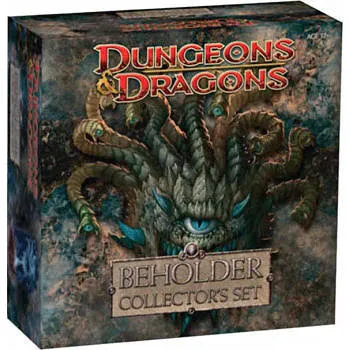
Last Saturday (February 1, 2025), to give myself some practice running 4th edition Dungeons & Dragons using the Masterplan software, I ran a couple of my synDClash delves. TL;DR: They were written for my convention, synDCon, as competitive, 4th edition delves. Five players playing one pre-generated character each goes through three combats, and whichever group of five players goes the farthest is the winner. My friend, Dusty, won, but I never got the prize to him (i.e., the set of five beholder mins). If I ever see him again, it’s his. But I digress . . . .

I think this is the one. I mention it only because my shame is my penance.

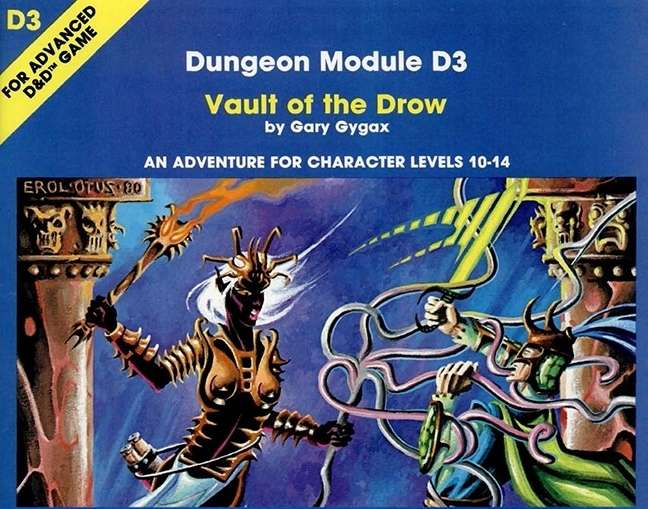
Each of the delves was based on classic 1st edition adventure module (what I always called a “mod,” which has strangely generated some grief on the internet). Why did I based them on 1e mods? Because I’m old. The mods were based on B2: The Keep on the Borderlands (easy), C2: The Ghost Tower of Inverness (moderate), G1-2-3: Against the Giants (moderate), D1-2-3: The Drow Series (difficult), S3: Expedition to the Barrier Peaks (difficult), and Q1: Queen of the Demonweb Pits (impossibly difficult). I converted those delves into Masterplan project files, which can be found on my D&D 4e Resources page along with the pre-generated characters.

How It Went

In short, it went tremendously well. Everyone had a blast, and the software was smooth almost all the time. There were only two downsides. First, 4e is inherently slow, and despite delves being relatively fast, this particular group really likes to have side conversations. This meant that we got through only two: Return to the Borderlands (based on B2) and The Great Metal Dungeon (based on S3). Second, there was a clear error in my math for skill checks during the second encounter of The Great Metal Dungeon, which resulted in an unfair TPK. (Revisions have already been made but not yet uploaded.) The delve is labeled as “difficult,” but I assure you that those numbers were still unfair.

You know what I’m talking about.

But what this means is that there are still four more (plus perhaps a retry of The Great Metal Dungeon) available for my group to play during weekends on which we can’t get a quorum for our regular gaming.

New Delves?

Over on BlueSky, someone posted an image of his four copies of the original versions of C2: The Hidden Shrine of Tomoachan. That triggered a thought inside my soft human brain. If we get through these delves, I’m going to write at least two more based on Tomoachan and S2: White Plume Mountain. I don’t think there are any other mods that, though iconic, have much special meaning to me. Even Keep on the Borderlands didn’t, but I needed an easy one, I knew it was special to a lot of people, and I knew what the three best encounters to use would be. Perhaps I’ll convert S1: Tomb of Horrors as well considering that Wizards of the Coast already converted it to 4e, though that one would be hard to run as a delve. If so, for obvious reasons, I’d have to make it as impossibly difficult as The Demonweb Pits was. If I convert them, I’ll post the to my D&D 4e Resources page as Masterplan files.

I miss the days of 4e.

Follow me on Twitter/X @gsllc
Follow me on Mastadon chirp.enworld.org/@gsllc
Follow me on MeWe robertbodine.52
Follow me on Blue Sky @robbodine
Updates to My 4e D&D Resources Page #RPG #TTRPG #DnD #4e #synDCon #gaming

If you enjoy this post, please retweet it (Twitter/X), boost it (Mastodon), repost it (MeWe), or repost it (BlueSky).

FYI, I’ve updated my (modest) 4e resources page. It includes support for the Masterplan campaign manager. For those that don’t know, some guy (a pro software engineer) built a campaign manager for 4e and left it on GitHub for all to use. It’s a great tool. The glaring problem it has is that some of the monster files cause the application to crash if you try to open them. (A good example are several of the hobgoblin files from the Monster Manual.) Well, I’ve fixed a lot of those. I can’t say whether I’ve fixed even half of the issues, but I’ve made a ton of progress. I’ve also updated a lot of the stat blocks to Monster Manual 3 format. My edited libraries are available on that page.


In addition, I ran convention in 2010 and 2011 (synDCon), and one of the events I created was a dungeon delve we called synDClash. These were common in cons. All combat. Just try to finish three combat encounters in 45 minutes. Rather than have only one adventure that people would have to play over and over again, I created six, each based on a classic 1e adventure. (In hindsight, I wish I had added “Revisiting the Mountain” or whatever as a homage to S2: White Plume Mountain.) Those files are up there too as separate Masterplan projects.

In other words, there are project files and libraries available for download. Moreover, the character sheets — both the ones used for synDClash and the offline Character Builder versions I created over the past couple days — are linked to there. (Please let me know if the link to my dropbox file works.)

All of this is a work in progress. I’ll continue to create whatever fixes are necessary and update sourcebook stat blocks to Monster Manual 3 format, but if you’re running an in-person 4e game and weren’t aware of Masterplan, you should consider it for tracking initiative, etc. We use it with a big screen TV as our battle map. This was my goofy way of letting everyone know that the set up was ready for what was the upcoming session: Reveal.

Follow me on Twitter/X @gsllc
Follow me on Mastadon chirp.enworld.org/@gsllc
Follow me on MeWe robertbodine.52
Follow me on Blue Sky @robbodine
The Golden Age of Living Campaigns (for Me Anyway) #DnD #4e #TTRPG #RPG #gaming #Pathfinder #Shadowrun #L5R #Rokugan #WotC @Luddite_Vic

If you enjoy this post, please retweet it (Twitter/X), boost it (Mastodon), repost it (MeWe), or repost it (BlueSky).

Still my favorite 4e image (PHB, page 177).

Last night, I hosted the 7th session of a 4th Edition D&D (“4e“) campaign that’s being run by my friend, Luddite Vic, but is based on a campaign setting that he and I created (still a work in progress). We’ll be alternating DMing duties, so I’ll get to run and play the game. As always, this led to reminiscing about the 4e days. For example, one of the players is almost finished converting Teos’s Ashes of Athas adventures to 5th Edition D&D. The conversations got me thinking (as always). I know that 4e is probably the most maligned edition of the game. It’s accused of not being “real D&D” by those who constantly complain when others say “you’re playing D&D wrong.” The hypocrisy keeps me from caring about that, but the reality is that it wasn’t nearly as popular as the other editions during each edition’s heyday. Nevertheless, for the Washington, DC area, the era of 4e was, as far as I can tell, the golden era of organized play and was the best the TTRPG community was ever organized.

Vic and I were two of the founders of the Gamers’ Syndicate gaming club that boasted about 250 members. With a lot of help from too many people to list here, we organized gamedays every single Saturday at, if I recall correctly, six different sites. We additionally organized and ran Wizard of the Coast‘s Encounters program at some of those sites one weekday a week. We (and Stephen and Cassandra) put on a convention, synDCon for two years. Nevertheless, I realize my experience is ultimately anecdotal, and I haven’t taken any polls to back up these claims, so take this with a grain of salt.

So, during the 4e era, we had two events regularly occurring every week in Chantilly, VA; Woodbridge, VA; Rockville, MD; Ashburn, VA; and some other spots occasionally. Every event had two to six tables of games being run, but we occasionally ran special events (i.e., battle interactives) that doubled the number of tables. (Somewhere out there is an embarrassing video of me being forced to LARP the introductory scene to a battle interactive. LARPs have never been my thing.) I can’t explain how, but we never turned away a single player. If someone showed up without registering, either Vic or I immediately organized another table and ran it ourselves if no one else could. We always organized with that possibility in mind.

What Edition Warriors Don’t Get

Our success came not only through organizing the 4e living campaign, Living Forgotten Realms (“LFR“), but also by including Pathfinder Society, Greyhawk Reborn, Shadowrun Missions, and Heroes of Rokugan living campaigns in our organizing. I even ran my own 4th Edition Gamma World adventure at one weekend gameday. Community interaction exploded even beyond what we experienced for Living Greyhawk, and everyone was happier for it. I don’t think anyone in the DC area brought TTRPG gamers together more than we did, but even after they formed home games from their new connections, these players still showed up to our events. They were just too much fun.

There were a couple other gaming groups nearby with whom we didn’t coordinate at all. We shared members with these groups, so it’s hard to really know who organized more people, but I’d bet good money we organized more events. We were at it literally every weekend for years.

Fast Forward to Today

This isn’t happening nearly as much today as far as I can tell, and if I’m right, there are at least a few reasons I can think of for the waning of these events. First, to a non-negligible extent, gaming is moving online. Face-to-face gaming, while still a majority of gaming, is slowly being chipped away by modern technology. Second, despite all its PR disasters, Wizards of the Coast (“WotC“) still dictates the industry (and by extension, the community) because they have the most valuable TTRPG trademark, Dungeons and Dragons. Because there are more people playing in general, the need for supporting game day organizers, or even game stores, has diminished. It simply makes less fiscal sense to worry about whether people like Vic and I are putting butts into public play seats. To the extent that’s still useful, WotC is going to rely on conventions, not game days, for organized play, and those are neither cheap nor as personal (but see Winter Fantasy hosted by Baldman Games). The Encounters program and the true DM rewards program no longer even exist, so what’s the point of game store gamedays? Third, this has led to a reduction of the number of game stores, at least in the DC area, so there aren’t a lot of affordable places for large crowds to organize. Fourth, and most importantly, I don’t think anyone was willing to work as hard as Vic and I at putting these events together. As I said above, we had a lot of help, and sometimes those people did an admirable amount of work without compensation, but every single one of them would tell you that they weren’t willing to do nearly as much work that Vic and I did. Today, neither of us has time for that, nor do we have the motivation considering WotC‘s approach, but if someone else did, I think the first three causes I mentioned would be rendered moot. Hard work cures almost all that ails us.

Change is Inevitable

It’s really not like this.

This is largely just an old guy rant, but not in the stereotypical way. I’m not angry. In fact, I’m doing great. I’m hosting a 1st Edition D&D game I run, and I’m hosting the 4e game I mentioned above. I’m getting exactly what I want. As for the newer gamers, if they don’t realize what type of an awesome community we had in those days and and are happy because they don’t know what they’re missing, that’s fine too. I do feel bad for my contemporaries from those days that no longer play because what I’m describing is no longer largely available, but ultimately that’s their choice, and if they’re weren’t happy, they’d make another choice. As long as everyone is happy, regardless of what they’re playing or whether they’re playing, all is well, but if they ever ask me, I’ll make it clear to them that it could be better.

One hell of a lot better.

Follow me on Mastadon chirp.enworld.org/@gsllc
Follow me on MeWe robertbodine.52
Follow me on Blue Sky @robbodine