Let's roll some dice, watch some movies, or generally just geek out. New posts at 6:30 pm ET but only if I have something to say. Menu at the top. gsllc@chirp.enworld.org on Mastodon and @gsllc on Twitter.
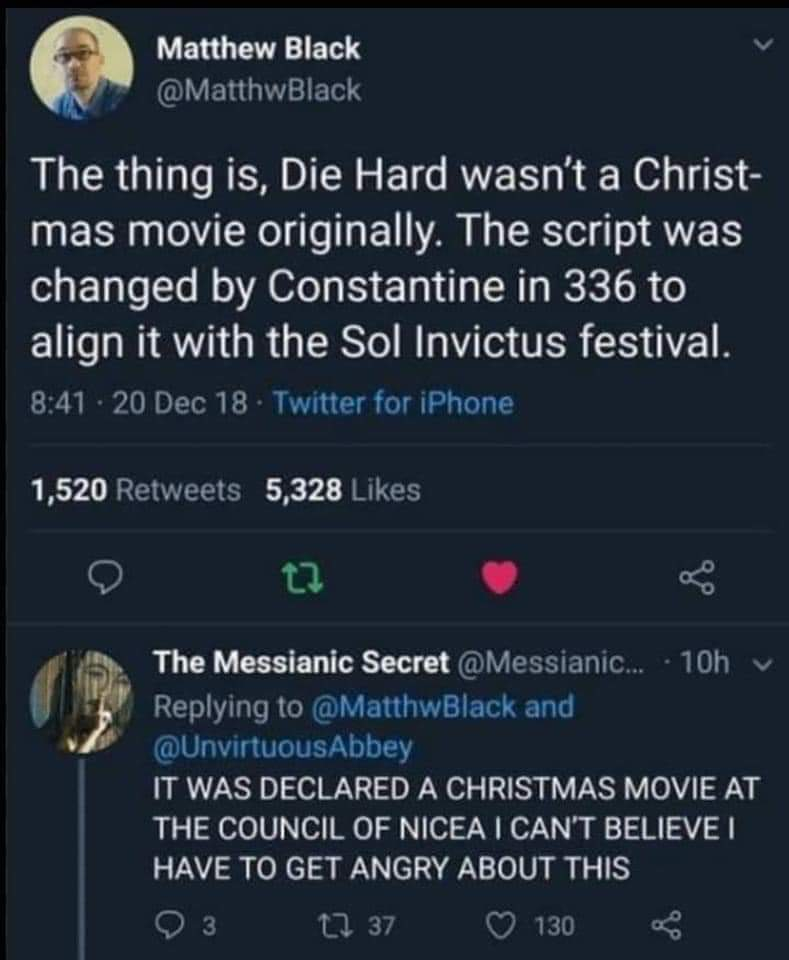
Everyone likes to claim Die Hard is a Christmas movie despite it being released July 22 (1988) right in the middle of the USA’s summer. I’ve always had trouble with this because I remember the theater being sweltering.
Here are two other potential Christmas movies for your consideration.
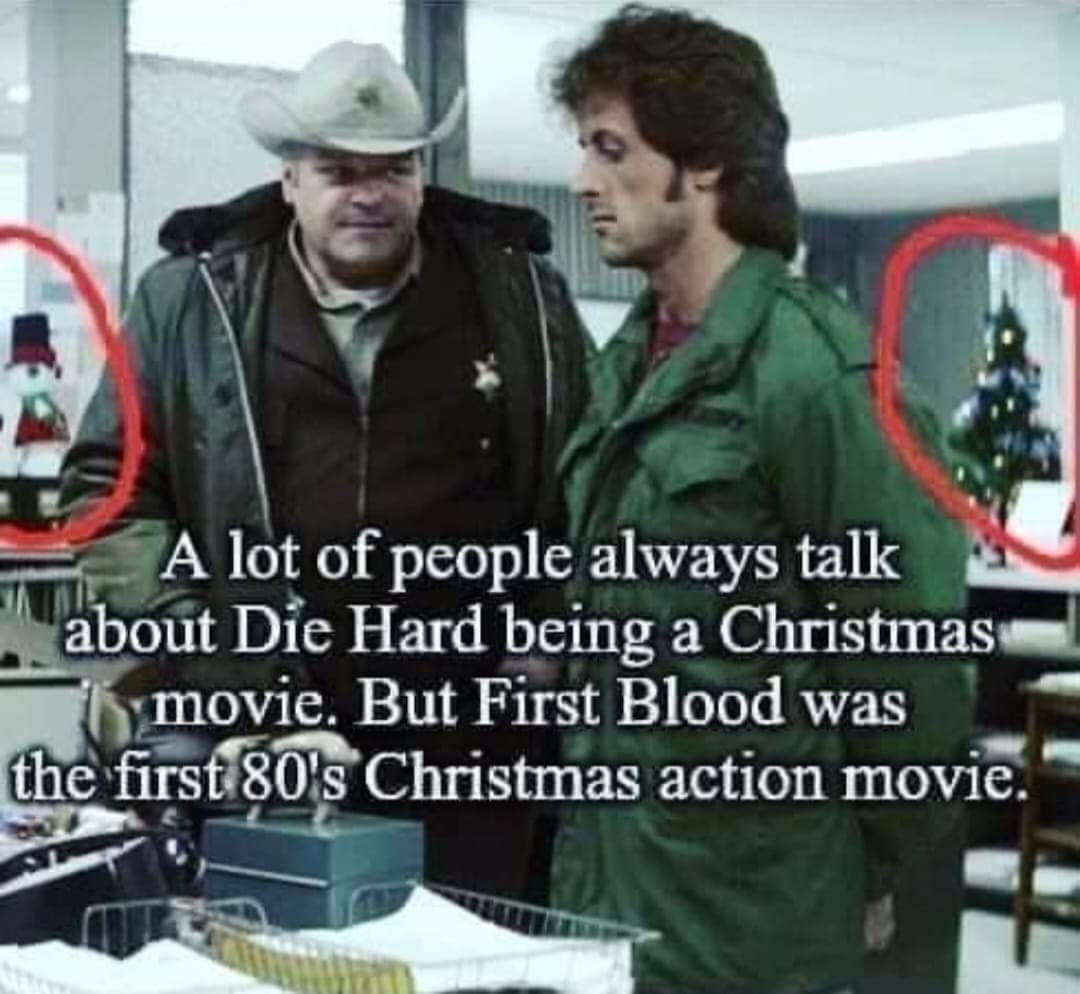
This is no different that Die Hard being a Christmas movie. First Blood takes place during Christmas, and because it was released in October (1982), it at least wasn’t hot out when the movie was released.
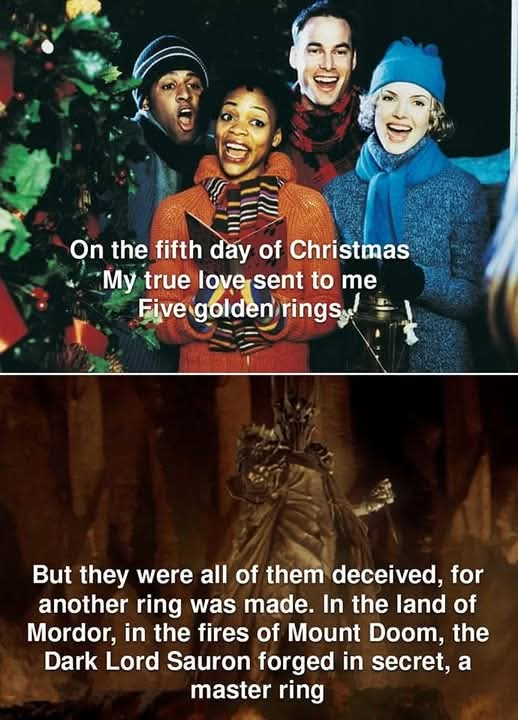
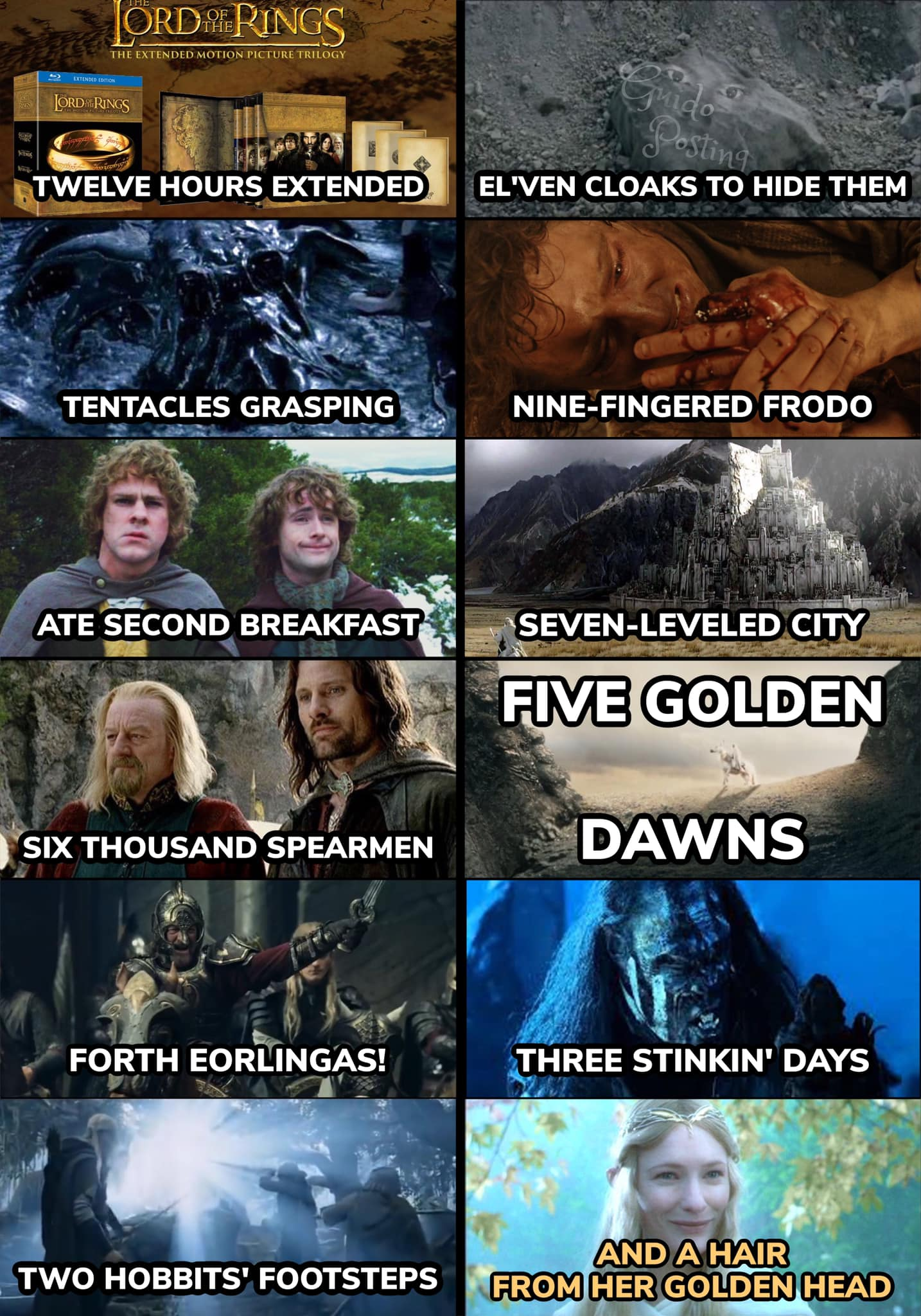
Now, now. I know this seems to be a stretch, but there’s more.
If you enjoy this post, please retweet it (Twitter/X), boost it (Mastodon), repost it (MeWe), or repost it (BlueSky).
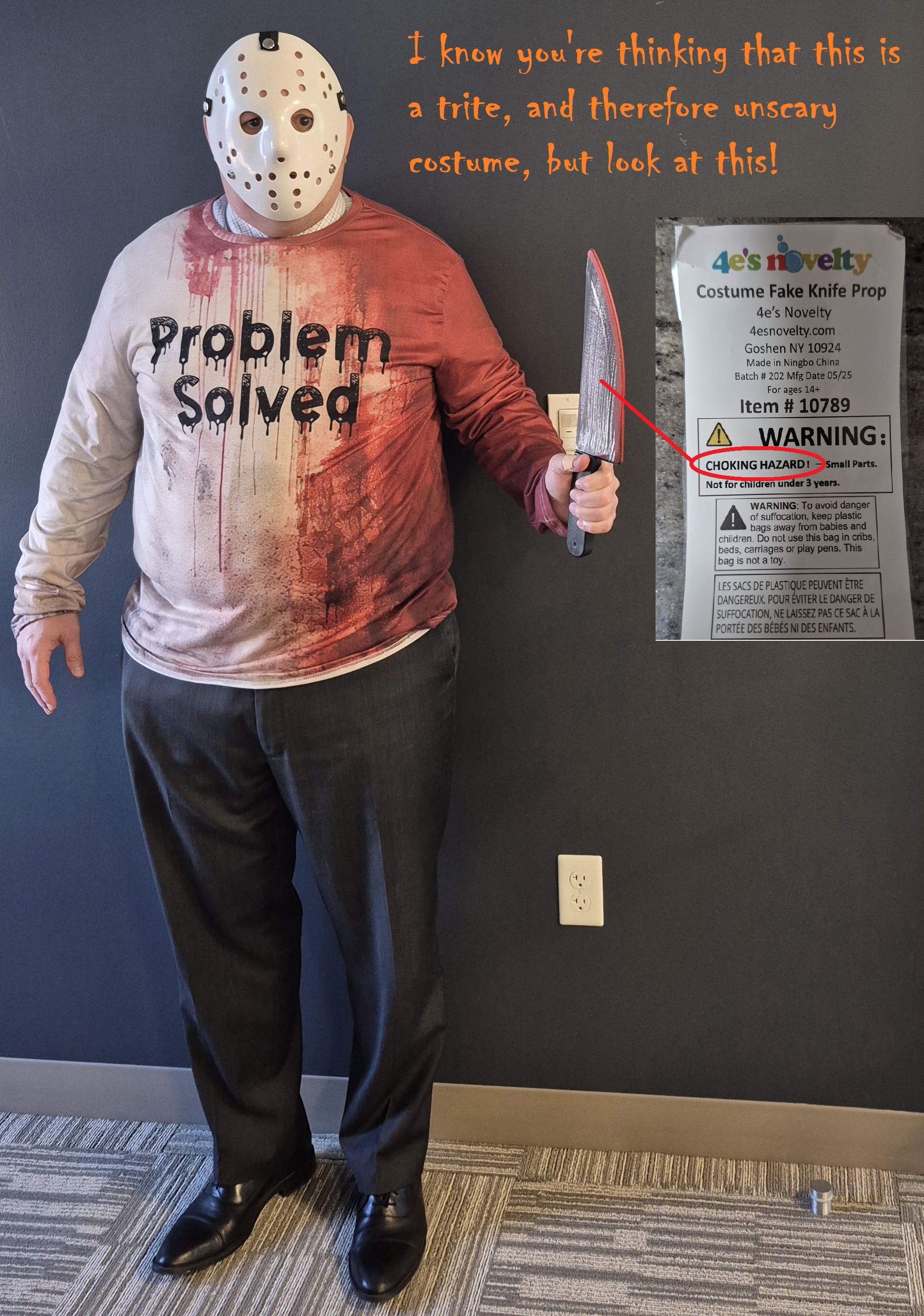
I’m in the unfortunate position of not being able to fully participate in my company’s Halloween costume contest. I have to wear something that can be quickly removed and put back on, so things like face paint are out of the question. In order for people even just to like my costume, I have to tell a story. Last year, I wore a prison jump suit. This year, I give you the prequel to that costume.
Did Jason wear dress shoes?
It’s hard to be scary when everyone knows they can outrun you.
Here’s something that in part is completely uncontroversial, but I still want to say it because I think some of it might encourage disagreement.
Old Guard was released 5 years ago. The sequel was released recently. I have zero recollection of the original beyond the basics, so I don’t fully appreciate the context, and I didn’t enjoy it. Releasing the sequel 5 years later is just fucking stupid. There’s far too much content we absorb to expect us to clearly remember the detailed context from a prior film that isn’t worthy of multiple rewatches over the years, and I’m not going to rewatch the original just to make sure I appreciate all the subtleties of the sequel that make it worth watching. And that’s for a movie. For a TV show, this is even dumber.
I saw a meme recently that I didn’t save, so I can’t reproduce it here. It pointed out that in the old days, there were 20-something episodes per season, with only a summer break between each season. Now it’s 10 episodes (or fewer) separated by at least a couple of years. In the age of the internet and streaming where release schedules should be more relaxed, this represents a massive failure by the creatives. I’m sure they, along with the suits in control, win with this arrangement: less work for more pay. In the meantime, people can be distracted by all the other content available.
I get the notion of Abe Simpson yelling at clouds. I’m very much self-aware of how I’m not part of the new culture when it comes to a lot of things. Unlike many people my age (57), I’m 100% fine with that. All of you do you, and don’t worry about the guy that isn’t in the most important demographic. But this is fucking stupid, and on this, I don’t know why the currently generation tolerates it. Maybe they don’t feel they have a choice, or perhaps ignorance is bliss, but if they’ve given this any thought and still think this is a reasonable option, then I really don’t get what the kids are thinking these days. In this narrow regard, it was much better in the old days. Considering we had only three viable channels, that’s crazy.
Note well that I’m not criticizing the content itself. Most people my age do, but that’s not what this is about. To the extent that I don’t like the creative direction of modern media, that’s generational, and my opinion should be ignored. I’m talking about something far more objective than personal taste. This is about structure, and the structure is shit.
There are a ton of movies I’ve never seen, and I try to watch as many of them as possible. This means not watching movies I’ve already seen. Of course, like all of you, there are still some movies I like to rewatch. One of them I’m watched again tonight: The Devil’s Own.
This is the first I’ve seen it since quite some time before everything switched from DVDs to streaming (well over a decade). I saw it was available on Hulu/Disney+, so I figure it was about time to give it another watch. Brad Pitt stars as a member of the IRA beside Harrison Ford’s Irish-American New York City cop. Ford’s wife was played by Margaret Colin just off her breakout role in Independence Day, and his eldest daughter was played by a young Julia Stiles. Treat Williams, Ruben Blades, and (of all people) Rob McElhenney round out the lead cast. I love the movie, and I love the soundtrack even more. James Horner is probably my favorite musical writer of the 90s. His soundtracks are more valuable to me than any of the popular music that came out in that decade.
A Weird Connection
Right before law school, I moved to Westchester County, NY and worked in the Wall Street district of Manhattan. I was intending to attend the New York Law School, but the more prestigious Chicago-Kent College of Law accepted me two weeks before class started. I changed gears and moved to Chicago the day classes started. However, during the four months I was working in Manhattan, there was an area blocked off for the filming of a “new Brad Pitt movie.” I never saw Pitt because I never had the desire to hang out and watch filming, but I saw the set up for the scene when (spoiler alert!) Diaz was killed. It was filmed right outside my office, and whenever I watch the scene, it reminds me of the lead in to what was probably the best time in my life.
I spent a lot of time here.
In any event, it didn’t have very good reviews, but I thought it was great.
If you enjoy this post, there’s something wrong with you.
And now for something really stupid.
New, overpriced Star WarsOreos! Will they be Jedi Oreos or Sith Oreos? Only those dumb enough to pay for the same exact cookie with an intellectual property markup will ever know.
Sorry Not sorry for the naughty word.
Somehow, this video received no copyright strike. Go figure.
I accidentally stumbled across a movie I saw as a kid: C.C. & Company. It came out when I was two, but I saw it a few years later and loved it. It’s memorable to me because 1) Joe Namath plays the main character, and 2) it starts out with a scene where Namath is making lunch in a supermarket. That is, he opens a bag of bread and steals a couple of slices, opens a package of cheese and puts it on the bread, etc. After eating the sandwich he just made, he politely asks an employee where the cupcakes are, and then calmly goes over there and eats one.
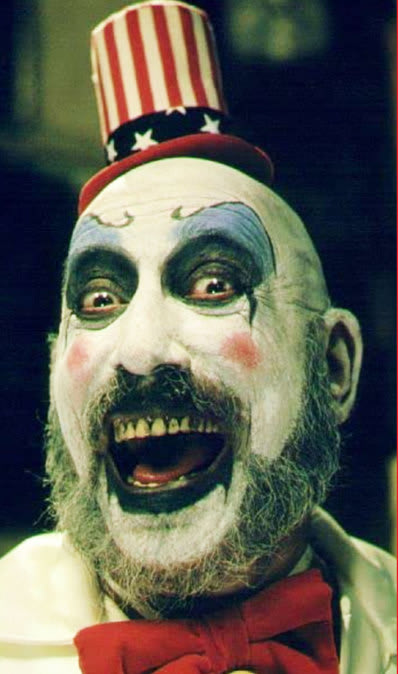
What I didn’t know then, and didn’t find out until I re-watched it is that Sid Haig is in it.
A Horror Icon
Wait, that’s not right.
There you go.
Sid Haig threw me a little bit. Some of my friends won’t stop talking about the guy’s impact on horror, but because I don’t like slasher-type horror, I never saw House of 1,000 Corpses. (I assume that movie is of that genre.) As far as I knew, this is the only movie in which I’ve seen him, but looking at his credits, I saw him in THX 1138, Jackie Brown, and Kill Bill Vols. 1 & 2. Not knowing who he was, I never noticed. I wouldn’t have noticed here if Amazon Prime didn’t display the scene’s cast during the movie.
Review
Anyway, a couple of early scenes of C.C. & Company hold up, but the movie in general? Not so much. It’s one of those movies about a particular subculture (bikers in this case) written by people who I assume don’t know anything about the subculture. It’s also quite dated. If you’ve seen it before and have even vague memories of it, it might be worth a watch. Everyone else my age should be watching Cobra Kai. I finished part one of the new season of Cobra Kai the night it dropped.
On second thought, no one should watch it; it sucked.
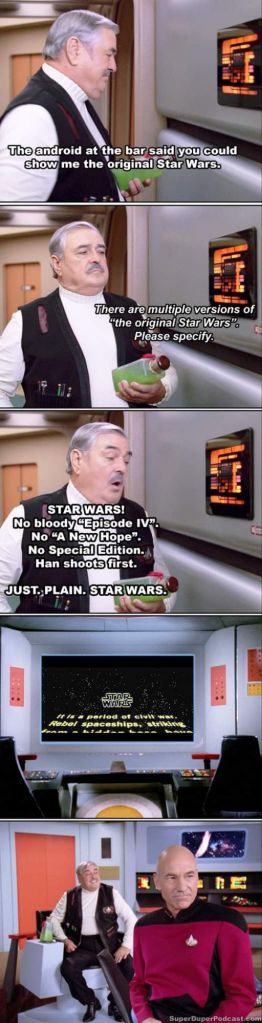
As today is the real Star Wars Day and the only one that should be celebrated, I’ll tell you my story. Like all my childhood stories, there’s an element of sadness to it, but only in a “first world problem” sense. It’s not really a downer.
Star Wars: A New Hope was released eight days after my ninth birthday. I didn’t get to see it quickly, as it wasn’t a priority for my parents, and they didn’t want to wait in those ridiculous lines. However, the release was extended due to its popularity, so because they were interested in it themselves, I technically did see it when it was released. Unlike some of you, I don’t remember the exact date, but it was definitely (and obviously) during 1977.
My cousin, Kessel Junkie, and his older brother loved it, but their parents fostered that. They had the bed sheets, toys, etc. So, when it was re-released in the theaters, their parents planned to see it again. The day before, they were over at the house. I had helped out their mother in some way I don’t remember, and she returned me home. She asked me what I wanted in return. I responded, “Take me to see Star Wars.” Knowing how my family would react, I said it with deep and sincere sarcasm in my voice because I never imagined being able to see it in the theater a second time. Well, she enthusiastically responded, “Sure!” She knew that would absolutely pay the debt (so to speak) to me. My mother wasn’t pleased but was in a position where it would be awkward to disallow it. I’d pay for it later, but I didn’t care. So, I actually got to see it twice on the big screen. This was the nicest thing my aunt ever did for me (I don’t mean that as a backhanded compliment), and I always appreciated that.
Foreshadowing!
On Christmas of the year the Empire Strikes Back was released, Kessel Junkie‘s parents got me the novelization for Christmas. It was given to me at the large, extended family Christmas party we had every year, so there was no way to hide it. I immediately started reading it, ignoring the party, but obviously I couldn’t finish the entire novel that night. I was ridiculed every time I picked it up because it was childish (I was fucking 11 years old!), but because that didn’t work, it was confiscated within the week. I never did finish it. I imagine, just like many books, it improved on the story from the movie. I hadn’t thought about this in decades, so maybe I should buy and read it.
This wasn’t really the product of an anti-Star Wars attitude as much as it was just another excuse to crush my spirit, but they did even meaner things with Star Trek, so this had nothing to do with . . .
The “Rivalry”
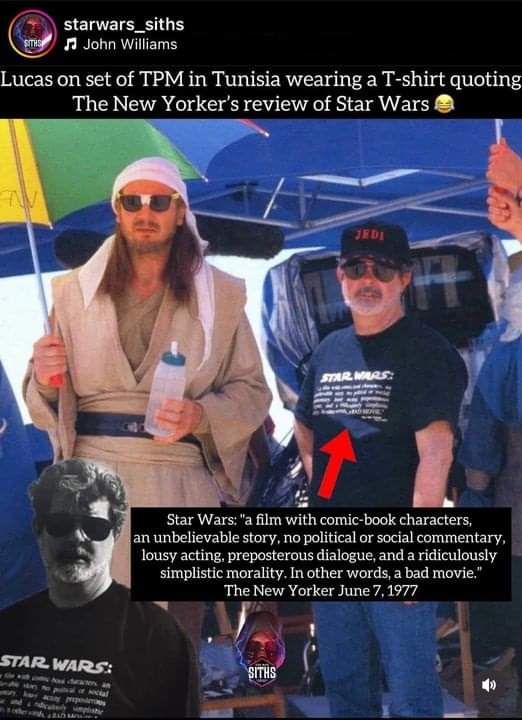
Star Wars sucks!
“Star Trek >> Star Wars” is a phrase I use more than “My name is Rob,” but as Kessel Junkie will tell you, we’re both fans of both. I just prefer Star Trek, and he prefers Star Wars. But the only Star Wars that doesn’t appeal to me is the animated stuff (for reasons I’ve discussed before) and the Last Jedi (it reminds me too much of the OJ Simpson slow speed chase). Maybe my love of Star Trek is why Rogue One is my favorite Star Wars movie; it has a more Star Trek feel. In any event, don’t take it as an insult to the franchise. Star Wars continues to consistently put out great material, and they even adjust on the fly to cater to what the fans suddenly want to see (e.g., Ahsoka). To be fair, Star Trek did that with Strange New Worlds.
I really do love Star Wars, and you should never doubt that simply because . . .
If you enjoy this post, please retweet it (Twitter/X), boost it (Mastodon), repost it (MeWe), or repost it (BlueSky).
I don’t read comics, so my knowledge of them is spotty. Also, I’m far more concerned that Marvel hire actors based on their talent rather than whether they remain faithful to the comics. Ergo, having no sentimentality towards the print medium, changing up the characters doesn’t affect me. But I get that it may affect others who love that medium and the particular characters as written. All that said, I still need to ask this question: What’s the big deal with the Silver Surfer casting for the Fantastic Four movie?
According to Wikipedia (sorry, that’s my source), Shalla-Bal is a canon Silver Surfer in an alternate universe (i.e., not the 616-universe of the MCU), and all the reporting claims that the Fantastic Four movie will be based in an alternative universe. Therefore, it makes sense that Shalla would be the Silver Surfer. Now, maybe your objection is that you prefer Norrin Radd, and that makes sense, but how do you know Norrin won’t be in this movie too?
According to Wikipedia, Shalla and Norrin were co-Silver Surfers in that alternative “Earth X” and “Universe X” universe (whatever that is). Just because Norrin hasn’t been cast yet doesn’t mean he won’t be. We currently have no reason to assume that you won’t get your Norrin Radd too, and maybe having two of them creates a better dynamic, if not in the comic, in the MCU, which is all I’m talking about and the source of your complaints.
As always, these complaints are coming far too early in the filmmaking process, and I suspect they’re based on assumptions rather than logic. Consider the complaint, “Krypton isn’t going to be destroyed in Man of Steel! I know! I saw a quick clip of an undestroyed Krypton!”
Spoiler alert!
That turned out to be hysterical nonsense, didn’t it?
Dirtbaggery aside, Jonathan Majors was awesome as Kang, so other than his unforeseen legal troubles, his race-swap casting worked out very well. But this isn’t even a swap. Shalla-Bal is a canon Silver Surfer as is, and Julia Garner is killing it (e.g., Ozark on Netflix). I’m not just disagreeing; I don’t even see the issue here.
One respondent on Facebook pointed out that many people don’t want the Silver Surfer in this movie at all, whether male or female, because we’ve already seen it. They want Dr. Doom. This response makes at least some of the following assumptions:
Dr. Doom won’t be the main villain in Secret Wars (or elsewhere);
Dr. Doom won’t be the main villain in Fantastic Four;
The Silver Surfer wasn’t cast merely as a cameo to set up Galactus as the next big bad evil guy for the next couple phases of the MCU.
All we have right now is confirmation of a casting. Everything else being thrown around is mere speculation. Everyone should just relax. If the movie (like its predecessors) sucks, you’ll have plenty of time not to watch it then. If it doesn’t, but you insist on hating it anyway, it’s your loss.
If you enjoy this post, please boost it via BlueSky, Mastodon, and/or Twitter/X.
Social media led me to an article entitled, Popular Movies That Aren’t Available to Stream Anywhere. Yes, I took the time to capitalize all the major words in that title because the Associated Press standard is stupid. Anyway, it’s an interesting list, and I’m sure you’ll sympathize with a lot of their choices. However, there’s one movie that isn’t on this list, probably because it isn’t that popular, but it’s one I wish I could find on a streaming service.
I Love You to Death
Movie poster with Kevin Kline in his white pajamas with a whole in his chest.
I Love You to Death was released in 1990. The “black comedy”, which was based on a true story, instantly became one of my favorite movies. The movie centers on an unfaithful husband, Joey, and his wife, Rosalie. When Rosalie discovers Joey has been cheating on her, she tries to kill him. For the record, the real “Rosalie” (Francis Toto of Allentown, Pennsylvania) spent four years in jail for attempted murder, but the couple is still married to this day.
The cast was incredible, led by Tracey Ullman, Kevin Kline (one of my favorite actors), Keanu Reeves (“Deliver us from freedom.”), the late William Hurt, and the late River Phoenix. Heather Graham and Phoebe Cates are also in it. As far as I know, it was Tracey Ullman’s only leading role in a motion picture. I could be wrong, but she did a great job in this one.
The trailer is here. You can buy or rent it here. I decided to buy it.
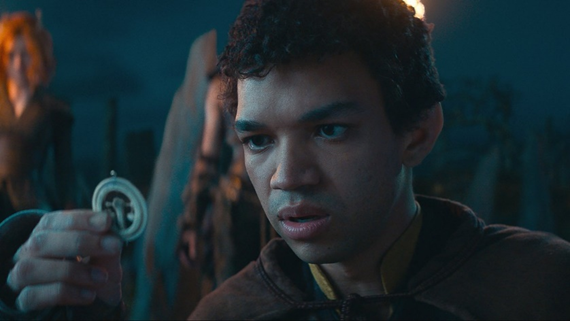
Timing is apparently not my strong suit. A few days ago, someone mentioned how much they loved the graveyard scene in the Dungeons & Dragons: Honor Among Thieves. Watch the scene here before it disappears.
I wasn’t as big a fan of the scene. Sure, it was funny, but it exemplifies the difference between legacy and modern gamers. Okay, I mean old people and young people. Whatever. As D&D players, we all want this movie to emulate the game, so our different approaches to the game affect our reactions to the movie or individual scenes. In the old days, failure was a thing in RPGs. If a magic user (that’s a wizard for the young’uns) wanted to learn a new spell, the player rolled percentile dice with a target number dependent on the character’s intelligence. If the roll failed, the wizard not only didn’t learn the spell, but could never learn it. Ever. That’s failure. The dice giveth, and the dice taketh away.
Nowadays, failure has fallen out of favor, granted to different degrees depending on the individual. Today, if a player were told that they could never learn the fireball spell, they’d be furious. If they couldn’t deduce a password from a riddle, it’s possible they’d quit your game. As I’ve discussed before (see the section, Another Example: The Puzzle Encounter), I once had players get angry at me because they couldn’t solve a puzzle trap, and as a result, the trap went off doing zero (0) points of damage to them.
Yeah, you read that right, but read it again if you don’t think you did.
Play whatever game you want — that’s the name of this blog — but I find this approach boring. I don’t try to solve easy sudoku puzzles; I go for the hard ones. I want the chance of failure because that’s how I improve. But even from a purely entertainment perspective, what’s the point of rolling the dice or even showing up to the game if you know the outcome? The players should instead tell the DM how they want the session to go, and the DM respond, “Sure, that’s what happened. Congratulations. You won D&D. Now get out of here and play some miniature golf or something.” Where’s the excitement in that? I really don’t get it, and it’s why I’m not involved in organized play anymore. Most tables just hand the players the victories.
This is not to say that I enjoy the notion of a character dying during character creation as in Traveler. There should be a chance of success, and the chances should tilt in favor of the players, but when the players don’t start enjoying my game until I remove all the challenge from it, I think the pendulum has swung too far in the other direction.
Nowadays, players don’t accept near enough failure in their games for them to be of interest to me, and the graveyard scene demonstrates this point. The point of the scene was to do something funny, and it succeeded, at least at first. I have no problem with that. However, after they failed, they simply tried again. And again. And again. The resource allowing them to speak with the dead was apparently unlimited, which means they couldn’t fail. Not only did that remove all consequences, and thus appear non-heroic, but it also detracted from the joke itself. Repeating a joke too many times is one way to ruin it. Why is the screw up funny if this is an unlimited trial-and-error.
The resource.
I would have written the scene in one of two alternative ways, and this is how my game would play out. First, they fail, so they have to be clever and come up with a different way to learn the information they need. Because this is a movie, that may not work. The movie could get really long, and no one really wants to watch a movie about people studying at a library. Second, they fail, but they get only one more bite at the apple. This time, they plan it out, come up with the five questions, assign one person to ask them, and everyone else shuts their annoying mouths (that’s another issue altogether).
That’s funny and heroic because the characters still had to rise to the occasion. But I really don’t think people want true heroes anymore, which is also demonstrated by this scene. They want to see idiots . . . .
. . . like him . . .
. . . win the day despite having none of the tools, including the personality and strength of character, to succeed. The only reason he succeeds is because the script says so. There’s nothing about him, even in a world of magic and monsters, that justifies his success logically. Even within that world, he’s a screw up, but he suddenly succeeds, because the screenwriters know that’s what the modern gamer wants to see, and they’re the foundation of the audience for this movie. After his success, he returns to being the same idiot that shouldn’t have succeeded in the first place. He didn’t improve; he was just handed success by the writers. This reminds me of another example.
None of us are perfect; some of us just can’t handle being reminded of that.







 Play What You Want