Let's roll some dice, watch some movies, or generally just geek out. New posts at 6:30 pm ET but only if I have something to say. Menu at the top. gsllc@chirp.enworld.org on Mastodon and @gsllc on Twitter.
Author: Frylock
Robert E. Bodine, Esq. is an attorney in Virginia focusing his practice on real estate and intellectual property law. He is one of the founding members of the Gamers’ Syndicate, a Washington, DC-based gaming club. He was the author of the Loremaster.org article series, Protection from Chaos, dealing with intellectual property law matters as they relate to the gaming industry, and has represented several game designers on intellectual property matters. You can follow him on Twitter @RobertEBodine for politics, @PropertyAtty for legal matters, @GSLLC for gaming matters, and if you’re a sports fan, @MMADork.
Tomorrow, I’m discussing memory, so for Caturday, here’s a video on feline memory.
By the way, with all my talk about cats, I don’t own one. However, I bought a house this year, so my tax withholdings were wrong. I’m getting about $2,300 back between federal and state. Hence, I’m buying some cat stuff and getting a cat. Maybe I’ll get two. My understanding is that if they have a playmate when they’re young, they learn the limits of violent behavior. Of course, I’ve always enjoyed “fighting” with the cats I’ve owned, so that’s not too much of a concern.
Today, I have a special surprise for you. My friend, ChatGPT, wrote a guest post. I asked it to write a post on role-playing games, which he insisted should be entitled, Table-Top Role-Playing Games: A Guide for Beginners. Here are its thoughts.
Table-Top Role-Playing Games: A Guide for Beginners
Table-top role-playing games (RPGs) are a unique and exciting form of gaming that has been around for decades. They offer a chance for players to enter a completely different world and take on a new persona. RPGs allow players to create their own storylines and characters while collaborating with others to explore a fictional universe. Here’s a beginner’s guide to getting started with table-top RPGs.
Choosing a Game
The first step is choosing a game that suits your interests. Dungeons & Dragons (“D&D“) is one of the most popular and widely known RPGs. However, there are countless other options available, each with their own rules, settings, and storylines. Some other popular RPGs include Pathfinder, Call of Cthulhu, and Shadowrun. Consider the themes and genre that you enjoy most in books, movies, or video games when choosing an RPG.
Finding a Group
Once you’ve chosen an RPG, it’s time to find a group to play with. Look online for local gaming stores or gaming groups that are actively seeking new players. Social media platforms like Facebook, Discord, or Reddit can also help you connect with other players. Joining an existing group will help you get started with the game and understand the rules and mechanics quickly.
Creating Your Character
Once you have a group and a game, it’s time to create your character. This is one of the most exciting and fun aspects of RPGs. You can create any type of character you want, from a sneaky rogue to a powerful wizard. Many RPGs provide character creation sheets that walk you through the process. You will need to decide on your character’s race, class, background, and abilities. It’s essential to have a clear understanding of your character’s backstory, personality, and motivations to make them come alive.
Playing the Game
During the game, players take on the role of their characters, and the Game Master (“GM”) guides the story. The GM is responsible for creating the world, setting up the encounters and challenges, and controlling non-player characters (“NPCs”). Players use dice to determine the outcomes of their actions and decide on their next moves as a team.
Having Fun
Table-top RPGs are meant to be fun, social, and creative. Players should never feel stressed or pressured to perform. Instead, focus on storytelling, teamwork, and immersion in the game world. Don’t be afraid to make mistakes or ask for help from the group. Remember, the ultimate goal is to have fun and enjoy the game.
In conclusion, table-top RPGs are a fantastic way to explore new worlds, make new friends, and exercise your creativity. With the right group of people, you can create unforgettable memories and epic adventures. So, find your group, choose your game, create your character, and start playing. The possibilities are endless!
Okay, that was useless, so I asked, “Can you write a more advanced post for me?” I requested the mathematics used to generate a system. Here’;’s the response.
The Mathematics Behind Table-Top Role-Playing Game Systems
Table-top role-playing games (RPGs) are a unique blend of storytelling, game mechanics, and mathematics. While the storytelling aspect is the most noticeable and critical, the underlying math used to generate the game system is equally important. In this advanced post, we’ll explore the math behind table-top RPG systems and how it affects gameplay.
Game Design and Probability Theory
The mechanics behind table-top RPG systems are based on probability theory, which is a branch of mathematics that deals with the likelihood of an event occurring. Game designers use probability theory to determine how different actions in the game will affect the outcome of the player’s actions. The result is a series of rules and dice-rolling mechanics that determine the success or failure of actions taken by the players.
Dice Rolling and Randomness
Dice rolling is the most common method used to introduce randomness into the game system. Each type of die has a different number of sides and represents different probabilities of success or failure. For example, a 20-sided die has a 5% chance of rolling any specific number from 1 to 20.
Game designers use dice rolling mechanics to introduce randomness into the game system. For example, a player attempting to hit a target may need to roll a 15 or higher on a 20-sided die to succeed. The outcome is not predetermined, and players must rely on their luck and probability to succeed.
Game designers also use probability theory to create balanced systems. They must ensure that the probabilities of success and failure are fair for all players, regardless of their abilities or character types. This balancing act can be challenging, as different character types may have different abilities and skill sets that affect their probabilities of success.
Mathematics and Game Mechanics
Game designers use a range of mathematical concepts to create different game mechanics. One of the most important is probability theory, which we’ve already mentioned. Other mathematical concepts used in table-top RPGs include:
Geometry: Used to determine the range and area of attacks, spells, and abilities.
Calculus: Used to determine rates of change, such as the speed at which a character is moving.
Algebra: Used to determine the values of variables such as hit points, armor class, and damage.
Game designers use these mathematical concepts to create game mechanics that are balanced, fair, and realistic. For example, a spell that affects an area of effect may be limited to a specific radius or shape, based on geometric calculations. Similarly, a character’s ability to move and attack may be determined by their speed, which is calculated using calculus.
In Conclusion
The mathematics behind table-top RPG systems is complex and requires a deep understanding of probability theory, geometry, calculus, and algebra. Game designers use these mathematical concepts to create balanced and fair game mechanics that allow players to immerse themselves in a fictional world. Understanding the mathematics behind RPG systems can help players better understand the game mechanics and how their actions affect the outcome of the game. Ultimately, table-top RPGs are a fascinating blend of storytelling, game mechanics, and mathematics that provide a unique and engaging gaming experience.
I pressed further to see which game systems use calculus, and it said that both Champions and GURPS do. I’ve never played either, so I have no idea if that’s correct. In any event, I had a better idea, but I’ve said enough for today.
Damn, that pisses me off. Well, here are some other things that piss me off.
Slumdog Millionaire‘s Oscar win (2009) is as far away from today as the Oklahoma City bombing and O.J. Simpson’s not guilty verdict (1995).
The cloning of Dolly the Sheep (1997) is as far away from today as the premiere of All in the Family and the 26th Amendment lowering the voting age to 18 (1971).
George Bush 43’s ultimatum to Saddam Hussein (1991) is as far away from today as Alaska’s and Hawaii’s admissions as states (1959).
The USA Olympic hockey team’s Miracle on Ice (1980) is as far away from today as Amelia Earhart’s disappearance and the delivery of the first B-17 bombers to the US Army Air Corps (1937).
I continue to make huge strides on my 1st Edition Dungeons & Dragons (“1e“) application. I’ve collected some screenshots below. Keep in mind that my current focus is on data entry and functionality, so the user interface isn’t great. Moreover, it’s an Access database, so the user interface will probably never be great. If I don’t design a better interface in a real programming language, I’ll eventually upload the database to GitHub so that someone else can do so.
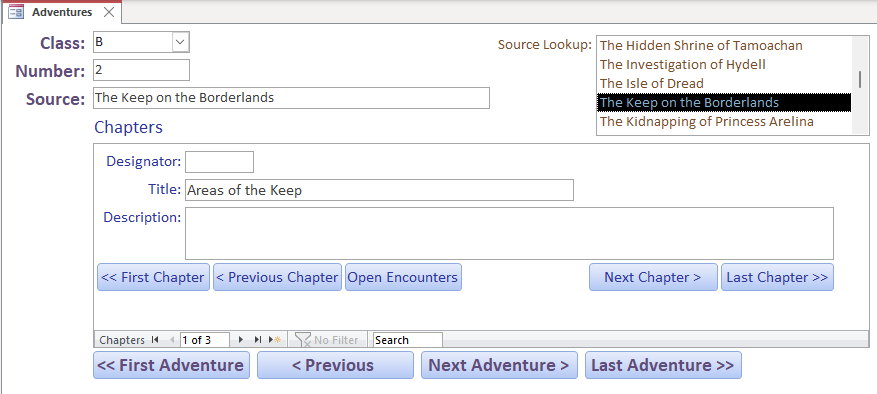
First up, adventure entry. In order to keep my adventure forms from getting too complex, they’re broken up into two forms. First, enter the adventure and the “chapters” within.
You enter the adventure itself, then add chapters within the adventure. For example, for the adventure shown, there are three chapters: Areas of the Keep, Adventures Outside the Keep, and the Caves of Chaos. Next, you add encounters within each of the chapters. These are from adventures outside the keep. The first one is an encounter I modified to mix things up a bit. Not only do I do that to avoid metagaming from players that have played these adventures many times before, but I also like to use Fiend Folio and Monster Manual II creatures that weren’t available when these adventures were written.
You can see that each encounter can have NPCs (leveled characters), actual monsters, both mundane and magical items, and coins. As you’ll see, items used (or at least held) by characters are handled on the character builder pages. The items you see here are ones stored in the encounter location (e.g., in the closet, in a chest, lying on the ground). The reason for the difference is that PCs shouldn’t have access to magic items possessed by a creature that escapes. Next up, is an encounter with NPCs.
These are humanoids (humans in this case) with class levels, so they’re handled differently than “monsters.” How are they handled? Well, here’s the character builder for PCs.
This is for PCs. The NPC form is identical. You can see that these characters can hold (and use) mundane items, armor, shields, magic items, and coins. Again, I track unattended coin and items separately because if an NPC escapes, those coins escape with the NPC. Only the unattended coin and items and those held by NPCs that are captured or killed are available to plunder. You can also see that there are buttons to call up prepared spells and the character sheet itself. Click on the links to see them in PDF format.
So, what about monsters? I refer to them as species. Here’s their data entry form.
There’s a typo above. In the Special Attacks field, it refers to a “divine attack.” That should be a “dive attack.” That’s another problem with Access. It doesn’t have spellcheck. This error has been fixed, but there are probably others.
After you’ve created the species, you then need to create a specific instance of a monster. I didn’t take a screenshot of that form, but it’s rather simple. Pick the species, calculate or designate it’s hit dice (if the species has a range of hit dice), and designate its hit points. You can also give the monster a name (e.g., Sappho, the gynosphinx from White Plume Mountain). Then your monster will be available to add to an encounter as shown above.
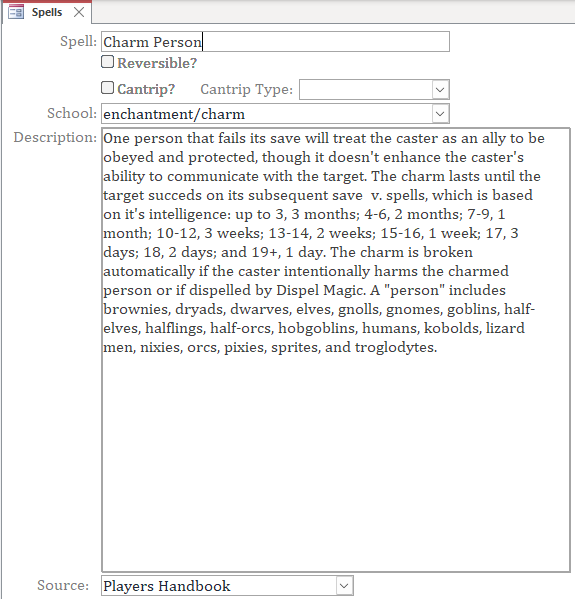
Spells deserve some discussion. There are several spells that are used by several classes, but the classes use them differently. An obvious example is Detect Magic. Clerics, druids, and magic users all use the spell, but their material components differ. The cleric uses a holy symbol, the druid a sprig of mistletoe, and the magic-user doesn’t need one. So, the way I have to handle it as follows. First, create the spell with a few characteristics that are constants across all classes.
Next, create what a software engineer would call an intersection entity to resolve the many-to-many relationship between spells and classes, entering the information that differs from class to class (e.g., material components).
In rare instances, the differences between the spells are so great that I’ve had to create different spells in the first form for different classes. In such a situation, I call the spells “[Spell Name] (arcane),” “[Spell Name] (divine),” “[Spell Name] (primal),” or “[Spell Name] (phantasm)” depending on what’s needed.
I’ve entered every spell appearing in the Player’s Handbook and Unearthed Arcana, every class appearing in those same two sources, every species from the Monster Manual, and am about halfway through the Fiend Folio. I intend to finish the Monster Manual II before releasing this software, so most of the work will be done. However, I won’t be doing everything from every adventure, and I’m not certain I’ll enter anything from Oriental Adventures. So I understand that, in the long run, the more user-friendly it is, the better.
Whether anyone ever finds this useful, I will. I’ve been using it for my game, and with the adventure-related features I’ve added over the past two weeks, my pre- and post-session tasks will be much easier.
Dungeons & Dragons is a trademark of Wizards of the Coast, LLC, who neither contributed to, nor endorsed, the contents of this post. (Okay, jackasses?)
YouTube suggested this video on Tiamat by Mythology & Fiction Explained.
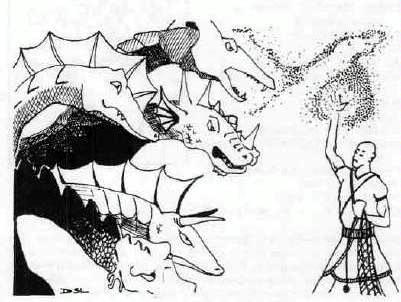
This video got me thinking (always dangerous). Decades of Dungeons & Dragons lore (whether playing or not) led me to thinking Tiamat was a purely evil creature.
I found it funny that one of her heads appears to be smiling.
I had forgotten that things aren’t so simple with her. So, I decided to re-read the Enūma Eliš. You can find one translation of it here. Considering how relatively little we have to work with, it remains the best look into the minds of Sumerian culture, and it paints a more complex picture of Tiamat. You have to remember that ancient cultures held very different ideas about right and wrong, so someone we’d consider evil can be responsible for very important things, some of which were quite generous or otherwise “good.”
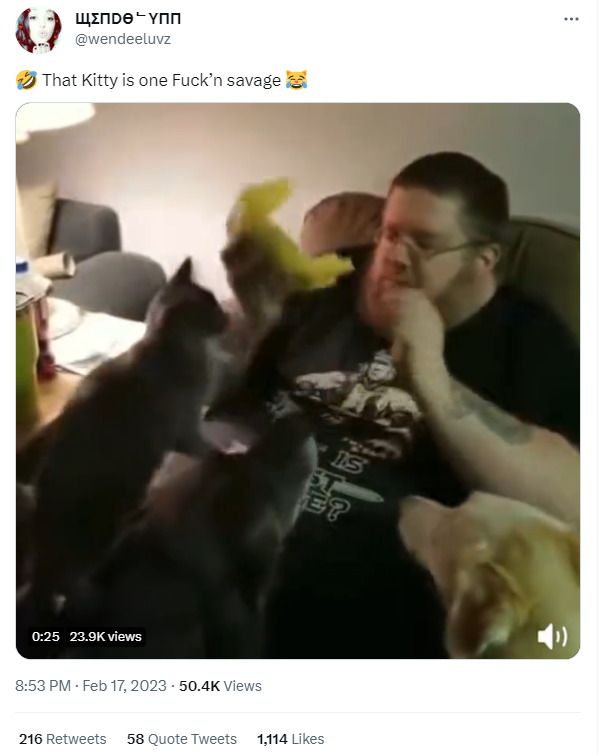
If the tweet is deleted, it’s gone. I can’t screenshot every frame of the video, but here’s one frame. It’s a housecat insisting on eating his owner’s McDonald’s cheeseburger.
Yesterday, I blasted a Paramount Plus offering, Scorpion. Today, I bounce back a little bit to tell you that Paramount+ has become my favorite streaming service. The content is just fantastic.
As you must know by now, I’m a Star Trek junkie; a complete apologist for the franchise. Even when I don’t like it, I like it. I just can’t help it. Perhaps there’s one exception, but that remains to be seen. Paramount+ has all the Trek I could ever want and more, so that certainly factors into my opinion.
That said, they have some pretty remarkable original content. Mayor of Kingstown with Jeremy Renner was a slow burn to (IIRC) episode 7 of season 1, but then it exploded, and so far, season 2 hasn’t let up. (Note: Episode 4 of season 1 was phenomenal.) Tulsa King with Sylvester Stallone is also superb. And then there’s these guys.
Perhaps a niche taste.
It’s CBS, so it’s unsurprising that there are also tons of shows and movies, new and old, that should pique your interests. There are some periods of time (e.g., law school) during which I couldn’t spend a lot of time on television. As a result, I missed a lot of series that people swear by as brilliant television. Paramount+ gives me the opportunity to watch many of them. Needless to say, my “My List” is huge on Paramount+. As always, YMMV.
Now, how can I get CBS to pay me for this advertising?
I have a really annoying habit. Actually, I have several, but this one annoys me. I have to finish what I start. In the context of this post, it means that, once I’ve set my mind to binging the entire run of a television show, I can’t stop until I’m finished no matter how bad the show is. That’s what happened with Scorpion.
Scorpion aired on CBS from 2014-2017, and now you can watch it on demand on Paramount Plus. It centered on a team of underachieving, supra-geniuses who finally get their big break when the Department of Homeland Security designates them a contractor. It started off well enough, and the ratings were some of the best CBS enjoyed during its run. One executive referred to it as “our Big Bang Theory, but as a drama.” However, by season four, the ratings were terrible, and despite a cult following and a tense cliffhanger to end season four, the show was cancelled.
Good riddance.
The show was wildly unrealistic. As anyone with a physics degree, a first career in software engineering, and a current career as an attorney can tell you, most shows are. I have no problem with that. You have to enter into any television show or movie with a certain suspension of disbelief, and I’m happy to do so for the sake of drama. After all, despite not being a comics reader, I’m a huge fan of the MCU and DCEU. What could be less realistic?
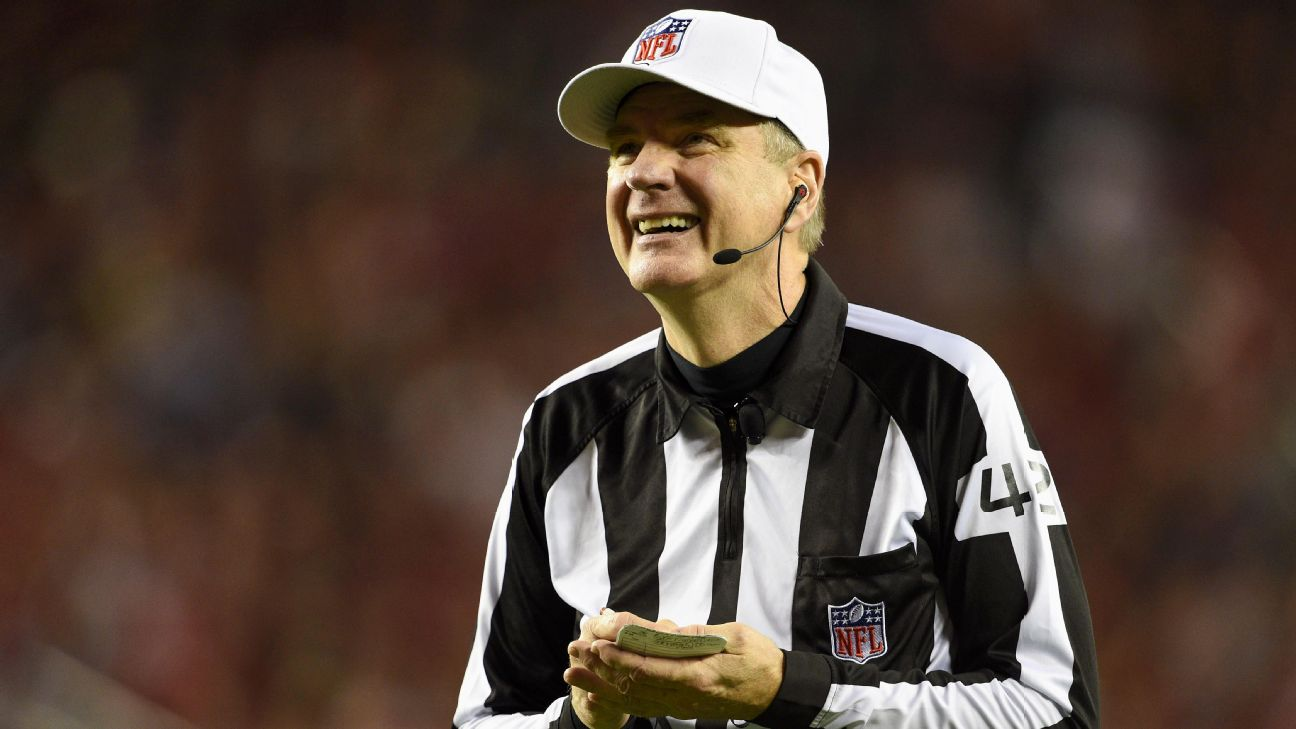
I called a fair game today.
But this show dives into many different branches of science, and it gets them all terribly wrong. Moreover, while each episode presents a preexisting peril to be solved, while addressing the peril, the Scorpion team members always make things worse, and usually in the most ridiculous or unrealistic of ways. It’s terrible writing that eventually grates on the viewer. Sharks don’t act that way. Computers don’t act that way. Gravity doesn’t act that way. How is it that you’re always getting your jacket caught right before you have to make a getaway? You’ve been on a deserted island for three weeks; how are you all so clean, and why is Cabe still wearing a suit and tie?
As the charm of the show tends to wane, there’s little left to keep the viewer interested. But I have to say, if there were a season five, I’d have watched it.








 Play What You Want