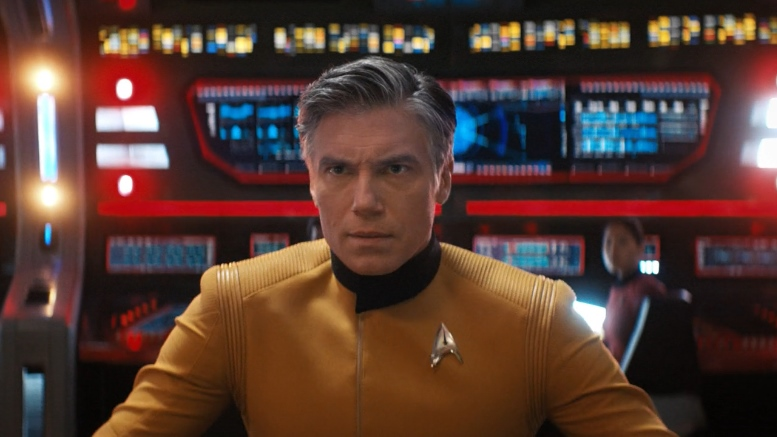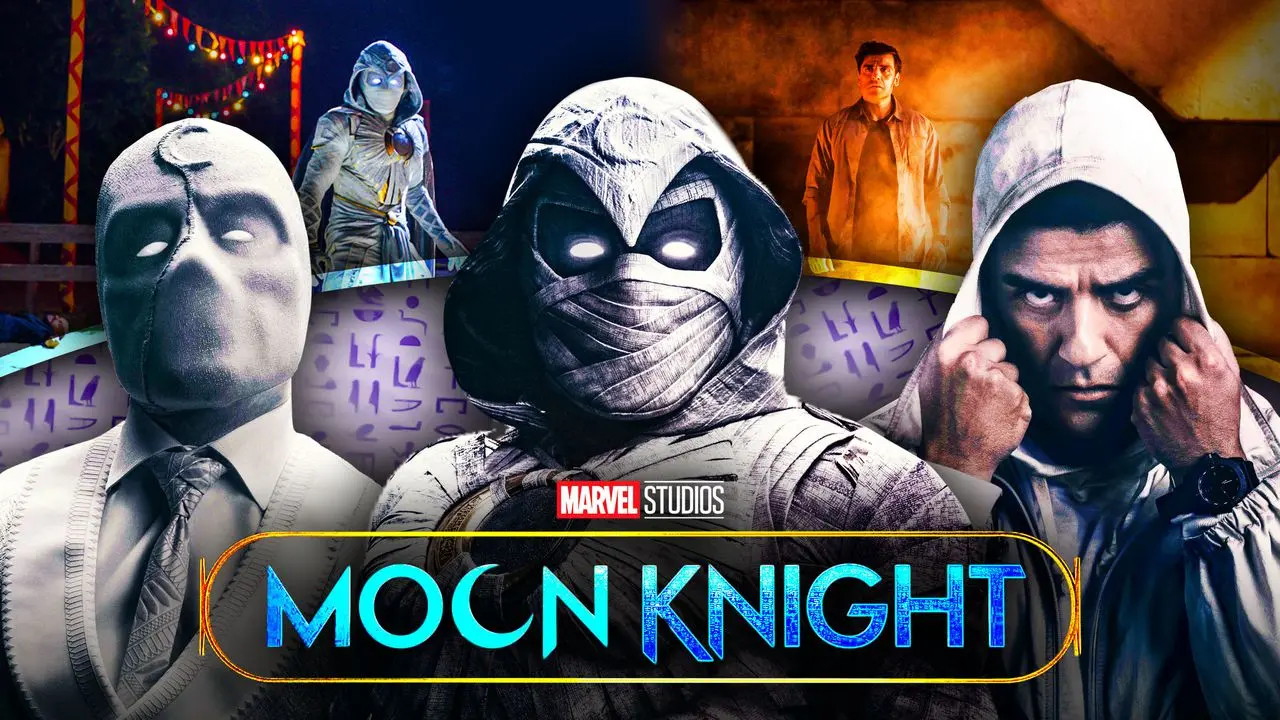
Brutal Watch: The Northman @TheNorthmanFilm @bjork @neilhimself #GoodWatch #mythology #folklore #DnD #ADnD #RPG #TTRPG

If you enjoy this post, please retweet it. Other posts in this series can be accessed by clicking here.

A few of weeks ago, I saw The Northman. I loved it but understand that it isn’t for everyone. It’s a Norse tale, which means it doesn’t fit the formula for what sells in Peoria.

This character was loosely based on me.

The cast was great, but this post isn’t a review. The movie, like several others before it, got me thinking.

I didn’t study mythology because of my interest in 1st Edition D&D (“1e”); it was the other way around. Mythology (and dinosaurs) got me into 1e in the 1970s. I thought, “Wow! I can tell my own stories within these settings and characters?!” However, whether it’s D&D, Neil Gaiman’s Norse Mythology, or Bulfinch’s Mythology, western literature tends to sanitize the characters and their stories. The “good-aligned” deities are often presented as noble, loving, and helpful. There are certainly some exceptions — Zeus was an asshole — but the sense of right and wrong have been aligned at least to some extent to what the modern audience thinks as “good.” We really do make the gods in our own image. The Northman reminds us that the “good guy” is not someone you’d want to marry your daughter. Life was brutal and uncaring back then, and being that way yourself was an effective survival strategy.

That said, there’s a reasonableness to garnering lessons from these myths. In a very narrow, personal way, I relate rather strongly to the protagonist’s backstory (appropriately discussed today). I would never handle our similar predicament in the same way, but the character’s backstory loosely parallels my own. If you dig through the primitive details of the specific culture at hand, you can find some universal truths, or at least something to which you can relate (no more than vaguely, I hope). After all, people take from stories whatever message they want to hear. We tend to cut out the brutality from these stories, and thus also ignore how those that wrote them applied them to real life.

So no, you wouldn’t want to invite any of these ancient people to dinner.

Follow me on Twitter @gsllc 
Follow the Northman @TheNorthmanFilm
Follow Bjork @bjork
Follow Neil Gaiman @neilhimself

Dungeons & Dragons is a trademark of Wizards of the Coast, LLC, who neither contributed to nor endorsed the contents of this post. (Okay, jackasses?)

Guilty Pleasure: The Island of Dr. Moreau (1996) @valkilmer @fairuza @perlmutations #GuiltyPleasure #movie

If you enjoy this post, please retweet it. Other posts in this series can be accessed by clicking here.

I will die on this hill.

Yeah, I know the history. I saw the 1977 version of this movie on TV as a kid. Then I saw the 1996 version, which is the subject of this post. I know of the disasters that befell the production of the remake. I know that Marlon Brando created a bizarre version of the titular character just to piss off the director. I don’t care. I like this movie and thought Marlon Brando’s interpretation of Dr. Moreau was brilliant.

The doctor was insane, SPOLIER ALERT! genetically experimenting with ordinary animals and turning them into anthropomorphic monstrosities. Well of course he wore an ice bucket on his head. His eccentricity is exactly what you’d expect from such a maniac. His eccentric intensity was hilarious. “Forcefully, forcefully!”

I think some others would at least appreciate my position.

Another scene I loved was SPOLIER ALERT! the one in which he dies.

It demonstrates both his manipulativeness and his arrogance. Rather than panic at the site of his creations in his home, he remained calm waiting for his device that would incapacitate his “children,” distracting them by giving credence to hyena’s random selection of notes banged out on the piano. The look of surprise on his face when SPOLIER ALERT! the device didn’t work was priceless. The conflict between Brando and the director is what gave us the perfect performance for this character.

One of these is a concert pianist.

On top of that, the tension between Kilmer and Brando gave us a great scene where Kilmer ridiculed Brando, which is exactly what you’d expect from an alcoholic, disgruntled employee. Art imitated life here, and it was marvelous.

The lead, played by David Thewlis, was terrible. Thewlis isn’t a bad actor, but he was much younger then, so maybe it was his fault, the screenwriter’s fault, or both. Either way, I agree that his performance was a weakness, but that’s all I’ll concede.

And with that, my streak of posting on consecutive days dies at 374.

This is an appropriate day to be discussing monsters and things that should die.

Follow me on Twitter @gsllc
Follow Val Kilmer @valkilmer
Follow Fairuza Balk @fairuza
Follow Ron Perlman @perlmutations

Gods of Death #MythologyMonday #MythologyMonandæg #folklore #Egypt #Greece #MCU

If you enjoy this post, please retweet it.

D&D didn’t get me into mythology; mythology got me into D&D. I loved mythology as a kid (still do), so I loved the idea of playing a game that allowed me to write stories within those worlds. The MCU is now getting deeper into the mix with Egyptian gods in Moon Knight, Greek and Egyptian gods (and maybe others) in Thor: Love and Thunder, and perhaps more in Black Panther 2 and others further down the pike.

So, continuing with the death theme of past few days, I give you a couple videos of death gods. First up, Anubis from the Egyptian pantheon.

Next, Thanatos from ancient Greece.

From Haiti, we get Baron Semedi.

The Japanese give us a host of death gods called the Shingami.

And then there’s the goddess of death from my favorite pantheon.

No, not her.

Depressed yet?

Follow me on Twitter @gsllc


Muppet Star Trek @brucemccorkinda @hafuboti #muppets #StarTrek #StarTrekSunday

If you enjoy this post, please retweet it.

Sundays now are lazy days for me. I either post something silly or other people’s work. Usually both. Today, in the final stages of the death of my year-long streak of daily posts, I return to Star Trek. (Star Trek Sunday? Is that a thing?)

Not everything seen as certain death is necessarily the end. There’s often a way out.

Okay, I admit this turns out to be a bad example for inspiring hope in the face of likely death. Plus, perhaps the wrong [guy] died.

Remember, no one’s really dying. It’s just the end of a streak.

Follow me on Twitter @gsllc
Follow Bruce McCorkindale @brucemccorkinda
Follow Hafuboti @hafuboti

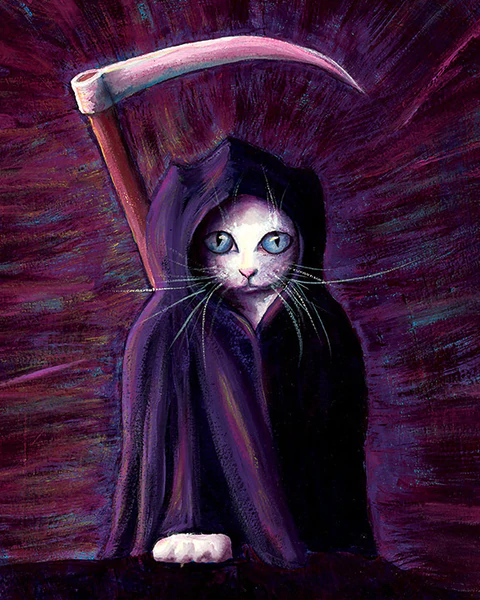
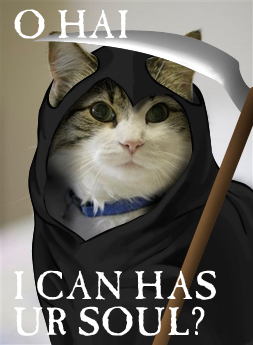
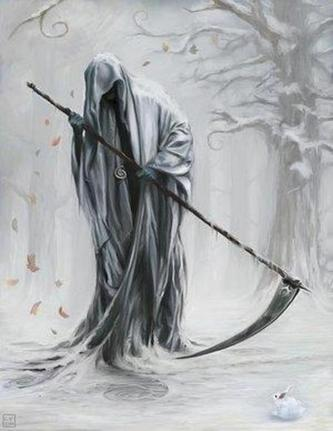
Cats as the Grim Reaper #Caturday #death

If you enjoy this post, please retweet it.

To start, I want to remind you that there’s nothing to worry about. That sounds ominous, doesn’t it? Well, here it goes.

As my year-long streak of daily posts will die soon, death will be the subject of the next few posts. So, because it’s Caturday . . . .

They’re not so cute when they’re just skeletons.

That’s a little better.

Even better.

Figures.

Cats >> matters of life and death.

Follow me on Twitter @gsllc


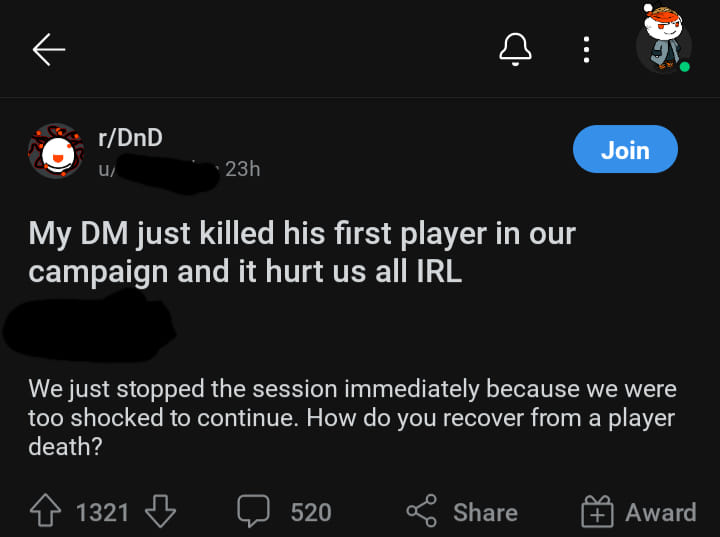
Character Death in RPGs #ADnD #DnD #RPG #TTRPG #1e

If you enjoy this post, please retweet it, and please visit my 1st Edition D&D resources page.

Today, I kick off my death theme for the last throes of my one-year streak of daily posting to this blog, I’m going to reiterate and summarize the content from a couple other posts. More detail on my positions can be found by clicking through.

I’ve spoken about how dumb I feel the save or die mechanic is (though my stance has softened a bit since I wrote that and started playing 1st Edition D&D [“1e“]). Moreover, in that same post I’ve talked about how much I enjoy the way 4th Edition D&D (“4e”) applied their remedial mechanic (“save three times or die”) to one of my favorite creatures, the medusa: slowed on first failed save, immobilized on the second failed save, and petrified on the third failed save. In fact, I’ve adapted that mechanic to my medusa in my 1e game simply because I enjoy it. Even if you prefer save or die, petrification is far more dramatic when the character (and player) can feel it slowly taking over. That’s dramatic and immersive.

Seriously?

All that said, I never understood the aversion modern gamers have towards character death (at least among those that play D&D). I have a friend who refused to kill my character even though he knew I didn’t mind it. He minded. There are two reasons I’m completely okay with character death. First, without risk, the reward loses meaning (at least to anyone with an ego). Second, as with other forms of failure, it presents new opportunities. I can switch to playing a completely different character before having the chance to grow tired of the now-dead character. Moreover, the one time I convinced that friend to kill one of my characters, it was because I wasn’t enjoying playing the character. This character is the brother of two of my other characters, one of whom I played as recently as this year’s Winter Fantasy. His death was not only heroic, but has now enhanced my other characters’ backstories. Win-win. Besides, it’s not as if anyone is actually dying. This is a fantasy world and should be viewed as such.

Now, all that said, we can have overkill. I was in a 4e Dark Sun campaign where, over 9 weeks of gaming, I lost five characters. My barbarian died in week one, so I rolled up a new character that lasted two weeks, then another that lasted two weeks, and so on. Each of those deaths meant that I had to write one of my one-page-or-more backstories. To paraphrase a friend, I shouldn’t have to write that much for you unless the result is money or a university degree. Full disclosure: One of my characters was a reanimated revenant of the one that died the week prior. So, I prefer a balance between the two rather than choosing one at the exclusion of the other. As with most things, the answer lies somewhere in the middle.

This streak of daily blog posts is almost dead.

Follow me on Twitter @gsllc

Dungeons & Dragons is a trademark of Wizards of the Coast, LLC, who neither contributed to nor endorsed the contents of this post. (Okay, jackasses?)


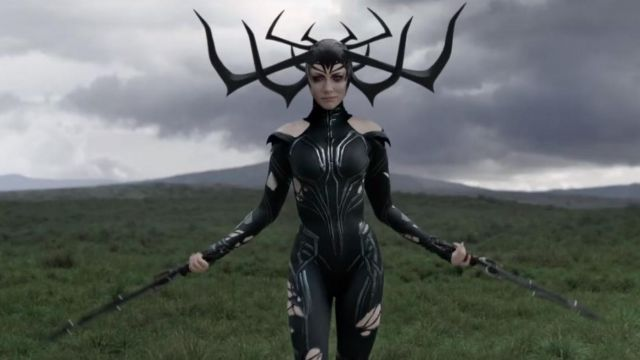
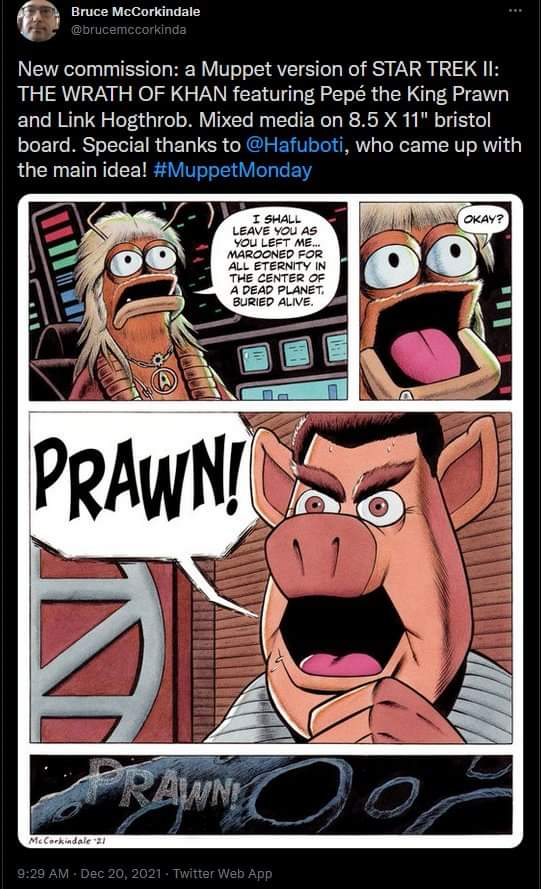
“What’s Old Is New” Watch: Strange New Worlds Series Premiere! @ansonmount @StarTrek @paramountplus @StarTrekOnPPlus #StarTrek #StrangeNewWorlds #Picard #Borg #GoodWatch

If you enjoy this post, please retweet it.

I got up at 5:30 am this morning to see the second season finale of Picard and the series premiere of Strange New Worlds. As to the latter, I haven’t been this excited for a Star Trek series since Next Generation was announced. First, it’s purported to be a return to the episodic format that I prefer (though I hear there will be an larger, overlayed story, which is fine). Second — I never thought I’d say this — Anson Mount’s Captain Pike has overtaken William Shatner’s Captain Kirk as my favorite Captain.

No cheese zone.

This still looks like a large, ensemble cast, so it won’t likely take over as my favorite series, but you never know. It certainly started off great. TOS is back, but without all the cheesy, 60s-era TV technology that the young-uns can’t seem to get past. Also, season2 of Picard ended today, and I was pretty happy with that as well. Here’s a spoiler for the last episode.

Called it!

Follow me on Twitter @gsllc
Follow Anson Mount @ansonmount
Follow Paramount+ @paramountplus
Follow Star Trek on Paramount+ @StarTrekOnPPlus
Follow Star Trek @StarTrek

Mythic Watch: Moon Knight @moonknight @MarvelStudios #MoonKnight #MCU #GoodWatch

If you enjoy this post, please retweet it. To read other posts in this series, click here.

So, Moon Knight. Today’s the season finale.

As always, I got up early to watch it.

This isn’t a traditional review that implicitly claims that a show is good or bad based on some make-believe objective standard. I hate that pretentious nonsense. Whether or not you like a movie, song, TV show, or food is purely subjective. Instead, my approach to reviews is to explain why I like what I like and hate what I hate. If what makes me like/hate it applies to you, then maybe you’ll like/hate it too. I say, “maybe,” because there are other factors beyond what I can possibly express, but at least you have a better chance of predicting your reaction.

So, here is the context to understand the place from which my feelings arise:

  1. I grew up reading about dinosaurs and mythology, so anything involving either one of them has an advantage in gaining me as an audience, but are still not all winners.
  2. I’m not a fan of the comic book genre. However, when I was in elementary school, I’d sometimes hang out with my cousin. When it was too hot or cold to play outside, we’d read his comics. I remember them oddly well, but there were very few that grabbed me.
  3. I’m an apologist for comic book movies.

So, what do I think of Moon Knight? I love it. Considering the context given above, I don’t think I need to say much beyond that, as the explanation has already been given. However, I don’t want any of you asking for your money back, so here’s a little more. As with Shang-Chi before it, Moon Knight is opening the door to folklore, legends, and myths of a culture rarely addressed in western media. I’m sure most (non-bot) readers of this blog get that, but for our society as a whole, these other cultures are untapped resources. Disney is just scratching the surface with Egyptian and Chinese cultures. Give me Quetzalcoatl! Give me Shango! Give me Raijin! But please keep Chris Hemsworth as Thor. 😊

I suspect the upcoming Thor: Love and Thunder is going to have me lose my shit for the same reason.

Follow me on Twitter @gsllc
Follow Moon Knight @moonknight
Follow Marvel Studios @MarvelStudios

The Curious Legality of the Aspirin Trademark @bayer #trademark #ip #aspirin #Bayer #TrademarkTuesday

If you enjoy this post, please retweet it.

Blog posts cannot substitute for legal advice. If the topics discussed in this post are relevant to a real case you have, please consult an attorney.

I’ve previously dispelled a common misconception between copyrights and trademarks. In summary, the “doctrine of laches” does not apply to copyrights. That is, if a copyright holder doesn’t enforce their copyright, they don’t lose the copyright. The doctrine of laches does apply to trademarks. Bayer’s Aspirin is an example of a trademark that fell prey to the doctrine of laches and was subsequently “genericized.” But there’s a legal twist to this story.

The German company, Bayer, held a patent in acetyl salicylic acid (“ASA”), and a trademark in Aspirin to identify it. The patent expired in 1917, but they continued to sell it under the brand name Aspirin, so the trademark lingered. Due to World War I, Bayer lost all its assets including its intellectual property. A new, company, bought those assets (including the trademarks “Bayer” and “Aspirin”) and continued selling ASA using the Aspirin trademark. Unfortunately, “considerably more than 220 tons” of counterfeit Aspirin flooded the U.S. market. This ASA was sold as “aspirin” throughout the general public, but with perhaps only an insignificant percentage of exceptions, manufacturing chemists, retail druggists, and physicians didn’t use or sell the infringing ASA.

In Bayer Co. v. United Drug Co., 272 F. 505 (S.D.N.Y. 1921), Bayer sued to enforce the trademark, and the result was, despite the Honorable Learned Hand’s claim, a first in the law. Here’s the relevant quote, which I’ll next explain.

The case, therefore, presents a situation in which, ignoring sporadic exceptions, the trade is divided into two classes, separated by vital differences. One, the manufacturing chemists, retail druggists, and physicians, has been educated to understand that “Aspirin” means the plaintiff’s manufacture, and has recourse to another and an intelligible name for it, actually in use among them. The other, the consumers, the plaintiff has, consciously I must assume, allowed to acquaint themselves with the drug only by the name “Aspirin,” and has not succeeded in advising that the word means the plaintiff at all. If the defendant is allowed to continue the use of the word of the first class, certainly without any condition, there is a chance that it may get customers away from the plaintiff by deception. On the other hand, if the plaintiff is allowed a monopoly of the word as against consumers, it will deprive the defendant, and the trade in general, of the right effectually to dispose of the drug by the only description which will be understood. It appears to me that the relief granted cannot in justice to either party disregard this division; each party has won, and each has lost.

Id. at 513-14.

What all of this means is that, to the general public, aspirin was no longer a trademark. Anyone could sell ASA to the general public and call it aspirin (with a small A), because to the general public, they were the same thing. However, Aspirin (with a capital A) was still a distinctive mark among manufacturing chemists, retail druggists, and physicians, because they never treated it as a generic term. As professionals in the industry, they weren’t burdened by having to call the generic drug acetyl salicylic acid (or monoaceticacidester of salicylicacid), so they continued to do so. Also, those professionals weren’t willing to trade in infringing goods, so they never did.

The net result was that the trademark was no longer applicable to the general public, but it was still valid when selling to manufacturing chemists, retail druggists, and physicians.

Weird, huh?

Follow me on Twitter @gsllc
Follow Bayer @bayer

Temporal Deities @MythsExplained #MythologyMonday #MythologyMonandæg #folklore #Egypt

If you enjoy this post, please retweet it.

Due to my one year streak of posts soon coming to an end, the theme of the weekend has been time, so here are a couple of videos on time deities, starting with Chronos, the Greek god of time. This one also discusses how mythology often resembles fan fiction. Some gods were worshipped over centuries, and some over millennia. Some stories passed orally, while others were changed as the political winds shifted. Ancient peoples believed what they wanted to believe, and that changed.

Next up is the closest thing we have to a time deity in Egyptian mythology, Shai, a goddess of destiny. Like time, the story told has no ending. It was . . . lost to time. Get it?

Time is almost up.

Follow me on Twitter @gsllc
Follow Mythology and Fiction Explained @MythsExplained